
Published 30 August 2026 · Updated 5 October 2026 · By Jatin Dua, Broker of Record, RE/MAX Quantum Realty
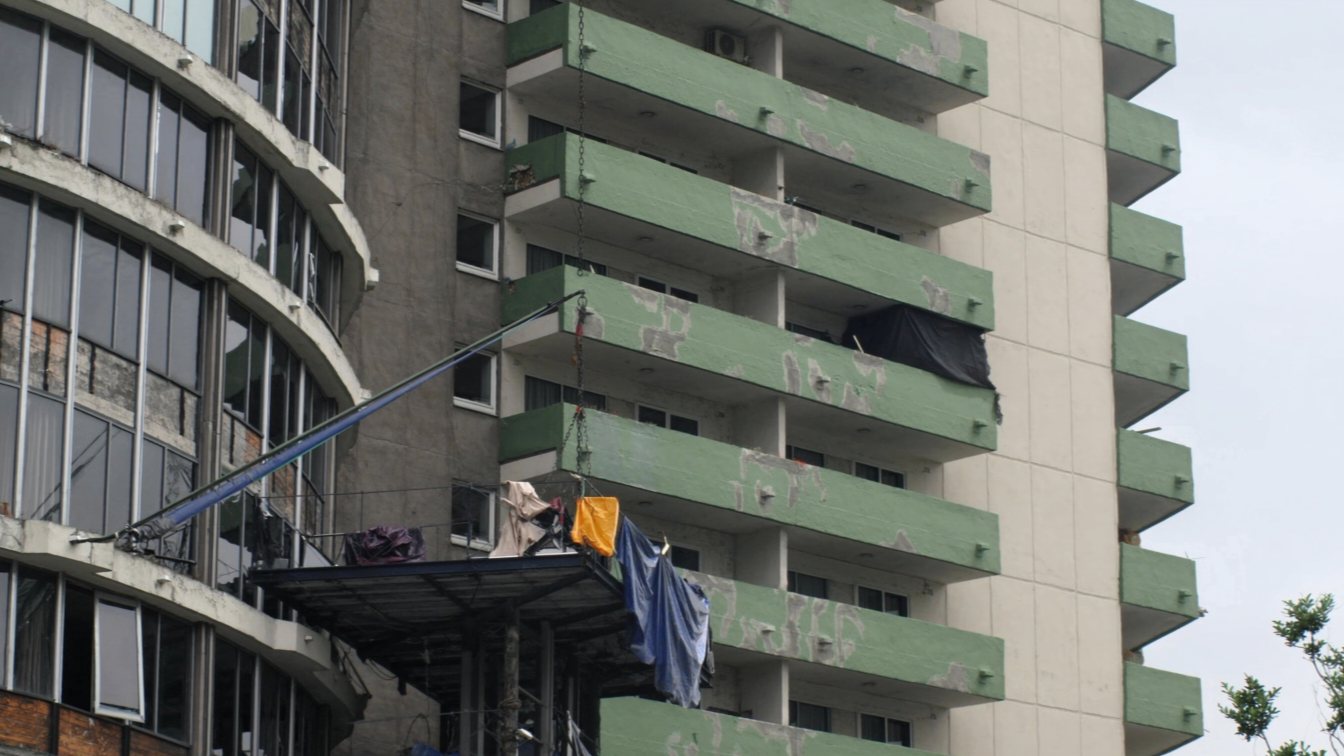
The Condominium Act, 1998 does not use the phrase “special assessment” anywhere, there is no owner vote, and no notice period is prescribed. A levy is simply the board exercising the owners’ standing obligation under s. 84(1). Section 95(2) is explicit that the board needs no owner consent to spend from the reserve fund. What you can obtain, before buying, is the reserve fund study (every three years under O. Reg. 48/01, s. 31(3)) and the board’s funding plan, which must make the fund adequate by the fiscal year following the study — not over 30 years, which is a widespread error. The most useful single line is O. Reg. 48/01, s. 18(1)(f) in the status certificate: what the corporation knows that may increase the fee. The Condominium Authority Tribunal has no jurisdiction over financial disputes.
Every question a buyer has about special assessments comes down to one thing: is the reserve fund adequate for what the building is going to need. That question has a documented answer, it is available to you before you buy, and almost nobody reads it. Here is how to.
What the reserve fund is
Section 93(1): “The corporation shall establish and maintain one or more reserve funds.” Section 93(2): it “shall be used solely for the purpose of major repair and replacement of the common elements and assets of the corporation.”
It is funded out of owners’ common expense contributions (s. 93(4)), interest earned on it forms part of it (s. 93(7)), and it cannot be distributed to owners except on termination (s. 95(3)). Money in it must be segregated into designated reserve fund accounts (s. 115(2)) and may be invested only in a narrow class of eligible securities — government-issued or guaranteed instruments, or instruments from CDIC- or FSRA-insured institutions (s. 115(5) and (7)).
Section 95(2): “The board does not require the consent of the owners to make an expenditure out of a reserve fund.” This is the opposite of what most owners assume. The board spends the reserve fund. There is no vote.
The study cycle
Section 94(1) requires periodic studies to determine whether the fund and the contributions are adequate. O. Reg. 48/01, s. 28 sets three classes:
| Class | What it involves |
|---|---|
| Comprehensive study | The full exercise. Required as the first study, within the year following registration of the declaration and description (s. 94(4) and reg s. 31(2)). |
| Updated study based on a site inspection | A refresh with someone physically looking at the building. |
| Updated study not based on a site inspection | A refresh from the desk. |
Every three years, under reg s. 31(3). And reg s. 31(4) alternates the two update types, so a site inspection happens at least every six years. A board may always commission a fresh comprehensive study, but nothing compels one on a cycle.
A common error worth naming: “a comprehensive study every nine years” is not in the regulation. The regulation requires a study every three years and alternates the update types. There is no nine-year comprehensive requirement.
The study must cover every component expected to need major repair or replacement within at least 30 years where the replacement cost is $500 or more (reg s. 27), and its financial analysis must include a recommended funding plan projected over at least 30 consecutive years (reg s. 29(3)(b)). Who may conduct one is prescribed by reg s. 32 — eight professional classes, with directors, officers, the property manager, owners and residents expressly barred, and errors and omissions insurance of at least $1 million required.
What the board has to do with it — and the deadline nobody knows
| Step | Deadline | Section |
|---|---|---|
| Review the study and propose a plan for future funding | Within 120 days of receiving the study | s. 94(8) |
| Send owners a notice with a summary of the study, a summary of the plan, and a statement of where the plan differs from the study; send the auditor the full study, plan and notice | Within 15 days of proposing the plan | s. 94(9) |
| Implement the plan | After 30 days from complying with s. 94(9) | s. 94(10) |
The plan must make the fund adequate by the fiscal year following the year the study was completed. That is O. Reg. 48/01, s. 33(1), and it is the single most misstated point in this whole area. The 30 years belongs to the study’s projection, not to the board’s adequacy deadline. If you read anywhere that the funding plan has 30 years to get the fund adequate, that is wrong.
The notice under s. 94(9)(a) is in a form specified by the Condominium Authority of Ontario, and reg s. 33(4) prescribes its contents in detail — including a Cash Flow Table and a Contribution Table each projected over at least 30 years, a statement of whether the board adopted the study’s recommended plan, and, if not, an explanation of how the board’s plan differs.
That last item is the one to read. A board that has departed from its own consultant’s recommendation has to say so, in writing, in a document you can obtain for free.
Special assessments: the term is not in the Act
I checked the whole statute. The phrase “special assessment” does not appear in the Condominium Act, 1998 at all. In O. Reg. 48/01 it appears exactly once, descriptively, in the prescribed contents of the funding-plan notice.
The mechanism is simply s. 84(1) — the owners’ standing obligation to contribute to common expenses in the proportions set by the declaration — exercised by the board. The Act acknowledges the practice only obliquely, in the status certificate provisions:
| Status certificate paragraph | What it must state |
|---|---|
| s. 76(1)(b) | The increase, if any, in the common expenses for the unit that the board has declared since the date of the current budget, and the reason for the increase. |
| s. 76(1)(c) | The assessments, if any, that the board has levied against the unit since the date of the current budget to increase the contribution to the reserve fund, and the reason. |
| O. Reg. 48/01, s. 18(1)(e) | The same, for assessments levied to increase the contribution to the operating fund. |
There is no prescribed notice period for a levy, no prescribed form, and no owner vote. Section 95(2) confirms the board needs no owner consent to spend from the reserve. Nothing in ss. 84 or 93 to 95 requires a vote to levy. The statutory disclosure obligation runs to purchasers, through the status certificate — not to owners in advance.
The alternative to a levy is borrowing, and that does require a by-law: s. 56(3) provides that a corporation shall not borrow for expenditures not listed in the current budget unless it has passed a by-law under s. 56(1)(e) specifically authorising it.
An unpaid levy is an unpaid common expense, which means the s. 85 lien applies: the lien arises on default and expires three months later unless the corporation registers a certificate of lien, with 10 days’ written notice to the owner first.
The line in the status certificate that matters most
O. Reg. 48/01, s. 18(1)(f): the certificate must contain “a statement of what knowledge, if any, the corporation has of any circumstances that may result in an increase in the common expenses payable for the unit.”
That is a forward-looking disclosure obligation and it is the closest thing a buyer gets to a warning. Read it before anything else in the document. And note s. 76(6): the status certificate binds the corporation as against a purchaser or mortgagee who relies on it. Section 76(4) deems an omission to be a statement that there is no such information, and s. 76(5) deems a corporation that misses the 10-day deadline to have given a clean certificate the next day.
What the Tribunal cannot help you with
The Condominium Authority Tribunal has no jurisdiction over money. Its prescribed disputes are records, pets and animals, vehicles, parking and storage, and nuisance, annoyance or disruption — plus related indemnification provisions. Section 1.36(4) of the Act expressly excludes disputes with respect to ss. 85 and 86, the lien provisions. The CAO’s own jurisdiction page lists “financial or budget disputes”, “repair and maintenance disputes” and board decisions among the matters it cannot hear.
So a buyer worried about a looming special assessment has no Tribunal remedy at all. The protection is entirely front-loaded into reading the documents before you close.
One forward-looking note: O. Reg. 237/26 expands the Tribunal’s jurisdiction to certain meeting-requisition disputes and raises the damages cap from $25,000 to $50,000 — but it takes effect on 1 July 2027 and is not in force today. Anything published now saying otherwise is premature.
The reading order
- Status certificate, s. 18(1)(f) — what the corporation knows that may increase the fee.
- Status certificate, s. 76(1)(b) and (c) — increases declared and assessments levied since the budget.
- The board’s s. 94(8) funding plan notice — free electronically, and it tells you whether the board followed its own consultant.
- The current budget — also free electronically.
- The reserve fund study — slower and chargeable, but it is where the component condition actually is.
Your lawyer reads these. On a pre-construction purchase, they read the disclosure statement inside the ten-day rescission window under s. 73(2). On a resale, the status certificate review is not a formality and should not be treated as one.
Buying a condo in Etobicoke and unsure what to ask for?
I will tell you exactly which documents to request, which are free, which are chargeable, and what to look for in each — before you are under time pressure. Getting this right at the offer stage is worth more than anything I can do afterwards.
[email protected] · 833-330-1925 · Book a free consultation
Confidential. Read personally and answered within 24 hours. I never share, sell or distribute your information.
Free tool — AI condo value estimator
Condo Valuation
What’s your condo
worth today?
Three quick steps. Condos don’t price like houses — your floor, your view, and whether you own parking move the number more than anything else. This weighs all of them.
Reading recent condo sales…
Estimated market value
—
$0–$0
Most likely $0 · about $0 per square foot
What moved the number
Starting from what comparable units in your area sell for, here’s what your specifics added or subtracted.
Market context
—
—
Two units, same floor plan,
$90,000 apart.
That happens constantly in condos — one has the parking, the right exposure, or a board that keeps the reserve fund healthy. A model can’t see your status certificate. I can.
Frequently asked questions
Do owners get to vote on a special assessment?
No. The Condominium Act, 1998 does not use the term “special assessment” at all, and no provision requires an owner vote. Section 95(2) states expressly that the board does not require the consent of the owners to make an expenditure out of a reserve fund. The levy itself operates through s. 84(1), the owners’ standing obligation to contribute to common expenses.
How much notice must a condo give before a special assessment?
None is prescribed. There is no statutory notice period and no prescribed form. The statutory disclosure runs to purchasers through the status certificate, under s. 76(1)(b) and (c) and O. Reg. 48/01, s. 18(1)(e).
How often must a reserve fund study be done?
Every three years, under O. Reg. 48/01, s. 31(3). Section 31(4) alternates the two update classes, so a study based on a site inspection happens at least every six years. A new corporation must conduct a comprehensive study within the year following registration of the declaration and description.
Is there a nine-year comprehensive reserve fund study requirement?
No. That is a widespread error. The regulation requires a study every three years and alternates updated studies with and without a site inspection. A board may always commission a fresh comprehensive study, but the regulation does not compel one on any cycle.
Over what period must the reserve fund be made adequate?
By the fiscal year following the fiscal year in which the study was completed — O. Reg. 48/01, s. 33(1). The 30-year figure that circulates belongs to the study’s own recommended funding projection under reg s. 29(3)(b), not to the board’s statutory adequacy deadline.
What is the most useful line in a status certificate?
O. Reg. 48/01, s. 18(1)(f): a statement of what knowledge the corporation has of any circumstances that may result in an increase in the common expenses payable for the unit. It is a forward-looking disclosure and it is the closest thing a buyer gets to a warning. Under s. 76(6) the certificate binds the corporation as against a purchaser who relies on it.
Can I take a special assessment dispute to the Condominium Authority Tribunal?
No. The Tribunal’s prescribed disputes are records, pets and animals, vehicles, parking and storage, and nuisance, annoyance or disruption, plus related indemnification provisions. Section 1.36(4) excludes lien disputes under ss. 85 and 86, and the CAO lists financial and budget disputes among the matters it cannot hear. Protection is front-loaded into reading the documents before closing.
Related reading
- Comparing Etobicoke maintenance fees: why the per-square-foot number lies
- Interim occupancy and the appraisal gap
- Reading a builder before you sign
Sources
Every figure on this page traces to one of these, and each was read on 30 August 2026. Primary sources only — statute, regulation, and the government or agency that administers the rule. Where I could not verify something from a primary source, the page says so instead of guessing.
- Condominium Act, 1998, S.O. 1998, c. 19. e-Laws. Section 73 sets the ten-day rescission right; section 80 governs interim occupancy and occupancy fees; section 81 governs money held in trust. Accessed 30 August 2026.
- O. Reg. 48/01 under the Condominium Act, 1998 (General). e-Laws. Consolidation from 20 July 2026. Sections 27 to 33 govern reserve fund studies and the funding plan; s. 18 prescribes the status certificate; ss. 13.1 to 13.11 govern records requests. Accessed 30 August 2026.
- Reserve funds. Condominium Authority of Ontario. Plain-language description of the study cycle and the board’s 120-day and 15-day obligations. Accessed 30 August 2026.
- Status certificates. Condominium Authority of Ontario. Confirms the 10-day production requirement and the $100 maximum fee including taxes. Accessed 30 August 2026.
- Condominium Authority Tribunal — our jurisdiction. Condominium Authority of Ontario. Lists financial and budget disputes, repair and maintenance disputes and board decisions among the matters the Tribunal cannot hear. Accessed 30 August 2026.
- Condominium Authority of Ontario. The provincial authority for condominium education, the public condominium registry, and the Condominium Authority Tribunal. Accessed 30 August 2026.
About the author — Jatin Dua, Etobicoke real estate agent
I’m the Broker of Record at RE/MAX Quantum Realty, 799 The Queensway in Etobicoke. I write these pages the same way I work a file: read the primary source, quote it, date it, and say plainly where the source is silent or where two sources disagree. If a figure on this page has no citation beside it, that is a mistake and I want to hear about it.
I work with buyers, sellers, renters and investors across Etobicoke, Mimico, Humber Bay Shores, New Toronto, Long Branch, Alderwood and Stonegate–Queensway. [email protected] or 833-330-1925.