
Published 2 September 2026 · Updated 29 September 2026 · By Jatin Dua, Broker of Record, RE/MAX Quantum Realty
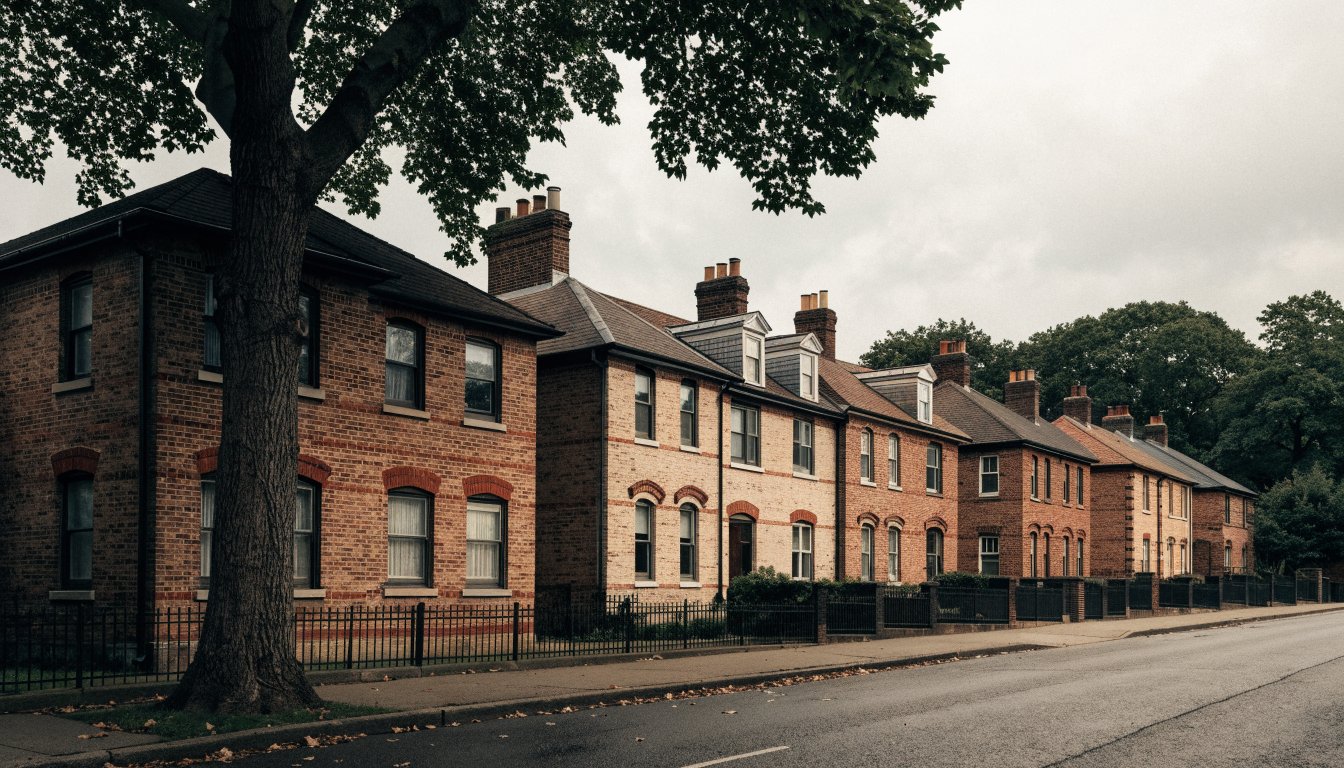
Since 31 March 2024 multi-tenant houses are permitted across all of Toronto and every operator needs an annual licence under Chapter 575. A multi-tenant house is “a building with four or more multi-tenant house rooms” occupied by people not living as a single housekeeping unit. Fees are $27.04 per room per application plus $162.24 per house for inspection. The room cap is set by zoning, not the by-law, and differs: six rooms in all zones in Etobicoke, North York and Scarborough, and six, twelve or twenty-five in Toronto, East York and York. Penalties reach $100,000, a special fine equal to any economic advantage, and $10,000 per day as a continuing offence. The City publishes a daily-refreshed, address-level licence dataset — 403 licences on 2 September 2026.
Rooming houses used to be legal in parts of Toronto and illegal in others. That ended on 31 March 2024, and almost nobody buying a house marketed for room rentals knows what replaced it.
Two facts to lead with. Multi-tenant houses are now permitted across all of Toronto and every operator needs a licence. And the City publishes an address-level list of licences that refreshes daily — so you can check a specific property before you write an offer. On 2 September 2026 that list held 403 licences: 226 active, 92 in progress and 85 inactive.
What counts as a multi-tenant house
Chapter 575 of the Toronto Municipal Code defines it as “a building with four or more multi-tenant house rooms, inhabited or intended to be inhabited by persons who do not live together as a single housekeeping unit.”
A “multi-tenant house room” is one used or intended as a bedroom, available for rent, and which “may include a bathroom or kitchen facilities for the exclusive use of the room’s occupant but does not include both”. That last clause is the line between a room and a self-contained unit.
Excluded: provincially or federally licensed residential premises, City shelters, college and university housing, fraternity and sorority houses, non-profit co-operative student residences, and hotels or motels.
The licence, and what it costs
| Item | Detail |
|---|---|
| Licence types | Type A for a multi-tenant house; Type B for a personal-care multi-tenant house |
| Term | Annual — apply for an initial licence or renewal once every 12 months |
| Application or renewal fee | $27.04 per room, per application |
| Inspection fee | $162.24 per house |
| Renewal notice | Sent about three months before the renewal date |
| Risk of losing it | A licence may be refused, revoked or suspended where renewal fees are not paid 90 days after the renewal date |
A six-room house therefore pays 6 × $27.04 = $162.24 in application fees plus the $162.24 inspection fee — $324.48 in the first year, renewable annually. Toronto Community Housing and other non-profit social housing providers are exempt from fees.
The room cap is zoning, not licensing — and it is not uniform
This is where buyers get hurt. Chapter 575 does not cap the number of rooms; zoning does, and it differs by district:
| Where | Maximum rooms |
|---|---|
| Etobicoke, North York and Scarborough | Six rooms, in all zones |
| Toronto, East York and York | 6, 12 or 25, depending on location and zone type |
| Everywhere | Up to six rooms allowed in all neighbourhoods |
Plus: a minimum of one bathroom for every four rooms, and outside the old City boundaries a minimum of one parking space for every three rooms, rounded down.
So a property advertised as a “ten-room rooming house” in Etobicoke cannot be licensed as one. Six is the maximum here in every zone. A new operator must pass a zoning review to get a Zoning Applicable Law Certificate before applying, and where the property does not comply — for instance because it exceeds the room maximum — the route is a minor variance from the Committee of Adjustment. That is a real application with a real chance of refusal, not a formality.
What the operator has to produce
An application must include a fire safety plan complying with the Ontario Fire Code, a property plan, a floor plan showing each room and the maximum number of tenants for each, a waste management plan, evidence of electrical compliance including an ESA certificate of inspection, and a preliminary project review from Toronto Building.
On receipt, the property may be inspected by Municipal Licensing and Standards for Chapter 629 property standards, by Toronto Fire Services for the Fire Code, and by Toronto Building for the Building Code.
Ongoing obligations include a notice board, an emergency contact who must respond, property maintenance plans for service requests, pests and waste, records of electrical work, and a transition plan with tenant notice before operations cease.
The penalties, and the reverse onus
Section 575-5.1: a fine of no more than $100,000; a special fine equal to the fair market value of any economic advantage obtained from non-compliance; the same $100,000 exposure for a director or officer who concurs; and each offence designated a continuing offence at up to $10,000 per day, with the by-law stating that daily fines in total “may exceed $100,000”.
Set fines, ticketed rather than prosecuted, include $600 for operating without a licence and $600 for an owner failing to comply.
The provision to read twice is section 575-5.1 H. Advertising a multi-tenant house as available for rent is, when entered in evidence, proof in the absence of evidence to the contrary that the building is a multi-tenant house. And where a building otherwise meets the definition, the burden of proving that the occupants live together as a single housekeeping unit is on the person charged. The listing itself becomes the evidence.
How to check an address before you buy
The City publishes a Multi-Tenant (Rooming) House Licences open dataset with the fields site address, district, ward and status, refreshed daily. Status is active, in progress, or inactive.
Section 575-2.2 C(2) requires the Executive Director to create a public record of all completed applications, so this is not a courtesy — it is a by-law obligation.
If you are buying a Toronto house being marketed on its room-rental income, search that dataset for the address first. No licence, or an inactive one, means the income you are being shown is either unlicensed or about to require a licence application you may not be able to obtain — particularly in Etobicoke, where six rooms is the ceiling.
One currency warning
Council approved changes in December 2025 that took effect 15 February 2026 — including replacing “building” with “premises” in the definition, excluding certain apartment units, requiring floor plans to show room dimensions and maximum tenants per room, and requiring 180 days’ tenant notice of a transition plan before operations cease. The consolidated Chapter 575 PDF on toronto.ca is still stamped 31 March 2024 and does not include them. Anything quoted from that PDF, here or anywhere else, is the pre-amendment text.
Looking at a house being sold on its room-rental income?
The first thing to do is check the address against the City’s licence dataset, and the second is to check what the zoning actually permits — because in Etobicoke that is six rooms in every zone, whatever the listing says the property produces. Send me the address and I will check both and tell you plainly whether the income being presented can be legally licensed. That is a different question from whether it is currently being earned.
[email protected] · 833-330-1925 · Book a free consultation
Confidential. Read personally and answered within 24 hours. I never share, sell or distribute your information.
Free tool — AI home value estimator
Instant Home Valuation
What’s your home
worth today?
Answer six quick questions and get an instant value range built from current Toronto & GTA sale data — property type, size, condition, lot and location all weighted the way a real pricing conversation weighs them. Takes about ninety seconds.
Reading recent GTA sale data…
Building your estimate
Estimated market value
—
$0–$0
Most likely value $0 · roughly $0 per square foot
What moved the number
Starting from the area baseline for your property type, here’s what each answer added or subtracted.
Market context
Recent local averages for comparison.
—
A range is a starting point.
A strategy is what sells.
This model doesn’t know that your neighbour’s identical semi went $80,000 over asking last month, or which two upgrades actually pay back in your area. That conversation is free and takes twenty minutes.
Frequently asked questions
Are rooming houses legal in Etobicoke now?
Yes. As of 31 March 2024 the City of Toronto states that multi-tenant houses are permitted across all of Toronto and that all operators require a licence. Toronto Municipal Code Chapter 575, adopted by By-law 157-2023 on 8 February 2023 and in force 31 March 2024, repealed the former City of Toronto rooming house chapter and the former City of Etobicoke lodging house chapter, replacing a patchwork in which they were permitted in some former municipalities and not others.
What is a multi-tenant house?
Section 575-1.1 defines it as a building with four or more multi-tenant house rooms, inhabited or intended to be inhabited by persons who do not live together as a single housekeeping unit. A multi-tenant house room is one used or intended to be used as a bedroom, available for rent, which may include a bathroom or kitchen facilities for the exclusive use of the occupant but does not include both. Excluded are provincially or federally licensed residential premises, City shelters, college and university housing, fraternity and sorority houses, non-profit co-operative student residences, and hotels or motels.
How much does a multi-tenant house licence cost in Toronto?
The application or renewal fee is $27.04 per room per application, plus an inspection fee of $162.24 per house. A six-room house therefore pays $162.24 in application fees plus $162.24 for inspection in the first year, and the licence must be renewed once every 12 months. Toronto Community Housing and other non-profit social housing providers are exempt from fees.
How many rooms can a multi-tenant house have in Etobicoke?
Six, in all zones. The cap is a zoning limit rather than a licensing one and it is not uniform across the city: the City states that in Etobicoke, North York and Scarborough a maximum of six rooms is allowed in all zones, while in Toronto, East York and York a maximum of six, twelve or twenty-five rooms is permitted depending on location and zone type. There must also be a minimum of one bathroom for every four rooms, and outside the old City boundaries a minimum of one parking space for every three rooms, rounded down. Exceeding the maximum requires a minor variance from the Committee of Adjustment.
Can I check whether a property has a multi-tenant house licence?
Yes. The City of Toronto publishes a Multi-Tenant (Rooming) House Licences open dataset containing the site address, district, ward and status of each licence, refreshed daily. Status values are active, in progress and inactive. On 2 September 2026 the dataset contained 403 licences, of which 226 were active, 92 in progress and 85 inactive. Section 575-2.2 C(2) of the by-law requires the Executive Director to create a public record of all completed applications posted in a manner available to the public.
What are the penalties for operating without a licence?
Section 575-5.1 provides for a fine of no more than $100,000 on conviction, a special fine equal to the fair market value of any economic advantage obtained from the contravention, the same maximum for a director or officer of a corporation who concurs, and designates each offence a continuing offence subject to a maximum of $10,000 for each day, with the by-law stating that the total of daily fines may exceed $100,000. Set fines include $600 for operating a multi-tenant house without a licence. Section 575-5.1 H also provides that advertising a multi-tenant house as available for rent is proof, in the absence of evidence to the contrary, that the building is a multi-tenant house, and places the burden of proving that occupants live as a single housekeeping unit on the person charged.
Related reading
- Short-term rental rules compared across the GTA
- The Toronto tree by-law: $100,000 per tree
- Lead pipes: Ontario’s legal standard is twice the federal guideline
- Property standards orders: the 14 days that decide everything
Sources
Every figure on this page traces to one of these, and each was read on 1 September 2026. Primary sources only — statute, regulation, and the government or agency that administers the rule. Where I could not verify something from a primary source, the page says so instead of guessing.
- Toronto Municipal Code Chapter 575, Multi-Tenant Houses (PDF) — City of Toronto. City of Toronto, consolidated PDF stamped 31 March 2024. Adopted by By-law 157-2023 on 8 February 2023 and in force 31 March 2024, repealing the former City of Toronto rooming house chapter and the former City of Etobicoke lodging house chapter. Defines a multi-tenant house as a building with four or more multi-tenant house rooms. Section 575-5.1 sets a maximum fine of $100,000, a special fine equal to the fair market value of any economic advantage gained, and a continuing offence fine of up to $10,000 for each day. Note this PDF predates the amendments in force 15 February 2026. Accessed 1 September 2026.
- Multi-tenant house owners and operators — City of Toronto. City of Toronto, date modified 16 June 2026. States that as of 31 March 2024 all multi-tenant house operators require a licence and that multi-tenant houses are permitted across all of Toronto. Publishes the application and renewal fee of $27.04 per room per application and an inspection fee of $162.24 per house, annual renewal, and the room maxima: six rooms in all zones in Etobicoke, North York and Scarborough, and six, twelve or twenty-five rooms in Toronto, East York and York depending on location and zone. Records that Council approved changes in December 2025 taking effect 15 February 2026. Accessed 1 September 2026.
- Multi-Tenant (Rooming) House Licences dataset — City of Toronto Open Data. City of Toronto Open Data. An address-level dataset of multi-tenant house licences with the fields site address, district, ward and status, refreshed daily. On 2 September 2026 the dataset had been refreshed that morning and contained 403 licences: 226 active, 92 in progress and 85 inactive. Section 575-2.2 C(2) of the by-law requires the Executive Director to create a public record of all completed applications posted in a manner available to the public. Accessed 1 September 2026.
- Toronto Municipal Code Chapter 629, Property Standards (PDF) — City of Toronto. City of Toronto, consolidated PDF stamped 30 April 2025. Section 629-49.2 requires an appeal to the Property Standards Committee to be sent by registered mail with the applicable fee within 14 days after being served, and provides that an order not appealed within that time is deemed to be confirmed. Penalties are a fine of not more than $50,000 for a first offence and $100,000 for a subsequent offence, and for a corporation $500,000 and $1,500,000 respectively. Accessed 1 September 2026.
- Building Code Act, 1992, S.O. 1992, c. 23. Government of Ontario e-Laws, read 2 September 2026. Section 15.2(4) permits an order to be registered against the title to a property, and a subsequent purchaser is deemed to have been served with it. This is the mechanism that makes an outstanding order discoverable on a title search. Accessed 1 September 2026.
About the author — Jatin Dua, Broker of Record
I’m the Broker of Record at RE/MAX Quantum Realty, 799 The Queensway in Etobicoke, and I work with buyers and sellers across the west GTA. Municipal by-laws are where a lot of real estate goes wrong — the rules differ from one side of a boundary road to the other, the fees change on dates nobody announces, and the consolidated PDF on a city website is often months behind what council actually passed.
Everything below is quoted from the municipality’s own by-law or page, with the date that source carries, so you can check it against the current version rather than take my word for it. Where a published document is out of date, or where a figure simply is not published anywhere, the page says so. [email protected] or 833-330-1925.