
Published 2 September 2026 · Updated 29 September 2026 · By Jatin Dua, Broker of Record, RE/MAX Quantum Realty
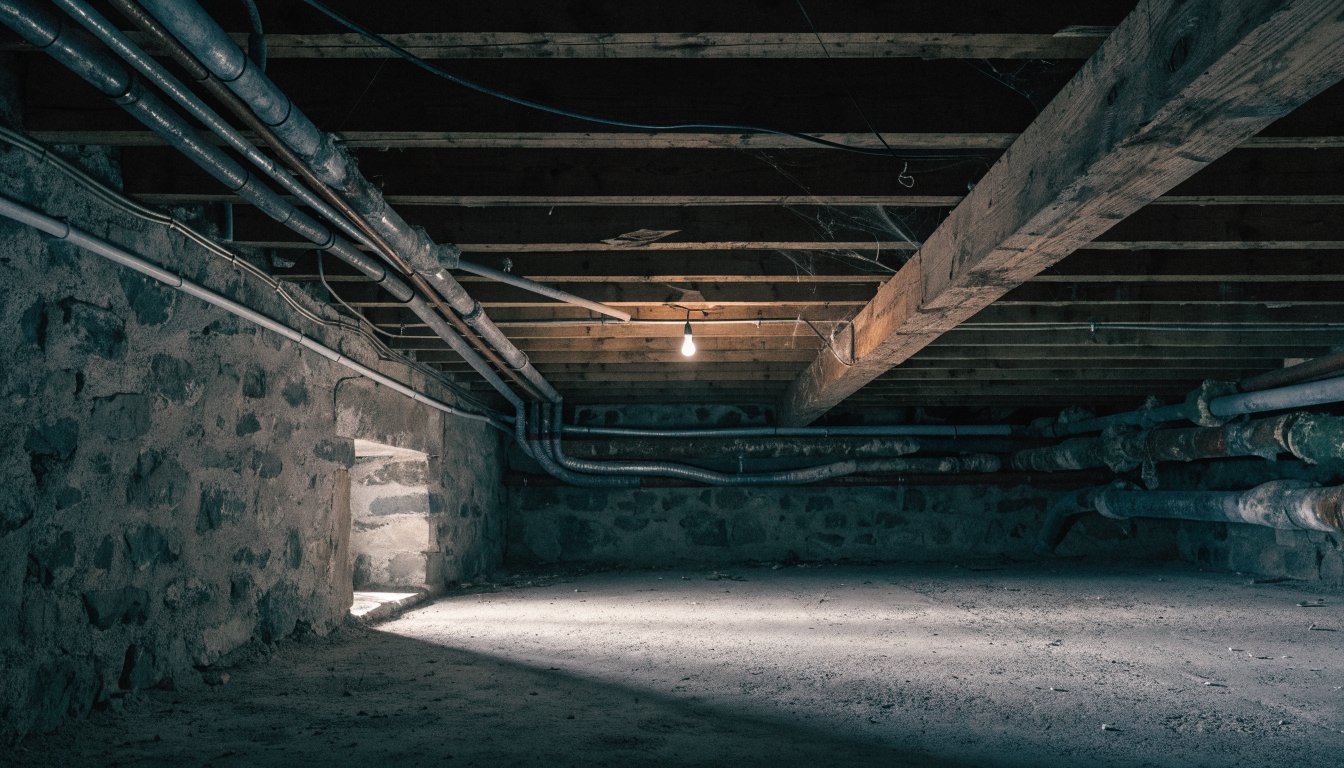
Three published rules define the risk. TSSA states that an underground storage tank “must be removed … within three years of disuse” under the Fuel Oil Code. Section 7(4) of O. Reg. 213/01 provides that “No person shall supply fuel oil to an underground tank unless the underground tank is registered.” And TSSA states that “Owners of underground tanks are responsible for the costs of maintaining, upgrading, and removing their underground tanks and for cleaning up contamination.” Only a certified Petroleum Equipment Mechanic working for a TSSA-registered contractor may remove one, removal triggers an Environmental Assessment Report by a Qualified Person under O. Reg. 153/04, and a spill must be reported to the Spills Action Centre. Abandonment in place requires a variance.
A buried fuel oil tank is one of the few house problems that can cost more than the house is worth to fix. Three published lines explain the entire risk.
One. TSSA: “An underground storage tank must be removed … within three years of disuse” under the Fuel Oil Code. Two. O. Reg. 213/01, section 7(4): “No person shall supply fuel oil to an underground tank unless the underground tank is registered.” Three. TSSA: “Owners of underground tanks are responsible for the costs of maintaining, upgrading, and removing their underground tanks and for cleaning up contamination.”
Put together: a disused, unregistered buried tank is both non-compliant and entirely the owner’s financial problem — and after closing, that owner is you.
The rules, and who may touch a tank
O. Reg. 213/01 (Fuel Oil), made under the Technical Standards and Safety Act, 2000, defines an underground tank as “a buried tank or partially buried tank that is in direct contact with earth or backfill”, and a tank system as including “all piping, valves, fittings, pumps and other equipment associated with the tank”.
| Requirement | Source |
|---|---|
| Only a holder of a Petroleum Equipment Mechanic certificate may install, repair, service or remove an underground tank | O. Reg. 213/01, s.4(2) |
| Contractors working on fuel oil equipment must be registered with TSSA | TSSA |
| No person shall supply fuel oil to an unregistered underground tank | O. Reg. 213/01, s.7(4) |
| A distributor must have inspected the appliance or work at least once within the previous 10 years before supplying | O. Reg. 213/01, s.7(1) |
| A distributor must prepare and retain a report on each inspection until the next one | O. Reg. 213/01, s.7(2) |
| Unused underground tanks must be removed | TSSA — “Yes. Ontario regulations require you to remove an unused underground storage tank.” |
Abandonment in place is possible only by variance, supported by documentation under TSSA Advisory FS-175-10 R1. It is an exception, not a default.
Removal triggers an environmental report
TSSA states that an Environmental Assessment Report is required on a fuel spill or leak, the discovery of petroleum-related impacts, the removal of a tank or site closure, or a TSSA inspection order. The report “must be completed by a ‘Qualified Person,’ as defined in O. Reg. 153/04” and submitted to TSSA.
If a spill is found during removal, TSSA states you must also notify the Ministry of the Environment’s Spills Action Centre at 1-800-268-6060.
This is the part that turns a manageable job into an open-ended one. Removing the tank is a known, priced piece of work. What is not knowable in advance is whether the soil beneath it is contaminated, and remediation is the owner’s cost. That asymmetry is why an undiscovered buried tank is worth taking seriously at the offer stage rather than after closing.
What to check before you buy
- Look for the evidence. Fill and vent pipes near the foundation, capped lines in the basement, an old oil-fired furnace or its footprint, a disused chimney liner.
- Ask directly, in writing: has there ever been an underground fuel oil tank on this property; if so, was it removed; by whom; and is there documentation.
- Ask for the removal paperwork — a TSSA-registered contractor, and any Environmental Assessment Report by a Qualified Person.
- Check registration status if a tank is still in place. Underground tanks are registered through the TSSA Client Portal, and an unregistered tank cannot lawfully be supplied.
- Talk to your insurer. This is a known underwriting question and it is better answered before your conditions expire.
One reassuring note by contrast: on aboveground tanks TSSA states that “there is no age at which an approved aboveground tank must be replaced, as long as the tank is not leaking.” The buried tank is the problem, not oil heat as such.
Suspect there is a buried oil tank on a property you are buying?
This is one of the few findings where I would genuinely rather you slow down than push through, because the cost is unbounded in a way almost nothing else in a house purchase is. Removing a tank is a priced job; remediating the soil under it is not. Tell me what you have seen — fill pipes, capped lines, an old furnace footprint — and what the seller has said, and I will help you frame the questions and the condition. Investigation itself has to come from a TSSA-registered contractor.
[email protected] · 833-330-1925 · Book a free consultation
Confidential. Read personally and answered within 24 hours. I never share, sell or distribute your information.
Free tool — AI home value estimator
Instant Home Valuation
What’s your home
worth today?
Answer six quick questions and get an instant value range built from current Toronto & GTA sale data — property type, size, condition, lot and location all weighted the way a real pricing conversation weighs them. Takes about ninety seconds.
Reading recent GTA sale data…
Building your estimate
Estimated market value
—
$0–$0
Most likely value $0 · roughly $0 per square foot
What moved the number
Starting from the area baseline for your property type, here’s what each answer added or subtracted.
Market context
Recent local averages for comparison.
—
A range is a starting point.
A strategy is what sells.
This model doesn’t know that your neighbour’s identical semi went $80,000 over asking last month, or which two upgrades actually pay back in your area. That conversation is free and takes twenty minutes.
Frequently asked questions
Do I have to remove an unused underground oil tank in Ontario?
Yes. The Technical Standards and Safety Authority answers this directly: asked whether an unused underground storage tank must be removed, it states yes, Ontario regulations require removal. Its environmental review page states that an underground storage tank must be removed within two years of disuse under the Liquid Fuels Handling Code, or within three years of disuse under the Fuel Oil Code. Abandonment in place is possible only by variance, supported by documentation under TSSA Advisory FS-175-10 R1.
Who is allowed to remove an underground fuel oil tank?
Only a certified person working for a registered contractor. Section 4(2) of O. Reg. 213/01 provides that the holder of a certificate under O. Reg. 216/01, Petroleum Equipment Mechanics, may install, repair, service or remove an underground or aboveground tank within the scope of that certificate. TSSA states that by law all contractors working on fuel oil equipment such as underground tanks must be registered with TSSA, and that persons repairing, installing, removing and servicing underground tanks must also be trained and certified.
What happens if an underground tank is not registered?
It cannot lawfully be supplied with fuel. Section 7(4) of O. Reg. 213/01 states that no person shall supply fuel oil to an underground tank unless the underground tank is registered. Underground tanks are registered through the TSSA Client Portal using the Underground Fuel Oil Application Form. Separately, section 7(1) requires a distributor to have inspected the appliance or work at least once within the previous ten years, or under a quality assurance inspection program, before supplying fuel oil.
Who pays if the soil under a tank is contaminated?
The owner. TSSA states that owners of underground tanks are responsible for the costs of maintaining, upgrading and removing their underground tanks and for cleaning up contamination. TSSA also requires an Environmental Assessment Report on a fuel spill or leak, the discovery of petroleum-related impacts, the removal of a tank or site closure, or a TSSA inspection order, completed by a Qualified Person as defined in O. Reg. 153/04. If a spill is found during removal, TSSA states you must also notify the Ministry of the Environment Spills Action Centre at 1-800-268-6060.
How do I tell if a property has or had an underground oil tank?
Look for physical evidence: fill and vent pipes near the foundation, capped supply lines in the basement, an oil-fired furnace or the footprint of one, or a disused chimney liner. Ask the seller in writing whether there has ever been an underground fuel oil tank on the property, whether it was removed, by whom, and whether there is documentation. Where a tank was removed, ask for the paperwork from the TSSA-registered contractor and any Environmental Assessment Report. Where a tank remains, check its registration status.
Is an aboveground oil tank a problem?
It is a different question. TSSA states that there is no age at which an approved aboveground tank must be replaced, as long as the tank is not leaking, and advises contacting your fuel supplier if you notice an abnormal increase in oil consumption or suspect a leak. The removal-on-disuse and registration rules that create the real exposure attach to underground tanks.
Related reading
- Home inspection in Ontario: still not a licensed profession
- Radon in Ontario homes: the 91-day rule most tests fail
- Asbestos and vermiculite: what the rules actually require
- Knob-and-tube and aluminum wiring: neither is illegal
Sources
Every figure on this page traces to one of these, and each was read on 1 September 2026. Primary sources only — statute, regulation, and the government or agency that administers the rule. Where I could not verify something from a primary source, the page says so instead of guessing.
- O. Reg. 213/01, Fuel Oil, under the Technical Standards and Safety Act, 2000. Government of Ontario e-Laws, read 2 September 2026. Section 7(4) provides that no person shall supply fuel oil to an underground tank unless the underground tank is registered. Accessed 1 September 2026.
- Fuel oil — Technical Standards and Safety Authority. Technical Standards and Safety Authority, read 2 September 2026; the fuel oil guidance pages carry no publication date. State that an underground storage tank must be removed within three years of disuse under the Fuel Oil Code, and that owners are responsible for cleaning up contamination. Accessed 1 September 2026.
- What to know before buying a home — Government of Ontario. Government of Ontario, page updated 28 July 2026. States that “At this time, Ontario does not have mandatory requirements for home inspectors”, that a home inspection “is not a pass or fail test”, that “an inspector cannot see or find everything” and does not provide warranties or guarantees, and that inspection fees typically range from $350 to $600. Accessed 1 September 2026.
About the author — Jatin Dua, Broker of Record
I’m the Broker of Record at RE/MAX Quantum Realty, 799 The Queensway in Etobicoke, and I work with buyers and sellers across the west GTA. I am not an inspector, an engineer, an electrician or a remediation contractor, and nothing on this page is a substitute for one.
What I can do is read the primary source and quote it accurately. Everything below comes from Health Canada, the Government of Ontario, a regulator or a municipality, with the date the source itself carries, so you can check it rather than take my word for it. Where a widely repeated claim turns out not to be in any official document, the page says so. [email protected] or 833-330-1925.