
Published 2 September 2026 · Updated 29 September 2026 · By Jatin Dua, Broker of Record, RE/MAX Quantum Realty
Not on land registered under the Land Titles Act, which is now almost all GTA land. Section 51(1) provides that no right or interest adverse to the registered owner “shall be acquired hereafter… by any length of possession or by prescription”. The Court of Appeal in Barbour v. Bailey, 2016 ONCA 98 held that any claim had to crystallize by the date the parcel converted. What had already matured before that date survives, because section 44(1) paragraph 2 keeps registered land subject to “any right of way, watercourse, and right of water, and other easements” unless the contrary is expressed on the register — and a converted LTCQ title expressly preserves rights arising from “length of adverse possession, prescription, misdescription or boundaries settled by convention”.
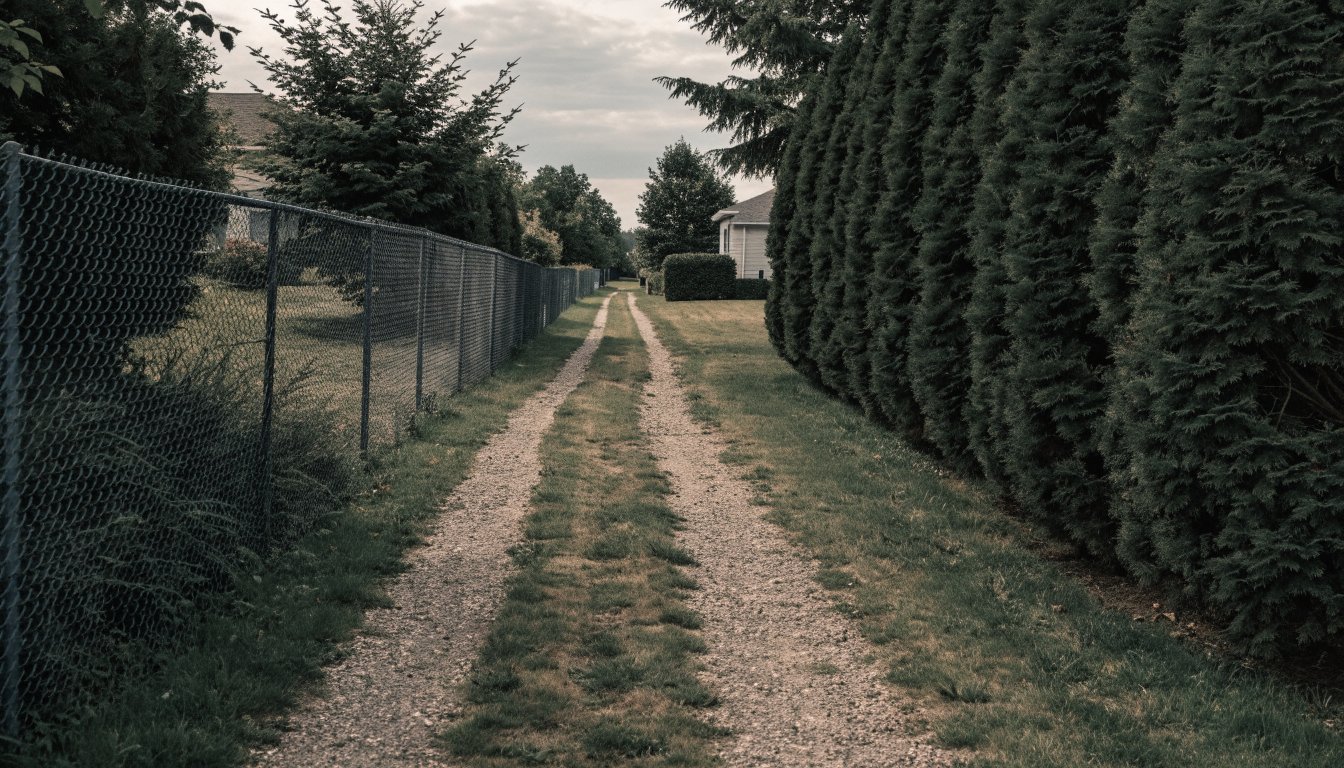
An easement is somebody else’s right to use part of your land. Most people meet one for the first time when a lawyer says the words “there’s a right of way over the side yard” two days before closing, or when a neighbour who has driven across the corner of the lot for thirty years says they are entitled to keep doing it.
Two rules do most of the work in Ontario. Section 51(1) of the Land Titles Act stops any new prescriptive right from arising over land registered under that Act — and virtually all GTA land now is. Section 44(1) paragraph 2 then preserves, unless the contrary is expressed on the register, “any right of way, watercourse, and right of water, and other easements” that already existed. So the question is almost never “can my neighbour build a claim from here?” It is “did one already exist before this parcel went into Land Titles?”
The four things every easement needs
The Court of Appeal for Ontario set them out in Barbour v. Bailey, 2016 ONCA 98 at paragraph 56, drawing on Depew v. Wilkes:
- a dominant tenement — land that gets the benefit;
- a servient tenement — land that carries the burden;
- the two must be owned by different people; and
- the right must be capable of forming the subject matter of a grant, and must actually accommodate the dominant land.
That fourth requirement is the one that defeats most homemade claims. A right has to benefit the land, not merely suit the person living on it.
How easements are created
| Route | Authority | What it means |
|---|---|---|
| Express grant or reservation | Conveyancing and Law of Property Act s. 15(1) | A conveyance, unless an exception is specially made, includes “ways, waters, watercourses, lights, liberties, privileges, easements, profits” and other appurtenances belonging to the land. Most easements you will meet are here — written, registered, and readable on the parcel register |
| By statute | Land Titles Act s. 40 (condominium); Drainage Act s. 2 | A condominium declaration creates easements “for all purposes to the same extent as if it had been created by a transfer”. A mutual agreement drain between adjoining owners becomes binding on successors on registration |
| By implication | Common law, not statute | Necessity, common intention, and the rule in Wheeldon v. Burrows. These are judge-made doctrines. There is no Ontario statute creating them, and I am not going to pretend otherwise |
| By prescription | Real Property Limitations Act s. 31 | Long use. See below — and see why it is largely a historical route in the GTA |
Prescription: twenty years, forty years, and the clock that stopped
Section 31 of the Real Property Limitations Act sets two periods. Enjoyment “without interruption for the full period of twenty years” means the claim cannot be defeated merely by showing the use began earlier. Enjoyment for the full period of forty years makes the right “deemed absolute and indefeasible, unless it appears that it was enjoyed by some consent or agreement expressly given or made for that purpose by deed or writing.”
Section 32 then does something people rarely expect. The period is the one immediately before the action in which the claim is raised — not any twenty years you can point to in the past. And nothing counts as an interruption “unless the same has been submitted to or acquiesced in for one year after the person interrupted has had notice thereof”.
What that means in practice. In Barbour v. Bailey the servient owner’s written objection did not interrupt the prescriptive period, because the claimants did not submit to it or acquiesce in it. A letter is not an interruption. Section 32 requires the interruption to be accepted for a year. If you want to stop a neighbour’s use from ripening, a letter on its own may achieve nothing — talk to a lawyer about what actually breaks the chain.
Two other things section 31 does not cover, and both surprise people:
- Light and air. Section 33: “No person shall acquire a right by prescription to the access and use of light or to the access and use of air to or for any dwelling-house, work-shop or other building”, except a right acquired by twenty years use before 5 March 1880. There is no such thing as a modern Ontario prescriptive right to a view or to sunlight.
- Wires and cables. Section 35: no easement in respect of wires or cables attached to, passing through or carried over property “shall be deemed to have been acquired or shall hereafter be acquired by prescription or otherwise than by grant from the owner”.
Section 34 adds that no presumption is allowed in favour of a claim on proof of use for any lesser period. The doctrine of lost modern grant does survive in Ontario — the Court of Appeal said so in 1043 Bloor Inc. v. 1714104 Ontario Inc., 2013 ONCA 91 at paragraph 56 — and it requires use that is “continuous, uninterrupted, open, and peaceful, for a period of 20 years” and, at paragraph 59, use as of right rather than by permission. A neighbour you gave permission to is building nothing.
Why prescription is mostly a historical question in the GTA
Section 51(1) of the Land Titles Act:
“Despite any provision of this Act, the Real Property Limitations Act or any other Act, no title to and no right or interest in land registered under this Act that is adverse to or in derogation of the title of the registered owner shall be acquired hereafter or be deemed to have been acquired heretofore by any length of possession or by prescription.”
Note that it covers both possession and prescription, and both title and any lesser “right or interest”. So it bars new prescriptive easements as squarely as it bars new possessory title.
The Court of Appeal put the consequence plainly in Barbour v. Bailey at paragraph 31: the two properties went into Land Titles on 10 September 2001, and “in consequence… any possessory claim or easement by Mrs. Bailey had to crystallize by September 10, 2001.” The date your parcel converted is the date the clock stopped.
What survived conversion — and what your parcel register says about it
Ontario moved most Registry properties into Land Titles administratively. The province’s own client guide is candid about what that process skipped:
“This administrative process does not involve owner applications, current surveys, service on adjoining or interested parties or a hearing process that would identify and resolve title disputes or adverse claims.”
Because nobody checked, the resulting titles carry qualifiers. A converted parcel shows LTCQ in the Estate/Qualifier field, and the standard wording preserves:
“The rights of any person who would, but for the Land Titles Act, be entitled to the land or any part of it through length of adverse possession, prescription, misdescription or boundaries settled by convention.”
The guide is explicit about the timing: the requirements “must have been completely met before title conversion. Time stops running when lands are converted to the land titles system.”
A wording correction worth making. The provincial guide repeatedly refers to “the Limitations Act”. For land, the governing statute is the Real Property Limitations Act — section 2(1)(a) of the Limitations Act, 2002 expressly excludes proceedings to which the Real Property Limitations Act applies, and section 51(1) of the Land Titles Act names the Real Property Limitations Act. The guide’s usage is loose. Do not repeat it to your lawyer.
There is a route out. Upgrading from LTCQ to LT+ deletes the possession qualifier: an LT+ register reads “subject to subsection 44(1) of the Land Titles Act, except paragraphs 3 and 14…”. But the guide requires a solicitor to certify that “to the best of my knowledge and belief, the applicant’s title is not subject to any claim based on adverse possession, prescription, misdescription or boundaries settled by convention” — which is exactly why an LT+ application usually requires a current survey.
The easements a GTA homeowner actually meets
| Type | Where it comes from | Note |
|---|---|---|
| Servicing and utility | Registry Act s. 114(1) defines a public utility easement as one for a water works or water supply system, sewage works, steam or hot water distribution, electrical generation, transmission or distribution, street lighting, natural or artificial gas works or supply, or a transportation system | These are registered. They will be on your parcel register and on the reference plan’s schedule of parts subject to easements |
| Hydro and telecom wires | RPLA s. 35 | Cannot arise by prescription at all — only by grant from the owner |
| Electricity and gas lines | Planning Act s. 50(3)(d) | Acquisition for a distribution line, transmission line or hydrocarbon line is exempt from subdivision control, on a declaration that is conclusive evidence of the purpose |
| Drainage | Drainage Act s. 2; Planning Act s. 50(10) | A mutual agreement drain binds successors once registered, and a section 2 agreement is outside subdivision control |
| Conservation | Planning Act s. 50(3)(h) | An easement or covenant under the Conservation Land Act is exempt from consent |
| Condominium | Land Titles Act s. 40 | A declaration creates easements as if by transfer. Section 40(4) prevents merger where an easement outside the property is transferred to the corporation as common elements. Section 40(8) gives the section retroactive effect |
| Mutual driveways | No statute uses the phrase | The word “mutual driveway” appears nowhere in the Land Titles Act, Registry Act, RPLA, Conveyancing and Law of Property Act, Boundaries Act or Planning Act. What you have depends entirely on your deed |
Does an easement ever go away?
Correcting a very common belief. There is no Ontario statutory provision that extinguishes an easement for non-use. The only extinguishment provision in the Real Property Limitations Act is section 15, and it extinguishes the title of a person who fails to sue for land within the limitation period — not an easement that has gone unused. Abandonment is a common-law doctrine that requires evidence of an intention to abandon, not mere disuse. Anyone who tells you “an unused easement lapses after X years” is quoting a number that does not exist in the statute.
What the statutes do provide:
| Mechanism | Provision | Effect |
|---|---|---|
| Registry system, 40-year expiry | Registry Act ss. 111, 113(1) | A registered claim — the definition expressly includes an easement — “expires at the end of that day unless a notice of claim has been registered”, forty years after the instrument that first created it |
| The carve-out | Registry Act s. 113(5)(a)(iv) | Part III does not apply to a claim “of a person to an unregistered right of way, easement or other right that the person is openly enjoying and using”. An unregistered right of way in active use does not expire |
| Land Titles, 40-year deemed expiry | Land Titles Act s. 119(9) | Applies to a condition, restriction or covenant with no expiry date. The word “easement” is not in it. Restrictive covenants can be deleted by the land registrar after forty years; easements cannot |
| Release | A registered instrument | The clean route. Both owners agree and it comes off title |
What to actually do
- Read the parcel register, not the listing. Registered easements are instruments on the register with numbers you can pull.
- Get the reference plan. Section 20(1)(f) of O. Reg. 43/96 requires a reference plan to include a list of all parts subject to easements, with the instrument numbers. Searching the Reference Plan Index on OnLand is free; the plan is $16.30.
- Check the qualifier. If the register says LTCQ, pre-conversion prescriptive and possessory rights are expressly preserved on your title.
- Ask what is actually happening on the ground. An easement on paper that nobody uses is a different problem from twenty years of a neighbour driving over your side yard with no paper at all.
- Do not rely on a letter to stop a use from ripening. Section 32 needs the interruption submitted to or acquiesced in for a year.
- Before you build over anything, confirm no servicing easement runs under it. Utilities do not negotiate with decks.
Found a right of way on the title two days before closing?
That is the usual timeline, and it is worse than it needs to be. Send me the parcel register and the reference plan and I will tell you what is actually registered against the property, what it burdens, and whether it touches the part of the lot you cared about. Then your lawyer can spend their time on the question that matters rather than on finding the documents.
[email protected] · 833-330-1925 · Book a free consultation
Confidential. Read personally and answered within 24 hours. I never share, sell or distribute your information.
Found a right of way on the title two days before closing?
Send me the parcel register and the reference plan and I will tell you what is actually registered and what part of the lot it touches.
[email protected] · 833-330-1925 · Book a free consultation
Confidential. Read personally and answered within 24 hours. I never share, sell or distribute your information.
Free tool — AI home value estimator
Instant Home Valuation
What’s your home
worth today?
Answer six quick questions and get an instant value range built from current Toronto & GTA sale data — property type, size, condition, lot and location all weighted the way a real pricing conversation weighs them. Takes about ninety seconds.
Reading recent GTA sale data…
Building your estimate
Estimated market value
—
$0–$0
Most likely value $0 · roughly $0 per square foot
What moved the number
Starting from the area baseline for your property type, here’s what each answer added or subtracted.
Market context
Recent local averages for comparison.
—
A range is a starting point.
A strategy is what sells.
This model doesn’t know that your neighbour’s identical semi went $80,000 over asking last month, or which two upgrades actually pay back in your area. That conversation is free and takes twenty minutes.
Frequently asked questions
Can a neighbour still get a right of way over my land by long use in Ontario?
Not if the land is registered under the Land Titles Act. Section 51(1) provides that “no title to and no right or interest in land registered under this Act that is adverse to or in derogation of the title of the registered owner shall be acquired hereafter or be deemed to have been acquired heretofore by any length of possession or by prescription.” The Court of Appeal for Ontario applied this in Barbour v. Bailey, 2016 ONCA 98 at paragraph 31: because the properties converted into Land Titles on 10 September 2001, any possessory claim or easement had to crystallize by that date. What matters is therefore whether a right had already matured before your parcel converted, not whether the use has continued since.
How long does it take to establish a prescriptive easement in Ontario?
Section 31 of the Real Property Limitations Act sets twenty years for a claim that cannot be defeated merely by showing earlier enjoyment, and forty years for a right that is “deemed absolute and indefeasible, unless it appears that it was enjoyed by some consent or agreement expressly given or made for that purpose by deed or writing.” Section 32 requires the period to be the one immediately before the action in which the claim is raised. The Court of Appeal in 1043 Bloor Inc. v. 1714104 Ontario Inc., 2013 ONCA 91 at paragraph 57 described the required use as continuous, uninterrupted, open and peaceful for twenty years, and at paragraph 59 as of right rather than permissive. On Land Titles land, section 51(1) of the Land Titles Act bars the claim regardless.
Does a letter to my neighbour stop a prescriptive claim?
Not by itself. Section 32 of the Real Property Limitations Act provides that no act or other matter is deemed an interruption “unless the same has been submitted to or acquiesced in for one year after the person interrupted has had notice thereof”. In Barbour v. Bailey the Court of Appeal held at paragraphs 66 and 67 that a servient owner’s written objection did not interrupt the period because the claimants did not submit to it or acquiesce in it. If you want to stop a use from ripening, take advice on what actually breaks the chain rather than relying on correspondence.
Is there a right to light or a view in Ontario?
No. Section 33 of the Real Property Limitations Act provides that “no person shall acquire a right by prescription to the access and use of light or to the access and use of air to or for any dwelling-house, work-shop or other building”, with a saving only for a right acquired by twenty years use before 5 March 1880. Separately, section 35 provides that no easement in respect of wires or cables can be acquired by prescription, only by grant from the owner.
Does an easement expire if nobody uses it?
There is no Ontario statutory provision extinguishing an easement for non-use. The only extinguishment provision in the Real Property Limitations Act is section 15, which extinguishes the title of a person who fails to bring an action to recover land within the limitation period. Abandonment is a common-law doctrine requiring evidence of an intention to abandon, not mere disuse. Note also that section 119(9) of the Land Titles Act, which deems a condition, restriction or covenant to expire forty years after registration, does not mention easements. In the Registry system, section 113(1) of the Registry Act expires a registered claim, including an easement, forty years after the instrument that created it unless a notice of claim is registered — but section 113(5)(a)(iv) exempts a claim to an unregistered right of way or easement “that the person is openly enjoying and using”.
How do I find out what easements are registered against my property?
Pull the parcel register from OnLand: $36.50 for the first page and $2.56 for each additional page. Registered easements appear as instruments with numbers you can order for $3.39 each. Then pull the reference plan — section 20(1)(f) of O. Reg. 43/96 requires a reference plan to include a list of all parts subject to easements and the instrument numbers of those easements. Searching the Reference Plan Index on OnLand is free; the plan itself is $16.30. What none of that shows is an unregistered right someone is exercising on the ground, which is what a current Surveyor’s Real Property Report is for.
Related reading
- Who Owns the Beach? Riparian Rights, Shore Road Allowances and Water Lots in Ontario
- Fence Disputes With Neighbours in Ontario: Boundaries, Costs and By-laws
- Surveys and SRPRs: what title insurance will not fix
- Mutual driveways in Etobicoke and Toronto
- Encroachments and possessory claims under Land Titles
- Heritage designation under the Ontario Heritage Act
Sources
Every figure on this page traces to one of these, and each was read on 1 September 2026. Primary sources only — statute, regulation, and the government or agency that administers the rule. Where I could not verify something from a primary source, the page says so instead of guessing.
- Land Titles Act, R.S.O. 1990, c. L.5 — Ontario e-Laws. Section 44(1) paragraphs 2 and 3 (registered land remains subject to rights of way and other easements, and to any title or lien acquired by possession or improvements by an adjoining owner, unless the contrary is expressed on the register); section 44(3); section 51 (no title by adverse possession or prescription against land registered under the Act); section 140(2) (the description of registered land is not conclusive as to boundaries or extent); sections 32(3), 36, 39, 40, 47, 54 to 59 (Land Titles Assurance Fund), 150. Consolidation in force from 17 August 2026. Read 2 September 2026. Accessed 1 September 2026.
- Real Property Limitations Act, R.S.O. 1990, c. L.15 — Ontario e-Laws. Section 4 (ten-year limitation on an action to recover land), section 15 (the right and title of the person barred is extinguished), section 30 (profits, thirty and sixty years), section 31 (twenty and forty years for a way or other easement), section 32 (how the period is calculated and what counts as an interruption), section 33 (no prescriptive right to light or air), section 35 (no prescriptive easement for wires or cables). Read 2 September 2026. Accessed 1 September 2026.
- Conveyancing and Law of Property Act, R.S.O. 1990, c. C.34 — Ontario e-Laws. Section 15(1) provides that every conveyance of land, unless an exception is specially made, includes “ways, waters, watercourses, lights, liberties, privileges, easements, profits” and other appurtenances belonging to the land. Read 2 September 2026. Accessed 1 September 2026.
- Limitations Act, 2002, S.O. 2002, c. 24, Sched. B — Ontario e-Laws. Section 2(1)(a): the Act applies to claims pursued in court proceedings other than proceedings to which the Real Property Limitations Act applies. This is why land claims are governed by the older statute. Read 2 September 2026. Accessed 1 September 2026.
- Registry Act, R.S.O. 1990, c. R.20 — Ontario e-Laws. Sections 80 and 81 govern when a reference plan must be deposited before an instrument can be registered. Read 2 September 2026. Accessed 1 September 2026.
- Drainage Act, R.S.O. 1990, c. D.17 — Ontario e-Laws. Section 2 permits adjoining owners to enter a written mutual agreement drain, and section 2(3) makes it binding on heirs, successors and assigns once registered in the proper land registry office. Read 2 September 2026. Accessed 1 September 2026.
- Planning Act, R.S.O. 1990, c. P.13 — Ontario e-Laws. Section 50 governs subdivision control and consents. Section 50(3) sets out the exceptions, including 50(3)(d) for electricity distribution, transmission and hydrocarbon lines and 50(3)(h) for a Conservation Land Act easement or covenant; section 50(10) exempts an agreement under section 2 of the Drainage Act. Read 2 September 2026. Accessed 1 September 2026.
- O. Reg. 43/96, Surveys, Plans and Descriptions of Land — Ontario e-Laws. Section 1 defines “reference plan”; section 19(1) requires a reference plan to be prepared from a current survey; section 20(1) sets the numbered PARTS and the schedule; section 21(3) requires the plan number to carry the land registry office number as a prefix followed by “R”. Consolidation period 27 July 2026, last amendment O. Reg. 254/26; contains provisions not in force until 1 January 2027. Read 2 September 2026. Accessed 1 September 2026.
- Land Titles Conversion Qualified (LTCQ) and Land Titles Plus client guide — ServiceOntario. Explains that administrative conversion from Registry to Land Titles “does not involve owner applications, current surveys, service on adjoining or interested parties or a hearing process”, that LTCQ titles remain subject to paragraph 44(1)3 of the Land Titles Act, and sets out the standard parcel register qualifiers in Appendix N. Page states Updated: June 03, 2026. Read 2 September 2026. Accessed 1 September 2026.
- Barbour v. Bailey, 2016 ONCA 98 — Court of Appeal for Ontario. Released 4 February 2016. Paragraph 56 sets out the four essential characteristics of an easement. Paragraph 63 states that use must run for twenty years immediately before the action. Paragraphs 66 and 67 apply the one-year acquiescence rule in section 32. Paragraph 31 states that after transfer into Land Titles it is no longer possible to acquire possessory title, subject to grandfathering, so any claim had to crystallize by the conversion date. Paragraph 97 confines a prescriptive easement to the actual use made. Read from the Court of Appeal’s own site on 2 September 2026; CanLII blocks automated retrieval. Accessed 1 September 2026.
- 1043 Bloor Inc. v. 1714104 Ontario Inc., 2013 ONCA 91 — Court of Appeal for Ontario. Released 14 February 2013. Paragraph 56 holds that the doctrine of lost modern grant survives in Ontario and is the foundation for prescriptive easements. Paragraph 57: the claimant must show use and enjoyment under a claim of right that is continuous, uninterrupted, open and peaceful for twenty years. Paragraph 59: the use must be as of right, not permissive. Read from the Court of Appeal’s own site on 2 September 2026. Accessed 1 September 2026.
- Payment and pricing — OnLand help centre. OnLand is operated by Teranet Property and Registration Services. Plans $16.30; parcel register first page $36.50; additional page $2.56; retrieve map $5.65; documents $3.39. The Reference Plan Index and the Subdivision Plan Index are shown at no charge. Read 2 September 2026. Accessed 1 September 2026.
- Bulletin 2025-07, Land services fee changes effective November 3, 2025 — Ontario Land Registration. The current statutory tariff. Plans viewing and copying $16.30; email copies of plans $16.30 each; copy of parcel register including first page $36.50; registration or deposit of an instrument or plan in electronic format $85.00; registration of a plan under the Boundaries Act $0. Signed by Dan Petoran, Director of Land Registration. Read 2 September 2026. Accessed 1 September 2026.
About the author — Jatin Dua, Broker of Record
I’m the Broker of Record at RE/MAX Quantum Realty, 799 The Queensway in Etobicoke, and I work with buyers and sellers across the west GTA. Boundaries, easements and the paper record behind a lot are the part of a deal that almost nobody looks at until it is a problem — and by then the fence is built, the addition is framed, or the closing is a week away.
I am not a lawyer and I do not read title. What I can do is quote the statute, the regulation and the municipality accurately, with the section number and the date the source carries, so you know what question to put to your lawyer or your surveyor. Where a figure is simply not published anywhere, this page says so rather than inventing one. [email protected] or 833-330-1925.