
Published 2 September 2026 · Updated 29 September 2026 · By Jatin Dua, Broker of Record, RE/MAX Quantum Realty
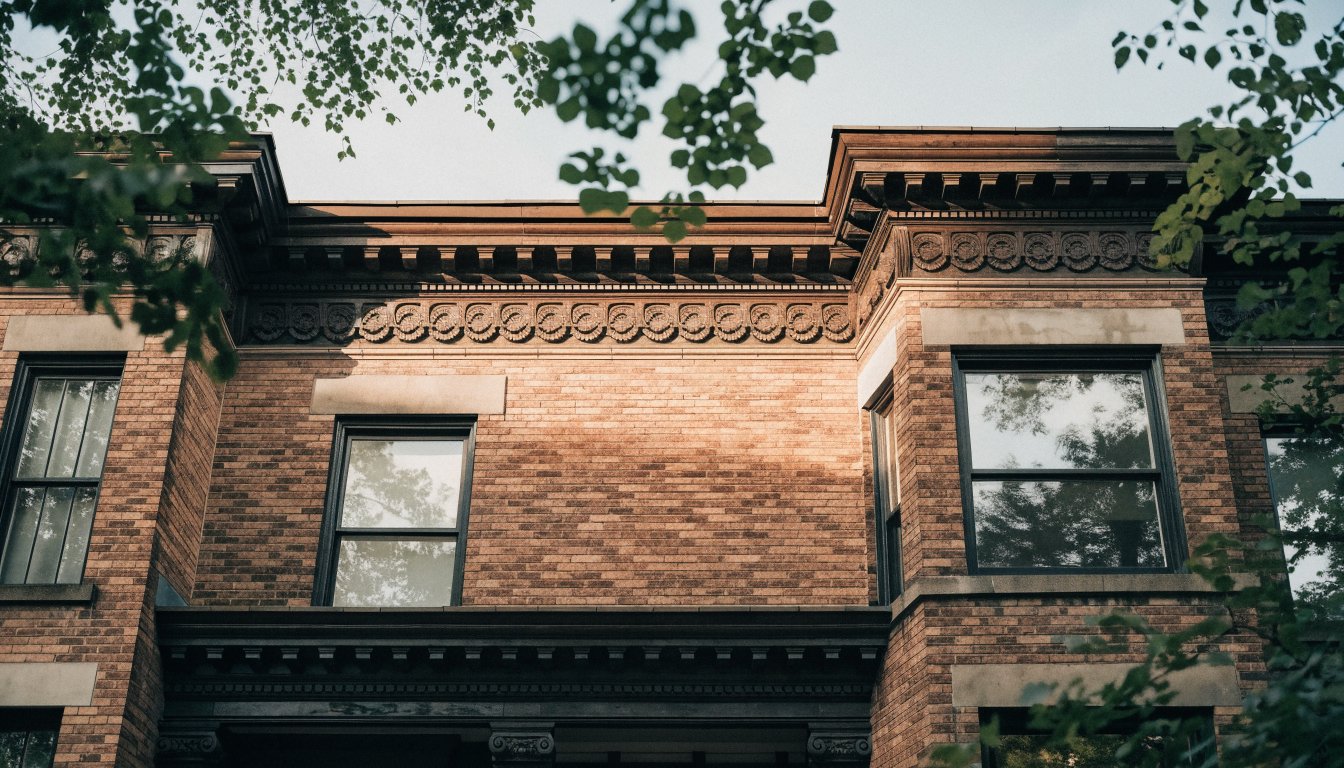
No. A listing is invisible on title; a designation is not. Section 29(12)(b) of the Ontario Heritage Act requires a Part IV designating by-law to be registered “against the properties affected by the by-law in the appropriate land registry office”, so a designation appears on the parcel register. Nothing in section 27 requires a listing to be registered anywhere, so a listed property looks clean on a title search — and a pending notice of intention to designate is not registered either, even though section 30 voids existing alteration and demolition permits from the day it is given. The only reliable check is the municipality’s own register, plus a written status confirmation; in Toronto that costs $60.00 and expressly covers property “listed, designated or being considered”.
There is a deadline coming that will change the heritage status of thousands of Toronto properties, and almost nobody buying or selling a house knows about it.
1 January 2027. Under section 27(16) of the Ontario Heritage Act, a municipality must remove a legacy-listed property from its register if it has not given a notice of intention to designate on or before that date. The City of Toronto states on its own page that approximately 4,000 properties are currently listed on its Heritage Register and that those not designated before the deadline will be removed. Between now and then, some of them will be designated instead — which is a permanent change to what an owner may do with the building.
Listed is not designated. The difference is the whole subject.
| Listed (s. 27) | Designated (s. 29, Part IV) | |
|---|---|---|
| What it is | Council believes the property has cultural heritage value or interest and has put it on the municipal register | Council has passed a by-law after a formal process |
| Criteria required | One or more of the nine criteria in O. Reg. 9/06 s. 1(2) | Two or more, for a notice of intention given on or after 1 January 2023 (O. Reg. 9/06 s. 2(3)) |
| On title? | No. Nothing in section 27 requires registration. Invisible to a title search | Yes. Section 29(12)(b) requires the by-law to be registered against the properties affected |
| Permit needed to alter? | No | Yes, where the alteration is likely to affect the heritage attributes (s. 33) |
| Demolition | 60 days’ written notice to council under s. 27(9) | Consent required under s. 34, which council may refuse |
| Time limit | Two years from listing under s. 27(15), for properties listed on or after 1 January 2023 | Permanent, unless repealed |
Section 27(1.1) requires the clerk to ensure the register is accessible to the public on the municipality’s website. Section 27(5) requires notice to the owner within 30 days of listing. Section 27(12) requires the clerk to issue extracts from the register to any person on payment of the fee set by by-law.
The 60-day demolition notice, and the gap in it
Section 27(9): the owner of a listed property shall not demolish or remove a building or structure “unless the owner gives the council of the municipality at least 60 days notice in writing of the owner’s intention”.
But section 27(10) limits it: subsection (9) applies only if the property was listed before any application was made for a demolition permit under the Building Code Act, 1992. Listing after a demolition application does not engage the 60 days.
The two clocks — and the mistake almost every article makes
“All listed properties must be designated by 1 January 2027” is wrong. There are two different rules, and which one applies depends on when the property was listed.
| Which property | Provision | The deadline |
|---|---|---|
| Listed on or after 1 January 2023 | s. 27(15) | Council must remove it if no notice of intention to designate is given on or before the second anniversary of the day it was included in the register. A rolling two-year clock, unique to each property |
| On the register as of 31 December 2022 (legacy listings) | s. 27(16) | Council must remove it if no notice of intention to designate is given on or before 1 January 2027 or such later date as may be prescribed |
The 1 January 2027 date is not the original one. Bill 23, the More Homes Built Faster Act, 2022, created the rule in force from 1 January 2023 with a deadline expressed as the second anniversary of that date — that is, 1 January 2025. Bill 200, the Homeowner Protection Act, 2024, Schedule 2, subsection 1(1), then struck out “2025” and substituted “2027 or such later date as may be prescribed”. It came into force on Royal Assent, 6 June 2024. The province’s own Environmental Registry decision notice records the change.
Has a later date been prescribed? Not as at the e-Laws currency date of 28 August 2026. O. Reg. 385/21 is the only general regulation under the Act and contains no such provision. But the enabling words are there, so treat 1 January 2027 as the date unless the Minister prescribes a later one.
And there is a consequence to removal. Section 27(18): where removal is required, council may not list the property again for five years. Bill 200 extended a five-year lockout to voluntary removals too.
How a property gets designated
| Step | Provision | Timing |
|---|---|---|
| Consult the municipal heritage committee | s. 29(2) | Before giving notice, where a committee exists |
| Notice of intention to designate | s. 29(3) | Served on the owner and the Ontario Heritage Trust, and published in a newspaper of general circulation |
| Objection | s. 29(5) | Within thirty days after the date of publication, a notice of objection served on the clerk setting out the reason and all relevant facts |
| Council decides the objection | s. 29(6) | Within 90 days after the end of the 30-day period |
| By-law passed | s. 29(8) para. 1 | Within 120 days after the date of publication of the notice of intention |
| Miss it | s. 29(9), (10) | The notice is deemed withdrawn — but council may give a new one |
| Appeal | s. 29(8) para. 4, s. 29(11) | Any person may appeal the by-law to the Ontario Land Tribunal within thirty days of publication |
The trap for anyone mid-transaction. Section 30(1): any permit allowing alteration or demolition — including a building permit — issued before the notice of intention was served and published becomes void on the day the notice is given. Section 30(2) applies the sections 33 and 34 permit regime from that same day, “as though the designation process were complete”. A property can be under full heritage control with a clean parcel register and a building permit that has just stopped being worth anything.
The 90-day rule that protects a development application
Section 29(1.2) limits when a municipality can start designating. Where a prescribed event has occurred:
- if the event occurs on or after 1 January 2023, council may give a notice of intention to designate only if the property was already listed on the register as of the date of the event; and
- council may not give a notice of intention after 90 days have elapsed from the event.
The prescribed events, under section 1(1) of O. Reg. 385/21, are the completion of statutory Planning Act notice of: a request for an official plan amendment (clause 22(6.4)(a)), an application for a zoning by-law amendment (clause 34(10.7)(a)), or an application for a plan of subdivision (clause 51(19.4)(a)).
Note what is not on that list: site plan control and minor variance applications are not prescribed events, so they do not start the clock.
Section 1(2) sets five exceptions — the owner and council can agree the restriction does not apply, or agree an extension within the 90 days; a declared municipal emergency suspends or restarts the period; and the bar ends at the date of final disposition of the application.
Altering a designated property: section 33
Section 33(1) requires council’s written consent to alter the property “if the alteration is likely to affect the property’s heritage attributes” as set out in the registered by-law. That limit matters: work that does not touch a listed attribute does not need consent.
| Rule | |
|---|---|
| Decision | Council shall consent, consent on terms and conditions, or refuse, and serve notice on the owner and the Ontario Heritage Trust (s. 33(6)) |
| The clock | 90 days after the notice of complete application is served (s. 33(7) para. 1). If no completeness notice is served within 60 days of the application commencing, the period is 90 days after the end of that 60 days — an effective 150-day backstop (para. 2) |
| Failure to decide | Council is deemed to have consented (s. 33(8)) |
| Appeal | The owner may appeal a conditional consent or a refusal to the Ontario Land Tribunal within 30 days after receipt of the notice (s. 33(9)). Note: only the owner, unlike section 29(11) where any person may appeal |
| Tribunal powers | Dismiss, or order the municipality to consent without conditions or with conditions the Tribunal specifies (s. 33(11)) |
| Places of worship | Since 1 July 2024, council shall consent without terms or conditions where the building is primarily used for religious practices, the attributes are connected to those practices, the alteration is required for them, and an affidavit is filed (s. 33(18) to (26)). Section 33(19) confirms religious practices include Indigenous religious or spiritual practices |
Demolition: section 34
Section 34(1) requires consent to demolish or remove any of the heritage attributes, and separately to demolish or remove a building or structure on the property, whether or not the demolition would affect the heritage attributes. That second limb is broad.
The machinery mirrors section 33 — a 90-day clock under section 34(4.3), deemed consent on a failure to notify under section 34(4.4), and an owner’s appeal to the Tribunal within 30 days under section 34.1. One difference: section 34(4.2) also requires council to publish its decision in a newspaper having general circulation in the municipality.
Does designation prevent demolition? No — it regulates it. The Ministry of Citizenship and Multiculturalism puts it as: designation “gives council the power to refuse an application for the demolition or removal”. The City of Toronto says conservation “helps shape change, not prevent it”. And the statute itself proves the point: council’s failure to decide is deemed consent, and the Tribunal may order the municipality to consent.
Equally, the old advice is out of date. Anyone who tells you designation is “only a 180-day delay” is describing the pre-2005 regime. That language survives only as transitional text. Since the 2005 amendments council can refuse outright, subject to the Tribunal appeal.
Heritage conservation districts are a different regime again
Under Part V, section 42(1), no owner in a designated district may do any of the following without a permit from the municipality:
- alter any part of the property, other than the interior of a structure or building;
- erect any building or structure on the property;
- demolish or remove an attribute that would affect a heritage attribute described in the district plan;
- demolish or remove a building or structure on the property.
The contrast with Part IV is sharp. Inside a district the permit requirement is triggered by any exterior alteration and any new erection — it does not turn on whether specific heritage attributes are affected. Interiors are expressly excluded. Section 42(2) exempts “such minor alterations or classes of alterations as are described in the heritage conservation district plan”, so the district plan itself is the operative document and it varies from district to district.
Section 42(4) gives council 90 days from serving the notice of receipt; section 42(5) deems the permit given if council does not act; and section 42(6) and (7) give the owner 30 days to appeal to the Tribunal. Section 41(1)(b) and section 3(2) of O. Reg. 9/06 require that at least 25 per cent of properties in a proposed district satisfy two or more of the criteria.
How to actually check a property — and why a title search is not enough
A Part IV designation by-law is registered against the affected PIN under section 29(12)(b) or 29(19), so it turns up on a parcel register. Three things do not:
| What | Why it is invisible on title |
|---|---|
| A listing | Nothing in section 27 requires any registration. A listed property is invisible to a title search |
| A heritage conservation district | Section 41(10.1) requires the by-law to be registered “in the appropriate land registry office” — notably not the “against the properties affected” wording used for Part IV. Whether Toronto’s district by-laws appear on every individual parcel register is a matter of local practice, and I could not verify it from a primary source |
| A pending notice of intention | It is served and published under section 29(3) but there is no registration requirement — while section 30 has already voided existing permits and applied the full permit regime |
So do three searches, not one:
- The parcel register, for a registered designating by-law.
- The municipal register. Toronto’s Heritage Property Search is described by the City as “the most up-to-date way of confirming whether a property is on the Heritage Register”, and searches by address, ward, building type, architect, construction year or district name. There is also a map and an open data extract.
- A written status confirmation from the municipality. In Toronto this is reference number 51 in Chapter 441, Appendix C, Schedule 13: $60.00 for “requests for formal confirmation re: property listed, designated or being considered re: OHA”. That last phrase is why it is worth the money — it catches the pending notice of intention that neither of the first two searches finds.
Two honest caveats on that $60.00. The appendix I read carries a page footer of 1 April 2024 while the body of Chapter 441 is footered 22 May 2025, and I could not locate a later published appendix. The item is flagged “annual adjustment: no”, which makes it more likely than most to still be current — but confirm it. And separately: I searched the full text of Chapter 441 and all 88 pages of Appendix C and found no line item at all for a heritage permit application fee. Toronto’s Heritage Permit Guide is silent on fees too. I am not going to tell you a heritage permit is free; I am telling you the fee is not published where the other fees are.
Outside Toronto, the Ontario Heritage Trust maintains a province-wide searchable register under section 23 of the Act. But it covers designated properties only. There is no province-wide search for listed properties — those live on each municipality’s own register.
What this means if you are buying or selling
- Search the municipal register before you write the offer, not after. A listing does not appear on title.
- If it is listed, ask whether the municipality intends to designate. With roughly 4,000 Toronto properties facing 1 January 2027, that question has a real answer right now.
- If it is designated, get the by-law and read the description of heritage attributes. Section 33 only bites on alterations likely to affect those.
- If it is in a district, get the district plan. The exemptions for minor alterations are defined there and nowhere else.
- Never assume a clean parcel register means no heritage issue. Spend the $60.00.
- If you are planning a rezoning or severance, remember section 29(1.2): the property has to have been listed already, and council has only 90 days from the statutory notice.
Buying a house that turns out to be on the Heritage Register?
The first question is whether it is listed or designated, because they are completely different situations and only one of them shows on title. The second is whether the municipality has signalled an intention to designate — which, with the January 2027 deadline in front of us, is a live question for thousands of Toronto properties. Send me the address and I will check the register and tell you which of the two you are actually dealing with before you firm up.
[email protected] · 833-330-1925 · Book a free consultation
Confidential. Read personally and answered within 24 hours. I never share, sell or distribute your information.
Buying a house that turns out to be on the Heritage Register?
Send me the address and I will check the register and tell you whether it is listed or designated before you firm up.
[email protected] · 833-330-1925 · Book a free consultation
Confidential. Read personally and answered within 24 hours. I never share, sell or distribute your information.
Free tool — AI home value estimator
Instant Home Valuation
What’s your home
worth today?
Answer six quick questions and get an instant value range built from current Toronto & GTA sale data — property type, size, condition, lot and location all weighted the way a real pricing conversation weighs them. Takes about ninety seconds.
Reading recent GTA sale data…
Building your estimate
Estimated market value
—
$0–$0
Most likely value $0 · roughly $0 per square foot
What moved the number
Starting from the area baseline for your property type, here’s what each answer added or subtracted.
Market context
Recent local averages for comparison.
—
A range is a starting point.
A strategy is what sells.
This model doesn’t know that your neighbour’s identical semi went $80,000 over asking last month, or which two upgrades actually pay back in your area. That conversation is free and takes twenty minutes.
Frequently asked questions
What is the difference between a listed and a designated heritage property in Ontario?
A listed property is one council believes to be of cultural heritage value or interest and has included on the municipal register under section 27(3) of the Ontario Heritage Act. It needs to meet one or more of the nine criteria in section 1(2) of O. Reg. 9/06, it is not registered on title, no heritage permit is required to alter it, and the only restriction is the sixty days written notice before demolition required by section 27(9). A designated property has been the subject of a by-law passed under section 29 after a formal process. Since 1 January 2023 a designation requires two or more of the nine criteria under section 2(3) of O. Reg. 9/06, the by-law is registered against the property in the land registry office under section 29(12)(b), and consent is required to alter heritage attributes under section 33 or to demolish under section 34.
What is the 1 January 2027 heritage deadline in Ontario?
Section 27(16) of the Ontario Heritage Act requires a municipality to remove a property from its register if it does not give a notice of intention to designate on or before 1 January 2027, or such later date as may be prescribed. It applies only to legacy listings, meaning properties on the register as of 31 December 2022. Properties listed on or after 1 January 2023 are governed by section 27(15) and get a rolling two-year clock from their own listing date. The original deadline was 1 January 2025; Schedule 2, subsection 1(1) of the Homeowner Protection Act, 2024 struck out “2025” and substituted “2027 or such later date as may be prescribed”, in force on Royal Assent, 6 June 2024. No later date had been prescribed as at the e-Laws currency date of 28 August 2026.
Can you demolish a designated heritage building in Ontario?
It is regulated, not prohibited. Section 34(1) requires council’s written consent to demolish or remove any heritage attribute, and separately to demolish or remove a building or structure on the property whether or not that would affect the heritage attributes. The Ministry of Citizenship and Multiculturalism describes designation as giving “council the power to refuse an application for the demolition or removal”, and the City of Toronto says heritage conservation “helps shape change, not prevent it”. Council has 90 days from the notice of complete application under section 34(4.3); if it fails to notify the owner in time, section 34(4.4) deems it to have consented. The owner may appeal a refusal or a conditional consent to the Ontario Land Tribunal within 30 days under section 34.1, and under section 34.1(5) the Tribunal may order the municipality to consent. Advice that designation is “only a 180-day delay” describes the pre-2005 regime and is out of date.
Does a heritage designation show up on a title search in Ontario?
A Part IV designation does. Section 29(12)(b) requires the clerk to ensure a copy of the by-law is registered “against the properties affected by the by-law in the appropriate land registry office”, and section 29(19) does the same where appeals have been resolved. Three things do not reliably show. A listing is not registered anywhere. A pending notice of intention to designate is served and published under section 29(3) but not registered, even though section 30(1) voids existing alteration and demolition permits from the day it is given. And a heritage conservation district by-law is required by section 41(10.1) to be registered “in the appropriate land registry office” rather than against the properties affected, so whether it appears on an individual parcel register is a matter of local practice.
How do I check if a Toronto property is on the Heritage Register?
Use the City’s Heritage Property Search, which the City describes as “the most up-to-date way of confirming whether a property is on the Heritage Register”. It searches by address, ward, building type, architect, construction year and heritage conservation district name. There is also a map-based Heritage Register Map and an open data extract. For anything material to a transaction, request a formal written confirmation: reference number 51 in Chapter 441, Appendix C, Schedule 13 of the Toronto Municipal Code is “requests for formal confirmation re: property listed, designated or being considered re: OHA” at $60.00 per request. The appendix I read is dated 1 April 2024, so confirm the current amount.
Can a municipality designate my property after I apply for a rezoning?
Only within tight limits. Section 29(1.2) of the Ontario Heritage Act provides that where a prescribed event occurs on or after 1 January 2023, council may give a notice of intention to designate only if the property was already listed on the register as of the date of the event, and may not give one after 90 days have elapsed from the event. The prescribed events under section 1(1) of O. Reg. 385/21 are the completion of statutory Planning Act notice of a request for an official plan amendment, an application for a zoning by-law amendment, or an application for a plan of subdivision. Site plan control and minor variance applications are not prescribed events. Section 1(2) sets exceptions, including agreement between the owner and council and the effect of a declared municipal emergency.
Related reading
- Port Dalhousie and St. Catharines lakefront homes
- Niagara-on-the-Lake waterfront homes
- Port Hope and Cobourg lakefront homes
- What $5 million and up buys on the GTA waterfront
- Southeast Oakville Lakefront Estates
- The Beach, Toronto
- Teardown or Renovate on a Lakefront Lot
- Old Oakville Lakefront Homes: What the Shoreline Actually Costs
- Surveys and SRPRs: what title insurance will not fix
- Easements and rights of way in Ontario
- Mutual driveways in Etobicoke and Toronto
- Encroachments and possessory claims under Land Titles
Sources
Every figure on this page traces to one of these, and each was read on 1 September 2026. Primary sources only — statute, regulation, and the government or agency that administers the rule. Where I could not verify something from a primary source, the page says so instead of guessing.
- Ontario Heritage Act, R.S.O. 1990, c. O.18 — Ontario e-Laws. Section 23 (the Trust’s register), section 27 (the municipal register, the 30-day notice of listing, the 60-day demolition notice for listed properties, the two-year rule in 27(15), the 1 January 2027 legacy deadline in 27(16) and the five-year lockout in 27(18)), section 29 (designation, the 30-day objection window, the 90-day decision, the 120-day by-law deadline and the appeal to the Ontario Land Tribunal), section 29(1.2) (the 90-day Planning Act limitation), section 30 (existing permits void on notice of intention), sections 33, 34 and 34.1 (alteration and demolition consents, the 90-day clock, deemed consent and appeals), sections 41 and 42 (heritage conservation districts and district permits). Consolidation in force from 1 April 2026; last amendment 2025, c. 11, Sched. 6. Read 2 September 2026. Accessed 1 September 2026.
- Homeowner Protection Act, 2024, S.O. 2024, c. 18 — Ontario e-Laws. Schedule 2, subsection 1(1) amended subsection 27(16) of the Ontario Heritage Act by striking out “2025” and substituting “2027 or such later date as may be prescribed”, and subsection 1(2) made the same change to paragraph 3 of subsection 27(18). The Schedule came into force on Royal Assent, 6 June 2024. Read 2 September 2026. Accessed 1 September 2026.
- More Homes Built Faster Act, 2022, S.O. 2022, c. 21 — Ontario e-Laws. Schedule 6, section 3(4) created the two-year limit on listing and the deadline for legacy listings, expressed as the second anniversary of the coming into force of that subsection. Schedule 6, section 4(2) created subsection 29(1.2). Both in force 1 January 2023. Read 2 September 2026. Accessed 1 September 2026.
- O. Reg. 9/06, Criteria for Determining Cultural Heritage Value or Interest — Ontario e-Laws. Section 1(2) sets nine criteria across design or physical value, historical or associative value and contextual value. A property may be listed if it meets one or more. Section 2(3) requires two or more criteria to designate under section 29 where the notice of intention is given on or after 1 January 2023. Section 3(2) requires at least 25 per cent of properties in a proposed heritage conservation district to satisfy two or more criteria. Consolidation from 1 January 2023, last amended by O. Reg. 569/22. Read 2 September 2026. Accessed 1 September 2026.
- O. Reg. 385/21 (General) under the Ontario Heritage Act — Ontario e-Laws. Section 1(1) prescribes the events that start the 90-day limitation in subsection 29(1.2): completion of notice under clause 22(6.4)(a) of the Planning Act for an official plan amendment request, clause 34(10.7)(a) for a zoning by-law amendment application, and clause 51(19.4)(a) for a plan of subdivision application. Section 1(2) sets the exceptions. Consolidation from 1 July 2024, last amendment O. Reg. 187/24. Read 2 September 2026. Accessed 1 September 2026.
- ERO notice 019-8738, proposed amendments to the Ontario Heritage Act — Environmental Registry of Ontario. The government’s own decision notice confirming that municipalities now have until 1 January 2027 to issue a notice of intention to designate, that the original threshold was 1 January 2025, and that Bill 200 received Royal Assent on 6 June 2024. Posted 27 May 2024, decision updated 21 June 2024. Read 2 September 2026. Accessed 1 September 2026.
- Designating heritage properties, part 2: the designation process — Ministry of Citizenship and Multiculturalism. Ministry guidance on the designation process; the thirty, ninety, one hundred and twenty and thirty day counts match the statute. Read 2 September 2026. Accessed 1 September 2026.
- Designating heritage properties, part 5: demolition control — Ministry of Citizenship and Multiculturalism. States that designation “gives council the power to refuse an application for the demolition or removal of a building, structure or heritage attribute on the property”, and sets out the application, the 90-day decision, deemed consent on a failure to decide, and the owner’s appeal to the Ontario Land Tribunal. Read 2 September 2026. Accessed 1 September 2026.
- Heritage Register — City of Toronto. Explains that listed properties are “not designated, but are believed to be of cultural heritage value or interest”, that owners of listed properties must give the City written notice at least sixty days before demolition, that designated properties “have a by-law registered on title”, and that conservation “helps shape change, not prevent it”. Identifies the Heritage Property Search tool as “the most up-to-date way of confirming whether a property is on the Heritage Register”. Read 2 September 2026. Accessed 1 September 2026.
- Heritage Property Search — City of Toronto. The City’s lookup tool. Searchable by address, ward, building type, architect, construction year, and heritage conservation district name. Read 2 September 2026. Accessed 1 September 2026.
- Heritage Register Review — City of Toronto. States that Council is required to state its intention by 1 January 2027 or a later date prescribed by the Minister, that the date was originally 1 January 2025 and was extended through the Bill 200 amendments, that approximately 4,000 properties are currently listed on the Heritage Register, and that listed properties not designated before the deadline will be removed from the Register. Page last updated 3 July 2026. Read 2 September 2026. Accessed 1 September 2026.
- Heritage Permit Guide — City of Toronto. Confirms that “the Ontario Heritage Act requires that decisions under S.33, S.34 and S.42 of the Act are made within 90 days of the date that the Notice of Complete Application has been served on the applicant”, and sets out the Toronto process. The page states no application fee. Read 2 September 2026. Accessed 1 September 2026.
- Toronto Municipal Code Chapter 441, Appendix C, Schedule 13, City Planning — City of Toronto. Reference number 51: “Requests for formal confirmation re: property listed, designated or being considered re: OHA”, $60.00 per request, flagged as not subject to annual adjustment. Reference number 49: expert research services, $135.00 an hour. No line item for a heritage permit application fee appears anywhere in the appendix. PDF page footer dated 1 April 2024. Read 2 September 2026. Accessed 1 September 2026.
- Ontario Heritage Act Register — Ontario Heritage Trust. The province-wide searchable database of properties designated under the Ontario Heritage Act, maintained under section 23 of the Act. It covers designated properties only; listed but non-designated properties appear on the individual municipality’s register alone. Read 2 September 2026. Accessed 1 September 2026.
- Planning Act, R.S.O. 1990, c. P.13 — Ontario e-Laws. Section 50 governs subdivision control and consents. Section 50(3) sets out the exceptions, including 50(3)(d) for electricity distribution, transmission and hydrocarbon lines and 50(3)(h) for a Conservation Land Act easement or covenant; section 50(10) exempts an agreement under section 2 of the Drainage Act. Read 2 September 2026. Accessed 1 September 2026.
About the author — Jatin Dua, Broker of Record
I’m the Broker of Record at RE/MAX Quantum Realty, 799 The Queensway in Etobicoke, and I work with buyers and sellers across the west GTA. Boundaries, easements and the paper record behind a lot are the part of a deal that almost nobody looks at until it is a problem — and by then the fence is built, the addition is framed, or the closing is a week away.
I am not a lawyer and I do not read title. What I can do is quote the statute, the regulation and the municipality accurately, with the section number and the date the source carries, so you know what question to put to your lawyer or your surveyor. Where a figure is simply not published anywhere, this page says so rather than inventing one. [email protected] or 833-330-1925.