
Published 2 September 2026 · Updated 29 September 2026 · By Jatin Dua, Broker of Record, RE/MAX Quantum Realty
Almost never, if the land is registered under the Land Titles Act. Section 51(1) provides that no title or interest adverse to the registered owner shall be acquired “hereafter” by any length of possession or by prescription, and the Court of Appeal held in Barbour v. Bailey, 2016 ONCA 98 that any claim had to crystallize by the date the parcel converted. Where ten years under section 4 of the Real Property Limitations Act had already run before that date, section 15 had already extinguished the paper owner’s title to the strip, and section 44(1) paragraph 3 preserves that on the converted register. So the question is a date on the parcel register, not the age of the fence. And you can never possess a municipal road allowance or boulevard: section 16 of the Real Property Limitations Act excludes them entirely.
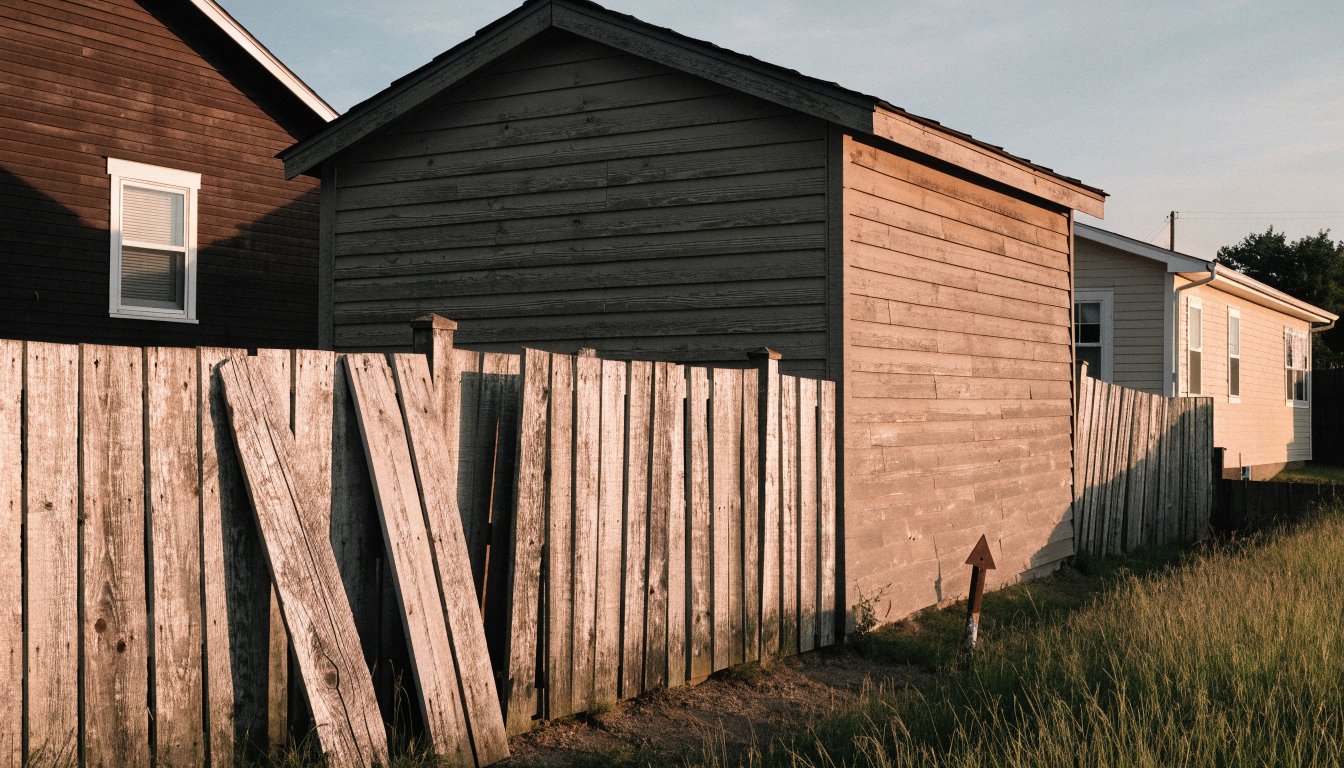
The fence has been in the same place since 1974. The survey says it is fourteen inches onto the neighbour’s land. Somebody is now selling, and a lawyer has to say something about it.
Almost everything written about this online describes the law as it applies to the old Registry system, where a squatter could acquire land by ten years of possession. In the GTA that is no longer how it works — and the date it stopped working is different for every parcel.
The three provisions. Section 4 of the Real Property Limitations Act gives the paper owner ten years to sue. Section 15 then extinguishes their title if they do not. And section 51(1) of the Land Titles Act says that once land is registered under that Act, no adverse title or interest can be acquired hereafter by possession or prescription. So a possessory claim in the GTA is a question about the past, not the present: had ten years already run before this parcel converted?
The ten years, and what happens at the end of them
Section 4 of the Real Property Limitations Act: no person shall make an entry or bring an action to recover any land or rent “but within ten years next after the time at which the right to make such entry… first accrued”. Section 5(1) fixes when the right accrues — “at the time of the dispossession or discontinuance of possession”.
Then section 15, which is the part people underestimate:
“At the determination of the period limited by this Act to any person for making an entry or distress or bringing any action, the right and title of such person to the land or rent… is extinguished.”
It is not merely that the owner loses the ability to sue. Their title to that strip is gone.
| Rule | Provision | Detail |
|---|---|---|
| The ordinary period | s. 4 | Ten years from dispossession or discontinuance of possession |
| The Crown | s. 3(1) | Sixty years, not ten |
| Municipal roads and boulevards | s. 16 | Sections 1 to 15 do not apply to a road allowance or land laid out as a public highway where the freehold is vested in the Crown or a municipal corporation. You cannot possess a Toronto boulevard, no matter how long the parking pad has been there |
| Restarting the clock | ss. 13, 14 | A written acknowledgment, or receipt of rent, restarts it |
The date the clock stopped
Section 51(1) of the Land Titles Act bars new claims — and it bars them broadly, covering both possession and prescription, and both title and any lesser “right or interest”. The Court of Appeal for Ontario applied it in Barbour v. Bailey, 2016 ONCA 98, at paragraph 31: the properties transferred into Land Titles on 10 September 2001, and therefore “any possessory claim or easement by Mrs. Bailey had to crystallize by September 10, 2001.”
Ontario’s own client guide says the same thing in one line: “Time stops running when lands are converted to the land titles system.”
So the operative question is a date. Not “how long has the fence been there”, but “had ten years of possession already run before the parcel was converted?” The conversion date is a fact on the parcel register. Pull it.
What is preserved on a converted title
Section 44(1) keeps registered land subject, unless the contrary is expressed on the register, to a list of things that are expressly declared not to be encumbrances. Two of them matter here:
2. Any right of way, watercourse, and right of water, and other easements.
3. Any title or lien that, by possession or improvements, the owner or person interested in any adjoining land has acquired to or in respect of the land.
Paragraph 3 is the encroachment paragraph, and it is the one printed on most converted Toronto titles. The LTCQ qualifier preserves “the rights of any person who would, but for the Land Titles Act, be entitled to the land or any part of it through length of adverse possession, prescription, misdescription or boundaries settled by convention”.
There is a way that paragraph can be defeated. Section 44(3) says a parcel is not subject to paragraph 3 if notice of the application for first registration, containing an accurate description, was served on the adjoining owner and no objection was filed in time. But the province’s own guide confirms that administrative conversion involved no “service on adjoining or interested parties”. Which is precisely why the paragraph 3 qualifier is still there.
Is there a statute for “my neighbour’s garage is over the line”?
No. The word “encroach” does not appear anywhere in the Conveyancing and Law of Property Act. I also searched the Land Titles Act, the Registry Act, the Boundaries Act and the Planning Act: zero occurrences in all of them. Ontario has no general encroachment statute.
The nearest thing is section 37 of the Conveyancing and Law of Property Act, and it is narrower than its reputation:
“Where a person makes lasting improvements on land under the belief that it is the person’s own, the person or the person’s assigns are entitled to a lien upon it to the extent of the amount by which its value is enhanced by the improvements, or are entitled or may be required to retain the land if the Superior Court of Justice is of opinion or requires that this should be done, according as may under all circumstances of the case be most just, making compensation for the land, if retained, as the court directs.”
Read the conditions. It requires a genuine mistaken belief of ownership. It gives the improver a lien, or lets the court order the improver to keep the land on paying for it. Appeal lies to the Divisional Court. It is a remedy for the person who built in error, not a mechanism for the neighbour who wants the structure gone.
The route that actually resolves it: the Boundaries Act
Where the dispute is genuinely about where the line runs, the mechanism is an application to the Director of Titles under section 3(1) of the Boundaries Act, supported by an up-to-date plan of survey and the surveyor’s field notes under section 4(1).
| Provision | Effect |
|---|---|
| s. 10 | The Director may order the removal of any monument that conflicts with a confirmed boundary |
| s. 13(2) | The certificate is conclusive that every notice, proceeding and act required by the Act was done |
| s. 15(1) | The confirmed boundaries “shall, despite any other Act, be deemed to be the true boundaries of the parcel” |
| s. 16(3) | A registered plan “supersedes all corresponding portions of all former registered plans and descriptions” |
| s. 11(1) | The applicant pays all costs of the application unless the Director orders otherwise |
| s. 12 | Appeal to the Divisional Court within thirty days of the mailing of the Director’s order |
One provision almost nobody mentions: section 56(1)(d) of the Land Titles Act lets an applicant under the Boundaries Act apply to the Director of Titles for financial assistance from The Land Titles Assurance Fund “in respect of the costs of and incidental to an application under that Act, including survey costs”. Section 56(2) lets the Director direct payment out of the Fund. Section 56(5) makes the amount unappealable. It is worth asking about before you assume the cost is entirely yours.
Possessory title, and what it is worth
Section 36(1) of the Land Titles Act allows an applicant entitled by length of possession to be registered as owner with a possessory title. Section 36(2) allows registration with an absolute title on a possession-based claim, subject to the approval of the Director of Titles.
Section 47(1) then tells you what a possessory title is actually worth: registration with a possessory title only “does not affect or prejudice the enforcement of any estate, right or interest adverse to or in derogation of the title of the first registered owner, and subsisting or capable of arising at the time of registration”. Everything adverse that existed at that date stays alive against it.
It can be upgraded: voluntarily under section 47(2), or after ten years from registration under section 47(3), on payment of the required fees. And section 51(2) is the one carve-out from the general bar — it protects a person already in possession when a first owner with possessory title only was registered. That is a narrow case: it does not apply where the first registered owner holds an absolute or qualified title.
Can the Assurance Fund pay you if you lose land?
The Land Titles Assurance Fund exists under Part V of the Land Titles Act. Section 54(2) requires it to be topped up from the Consolidated Revenue Fund whenever it falls below $1,000,000. Section 57(4) sets out entitlement. But for a boundary loss there are four statutory obstacles, and they are worth reading before anyone tells you the Fund is a backstop:
| Obstacle | Provision | What it says |
|---|---|---|
| The error must be the land registry office’s | s. 57(4)(a)(iii) | The misdescription, omission or other error must be “attributable to an officer appointed under this Act or their representative in a land registry office”. A surveyor’s error is not. A neighbour’s matured possessory claim is not |
| You must sue the person first | s. 57(4)(c) | You must be “unable under subsection (1) or otherwise to recover just compensation”. The personal remedy comes first |
| Your own neglect bars you | s. 59(1)(c) | No recovery “where the claimant has caused or substantially contributed to the loss by the claimant’s act, neglect or default”, and failing to register a caution or notice to protect an unregistered right is deemed neglect |
| Pre-conversion interests | s. 57(2) | No compensation for an interest existing when the land was brought under the Act unless it was registered under the Registry Act or notice was given to the land registrar before first registration |
The limitation period is six years. Section 57(5.1): an application must be made “within six years from the time of having suffered the loss”, or from the date a minority or incapacity ceased. Section 57(10) gives thirty days to serve a notice of intention to appeal the Director’s determination.
And a hard point about LTCQ. Where the register itself carries the qualifier preserving rights arising from “length of adverse possession, prescription, misdescription or boundaries settled by convention”, it is doubtful the registered owner has been wrongfully deprived of anything at all — the title disclosed the risk on its face. Whether the Fund has ever actually paid on a boundary-error claim of this kind, I could not verify: I found no published statistics and no published decisions of the Director of Titles on the point. I am not going to tell you it will pay.
What to do when a survey shows an encroachment
- Establish the conversion date. Pull the parcel register. If the parcel went into Land Titles thirty years ago, ask whether ten years had already run before then.
- Read the qualifier. LTCQ preserves pre-conversion possessory rights. LT+ has had them removed. Absolute title is a different conversation again.
- Work out which direction it runs. Your structure onto them, or theirs onto you, changes who has the problem and who has the remedy.
- Check whether it is a road allowance. Section 16 of the RPLA means possession claims against a municipal boulevard go nowhere.
- Get advice on section 37 of the CLPA if lasting improvements were built in a genuine belief of ownership. It is a compensation regime, not an eviction one.
- Consider a Boundaries Act application if the line itself is in doubt — and ask about section 56 assistance with the survey cost.
- Do not let it go unaddressed on a sale. An encroachment your buyer discovers after closing is a far more expensive conversation than one disclosed before it.
A survey turned up an encroachment and now nobody knows what to do with it?
The first thing to establish is not who is right — it is when the parcel converted into Land Titles and what the qualifier on the register says, because those two facts decide whether there is a live claim at all. Send me the parcel register and the survey and I will lay out what the documents actually show, what question belongs with your lawyer, and how it is likely to be handled on a sale.
[email protected] · 833-330-1925 · Book a free consultation
Confidential. Read personally and answered within 24 hours. I never share, sell or distribute your information.
A survey turned up an encroachment and now nobody knows what to do with it?
Send me the parcel register and the survey and I will lay out what the documents show and what belongs with your lawyer.
[email protected] · 833-330-1925 · Book a free consultation
Confidential. Read personally and answered within 24 hours. I never share, sell or distribute your information.
Free tool — AI home value estimator
Instant Home Valuation
What’s your home
worth today?
Answer six quick questions and get an instant value range built from current Toronto & GTA sale data — property type, size, condition, lot and location all weighted the way a real pricing conversation weighs them. Takes about ninety seconds.
Reading recent GTA sale data…
Building your estimate
Estimated market value
—
$0–$0
Most likely value $0 · roughly $0 per square foot
What moved the number
Starting from the area baseline for your property type, here’s what each answer added or subtracted.
Market context
Recent local averages for comparison.
—
A range is a starting point.
A strategy is what sells.
This model doesn’t know that your neighbour’s identical semi went $80,000 over asking last month, or which two upgrades actually pay back in your area. That conversation is free and takes twenty minutes.
Frequently asked questions
Can you still claim land by adverse possession in Ontario?
Only where the ten-year period under section 4 of the Real Property Limitations Act had already run before the land was registered under the Land Titles Act. Section 51(1) of the Land Titles Act provides that no title or interest adverse to the registered owner shall be acquired “hereafter” by any length of possession or by prescription. The Court of Appeal for Ontario applied that in Barbour v. Bailey, 2016 ONCA 98 at paragraph 31, holding that because the properties transferred into Land Titles on 10 September 2001, any possessory claim had to crystallize by that date. Ontario’s own land registration guide puts it as “time stops running when lands are converted to the land titles system.”
Can I claim the boulevard in front of my house by long use?
No. Section 16 of the Real Property Limitations Act provides that sections 1 to 15 do not apply to lands included in any road allowance, or to any lands reserved or set apart or laid out as a public highway, where the freehold is vested in the Crown or in a municipal corporation, commission or other public body. However long a parking pad or a garden has occupied a City boulevard, no possessory claim arises from it.
Is there an encroachment law in Ontario?
There is no general encroachment statute. The word “encroach” does not appear in the Conveyancing and Law of Property Act, the Land Titles Act, the Registry Act, the Boundaries Act or the Planning Act. The nearest statutory remedy is section 37 of the Conveyancing and Law of Property Act, which applies “where a person makes lasting improvements on land under the belief that it is the person’s own” and gives that person a lien to the extent the land’s value is enhanced, or allows the court to order that they retain the land on paying compensation as the court directs. It requires a genuine mistaken belief of ownership and it is a compensation remedy, not a removal remedy.
What does the Land Titles Assurance Fund cover?
Section 57(4) of the Land Titles Act entitles a person to compensation where they are wrongfully deprived of land by reason of the land being brought under the Act, the registration of a fraudulent instrument, or an error in a certificate of ownership or an entry on the register “attributable to an officer appointed under this Act or their representative in a land registry office”. Three limits matter for a boundary loss: the error must be the land registry office’s, not a surveyor’s; section 57(4)(c) requires the claimant to be unable to recover from the responsible person first; and section 59(1)(c) bars recovery where the claimant caused or substantially contributed to the loss by their own act, neglect or default. The limitation period under section 57(5.1) is six years from the time of the loss.
What is a possessory title in the Ontario land titles system?
Under section 36(1) of the Land Titles Act, an applicant for first registration who is entitled by length of possession may be registered as owner with a possessory title. Section 47(1) explains what that is worth: registration with a possessory title only “does not affect or prejudice the enforcement of any estate, right or interest adverse to or in derogation of the title of the first registered owner, and subsisting or capable of arising at the time of registration of such owner.” It can be upgraded voluntarily under section 47(2), or after ten years from registration under section 47(3).
Who pays for a Boundaries Act application?
Section 11(1) of the Boundaries Act makes the applicant liable for all costs, charges and expenses of and incidental to the application unless the Director orders otherwise, and at a hearing the Director may order costs to be paid by or to any party. But section 56(1)(d) of the Land Titles Act allows an applicant under the Boundaries Act to apply to the Director of Titles for financial assistance from The Land Titles Assurance Fund “in respect of the costs of and incidental to an application under that Act, including survey costs”. Section 56(2) permits the Director to direct payment out of the Fund and section 56(5) makes the amount determined not subject to appeal.
Related reading
- Shoreline Erosion and Your Property Line: What Happens When the Lake Takes Land
- Surveys and SRPRs: what title insurance will not fix
- Easements and rights of way in Ontario
- Mutual driveways in Etobicoke and Toronto
- Heritage designation under the Ontario Heritage Act
Sources
Every figure on this page traces to one of these, and each was read on 1 September 2026. Primary sources only — statute, regulation, and the government or agency that administers the rule. Where I could not verify something from a primary source, the page says so instead of guessing.
- Real Property Limitations Act, R.S.O. 1990, c. L.15 — Ontario e-Laws. Section 4 (ten-year limitation on an action to recover land), section 15 (the right and title of the person barred is extinguished), section 30 (profits, thirty and sixty years), section 31 (twenty and forty years for a way or other easement), section 32 (how the period is calculated and what counts as an interruption), section 33 (no prescriptive right to light or air), section 35 (no prescriptive easement for wires or cables). Read 2 September 2026. Accessed 1 September 2026.
- Land Titles Act, R.S.O. 1990, c. L.5 — Ontario e-Laws. Section 44(1) paragraphs 2 and 3 (registered land remains subject to rights of way and other easements, and to any title or lien acquired by possession or improvements by an adjoining owner, unless the contrary is expressed on the register); section 44(3); section 51 (no title by adverse possession or prescription against land registered under the Act); section 140(2) (the description of registered land is not conclusive as to boundaries or extent); sections 32(3), 36, 39, 40, 47, 54 to 59 (Land Titles Assurance Fund), 150. Consolidation in force from 17 August 2026. Read 2 September 2026. Accessed 1 September 2026.
- Conveyancing and Law of Property Act, R.S.O. 1990, c. C.34 — Ontario e-Laws. Section 15(1) provides that every conveyance of land, unless an exception is specially made, includes “ways, waters, watercourses, lights, liberties, privileges, easements, profits” and other appurtenances belonging to the land. Read 2 September 2026. Accessed 1 September 2026.
- Boundaries Act, R.S.O. 1990, c. B.10 — Ontario e-Laws. Sections 3 and 4 (application to the Director of Titles), 7 and 8 (notice and objections), 9 (hearing), 12 (appeal to the Divisional Court within thirty days), 15(1) (confirmed boundaries deemed the true boundaries), 16(3) (a registered plan supersedes former plans and descriptions), 11 (costs). Consolidation from 31 December 2022. Read 2 September 2026. Accessed 1 September 2026.
- R.R.O. 1990, Reg. 60 (General) under the Boundaries Act — Ontario e-Laws. Section 13(1): the fee for an application for boundary confirmation is $410 plus $1 for each lot or parcel adjoining the boundary to be confirmed. Section 13(2): $25 plus $25 an hour for a copy of the recording of evidence. Section 4 lists the required accompanying material. Read 2 September 2026. Accessed 1 September 2026.
- Boundaries Act client guide — ServiceOntario. Ontario’s own guide to a Boundaries Act application. States the $410 plus $1 fee, that notice generally allows thirty days for objections, that a reserved decision is usually finalised within five months of a hearing, that an existing survey cannot be used, and that “the Boundaries Act application deals solely with the position of boundaries while the CTA/LTA application deals with title to the land”. Page states Updated: March 02, 2022. Read 2 September 2026. Accessed 1 September 2026.
- Land Titles Conversion Qualified (LTCQ) and Land Titles Plus client guide — ServiceOntario. Explains that administrative conversion from Registry to Land Titles “does not involve owner applications, current surveys, service on adjoining or interested parties or a hearing process”, that LTCQ titles remain subject to paragraph 44(1)3 of the Land Titles Act, and sets out the standard parcel register qualifiers in Appendix N. Page states Updated: June 03, 2026. Read 2 September 2026. Accessed 1 September 2026.
- Barbour v. Bailey, 2016 ONCA 98 — Court of Appeal for Ontario. Released 4 February 2016. Paragraph 56 sets out the four essential characteristics of an easement. Paragraph 63 states that use must run for twenty years immediately before the action. Paragraphs 66 and 67 apply the one-year acquiescence rule in section 32. Paragraph 31 states that after transfer into Land Titles it is no longer possible to acquire possessory title, subject to grandfathering, so any claim had to crystallize by the conversion date. Paragraph 97 confines a prescriptive easement to the actual use made. Read from the Court of Appeal’s own site on 2 September 2026; CanLII blocks automated retrieval. Accessed 1 September 2026.
- Registry Act, R.S.O. 1990, c. R.20 — Ontario e-Laws. Sections 80 and 81 govern when a reference plan must be deposited before an instrument can be registered. Read 2 September 2026. Accessed 1 September 2026.
- Limitations Act, 2002, S.O. 2002, c. 24, Sched. B — Ontario e-Laws. Section 2(1)(a): the Act applies to claims pursued in court proceedings other than proceedings to which the Real Property Limitations Act applies. This is why land claims are governed by the older statute. Read 2 September 2026. Accessed 1 September 2026.
- Payment and pricing — OnLand help centre. OnLand is operated by Teranet Property and Registration Services. Plans $16.30; parcel register first page $36.50; additional page $2.56; retrieve map $5.65; documents $3.39. The Reference Plan Index and the Subdivision Plan Index are shown at no charge. Read 2 September 2026. Accessed 1 September 2026.
About the author — Jatin Dua, Broker of Record
I’m the Broker of Record at RE/MAX Quantum Realty, 799 The Queensway in Etobicoke, and I work with buyers and sellers across the west GTA. Boundaries, easements and the paper record behind a lot are the part of a deal that almost nobody looks at until it is a problem — and by then the fence is built, the addition is framed, or the closing is a week away.
I am not a lawyer and I do not read title. What I can do is quote the statute, the regulation and the municipality accurately, with the section number and the date the source carries, so you know what question to put to your lawyer or your surveyor. Where a figure is simply not published anywhere, this page says so rather than inventing one. [email protected] or 833-330-1925.