
Published 7 September 2026 · Updated 29 September 2026 · By Jatin Dua, Broker of Record, RE/MAX Quantum Realty
The single most important document is the status certificate. A condominium corporation may charge a maximum of $100 including tax and must deliver it within 10 days of a request. It discloses the reserve fund and the most recent reserve fund study, any special assessments levied in the current budget year, whether the unit is in arrears, any outstanding judgments or litigation involving the corporation, the declaration, by-laws and rules, the budget, audited financial statements and the insurance certificate.
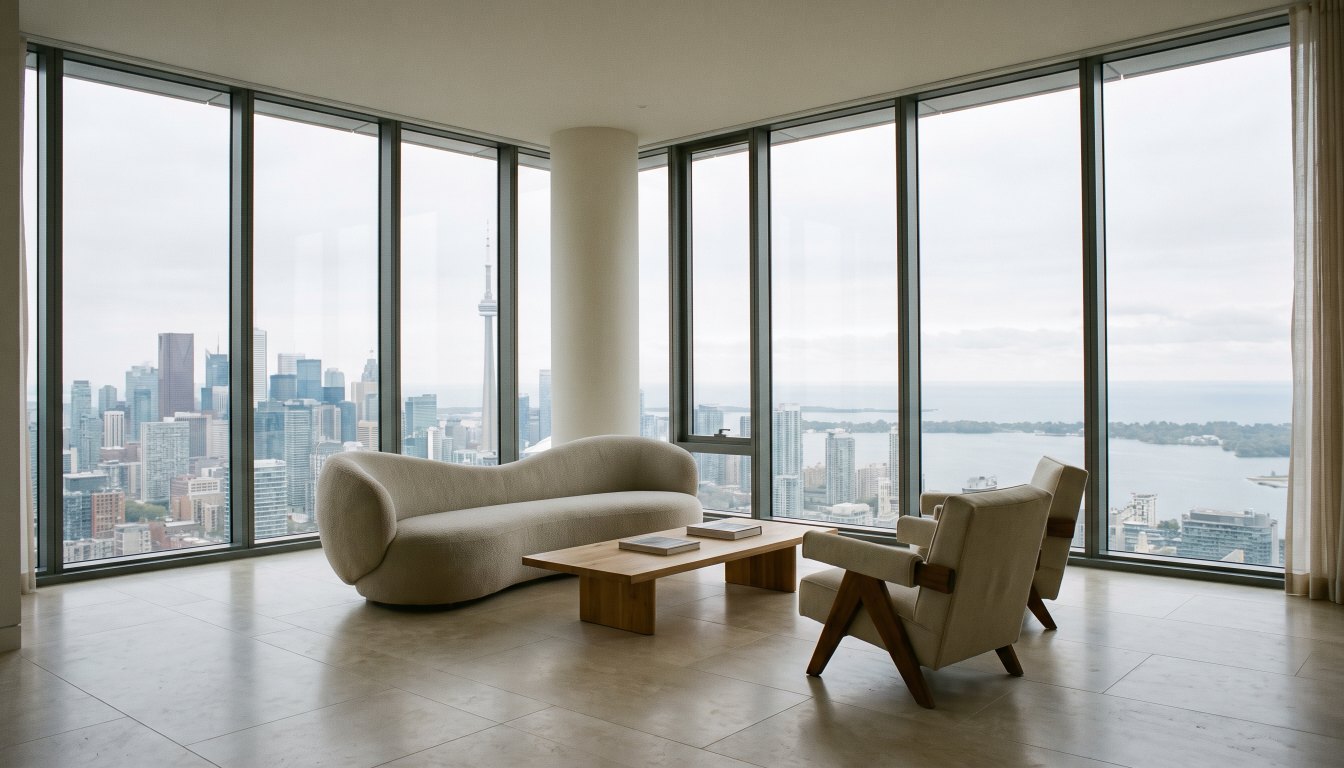
The second most important thing is whether the view is protected. A view is only worth a premium if nothing can be built in front of it. Everything else — finishes, amenities, the lobby — is easier to judge and easier to replace.
Step 1: know which market you are in
The Toronto condominium market is genuinely two markets. In Q1 2026 the GTHA recorded zero new project launches, 246 new condo sales (down 52% year over year), and a record 4,295 completed but unsold units. In the same period, $5 million-plus condominium sales in the Toronto core doubled from two to four.
Establish which one your target unit sits in, because the negotiating position is completely different.
Step 2: the status certificate is the property
More than in any house purchase, the document defines what you are buying. A corporation may charge a maximum of $100 including tax and must deliver it within 10 days. It must disclose:
- The reserve fund balance and the most recent reserve fund study
- Any special assessment levied during the current budget year, and why
- Whether the unit is in arrears of common expenses
- Any outstanding judgments or litigation involving the corporation
- The declaration, by-laws and rules
- The current budget and the most recent audited financial statements
- The certificate of insurance
Step 3: test the view
A view is the only feature of a condominium that cannot be renovated, and it is the one most often sold as permanent when it is not. Before you pay a premium:
- Identify every site in your sightline and check what its zoning permits
- Look for active development applications on those sites
- Ask whether the properties in front are already built to their permitted height
- Value a view over a park, a ravine, a heritage district or the lake far more highly than a view over a low-rise commercial site
Step 4: understand what the fees buy
Luxury condominium fees look alarming until you separate the components. Typically they include heating and cooling, water, building insurance, concierge and often valet, amenity staffing and maintenance, and — critically — the contribution to the reserve fund.
A lower fee is not automatically better. A building with low fees and an underfunded reserve is deferring cost, not avoiding it, and the bill arrives as a special assessment.
Step 5: the rules you have to live with
Read the declaration, by-laws and rules before you write an offer, not after. Common provisions that matter at the top end:
- Minimum lease terms and any prohibition on short-term rental
- Pet restrictions by size or number
- Renovation rules, hours and approval requirements — significant if you plan to combine or reconfigure units
- Parking and locker allocation, and whether they are owned, exclusive-use common elements, or leased
- Guest suite, moving and elevator booking rules
Step 6: the numbers on closing
Land transfer tax applies to a condominium exactly as it does to a house. In the City of Toronto that means both levels:
| Purchase price | Ontario LTT | Toronto MLTT | Total |
|---|---|---|---|
| $2,000,000 | $36,475 | $36,475 | $72,950 |
| $3,000,000 | $61,475 | $61,475 | $122,950 |
| $5,000,000 | $111,475 | $159,975 | $271,450 |
Add legal fees, title insurance and adjustments. On a new unit from a builder, HST applies and the new housing rebates are unavailable at these prices.
Step 7: know your rescission rights, and their absence
On a pre-construction unit you have a 10-day rescission right under the Condominium Act, running from the later of receiving the fully signed agreement or receiving the developer’s disclosure statement. Since 6 August 2025, an expanded Condominium Buyer’s Guide must be attached to pre-construction agreements.
On a resale unit there is no cooling-off period whatsoever. Once accepted and conditions are satisfied or waived, you are bound.
The practical takeaway
Buy the building and the view; the unit can be renovated. Read the status certificate with a lawyer before you are committed, verify what can be built in front of you, and compare fees by what they include rather than by the number. In a market carrying record unsold inventory, patience and documentation are worth more than speed.
Frequently asked questions
What does a status certificate cost and how long does it take?
A condominium corporation may charge a maximum of $100 including all applicable taxes, and must provide it within 10 days of the request. Third-party rush retrieval services are separate and are not subject to that cap.
What should my lawyer look for in the status certificate?
Adequacy of the reserve fund against the reserve fund study, any history of special assessments, pending or threatened litigation involving the corporation, arrears on the specific unit, restrictive rules on rentals and short-term letting, and how insurance deductibles are allocated between the corporation and unit owners.
Are luxury condo maintenance fees negotiable?
No. They are set by the corporation’s budget and allocated by the proportions in the declaration. What you can do is understand what they include — heating and cooling, water, concierge, valet, amenity staffing — and compare them properly rather than by the raw dollar figure.
How do I know if my view will stay?
Look at what is around you: the zoning on adjacent sites, any active development applications, and whether the sites in your sightline are already built to their permitted height. A view over a low-rise heritage district or over a park or the lake is far more secure than a view over a surface parking lot.
Is a pre-construction luxury condo a better buy than resale?
On the current numbers, usually not on price. New construction averaged $1,189 per square foot in Q1 2026 while resale averaged $859 — a record 38% gap. New buys you warranty coverage, current systems and choice of finishes. Resale buys you a known building, a visible reserve fund and immediate possession.
What rescission right do I have on a pre-construction unit?
Ten days under the Condominium Act, running from the later of receiving the fully signed agreement of purchase and sale or receiving the developer’s disclosure statement. On a resale unit there is no cooling-off period at all.
Thinking about buying or selling at the top end?
Send me the address, or the shortlist you are considering. I will tell you what the property is actually worth today, what the land is worth without the house, what the transfer tax and carrying costs will be, and whether the deal makes sense. Confidential, always.
[email protected] · 833-330-1925 · Book a free consultation
Confidential. Read personally and answered within 24 hours. I never share, sell or distribute your information.
Related reading
- Reading a status certificate like a buyer’s lawyer
- The Toronto luxury condo market in 2026: two markets in one city
- Why luxury condo maintenance fees are so high — and when they are worth it
- What a view is actually worth in a Toronto condo
- Free AI condo value estimator for Toronto
Sources
Everything above that is a rule, a rate or a published number comes from these. Verify anything that matters to your own deal.
- Condominium Authority of Ontario — Status certificates
- Real Estate Magazine — Q1 2026 condominium market (Urbanation data)
- RE/MAX Canada — 2026 Spotlight on Luxury Real Estate, Greater Toronto
- City of Toronto — Municipal Land Transfer Tax rates and fees
About the author — Jatin Dua, Broker of Record
I’m the Broker of Record at RE/MAX Quantum Realty, 799 The Queensway in Etobicoke, and I work with buyers, sellers and investors across Toronto and the west GTA. A large part of my work sits in the upper end of the market, where the comparables are thin, the rules are heavier and the cost of a wrong number is measured in hundreds of thousands of dollars.
The free estimators on this site are mine. I built them because the first question every owner asks is “what is it worth?” and the honest answer starts with a number you can check yourself. [email protected] or 833-330-1925.