
Published 7 September 2026 · Updated 29 September 2026 · By Jatin Dua, Broker of Record, RE/MAX Quantum Realty
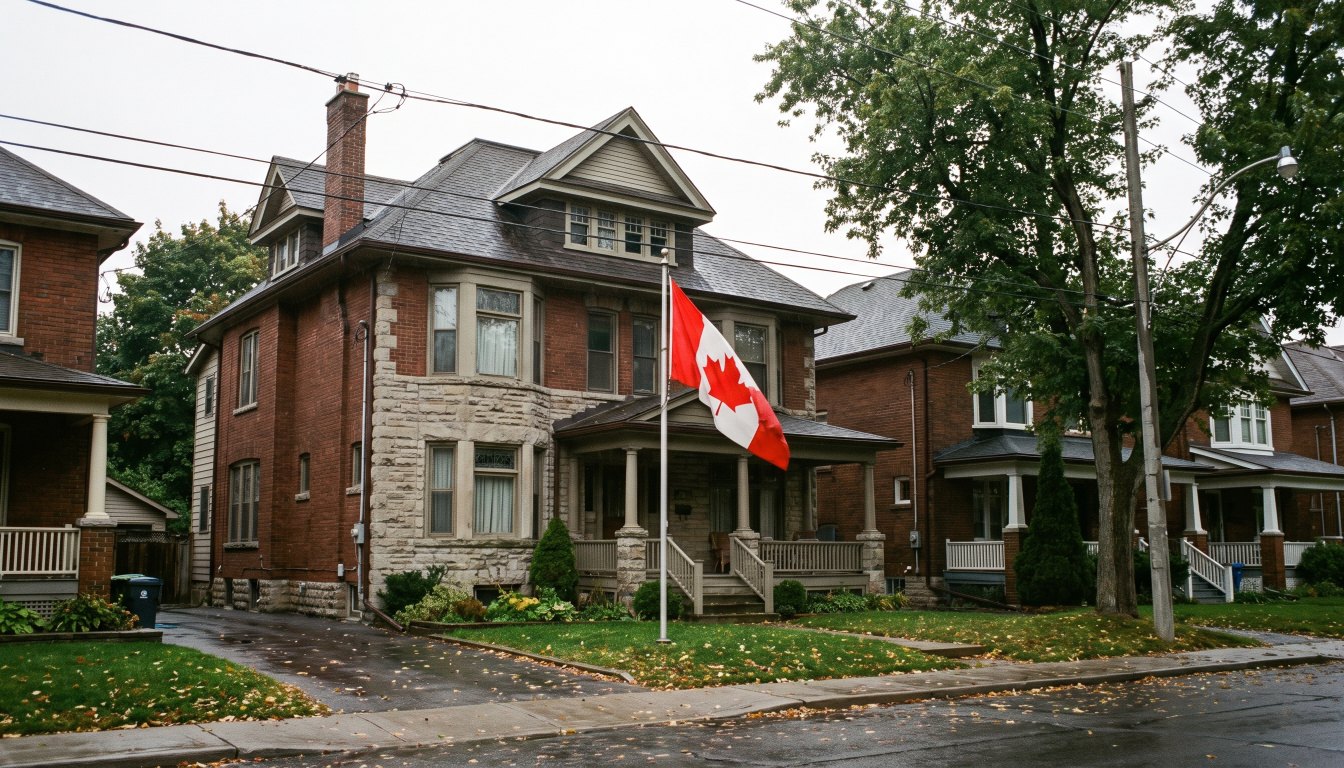
Generally no, while the federal prohibition remains in force. The Prohibition on the Purchase of Residential Property by Non-Canadians Act has applied since 1 January 2023 and is currently set to expire on 1 January 2027. Exemptions include permanent residents, qualifying temporary residents, refugees and protected persons, diplomats, Canadian-controlled corporations, recreational property outside census metropolitan and agglomeration areas, and purchases made for the purpose of development.
A buyer who is exempt from the ban but still a foreign national, foreign corporation or taxable trustee then faces Ontario’s Non-Resident Speculation Tax at 25% of the purchase price and Toronto’s Municipal Non-Resident Speculation Tax at 10%, on top of both land transfer taxes. On a $5,000,000 Toronto house that stack comes to roughly $2.02 million payable on closing.
Layer one: the federal prohibition
The Prohibition on the Purchase of Residential Property by Non-Canadians Act came into force on 1 January 2023. It has been extended, and is currently set to expire on 1 January 2027.
Exemptions established under the Act and its regulations include:
- Permanent residents of Canada
- Qualifying temporary residents, including certain workers and students meeting prescribed conditions
- Refugees and protected persons
- Diplomats, consular staff and their families
- Canadian-controlled corporations
- Recreational property outside census metropolitan areas and census agglomerations
- Purchases made for the purpose of development
Each of these has conditions attached. None of them should be relied on without legal advice.
Layer two: Ontario’s 25% speculation tax
If a buyer clears the federal prohibition but is a foreign national, foreign corporation or taxable trustee, Ontario’s Non-Resident Speculation Tax applies at 25% of the purchase price. It has applied province-wide since 25 October 2022, to land containing one to six residential units.
Exemptions include nominees under the Ontario Immigrant Nominee Program, protected persons, and the spouse of a Canadian citizen or permanent resident, each subject to principal residence conditions. A rebate is available where the purchaser becomes a permanent resident within four years, holds the property alone or with a spouse, occupies it as a principal residence within 60 days, and applies within 90 days of obtaining permanent residence.
Layer three: Toronto’s additional 10%
Since 1 January 2025, the City of Toronto has charged its own Municipal Non-Resident Speculation Tax at 10% of the purchase price on residential purchases by foreign buyers. It sits on top of the provincial speculation tax and on top of both land transfer taxes.
What the stack actually costs
| On a $5,000,000 Toronto house | Amount |
|---|---|
| Ontario land transfer tax | $111,475 |
| Toronto municipal land transfer tax | $159,975 |
| Ontario Non-Resident Speculation Tax at 25% | $1,250,000 |
| Toronto Municipal Non-Resident Speculation Tax at 10% | $500,000 |
| Total payable on closing | $2,021,450 |
What this means for the market
Two structural effects. First, Toronto’s top-end house market has been effectively domestic since 2023. Second, the federal prohibition’s scheduled expiry on 1 January 2027 is one of the few genuinely knowable dates on the horizon — though its expiry would not remove either speculation tax, which are separate provincial and municipal measures with no expiry attached.
If you are in this situation
- Establish your status precisely, in writing, with an immigration or tax lawyer — not from a website and not from an agent.
- Confirm whether an exemption to the federal prohibition applies to you, and document it.
- Model the full tax stack before you look at properties, not after you find one.
- Expect thorough identity and source-of-funds verification. Brokerages must verify identity, determine beneficial ownership at 25% or more for corporate and trust purchasers, and make third-party determinations under FINTRAC rules.
- Retain an Ontario real estate lawyer before you sign anything. There is no cooling-off period on a resale purchase in Ontario.
The practical takeaway
The rules are strict, the penalties for getting them wrong are severe, and the definitions are technical. Nobody should navigate this from an article. Get advice on your specific status first, model the whole stack second, and only then start looking.
Frequently asked questions
Is the foreign buyer ban still in effect in 2026?
Yes. The federal Prohibition on the Purchase of Residential Property by Non-Canadians Act has been in force since 1 January 2023 and is currently set to expire on 1 January 2027. Anyone relying on that date should confirm the current position with a lawyer, since the expiry has been extended before.
Who is exempt from the federal ban?
Exemptions include permanent residents, qualifying temporary residents such as certain workers and students, refugees and protected persons, diplomats and their families, Canadian-controlled corporations, purchases of recreational property outside census metropolitan and agglomeration areas, and purchases for the purpose of development. The details matter and require legal advice.
What is Ontario’s Non-Resident Speculation Tax?
A tax of 25% of the purchase price, effective 25 October 2022, applying province-wide to foreign nationals, foreign corporations and taxable trustees who buy land containing one to six residential units.
What is Toronto’s Municipal Non-Resident Speculation Tax?
An additional 10% of the purchase price on residential purchases by foreign buyers in the City of Toronto, effective 1 January 2025. It applies on top of the provincial NRST and both land transfer taxes.
Can NRST be refunded?
A rebate is available where the buyer becomes a permanent resident of Canada within four years of the purchase, holds the property alone or with a spouse, occupies it as their principal residence within 60 days of purchase, and applies within 90 days of becoming a permanent resident. Confirm the current conditions and deadlines with the Ministry of Finance and your lawyer.
Does the ban apply to a Canadian citizen living abroad?
The federal prohibition applies to non-Canadians. Citizenship and residency are different concepts, and the speculation taxes turn on residency and status rather than citizenship alone. This is exactly the kind of question that requires legal advice specific to your situation before you sign anything.
Thinking about buying or selling at the top end?
Send me the address, or the shortlist you are considering. I will tell you what the property is actually worth today, what the land is worth without the house, what the transfer tax and carrying costs will be, and whether the deal makes sense. Confidential, always.
[email protected] · 833-330-1925 · Book a free consultation
Confidential. Read personally and answered within 24 hours. I never share, sell or distribute your information.
Related reading
- Ontario’s 25% Non-Resident Speculation Tax, explained properly
- Land transfer tax on a luxury home in Toronto: the full 2026 numbers
- Buying a Toronto luxury home from out of country: how to do it safely
- Who actually buys a $5 million home in Toronto?
Sources
Everything above that is a rule, a rate or a published number comes from these. Verify anything that matters to your own deal.
- Government of Canada — Prohibition on the Purchase of Residential Property by Non-Canadians Act
- Government of Ontario — Non-Resident Speculation Tax
- City of Toronto — Municipal Land Transfer Tax and MNRST rates
- Government of Ontario — Calculating land transfer tax
About the author — Jatin Dua, Broker of Record
I’m the Broker of Record at RE/MAX Quantum Realty, 799 The Queensway in Etobicoke, and I work with buyers, sellers and investors across Toronto and the west GTA. A large part of my work sits in the upper end of the market, where the comparables are thin, the rules are heavier and the cost of a wrong number is measured in hundreds of thousands of dollars.
The free estimators on this site are mine. I built them because the first question every owner asks is “what is it worth?” and the honest answer starts with a number you can check yourself. [email protected] or 833-330-1925.