
Published 7 September 2026 · Updated 29 September 2026 · By Jatin Dua, Broker of Record, RE/MAX Quantum Realty
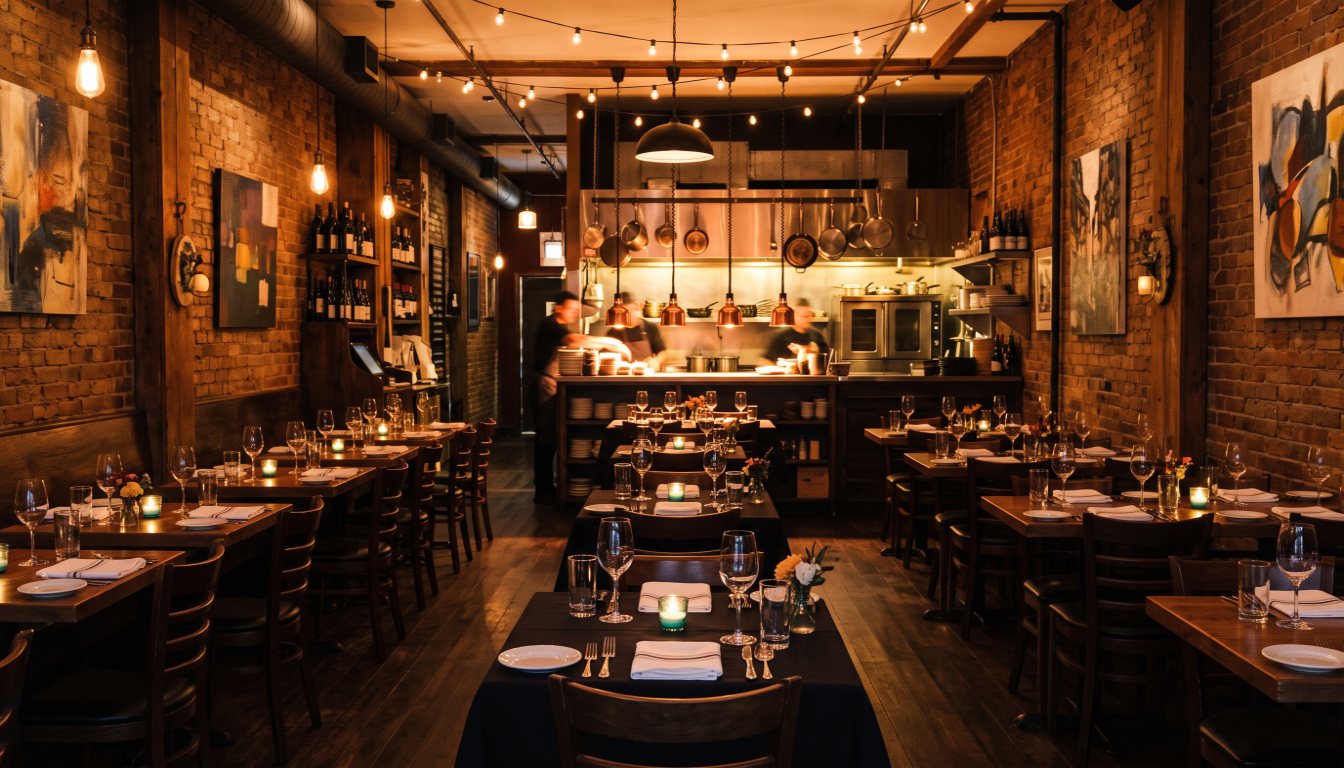
A restaurant is worth a multiple of its seller’s discretionary earnings — the cash the owner actually takes out after add-backs — not a multiple of sales. Across 8,692 completed restaurant sales in 2025, the median sale was about $225,000 against a median asking price of $265,000, so sellers achieved roughly 85 percent of ask, and the middle half of deals closed between about 1.3 and 2.5 times SDE. Where your restaurant lands inside that band depends on concept, how long it has been open, whether it runs without you, the sales trend, the kitchen and the lease. The free AI restaurant value estimator works through exactly those and gives you a likely sale range plus a suggested asking price.
Why revenue is the wrong number
Owners quote revenue because it is the biggest number they have. Buyers ignore it, because two restaurants doing $1.2 million a year can leave the owner with $60,000 or $220,000 depending on food cost, labour and rent. What a buyer is purchasing is the owner’s earnings stream, and the price is a multiple of that stream.
The stream is called seller’s discretionary earnings, or SDE. It is net profit plus everything the owner takes out or runs through the business that a new owner would not have to: the owner’s salary, personal vehicle and phone, family members on payroll who do not really work there, one-time expenses, depreciation, interest. Add those back and you have the number a buyer is paying for.
Calculating your SDE in ten minutes
- Start with net profit from the last full year’s statements.
- Add back your own salary and any draws.
- Add back depreciation and amortisation, and interest on any loans the buyer will not assume.
- Add back personal expenses run through the business: vehicle, phone, travel, meals, the family cell plan.
- Add back one-time costs: the flood repair, the legal fight, the opening-year marketing.
- Subtract anything the business gets for free that a buyer will have to pay for: a family member cooking for nothing, rent below market because you own the building.
If you do not have clean statements, the estimator lets you start from annual sales and applies a typical margin for your concept — about 12.5 percent for full-service, 16.5 percent for quick-service, 14.5 percent for a café, 12 percent for a bar, 11 percent for a franchise, 13 percent for a banquet hall and 10 percent for a delivery-only kitchen — and flags the result as estimated. A buyer will not accept an estimate, so before you list, get the statements clean.
What moves the multiple
The base multiple in the model is 1.85 times SDE, and it moves between a floor of 1.0 and a ceiling of 3.2 depending on the business. The things that move it are not mysterious; they are the things a buyer is nervous about.
| Factor | Effect on the multiple | Why buyers care |
|---|---|---|
| Concept | QSR/takeout +0.15; café +0.05; full-service 0; franchise −0.05; bar −0.10; banquet −0.15; ghost kitchen −0.45 | Simpler operations and lower labour transfer more reliably to a new owner |
| Years open | Under 2 years −0.35; 2–5 years 0; 5–10 years +0.10; over 10 years +0.18 | A track record is proof the earnings are real and repeatable |
| Owner’s role | Owner full-time 0; part-time with a supervisor +0.25; manager runs it +0.60 | The single biggest lever. A business that runs without you is a business, not a job |
| Sales trend | Up +0.32; flat 0; down −0.42 | Buyers pay for the next three years, not the last three |
| Kitchen and fit-out | New +0.18; well maintained 0; dated −0.25; needs replacing −0.40 | Capital the buyer has to spend in year one comes off the price |
| Lease | Long term at fair rent supports the multiple; short or expensive lease drags it | The lease is the business. Under three years left and the buyer’s bank gets nervous |
Worked example
A full-service restaurant in Toronto’s west end doing $1.1 million in sales, open eight years, owner working the floor full-time, sales flat, kitchen well maintained, rent at 9 percent of sales with six years left on the lease. Clean statements show SDE of $165,000. Base multiple 1.85, plus 0.10 for eight years open, nothing for the owner working full-time, nothing for the flat trend or the kitchen: about 1.95x. Likely sale around $320,000, with a 14 percent band either side, and a suggested asking price around $375,000 given that sellers achieve roughly 85 percent of ask on average.
Now change one thing: a manager runs it and the owner shows up twice a week. The multiple moves to about 2.55x and the likely sale to around $420,000. Same restaurant, same earnings, $100,000 more — because the buyer is buying a system rather than buying a job.
Inventory, equipment and the building
Food and beverage inventory is normally added on top of the price at closing, at cost. Equipment is included unless it is leased, in which case the lease transfers or is paid out. If you own the building, that is a separate real estate transaction and the restaurant is valued as if it were paying market rent; the estimator asks whether you own the premises for exactly that reason.
What buyers pay for, in one line
Provable earnings, a lease that outlives their financing, a kitchen they do not have to rebuild, and a business that keeps running the week you leave. Everything else — the reviews, the décor, the recipes, the story — is what gets them to look. The four things are what they write the cheque for.
How to get your number
Run the estimator: concept and area, annual sales or SDE, years open, your role, the trend, the kitchen, the lease and whether you own the building. It returns a likely sale range, the multiple it applied, and a suggested asking price. Then, if you are serious, send me the statements and I will tell you what a buyer will actually pay and what to fix first.
Free tool — AI restaurant value estimator
Restaurant valuation
What is your restaurant
actually worth?
Restaurants don’t sell on revenue — they sell on what the owner takes home, multiplied by how easy the business is to hand over. Your lease and your rent do more damage or more good than anything on the menu. This weighs all of it in about two minutes.
Reading comparable restaurant sales…
Indicative business value
—
$0$0
Most likely sale price $0 · Implied multiple 0×
Where I’d list it
$0
Comparable restaurants sell for about 85% of asking. Price to that, not to hope.
How the number is built
Your owner earnings, multiplied by what buyers pay for a business like yours — then adjusted line by line.
What the market pays
Benchmarks from completed restaurant sales.
What a buyer will ask for
- Three years of financials — statements and tax returns, not just POS reports.
- The lease, with the assignment clause and every option in writing.
- Proof of your add-backs. Lenders reject the ones you cannot document, and that is the single biggest reason deals reprice.
- Equipment list showing what is owned outright and what is leased or financed.
- Licences — AGCO, food premises, patio, and whether each one transfers.
- WSIB, HST and payroll accounts in good standing.
Want the number a buyer
would actually sign?
Send me three years of financials and your lease and I will price it properly — normalised earnings, real comparables, a defensible asking price and a confidential marketing plan that never tips off your staff or your landlord.
Frequently asked questions
What multiple do restaurants sell for in Toronto?
Across 8,692 completed restaurant sales in 2025 the middle half of deals closed between roughly 1.3 and 2.5 times seller’s discretionary earnings. Well-established restaurants that run without the owner reach the upper end; new, owner-dependent or declining businesses sit at the bottom or below it.
What is SDE for a restaurant?
Seller’s discretionary earnings is net profit plus everything the owner takes out or runs through the business that a new owner would not have to pay: owner salary, depreciation, interest, personal expenses and one-time costs. It is the number buyers multiply to arrive at a price.
Is a restaurant valued on revenue?
No. Revenue is the top line; buyers pay for the owner’s earnings. Two restaurants with the same sales can be worth very different amounts depending on food cost, labour and rent. Revenue only matters when there are no clean statements, in which case a typical margin for the concept is applied as an estimate.
What is the average sale price of a restaurant?
The median completed restaurant sale in 2025 was about $225,000 against a median asking price of $265,000, meaning sellers achieved roughly 85 percent of ask. Individual sales range from well under $100,000 to several million depending on earnings and lease.
Does the lease affect what my restaurant is worth?
Heavily. The lease is the business. A long term at fair rent supports the price; a short remaining term, a rent above roughly ten percent of sales, or a landlord who will not consent to assignment all drag the multiple down or kill the deal.
Want to know what a buyer would actually pay?
Run the estimator, then send me your last two years of statements and the lease. I will tell you the realistic sale range, the asking price, and the one or two things to fix before listing that would add the most.
[email protected] · 833-330-1925 · Book a free consultation
Confidential. Read personally and answered within 24 hours. I never share, sell or distribute your information.
Related reading
- Free AI Restaurant Value Estimator
- Selling a restaurant in Toronto: what buyers pay for
- Free AI Home Value Estimator
- All free calculators and tools
Sources
Every figure on this page traces to one of these, and each was read on 7 September 2026. Where a number is a model calibration rather than a published statistic, the page says so.
- 2025 business-for-sale marketplace data behind the jatindua.com Restaurant Value Estimator — 8,692 completed restaurant sales; median sale $225,000; median asking $265,000; median sold-to-ask 0.849; inter-quartile SDE multiple 1.34x to 2.53x.
- Calibration tables of the jatindua.com Restaurant Value Estimator (base multiple 1.85x, floor 1.0x, ceiling 3.2x; concept margins and adjustments as listed above). These are model rules of thumb, not published statistics.
About the author — Jatin Dua, Broker of Record
I’m the Broker of Record at RE/MAX Quantum Realty, 799 The Queensway in Etobicoke, and I work with buyers, sellers, investors and business owners across the west GTA. I sell restaurants and food businesses alongside houses and land in the west GTA, and the first conversation is always the same: the owner has a revenue number and a feeling, and the buyer has a calculator.
The free estimators on this site are mine. I built them because the first question every owner asks is “what is it worth?” and the honest answer starts with a number you can check yourself. [email protected] or 833-330-1925.