
Published 7 September 2026 · Updated 29 September 2026 · By Jatin Dua, Broker of Record, RE/MAX Quantum Realty
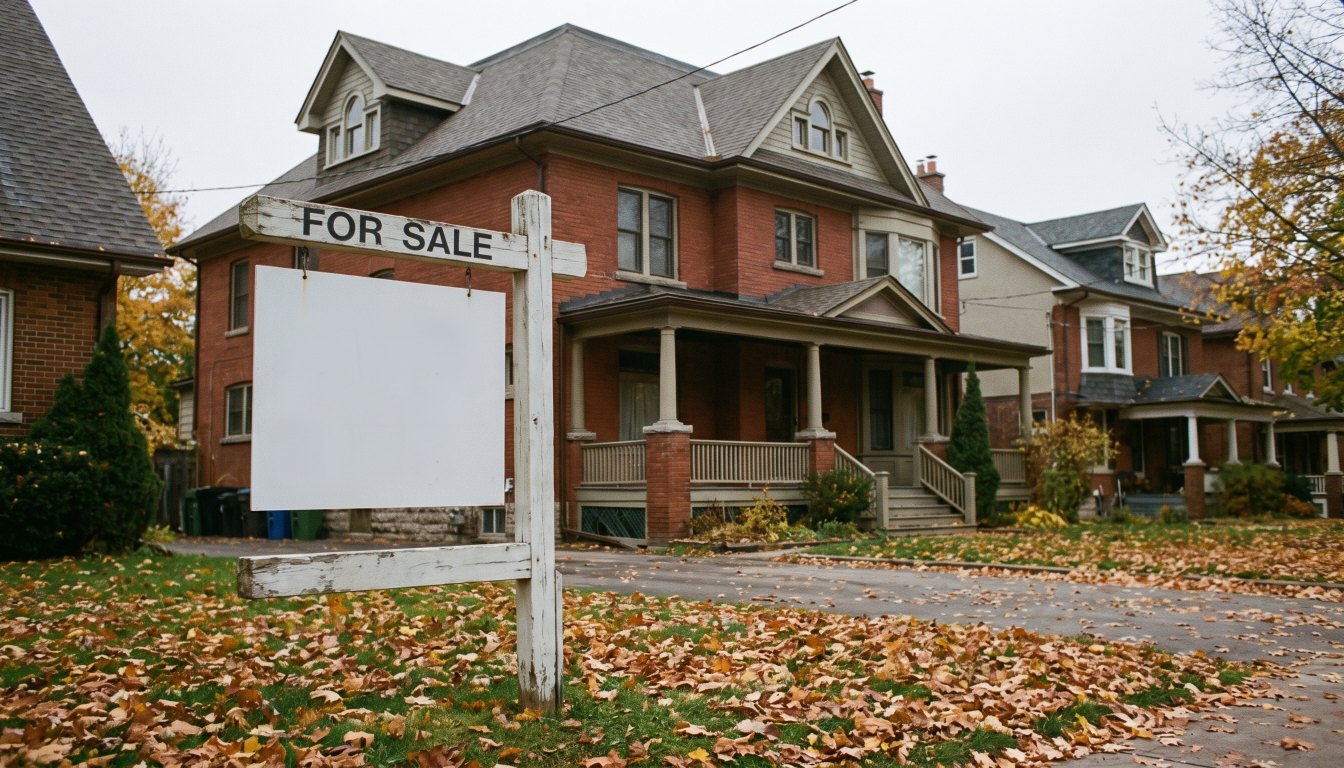
In the mid-market, an overpriced house sells slowly because new buyers keep arriving. Above $3 million in Toronto they do not. With roughly 300 GTA sales in four months, the pool that exists when you launch is largely the pool that will exist eight weeks later. Price above it and you do not sell slowly — you sell after a reduction that everyone in the market watched happen.
The sequence is predictable: strong initial interest, no offers, a quiet third week, a reduction, renewed interest at the lower number but now with a visible price history, and a final result below what correct pricing would have produced. The cost of overpricing is not time. It is money.
The sequence
| Week | What happens |
|---|---|
| 1–2 | Strong activity. The existing buyer pool comes through because the property is new. No offers. |
| 3–4 | Activity falls sharply. Everyone who was going to look has looked. |
| 5–8 | Very little. Occasional showings from buyers newly entering the market. |
| 9–12 | A reduction. Renewed interest, now accompanied by a visible price history. |
| 13+ | Offers arrive below where correct pricing would have landed, because the market has watched the property fail once. |
The important row is the second one. That is where the difference between a deep market and a thin one shows up. In a deep market, new buyers keep arriving every week and the property is discovered continuously. Above $3 million, with roughly 75 GTA sales a month, they do not.
The first three weeks are the asset
A luxury listing gets one genuinely fresh window in front of the buyers who actually exist. That window is worth more than every marketing decision combined, and it can only be spent once. Launching at a hopeful number spends it on discovering that the number was hopeful.
Why relisting to reset the clock does not work here
In each Toronto neighbourhood and price band, a relatively small group of agents handles most of the transactions. They remember your listing. The gap between the GTA’s 35-day listing figure and its 51-day property figure exists precisely because relisting is common — and both numbers are visible.
Relist when something has genuinely changed: a meaningful price adjustment, completed work with paperwork, new photography, a new season, or a change in strategy. Relist for a reason, not for a number.
What correct pricing looks like
The Forest Hill South house that sold on 26 August 2026 was listed at $22 million and sold for $23.5 million with three competing offers. That is what a defensible number does in a thin market: it makes the property the obvious choice in its band, and competition takes it from there.
Contrast that with the top-end listings that sit. A Bridle Path property was offered under power of sale at $22.8 million in November 2025, having previously been listed at $29.8 million in June 2024 and then $25 million. Ambition at the top of the market is expensive.
One decisive reduction beats three small ones
A series of small reductions tells buyers that another is coming and rewards waiting. A single adjustment that puts the property clearly into a new competitive band gives buyers a reason to act now. Decide this with your agent before the first reduction, not after the third.
The practical takeaway
Get the number right before launch, because you cannot buy the first three weeks back. If you are already past that point, diagnose honestly — timing or pricing — and if it is pricing, move decisively once rather than gradually four times.
Frequently asked questions
How long should I wait before reducing the price?
Judge it by activity rather than by the calendar. If most of the active buyers in your band have been through and none raised the price as the issue, wait. If they came through and the price was the consistent objection, waiting makes it worse, because no new buyers are coming.
Does an overpriced listing hurt the eventual sale price?
It frequently does. Buyers see the price history and read a long listing as a negotiating position. The strongest results come from correct pricing at launch: the Forest Hill house that sold in August 2026 was listed at $22 million and closed at $23.5 million with three competing offers.
Should I terminate and relist to reset the day count?
Only if something has genuinely changed. In a market where a small group of agents handles most transactions in each band, everybody remembers the earlier listing. Relist after a real price adjustment, completed work, new photography or a change of season — not to hide a number.
What is the difference between listing days and property days on market?
Listing days counts from the current listing; property days counts cumulative time for sale including earlier listings. In August 2026 the GTA figures were 35 and 51 respectively, and the gap between them reflects how much relisting happens.
Is a big reduction worse than several small ones?
Several small reductions signal a seller chasing the market down and invite buyers to wait for the next one. One decisive reduction that puts the property clearly into a new competitive band tends to produce activity. This is a strategy question to settle with your agent before the first reduction, not after the third.
How do I know what the right price is?
Triangulate: land value adjusted for what can be built, depreciated replacement cost of the building, and a short list of true comparables including expired and terminated listings. Where those converge is defensible. Where they diverge, name the reason.
Thinking about buying or selling at the top end?
Send me the address, or the shortlist you are considering. I will tell you what the property is actually worth today, what the land is worth without the house, what the transfer tax and carrying costs will be, and whether the deal makes sense. Confidential, always.
[email protected] · 833-330-1925 · Book a free consultation
Confidential. Read personally and answered within 24 hours. I never share, sell or distribute your information.
Related reading
- How to price a luxury home in Toronto when there are no comps
- Why luxury homes sit longer — and what that actually means
- Selling a luxury home in Toronto: the complete 2026 playbook
- How luxury homes are actually valued in Toronto
Sources
Everything above that is a rule, a rate or a published number comes from these. Verify anything that matters to your own deal.
- Toronto Regional Real Estate Board — Market Watch, August 2026
- RE/MAX Canada — 2026 Spotlight on Luxury Real Estate, Greater Toronto
- Sotheby’s International Realty Canada — Forest Hill sale release, 26 August 2026
About the author — Jatin Dua, Broker of Record
I’m the Broker of Record at RE/MAX Quantum Realty, 799 The Queensway in Etobicoke, and I work with buyers, sellers and investors across Toronto and the west GTA. A large part of my work sits in the upper end of the market, where the comparables are thin, the rules are heavier and the cost of a wrong number is measured in hundreds of thousands of dollars.
The free estimators on this site are mine. I built them because the first question every owner asks is “what is it worth?” and the honest answer starts with a number you can check yourself. [email protected] or 833-330-1925.