
Published 7 September 2026 · Updated 29 September 2026 · By Jatin Dua, Broker of Record, RE/MAX Quantum Realty
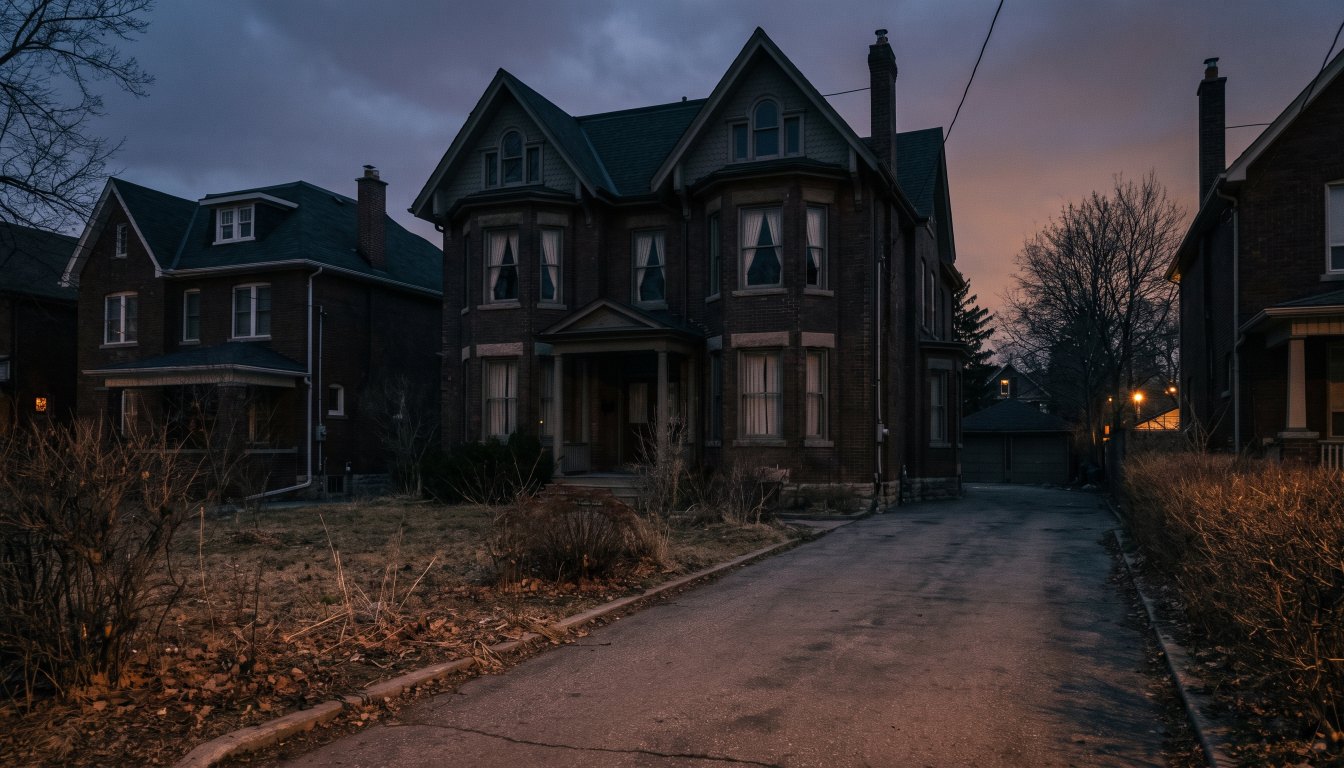
Toronto’s Vacant Home Tax is 3% of a property’s Current Value Assessment, applying from the 2024 taxation year onward, up from 1% when it launched in 2022. On a property assessed at $3,000,000 that is $90,000 a year. At $5,000,000 it is $150,000 a year.
The mechanism that catches people is the declaration. Every residential property in Toronto requires an annual declaration of occupancy status, whether it is occupied or not. If you do not declare, the property defaults to vacant and the tax applies. A false declaration or a failure to provide required information carries a penalty of up to $10,000 on top of the tax.
The arithmetic
| Current Value Assessment | Vacant Home Tax at 3% per year | Over three years |
|---|---|---|
| $1,500,000 | $45,000 | $135,000 |
| $2,000,000 | $60,000 | $180,000 |
| $3,000,000 | $90,000 | $270,000 |
| $5,000,000 | $150,000 | $450,000 |
The base is Current Value Assessment, not market value — the number MPAC assigns for property taxation purposes. Those two can differ substantially at the top of the market, in either direction.
The declaration is the mechanism
This is where most Vacant Home Tax bills actually come from. Every residential property in Toronto requires an annual declaration of occupancy status, whether the property is occupied or not.
Who gets caught
- Owners of a second Toronto property — a pied-à-terre, a property held for a family member, a unit between tenants
- Estates, where a property sits while an estate is administered and nobody is clear who files
- Long renovations and rebuilds, where a house is empty for eighteen months or more through design, approvals and construction
- Owners who travel and simply did not see the notice
- New owners who did not realise the obligation transferred with the property
The renovation and rebuild category is worth particular attention. A teardown project in Toronto routinely runs a year or more through zoning review, heritage or ravine approvals, TRCA clearance where applicable, permits and construction. Raise the property’s status with the City early, keep evidence, and file the declaration every year regardless.
What to do, practically
- Diarise the declaration as a recurring annual task, in the same place you keep your tax deadlines. Confirm the current date on toronto.ca each year, since it changes.
- File for every Toronto property you own, occupied or not.
- Keep evidence of occupancy — utility accounts, insurance, correspondence — particularly for a property that is genuinely occupied but might look otherwise.
- If you are renovating, document the permits and the timeline and speak to the City about how your circumstances are treated.
- If you are buying, ask whether the declaration for the current cycle has been filed and confirm the position with your lawyer as part of closing.
Why this matters more at the top of the market
The tax is proportional to assessment, so it scales directly with value. A missed declaration on a modest property is an expensive administrative error. A missed declaration on a $5 million property is a $150,000 one, repeated annually until it is corrected.
The practical takeaway
File the declaration every year for every Toronto property you own, without exception, and treat it as a compliance obligation rather than an optional form. Almost every vacant home tax bill I have seen on a luxury property came from a missed declaration rather than from a genuinely vacant house.
Frequently asked questions
How much is Toronto’s Vacant Home Tax?
Three per cent of the property’s Current Value Assessment, from the 2024 taxation year onward. It was 1% for the 2022 and 2023 taxation years.
Do I have to declare even if I live in my home?
Yes. The annual declaration of occupancy status is required for every residential property in Toronto regardless of whether it is occupied. Failing to declare results in the property being deemed vacant.
What is the penalty for a false declaration?
Up to $10,000, in addition to the tax itself, for a false declaration or a failure to provide required information.
When is the declaration due?
The deadline falls early in the year and the City publishes it each cycle. Because it changes, confirm the current date directly on toronto.ca rather than relying on a previously published date.
What if my home is under renovation?
The City’s framework provides for certain circumstances in which a property that is not occupied is not treated as vacant, including some renovation and permit situations. The rules are specific and evidence-based — speak to the City and to your adviser rather than assuming, and file the declaration in any case.
Does the tax apply to a property I am building on?
That depends on the property’s status and the City’s treatment of it. This is a common issue on teardown and rebuild projects with long approval timelines. Raise it with the City early and keep the declaration current every year.
Thinking about buying or selling at the top end?
Send me the address, or the shortlist you are considering. I will tell you what the property is actually worth today, what the land is worth without the house, what the transfer tax and carrying costs will be, and whether the deal makes sense. Confidential, always.
[email protected] · 833-330-1925 · Book a free consultation
Confidential. Read personally and answered within 24 hours. I never share, sell or distribute your information.
Related reading
- Your MPAC assessment and your real value: why they are nothing alike
- Is Toronto luxury real estate a good investment?
- Building a custom home in Toronto: the real timeline and the real costs
- Vacant home taxes in Ontario compared
Sources
Everything above that is a rule, a rate or a published number comes from these. Verify anything that matters to your own deal.
About the author — Jatin Dua, Broker of Record
I’m the Broker of Record at RE/MAX Quantum Realty, 799 The Queensway in Etobicoke, and I work with buyers, sellers and investors across Toronto and the west GTA. A large part of my work sits in the upper end of the market, where the comparables are thin, the rules are heavier and the cost of a wrong number is measured in hundreds of thousands of dollars.
The free estimators on this site are mine. I built them because the first question every owner asks is “what is it worth?” and the honest answer starts with a number you can check yourself. [email protected] or 833-330-1925.
An estate property sitting empty raises this: the executor guide to probate, tax and timing.