

Published 7 September 2026 · By Jatin Dua, Broker of Record, RE/MAX Quantum Realty
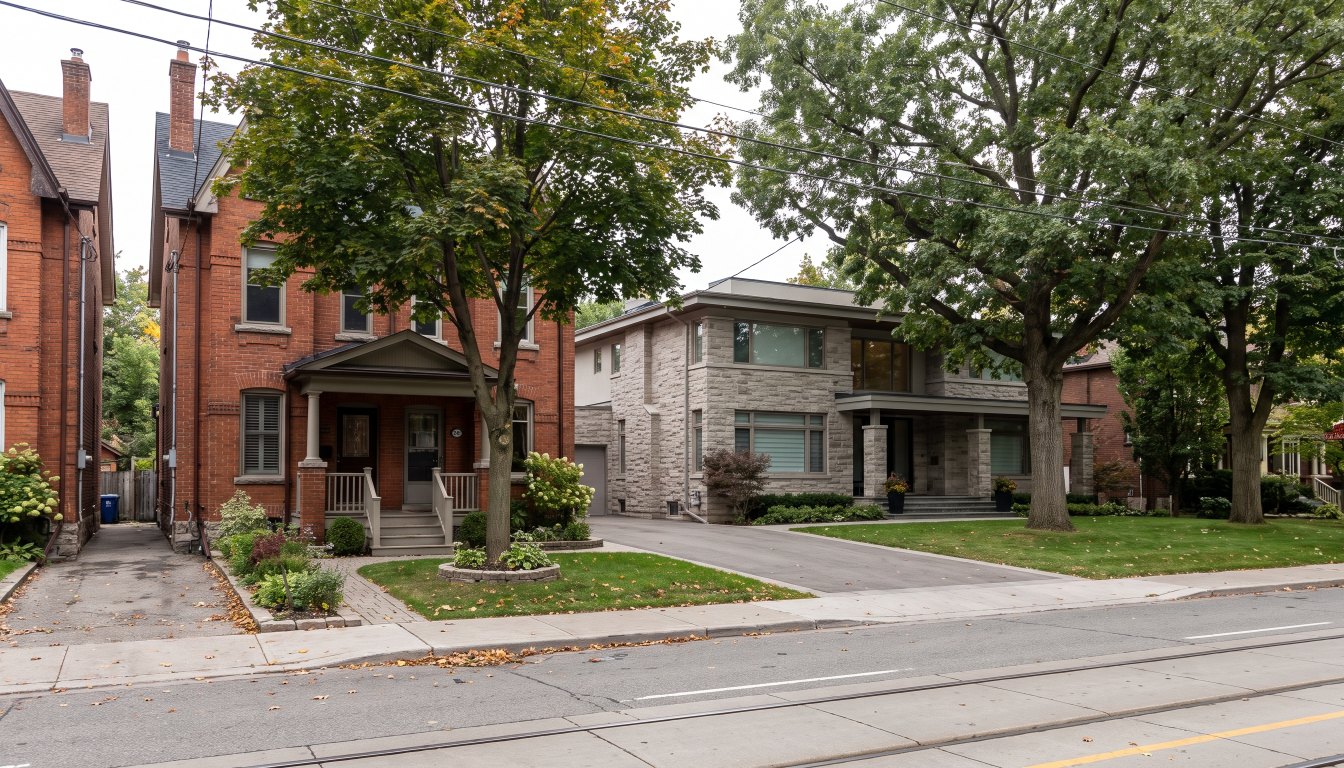
Because every automated valuation model needs three things, and the Toronto luxury market supplies none of them. It needs volume — there were about 300 GTA sales above $3 million in four months of 2026. It needs uniformity — luxury properties are individual by definition. And it needs clean input data — square footage in listings is inconsistently measured and lot descriptions are often approximate.
This is not a criticism of any particular tool. I build estimator tools myself and I will tell you the same thing: they are genuinely useful for typical properties in deep market segments, and they degrade sharply as a property becomes unusual. Above $3 million, almost every property is unusual.
What an automated model needs, and what luxury denies it
| A model needs | Toronto luxury supplies |
|---|---|
| High transaction volume | About 300 GTA sales above $3M in four months; 62 above $5M |
| Uniform, comparable properties | Individually designed houses on individually shaped lots |
| Clean, standardised input data | Square footage measured to no common standard; approximate lot descriptions |
| Features that can be encoded | Value concentrated in ravine exposure, table land, light, heritage protection, view permanence |
| Stable relationships between inputs and price | Relationships that shift entirely between $1.5M and $5M |
The five specific failure points
1. The model cannot see the lot properly
Automated models are built primarily on building attributes: bedrooms, bathrooms, square footage, age, property type. At the top of the market most of the value is in the land — frontage, usable table land, ravine or valley exposure, shape, and the zoning envelope. Those are either absent from the data or present in a form too crude to use.
2. The square footage input is unreliable
There is no single measurement standard applied to resale listings in Ontario. Whether below-grade area, stairwells, garages and wall thickness are counted varies. A 15% error in the input produces a large error in the output, and the model has no way to detect it.
3. Constraints are invisible
Two identical houses, one inside a Heritage Conservation District and one not, one in a mapped ravine protected area and one not, one with twelve trees over 30 centimetres and one with none. To the model they are the same house. To the market they are not.
4. The comparable pool is too small
Where a model would normally draw on thirty recent sales, at this level it may find three, and it may reach further out in geography or further back in time to find them. Both of those adjustments introduce more error than they remove.
5. Time adjustment in a moving market
With the MLS Home Price Index composite down 4.5% year over year in August 2026, a comparable from fourteen months ago needs adjusting. Models do adjust for time, but the adjustment is built from the broad market, and the broad market and the luxury market moved differently in 2026 — the average price fell 2.7% while $5 million-plus sales held at 62 against 63.
What to use instead
- Land value, built from lot sales and adjusted for the zoning envelope and the constraints that apply to the address.
- Depreciated replacement cost of the building, allowing honestly for age, systems and functional obsolescence.
- A short list of true comparables, including expired and terminated listings, which tell you where the ceiling was.
Where those three converge is a defensible number. Where they diverge, the divergence itself is the information.
The practical takeaway
Use an online estimate the way you would use a thermometer reading from the next street: directionally interesting, not actionable. If the number matters — a listing decision, an offer, an estate, a separation, a lender — get a proper valuation from someone who will show you the reasoning behind it.
Frequently asked questions
Are online home value estimates accurate?
They are reasonably useful for common property types in areas with many recent sales, and they degrade as properties become unusual and as sales become sparse. Above $3 million in Toronto both conditions apply at once, which is why estimates in that range are frequently out by a wide margin.
Why do two estimate tools give me different numbers?
Because they use different data sources, different comparable selection rules and different models. Where a property has three plausible comparables instead of thirty, small differences in method produce large differences in output.
What does an estimate tool get wrong most often on a luxury home?
The land. Models are built primarily on the building — beds, baths, square footage, age. They handle frontage, table land, ravine exposure, heritage status and view protection poorly or not at all, and at the top end that is where most of the value sits.
Should I use an online estimate at all?
As a starting point and a sanity check, yes. As a basis for a listing price, an offer, or an estate or matrimonial decision, no. Use it to frame the question, then get a proper valuation.
What is a better alternative?
A three-part analysis: land value adjusted for what can be built, depreciated replacement cost of the improvements, and a short list of genuinely comparable sales including expired and terminated listings. For anything with legal or financial consequences, a designated appraiser.
Why do you publish estimator tools if they have limits?
Because for the great majority of properties they answer the first question honestly and for free, and because a homeowner who starts from a transparent number asks better questions afterwards. Being clear about where a tool stops working is part of the tool being useful.
Thinking about buying or selling at the top end?
Send me the address, or the shortlist you are considering. I will tell you what the property is actually worth today, what the land is worth without the house, what the transfer tax and carrying costs will be, and whether the deal makes sense. Confidential, always.
connect@jatindua.com · 437-987-1925 · Book a free consultation
Confidential. Read personally and answered within 24 hours. I never share, sell or distribute your information.
Related reading
- How luxury homes are actually valued in Toronto
- Appraised value vs market value on a luxury home
- Price per square foot: why it breaks down above $3 million
- Free AI home valuation for Toronto and the GTA
- Free real estate calculators for the GTA: a guide
Sources
Everything above that is a rule, a rate or a published number comes from these. Verify anything that matters to your own deal.
- RE/MAX Canada — 2026 Spotlight on Luxury Real Estate, Greater Toronto
- Toronto Regional Real Estate Board — Market Watch, August 2026
About the author — Jatin Dua, Broker of Record
I’m the Broker of Record at RE/MAX Quantum Realty, 799 The Queensway in Etobicoke, and I work with buyers, sellers and investors across Toronto and the west GTA. A large part of my work sits in the upper end of the market, where the comparables are thin, the rules are heavier and the cost of a wrong number is measured in hundreds of thousands of dollars.
The free estimators on this site are mine. I built them because the first question every owner asks is “what is it worth?” and the honest answer starts with a number you can check yourself. connect@jatindua.com or 437-987-1925.