
Published 7 September 2026 · Updated 29 September 2026 · By Jatin Dua, Broker of Record, RE/MAX Quantum Realty
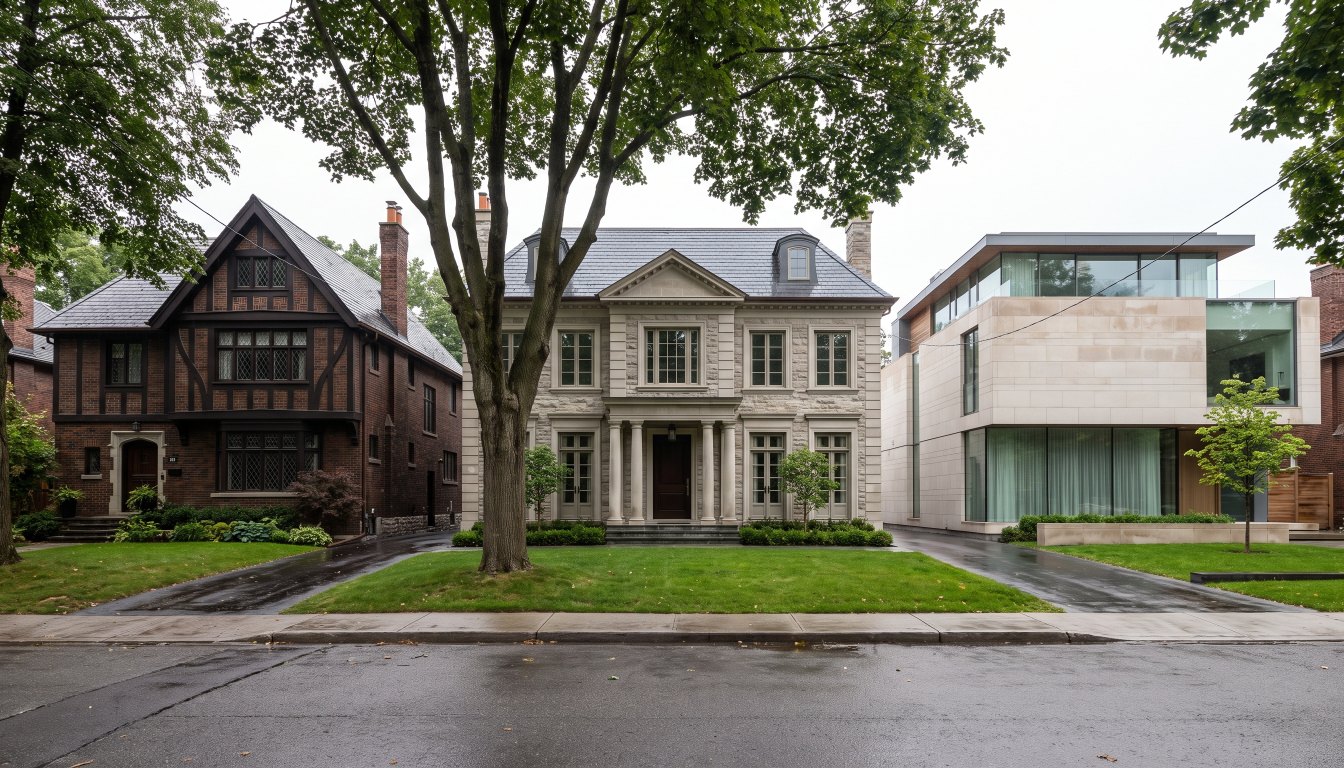
There is no official definition. No statute, no regulator and no real estate board sets a luxury threshold in Ontario. The number brokerages use for reporting purposes in the GTA is $3 million — RE/MAX applied exactly that benchmark to Toronto in 2026, while using $1.5 million for Edmonton in the same report. The threshold is relative to the city, not absolute.
In practice, the Toronto market starts behaving differently somewhere around $2.5 million to $3 million: the buyer pool becomes countable, financing changes character, comparable sales run out, and the Toronto land transfer tax rate begins to climb steeply. Those four changes are a better definition of luxury than any price tag.
Nobody is in charge of the word
“Luxury” is not a regulated term in Ontario real estate. There is no threshold in the Trust in Real Estate Services Act, nothing in the Toronto Regional Real Estate Board’s rules, and no definition an appraiser is required to use. Any agent can call any listing luxury, and many do.
What exists instead are reporting conventions. When RE/MAX Canada published its 2026 Spotlight on Luxury Real Estate, it used $3 million as the benchmark for the Greater Toronto Area — and $1.5 million for Edmonton in the same document. That tells you everything about how the word works. It is relative to the market it is used in.
Where Toronto actually changes gear
Price thresholds are arbitrary. Behaviour is not. Four things genuinely change as you move up the Toronto market, and they change at roughly the same point.
1. The buyer pool becomes countable
At the GTA average of $993,410, thousands of households are actively shopping in any given month. Above $3 million, 300 sales happened across the entire region in four months of 2026. In a specific neighbourhood, in a specific price band, the number of genuine buyers at any moment is often a dozen or two. You can practically name them.
2. Comparable sales run out
Below $2 million there is usually a recent, close, honest comparable. Above $3 million there frequently is not. Rosedale recorded twenty $3 million-plus sales in four months. Filter those for similar lot size, similar age, similar quality of construction and you may be left with two. That is why per-square-foot averages stop working and land value and replacement cost take over.
3. Financing changes character
Conventional insured lending disappears entirely; you are into uninsured, often bespoke, lending with tighter appraisal scrutiny and larger down payments. Appraisal risk becomes a live issue precisely because comparables are thin — a lender’s appraiser working from the same four sales you are can land meaningfully below your contract price.
4. The tax rate climbs steeply
This one is concrete. The City of Toronto’s municipal land transfer tax is graduated, and the steep bands start at $3 million:
| Portion of price | Toronto MLTT rate (since 1 April 2026) |
|---|---|
| $400,000.01 – $2,000,000 | 2.0% |
| $2,000,000.01 – $3,000,000 | 2.5% |
| $3,000,000.01 – $4,000,000 | 4.40% |
| $4,000,000.01 – $5,000,000 | 5.45% |
| $5,000,000.01 – $10,000,000 | 6.50% |
| $10,000,000.01 – $20,000,000 | 7.55% |
| Over $20,000,000 | 8.60% |
Ontario’s own land transfer tax adds 2.5% on everything above $2 million on top of that. The City has, in effect, drawn its own luxury line at $3 million and priced it. That is the closest thing to an official definition Toronto has.
Expensive is not the same as luxury
This is the distinction that costs people money. A brand-new 4,000 square foot house on a 25-foot lot on a four-lane arterial can be listed at $2.9 million. It is expensive. It is not scarce, because more of them can be built next year and the year after.
Scarcity is the whole game. What cannot be manufactured:
- Lot size and shape. Two-acre minimums on the Bridle Path exist because the land was platted that way in the 1950s. Nobody is making more.
- Ravine and water frontage. Protected by the City’s Ravine and Natural Feature Protection Bylaw and often by TRCA regulation as well, which is a constraint on the owner and a guarantee for the neighbour.
- Ceiling height and light. Structural, expensive and usually impossible to add later.
- A protected view. A condominium view is only worth something if nothing can be built in front of it.
- A heritage streetscape. The reason South Rosedale, North Rosedale, Wychwood Park and Teiaiagon–Baby Point look the way they do is that a Heritage Conservation District plan says they must.
The practical takeaway
Judge a property by what cannot be replicated on the next street. Finishes, appliances, millwork and technology all depreciate and all get replaced. Land, frontage, light, elevation, ravine and a protected streetscape do not. If you can list what is scarce about a property in one sentence, it is a luxury property. If the sentence is about the kitchen, it is an expensive house.
What about the word “estate”?
Also unregulated. In listing language it usually signals a large lot, often multi-acre, frequently with a gated or long private drive — the Bridle Path being the clearest Toronto example, with a two-acre minimum lot size and typical parcels of two to four acres. But nothing prevents the word being used on a half-acre suburban lot, and it regularly is.
So what should you call your home?
If you are selling, the honest answer is that the label does not matter and the positioning does. Buyers above $3 million are, almost without exception, experienced, well advised and immune to adjectives. What moves them is evidence: the survey, the lot dimensions, the permits, the mechanical age, the property tax bill, the reserve fund if it is a condominium, and a price that is defensible against the small number of sales that actually happened.
Frequently asked questions
Is there an official luxury price threshold in Toronto?
No. No board, regulator or statute defines one. Brokerages choose a threshold for reporting, and RE/MAX used $3 million for the Greater Toronto Area in its 2026 luxury report. Different firms use different numbers, which is why luxury statistics from two sources rarely agree.
Is a $2 million house in Toronto a luxury home?
By most reporting definitions, no. With a GTA average selling price of $993,410 in August 2026, a $2 million home is roughly double the average — expensive, but it still sits in a deep, competitive market with plenty of comparable sales. The genuinely thin, slow, negotiated part of the market begins higher.
What makes a home luxury other than price?
Scarcity of the land, quality and permanence of the build, and features that cannot be retrofitted — lot size and shape, ceiling height, natural light, ravine or water frontage, protected views, and a location with a fixed supply of comparable properties. A large new house on a small lot on a busy road is expensive. It is not scarce.
Does luxury mean the same thing in Etobicoke as in Rosedale?
The price points differ but the behaviour is the same. Kingsway South recorded 9 sales above $3 million in the January to April 2026 count against Rosedale’s 20. Both are thin markets where a handful of transactions set the tone for a year, and both reward preparation over volume marketing.
Do luxury homes appreciate faster?
Not reliably, and anyone who tells you otherwise is selling something. What the top end does offer is land in fixed supply, which is the part of a property that holds value over decades. The building on it depreciates like any other building. That distinction matters far more than any claim about appreciation rates.
Is a luxury condo the same market as a luxury house?
No. In the first four months of 2026, four condominiums sold above $5 million in the Toronto core while the wider condo market recorded record unsold inventory and zero new project launches in the GTHA. Those are two completely different markets that happen to share a property type.
Thinking about buying or selling at the top end?
Send me the address, or the shortlist you are considering. I will tell you what the property is actually worth today, what the land is worth without the house, what the transfer tax and carrying costs will be, and whether the deal makes sense. Confidential, always.
[email protected] · 833-330-1925 · Book a free consultation
Confidential. Read personally and answered within 24 hours. I never share, sell or distribute your information.
Related reading
- Toronto luxury real estate in 2026: what the numbers actually say
- How many $3 million homes actually sell in Toronto each year?
- What actually moves house value in Toronto and the GTA
- Free AI home valuation for Toronto and the GTA
Sources
Everything above that is a rule, a rate or a published number comes from these. Verify anything that matters to your own deal.
- RE/MAX Canada — 2026 Spotlight on Luxury Real Estate, Greater Toronto
- Toronto Regional Real Estate Board — Market Watch, August 2026
- City of Toronto — Municipal Land Transfer Tax rates and fees
About the author — Jatin Dua, Broker of Record
I’m the Broker of Record at RE/MAX Quantum Realty, 799 The Queensway in Etobicoke, and I work with buyers, sellers and investors across Toronto and the west GTA. A large part of my work sits in the upper end of the market, where the comparables are thin, the rules are heavier and the cost of a wrong number is measured in hundreds of thousands of dollars.
The free estimators on this site are mine. I built them because the first question every owner asks is “what is it worth?” and the honest answer starts with a number you can check yourself. [email protected] or 833-330-1925.