
Published 7 September 2026 · Updated 29 September 2026 · By Jatin Dua, Broker of Record, RE/MAX Quantum Realty
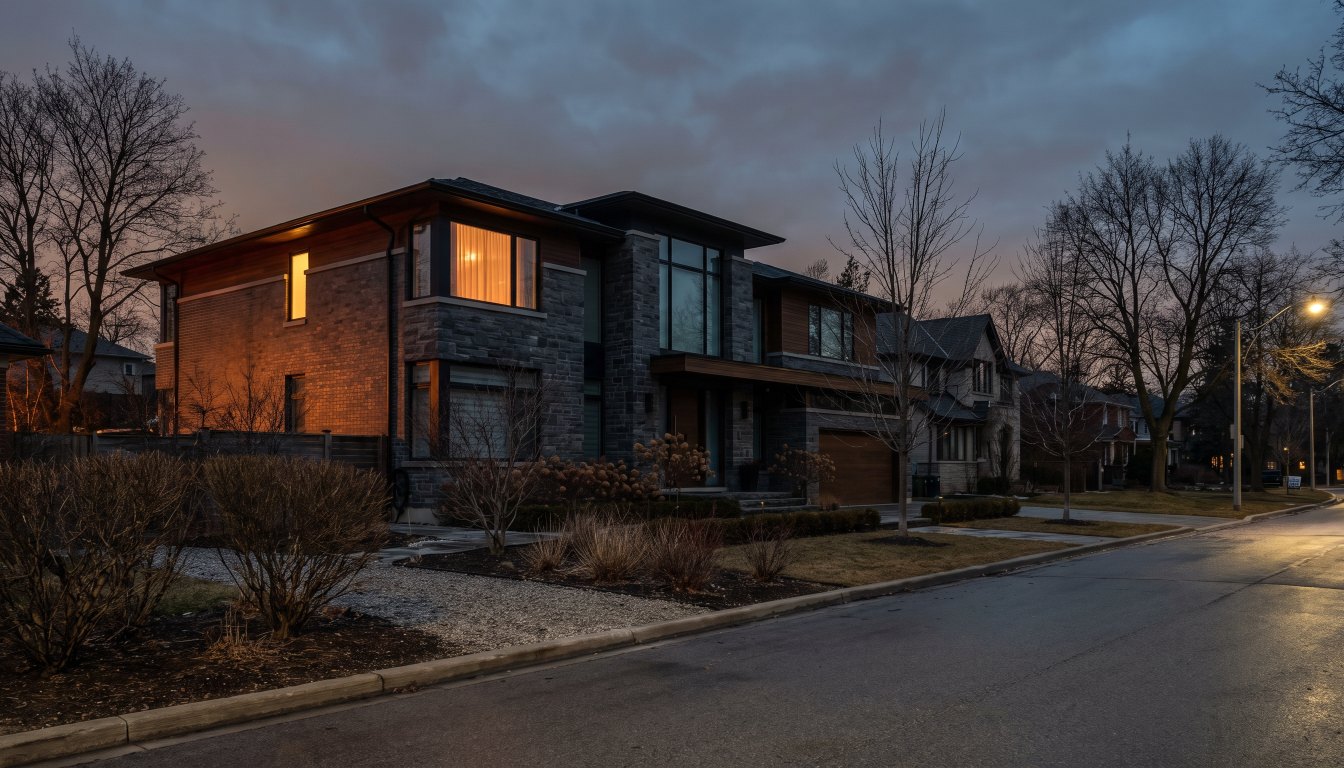
The expensive mistakes in Toronto’s luxury market are almost never about price. They are about constraints discovered after closing — a ravine designation, a heritage district plan, twelve protected trees standing where the pool was going, an unpermitted addition — and about cash discovered too late, principally a land transfer tax bill of $271,450 on a $5 million purchase that cannot be financed.
The good news is that every item on this list is discoverable in advance, and most of them within a two-week diligence period. Ontario provides no cooling-off period on a resale purchase, so the diligence has to happen before you are bound, not after.
1. Assuming you can rebuild
Check three things before you offer: whether the property sits in a mapped ravine protected area under Municipal Code Chapter 658, whether it falls in a TRCA regulated area under O. Reg. 41/24, and whether it is individually designated under Part IV of the Ontario Heritage Act or inside a Part V Heritage Conservation District. Any one of these changes what a rebuild looks like. All three together can rule it out.
2. Not counting the trees
Chapter 813 requires a permit to injure, destroy or remove any privately owned tree with a trunk diameter of 30 centimetres or more. Fines run from $500 to $100,000 per tree, plus a possible special fine of up to $100,000 under the City of Toronto Act, and replacement trees must be maintained for two years or cash in lieu paid at 120% of replanting plus two years of maintenance. On a mature lot, a dozen qualifying trees is normal.
3. Forgetting that land transfer tax is cash
$122,950 at $3 million. $191,950 at $4 million. $271,450 at $5 million. $721,450 at $10 million. Payable on closing, on top of the down payment, and not financeable.
4. Going firm without doing the work first
Ontario has no cooling-off period on a resale purchase. If competition requires a firm offer, the inspection, the lawyer’s title and bylaw review and the financing confirmation must happen before you write it.
5. Trusting the square footage
There is no single measurement standard applied to resale listings in Ontario. Whether below-grade area, stairwells, garages and exterior wall thickness are counted varies by who measured. Ask what standard produced the number before you compare anything to anything.
6. Paying for the finishes and ignoring the land
The building depreciates. The lot does not. Two identical houses on different lots can differ by millions, and per-square-foot pricing cannot see the difference.
7. Skipping the survey
Encroachments, mutual driveways, easements and rights of way are common in older luxury neighbourhoods and typically surface only when you try to build. Obtain the survey.
8. Buying a view that is not protected
Identify every site in the sightline, check what the zoning permits there, and look for active development applications. A view over water, a ravine, a park or a Heritage Conservation District is structurally different from a view over a low-rise site zoned for a tower.
9. Not reading the reserve fund study
In a condominium, the status certificate discloses the reserve fund, the most recent reserve fund study, any special assessment levied in the current budget year, arrears on the unit, and any outstanding litigation. It cannot disclose the assessment that has not been voted on. The study is where that risk lives.
10. Ignoring the vacant home tax
Toronto’s Vacant Home Tax is 3% of Current Value Assessment and every residential property requires an annual declaration of occupancy status. Failing to declare defaults the property to vacant. On a property assessed at $3 million that is $90,000 a year, and it catches renovation projects and second properties routinely.
11. Misunderstanding your representation
Under TRESA you are either a client under a written representation agreement, owed full duties, or a self-represented party, owed only fairness and honesty and no advice. The middle tier no longer exists. You must be given the RECO Information Guide before any brokerage provides services.
12. Underestimating how long it takes
With roughly 300 GTA sales above $3 million across four months, the property you want may not appear this season. Buyers who set a deadline rather than a standard end up compromising on the land — the one thing they cannot change afterwards.
The practical takeaway
Price is the part of a luxury purchase everyone negotiates and the part that matters least over ten years. What matters is whether the land is what you think it is and whether you may do what you intend to do with it. Verify both in writing before you are bound.
Frequently asked questions
What is the single most expensive mistake buying a luxury home in Toronto?
Buying on the assumption that you can rebuild, extend or add a pool, then discovering the property sits in a mapped ravine protected area, a TRCA regulated area, a Heritage Conservation District, or all three. There is no cooling-off period on a resale purchase in Ontario, so this has to be confirmed before you are bound.
Do buyers really forget the land transfer tax?
Regularly. On a $5,000,000 Toronto purchase it is $271,450, payable in cash on closing on top of the down payment, and it is not financeable. Buyers plan the down payment carefully and treat closing costs as a rounding error.
Is it a mistake to go firm without an inspection?
It is a risk, and sometimes a necessary one in competition. The mistake is going firm without having done the inspection, the lawyer’s title and bylaw review and the financing confirmation beforehand. Firm is a decision about when the work happens, not whether it happens.
What should I check about trees before buying?
How many privately owned trees on the property have a trunk diameter of 30 centimetres or more, and where they stand relative to anything you plan to build. A permit is required to injure, destroy or remove them, with fines from $500 to $100,000 per tree.
Should I trust the square footage in the listing?
Verify it. There is no single measurement standard applied to resale listings in Ontario, and whether below-grade area, stairwells, garages and wall thickness are counted varies. Ask what standard produced the figure.
What is the most common condominium mistake?
Not reading the reserve fund study. The status certificate discloses the reserve fund and any special assessment levied in the current budget year, but it cannot disclose the assessment that has not been voted on yet. The reserve fund study is where that risk is visible.
Thinking about buying or selling at the top end?
Send me the address, or the shortlist you are considering. I will tell you what the property is actually worth today, what the land is worth without the house, what the transfer tax and carrying costs will be, and whether the deal makes sense. Confidential, always.
[email protected] · 833-330-1925 · Book a free consultation
Confidential. Read personally and answered within 24 hours. I never share, sell or distribute your information.
Related reading
- Buying a luxury house in Toronto: the complete 2026 guide
- Going firm on a $4 million house: the risk nobody prices
- Buying a ravine lot in Toronto: what the bylaw does to your plans
- Land transfer tax on a luxury home in Toronto: the full 2026 numbers
- Reading a status certificate like a buyer’s lawyer
Sources
Everything above that is a rule, a rate or a published number comes from these. Verify anything that matters to your own deal.
- City of Toronto — Municipal Code Chapter 658, Ravine and Natural Feature Protection
- City of Toronto — Municipal Code Chapter 813, Trees
- City of Toronto — Heritage Conservation Districts
- City of Toronto — Municipal Land Transfer Tax rates and fees
- RECO — Information Guide
- Condominium Authority of Ontario — Status certificates
About the author — Jatin Dua, Broker of Record
I’m the Broker of Record at RE/MAX Quantum Realty, 799 The Queensway in Etobicoke, and I work with buyers, sellers and investors across Toronto and the west GTA. A large part of my work sits in the upper end of the market, where the comparables are thin, the rules are heavier and the cost of a wrong number is measured in hundreds of thousands of dollars.
The free estimators on this site are mine. I built them because the first question every owner asks is “what is it worth?” and the honest answer starts with a number you can check yourself. [email protected] or 833-330-1925.