
Published 7 September 2026 · Updated 29 September 2026 · By Jatin Dua, Broker of Record, RE/MAX Quantum Realty
What's Your Home Worth Right Now?
Get a free AI-powered price range for your property in under 90 seconds, based on recent GTA comparable sales. No name or address required.
Get My Free Estimate →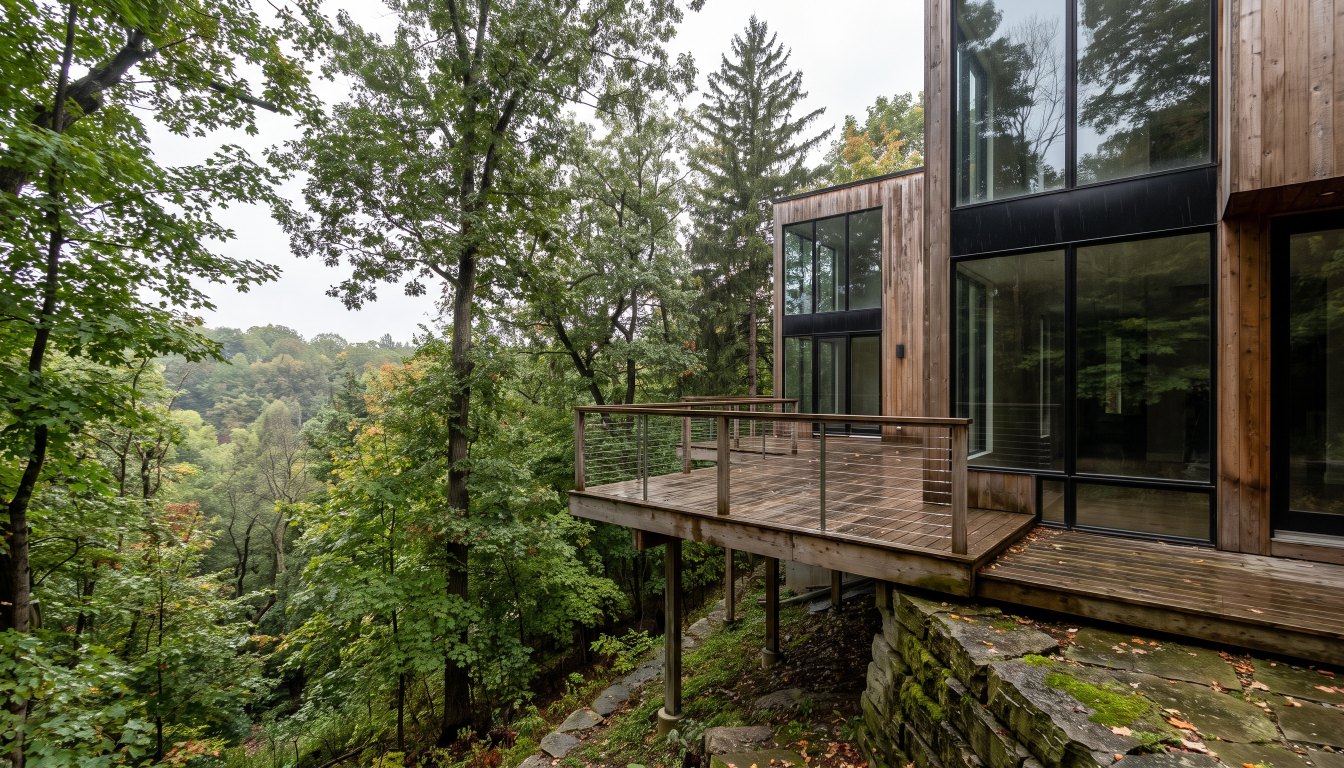
A ravine lot in Toronto is regulated by two separate authorities at once. The City’s Ravine and Natural Feature Protection Bylaw (Municipal Code Chapter 658) requires a permit inside a mapped protected area before you injure, destroy or remove a tree, place or dump fill or refuse, or alter the grade of the land. Separately, if the property sits in a Toronto and Region Conservation Authority regulated area under O. Reg. 41/24, a TRCA permit is required, and the City will not issue a building permit until TRCA clearance is in hand.
The penalties are not nominal. Injuring or destroying a tree carries a fine of $500 to $100,000 per tree, other violations the same range, continuing offences $500 to $10,000 per day, and the City can order restoration at the owner’s expense. Check the mapping before you make an offer, not after.
Why ravine lots command a premium
Look at the streets that produce Toronto’s largest sales. North Rosedale is bounded by the Don Valley and Moore Park ravine to the east and the Park Drive Reservation ravine to the south. Hoggs Hollow sits inside the Don Valley itself. Baby Point occupies a peninsula overlooking the Humber. Humber Valley Village runs down to the Humber River. The Old Mill sits on the riverbank.
The reason is straightforward. A ravine gives you privacy, mature tree canopy, quiet and a view, and — unlike a neighbour’s garden — none of it can be built on. The regulation that frustrates you as an owner is what makes the asset permanent.
Two authorities, not one
| City of Toronto | TRCA | |
|---|---|---|
| Instrument | Municipal Code Chapter 658, Ravine and Natural Feature Protection | O. Reg. 41/24 |
| Where it applies | Mapped protected areas on the City’s data maps | Regulated areas: valley and stream corridors, wetlands, shoreline |
| What it controls | Trees, fill, grade alteration | Development, interference with wetlands, alterations to watercourses |
| Sequence | Permit required before the work | Clearance required before the City issues a building permit |
A property can be inside one, both, or neither. The boundaries do not always follow what the land looks like from the back deck, which is why the only reliable answer comes from the mapping for the specific address.
What triggers a ravine permit
Inside a mapped protected area you need a permit to do any of the following:
- Injure, destroy or remove a tree
- Place or dump fill or refuse
- Alter the grade of the land
The listed exemptions are narrow: removal of dead trees, pruning for the health of a tree, emergency work, fruit trees, and placing under 5 cubic metres of fill to maintain an existing manicured area. Note that grading is on the list. Regrading a rear garden to fix drainage — a very common project on a slope — is regulated work.
The tree bylaw applies as well
Even outside a ravine, Chapter 813 requires a permit to injure, destroy or remove any privately owned tree with a trunk diameter of 30 centimetres or more. Where a permit is granted, replacement trees must be planted and kept in good condition for two years, and where replanting on site is not feasible, cash in lieu is calculated at 120% of the cost of replanting and two years of maintenance.
On a mature ravine lot in Rosedale or the Kingsway, it is entirely normal for a rear garden to contain a dozen trees over that threshold. Count them before you plan an addition or a pool.
The buyer’s checklist
- Pull the mapping for the exact address — ravine protected area and TRCA regulated area, separately.
- Ask how much of the lot is table land rather than slope. A 200-foot depth that falls away at 90 feet is a 90-foot usable lot.
- Count and measure the trees over 30 centimetres in trunk diameter anywhere your plans might touch.
- Check the grading and drainage history. Ravine slopes shed water toward the house as often as away from it.
- Ask whether previous work was permitted. An unpermitted retaining wall, patio or fill placement becomes your problem on closing.
- Build the approval timeline into your closing date and budget, not your optimism.
If you are replacing the house entirely
TRCA publishes guidance specifically on replacing an existing home in a regulated area, and the essential point is sequencing: TRCA clearance comes first, then the municipal building permit. Design work done before you know what TRCA will accept is design work you may pay for twice.
The practical takeaway
Ravine lots are the best land in Toronto and the least forgiving. Everything you might want to do with the outdoors — a pool, an addition, a terrace, regrading, taking down a tree that blocks the light — is regulated work with real fines attached. Buy one with your eyes open, get the mapping before you sign, and treat the permit process as part of the purchase rather than something to worry about later.
Frequently asked questions
How do I know if a property is in a ravine protected area?
The City publishes the protected area boundaries on its data maps. A property can be in a mapped ravine protection area, in a TRCA regulated area, in both, or in neither, and the boundaries do not always match what the land looks like. Confirm the actual mapping for the specific address before you make an offer, and have your lawyer confirm it as part of your diligence.
What triggers a ravine permit?
Inside a mapped protected area, three categories of work: injuring, destroying or removing a tree; placing or dumping fill or refuse; and altering the grade of the land. Exemptions include removing dead trees, health pruning, emergency work, fruit trees, and placing under 5 cubic metres of fill to maintain an existing manicured area.
What are the penalties for cutting a tree without a permit?
Under Chapter 658, tree injury or destruction carries a fine from a minimum of $500 to a maximum of $100,000 per tree. Continuing offences run $500 to $10,000 per day. The City can also order restoration at the violator’s expense. Under the private tree bylaw in Chapter 813, the range is the same, with a possible additional special fine of up to $100,000 under the City of Toronto Act.
Does a ravine lot stop me from renovating?
No, but it changes the sequence and the cost. Work inside the protected area needs a permit, and where TRCA jurisdiction applies you need TRCA clearance before the City will issue a building permit. That is a real timeline, not a formality — build it into your plans and your closing date, not into your hopes.
Is a ravine lot worth the trouble?
That is the trade-off. The same regulation that constrains you also guarantees that the view will still be there in thirty years, which is precisely why ravine and valley frontage carries a premium in Rosedale, Hoggs Hollow, Baby Point, Humber Valley Village and the Old Mill area. You are paying for permanence and accepting rules as the price of it.
Does the ravine part of my lot count as usable land?
Not in the way a flat rear garden does. A slope that falls away into the valley cannot support a pool, an addition or most landscaping, and it is regulated on top of that. When you compare lot depths between two properties, ask how much of it is table land.
Thinking about buying or selling at the top end?
Send me the address, or the shortlist you are considering. I will tell you what the property is actually worth today, what the land is worth without the house, what the transfer tax and carrying costs will be, and whether the deal makes sense. Confidential, always.
[email protected] · 833-330-1925 · Book a free consultation
Confidential. Read personally and answered within 24 hours. I never share, sell or distribute your information.
Related reading
- TRCA permits: the approval that comes before your building permit
- The Toronto tree bylaw can cost you $100,000. Here is how it works
- Conservation authority regulated land: TRCA and CVC explained
- Buying a luxury house in Toronto: the complete 2026 guide
Sources
Everything above that is a rule, a rate or a published number comes from these. Verify anything that matters to your own deal.
- City of Toronto — Municipal Code Chapter 658, Ravine and Natural Feature Protection
- City of Toronto — When to apply for a tree or ravine permit
- Toronto and Region Conservation Authority — Replacing an existing home
- City of Toronto — Municipal Code Chapter 813, Trees
About the author — Jatin Dua, Broker of Record
I’m the Broker of Record at RE/MAX Quantum Realty, 799 The Queensway in Etobicoke, and I work with buyers, sellers and investors across Toronto and the west GTA. A large part of my work sits in the upper end of the market, where the comparables are thin, the rules are heavier and the cost of a wrong number is measured in hundreds of thousands of dollars.
The free estimators on this site are mine. I built them because the first question every owner asks is “what is it worth?” and the honest answer starts with a number you can check yourself. [email protected] or 833-330-1925.