Published 2 November 2026 · By Jatin Dua, Broker of Record, RE/MAX Quantum Realty
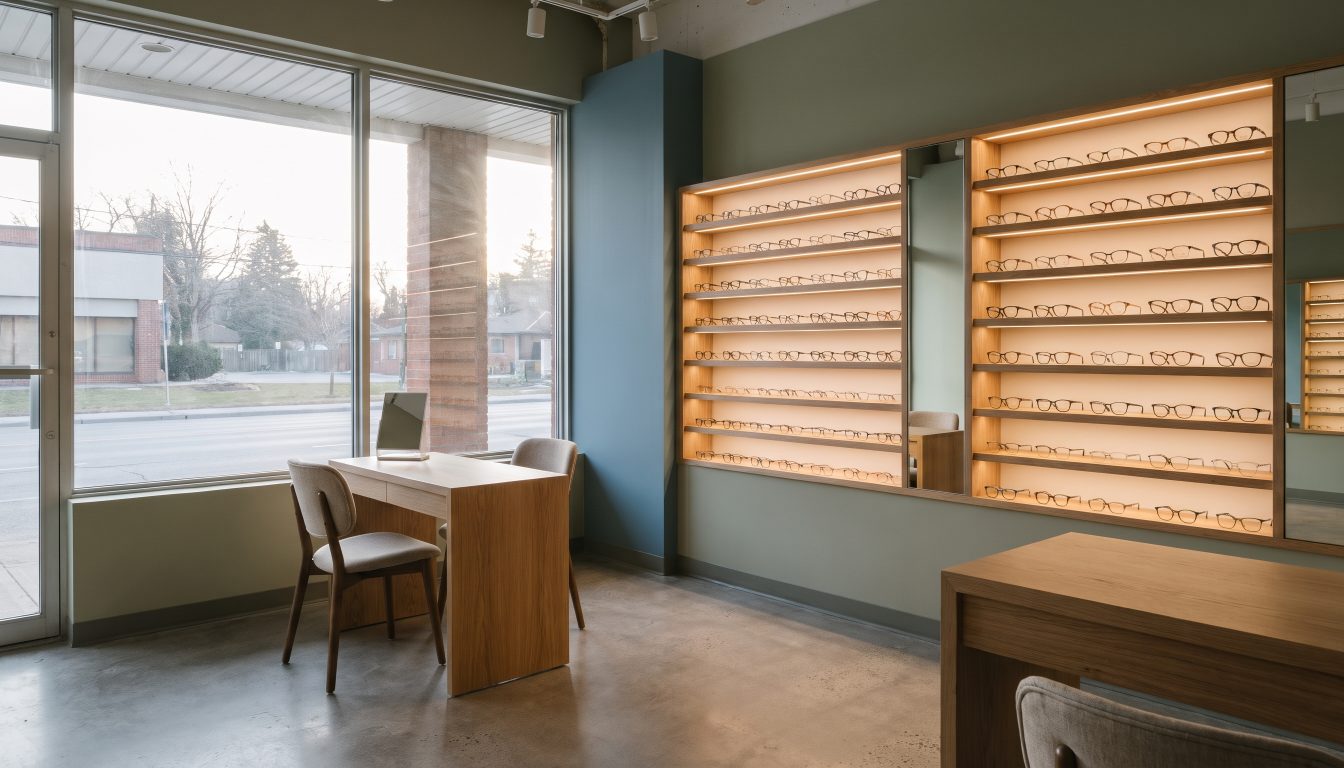
To sell an optometry practice in Ontario, give yourself two to three years to clean up the books, secure the lease and find the right buyer, usually an associate, another optometrist or a larger group. Only Ontario-registered optometrists may hold shares of an optometry corporation, so a share sale needs an optometrist buyer. Records must be transferred properly and the College told within 14 days.
This guide is for Ontario optometrists who plan to sell a practice in 2027 or soon after, whether to retire, move or join a larger group. You will get the steps in order, the College of Optometrists of Ontario rules that apply to a sale, and the spots where optometry deals usually stall.
A quick word on my role. I am a commercial broker. I handle the sale of the business and the real estate behind it, and I work alongside your lawyer, your accountant, the buyer’s lender and, where needed, a practice appraiser. I am not a lawyer, accountant or appraiser, so confirm the legal and tax points below with those professionals.
How far ahead should you plan to sell an optometry practice?
Start earlier than feels necessary. Buyers and their banks read your recent financial statements. Changes you make now, such as trimming overhead, adding an associate or renewing the lease, take a year or more to show up in those numbers. In my view, two to three years of runway lets you fix problems instead of discounting the price for them.
Use that time to get these in order:
- Clean books. Separate personal spending from practice costs so the real profit is easy to see.
- A revenue split. Show OHIP-insured exams, private exams, eyewear, contact lenses and other services as separate lines. Buyers value them differently.
- A patient count you can defend. Write down how you define an active patient, for example seen in the last 24 months, and keep the recall list current.
- An equipment list. Age, service history and calibration records for each major instrument.
- The lease. Remaining term, renewal options and the landlord’s rules for assigning it to a buyer.
Who is allowed to buy an optometry practice in Ontario?
This is where optometry differs from most businesses. The College says only optometrists registered in Ontario may be shareholders in an Optometry Professional Corporation, and that applies to voting and non-voting shares. Holding companies cannot own those shares. Family members cannot either, unless they are also Ontario-licensed optometrists.
Non-optometrists are limited by the conflict-of-interest rules in O. Reg. 119/94 under the Optometry Act. An optometrist who practises in a working arrangement with anyone other than another optometrist, a physician or a short list of public bodies is in a conflict, unless they work as an independent contractor under a written agreement that leaves them in control of patients, fees, records and advertising. My guide to buying an optometry practice in Ontario walks through that agreement clause by clause.
So your realistic buyers are:
- Your associate. Often the smoothest sale, because patients already know them.
- Another optometrist or group of optometrists nearby who want more patients or a second location.
- A larger eye care group. FYidoctors, part of FYihealth group, reported 22 clinic mergers and acquisitions in 2025, six of them in Ontario. Any group buyer has to fit the same College rules, so ask early how they plan to structure the deal.
Should you sell the assets or the shares of your optometry corporation?
There are two basic ways to sell, and each one changes your tax and your paperwork.
Asset sale
The buyer purchases the equipment, optical inventory, patient records, practice name and goodwill. Your corporation keeps its own history, and the sale money lands inside it. This is the usual route when the buyer is a group, a new corporation or anyone who is not an Ontario optometrist.
Share sale
The buyer takes over your professional corporation itself, history included. Because only Ontario-registered optometrists may hold those shares, a share sale only works with an optometrist buyer. The College also says the Registrar may revoke a corporation’s certificate of authorization if it is not told about a change within 14 days, so a change of shareholders has to be reported quickly.
Many owners prefer a share sale because of the lifetime capital gains exemption. The limit for qualified small business corporation shares is $1,275,000 for 2026 dispositions, up from $1,250,000 in 2025, and it is indexed to inflation. Not every corporation qualifies. One that holds a lot of investments, for example, may fail the CRA’s tests. Confirm with your accountant well before you sign anything, because fixing a corporation to qualify can take time. The HST rules on a practice sale are covered in my buying guide linked above.
What do buyers look at first in an optometry practice?
Most buyers start with where the money comes from, because each stream carries a different risk.
- OHIP-insured exams. OHIP pays for routine eye exams for people 19 and under and 65 and over, and for adults with certain eye-related medical conditions. Fees since April 1, 2023 include $51 for a periodic exam for patients 19 and under, $80 for patients 65 and over, and $55 for a major exam for eligible adults 20 to 64. Those fees came from an agreement with the Ontario Association of Optometrists that covered April 1, 2021 to March 31, 2025. As of November 2026, I found no OHIP bulletin announcing a newer optometry agreement, so a buyer cannot count on fee increases.
- Private exams. Most adults 20 to 64 pay privately or through workplace insurance. That income depends on your fees and your recall system.
- Eyewear and contact lenses. Often the largest line. Buyers check how many exam patients buy from your dispensary.
- Who produces the revenue. If you see most patients yourself, a buyer worries they will leave with you. An associate who already sees a good share makes the practice easier to sell.
If you own the unit your clinic is in, or want a sense of what your space could rent or sell for, try the estimator below.
What happens to patient records when you sell or retire?
Records are the heart of an optometry practice’s goodwill, and they come with firm rules.
- Keep them 10 years. O. Reg. 119/94 says every patient health record must be kept for at least 10 years after the last visit. For a patient under 18 at the last visit, the 10 years run from the day they turned, or would have turned, 18.
- Arrange the transfer. The same regulation makes it professional misconduct, when you close your office or retire, to fail to make reasonable efforts to arrange for each patient’s records to go to the patient, to another optometrist the patient chooses, or to another optometrist with notice to the patient.
- Tell patients where their records are. The College’s guidance on relocation and retirement says patients have a right to know, and that you should agree with the optometrist who receives the files that you can still get access to them later if you need to.
In a sale, the purchase agreement should say who sends the patient notice, when it goes out, and that the buyer takes on the 10-year retention duty for the files they receive.
Do not let records fall into a gap. The Information and Privacy Commissioner of Ontario says a custodian’s duties under PHIPA do not end until a legally authorized successor has custody and control of the records, and that retirement, illness or death without a clear plan can leave records abandoned. If your sale is a year or two away, put a written succession plan in place now, naming who takes the files if something happens before closing.
What do you have to tell the College of Optometrists when you sell?
A sale triggers a few filings. Missing them can cause trouble for both you and the buyer.
| Rule | What it says | Deadline or term |
|---|---|---|
| Practice location changes | Report every new, changed or ended practice location to the College | Within 14 days of the change |
| Professional corporation changes | Tell the College about changes to the corporation, such as new shareholders | Within 14 days, or the certificate may be revoked |
| Who may hold shares | Only Ontario-registered optometrists; no holding companies | Applies at all times |
| Record retention | Keep each patient record after the last visit | At least 10 years (or 10 years after age 18) |
| Closing or retiring | Make reasonable efforts to transfer records to the patient or another optometrist | Before you close |
| Rent tied to fees | A lease where rent is related to fees or volume is a conflict of interest | Applies to any lease you assign |
Source: College of Optometrists of Ontario, Professional Corporations and Updating Your Information pages; O. Reg. 119/94 under the Optometry Act, 1991 (e-Laws). Confirm current requirements with the College and your lawyer.
If you are leaving practice entirely, the College says retirement is not complete until you submit its retirement and resignation form. If you want to keep your membership without practising in Ontario, the College has an inactive class with a reduced fee.
How do the lease and the building affect an optometry practice sale?
The lease can quietly break a deal. Before you list, check how many years are left, whether there are renewal options, and what the landlord needs before it will consent to an assignment. A buyer’s lender will want the lease to run at least as long as the loan.
Optometry adds one rule most landlords do not know. O. Reg. 119/94 treats any lease where the amount payable is related to the fees charged or the volume of business as a conflict of interest. Percentage rent clauses, common in malls, need a lawyer’s review before a buyer takes over your lease. My notes on commercial lease clauses in Ontario cover assignment, renewal and demolition terms in more depth.
If you own the unit or building, you have three choices: sell it with the practice, keep it and lease it to the buyer, or sell it to an investor and lease it back for the transition. My guide to a sale and leaseback in Ontario explains the third route, and how commercial property is valued shows how an investor will price your building on its rent. This is the part of the deal I handle directly: valuing the space, checking zoning and condo rules, and finding the right buyer or tenant.
Should you stay on after you sell your practice?
Most buyers want some transition, because patients stay more readily when the seller introduces the new optometrist. That can mean a few months of handover or a longer period working as an associate.
Two cautions. First, the deal terms for staying on matter as much as the price. Ask what you will be paid, for how long, and whether part of the price depends on future results. Second, non-compete promises are tricky in Ontario. The province’s guide to the Employment Standards Act says non-compete agreements with employees are generally prohibited, with a narrow exception for the sale of a business run as a sole proprietorship or partnership where the seller becomes the buyer’s employee right after the sale. Have your lawyer draft any restrictive covenant to fit your exact structure.
Compare offers on the total package, not the headline number. A higher price paid over several years, tied to targets, while you work under someone else’s rules can be worth less than a lower price paid at closing by a colleague with bank financing. Write down what you want your next three years to look like, then judge each offer against that.
What to do next
- Ask your accountant whether your corporation qualifies for the lifetime capital gains exemption today, and what it would take to qualify.
- Prepare a three-year revenue split by OHIP exams, private exams, eyewear and contact lenses, plus an active-patient count with a written definition.
- Read your lease for term, renewal, assignment and any percentage rent, and talk to the landlord early.
- Put a written records succession plan in place and decide who will send the patient notice.
- If the sale involves your unit, building or a new lease, call me to value the premises and plan how the real estate side fits the practice sale.
Need help with this? Talk to me.
I’m Jatin Dua, Broker of Record at RE/MAX Quantum Realty, and I’m the best agent to do this kind of work for you in Toronto and across the GTA. Over $100 million in GTA sales and 100+ families helped sell. Feel free to contact me any time: call or text 833-330-1925 or email [email protected].
Frequently asked questions
How do I sell my optometry practice in Ontario?
You sell an Ontario optometry practice in stages: prepare clean financials and a revenue split, secure the lease, get a valuation, market it confidentially, then close with your lawyer. In 2027 most buyers are associates, nearby optometrists or larger eye care groups. After closing you must arrange the patient record transfer and report practice changes to the College of Optometrists of Ontario within 14 days.
Can a non-optometrist buy an optometry practice in Ontario?
Not through the shares of an optometry professional corporation, which only Ontario-registered optometrists may hold. A non-optometrist business can only have optometrists practise with it under the independent contractor agreement set out in O. Reg. 119/94, which leaves the optometrist in control of patients, fees, records and advertising. Any such deal in Ontario needs a lawyer’s review in 2027.
Who can own shares in an optometry professional corporation in Ontario?
Only optometrists registered in Ontario with the College of Optometrists of Ontario may hold shares, voting or non-voting. Holding companies cannot be shareholders, and family members cannot either unless they are also licensed Ontario optometrists. That is why a share sale of an Ontario optometry corporation only works when the buyer is an optometrist.
What happens to patient records when an optometrist retires in Ontario?
The retiring optometrist must make reasonable efforts to transfer each patient’s records to the patient, to another optometrist the patient chooses, or to another optometrist with notice to the patient. Failing to do so is professional misconduct under O. Reg. 119/94. Patients must be told where their records are, and the records must still be kept for the full retention period.
How long must an Ontario optometrist keep patient records?
At least 10 years after the patient’s last visit, under O. Reg. 119/94. If the patient was under 18 at the last visit, the 10 years start on the day they turned, or would have turned, 18. When you sell an Ontario practice, the buyer who receives the files should take on that duty in writing.
Do I need to tell the College of Optometrists of Ontario when I sell my practice?
Yes. Optometrists must report changes to their practice locations within 14 days, and a professional corporation must tell the College about changes such as new shareholders within 14 days or risk having its certificate of authorization revoked. If you are retiring, the College requires its retirement and resignation form before your retirement is complete.
Can I use the lifetime capital gains exemption when I sell my optometry practice?
Possibly, if you sell shares and they qualify as qualified small business corporation shares. The CRA lists the exemption at $1,250,000 for 2025 and says it is indexed to inflation. In Ontario only an optometrist can buy optometry corporation shares, and many corporations need clean-up to qualify, so confirm with your accountant well before a 2027 sale.
Is percentage rent a problem when selling an optometry practice?
It can be. O. Reg. 119/94 treats any Ontario lease where the amount payable is related to the optometrist’s fees or volume of business as a conflict of interest. Buyers’ lawyers will flag a percentage rent clause before taking an assignment, so review it with your lawyer and the landlord before you list the practice.
Who buys optometry practices in Ontario in 2027?
The usual buyers are associates already working in the practice, nearby optometrists who want more patients, and larger eye care groups. FYidoctors, for example, reported 22 clinic mergers and acquisitions across Canada in 2025, six in Ontario. Every buyer must fit the College of Optometrists of Ontario rules on ownership and working arrangements.
Sources
- College of Optometrists of Ontario: Professional Corporations (shareholders, certificate of authorization, 14-day notice)
- O. Reg. 119/94 under the Optometry Act, 1991: conflict of interest, records retention, closing a practice (e-Laws)
- College of Optometrists of Ontario: Records, patient access after relocation or retirement
- College of Optometrists of Ontario: Updating your information (practice locations within 14 days)
- Information and Privacy Commissioner of Ontario: Succession planning to help prevent abandoned records (2019)
- Canada Revenue Agency: Line 25400, capital gains deduction limits
- Ontario Ministry of Health: OHIP INFOBulletin 230311, Implementing the New Optometry Services Agreement
- OptikNow: FYihealth group expands to 370 locations, 22 clinic mergers and acquisitions in 2025
- Government of Ontario: Your guide to the Employment Standards Act, non-compete agreements
Related reading
- Where Can You Open a Dental Clinic in the GTA? Zoning by City (2027)
- Buying a Commercial Condo Unit for a Dental Clinic in the GTA (2027)
- Selling Your Dental Practice, Your Building, or Both: Options for Ontario Dentists in 2027
- The Canadian Dental Care Plan in 2027: What It Means for Buying, Selling or Opening a GTA Dental Practice
About the author — Jatin Dua, Toronto and GTA real estate broker
I am Jatin Dua, Broker of Record and co-founder of RE/MAX Quantum Realty Inc., Brokerage, Unit 101, 799 The Queensway, Toronto. I work with buyers and sellers across Toronto and the GTA and have helped more than 100 families sell. Four-plus years of active GTA transactions and over $100 million in sales volume.
Reach me at [email protected] or 833-330-1925, or book a call.
More from the library
- Private School Premises in Ontario: Zoning, Change of Use and Fire Drills
- Print and Sign Shop Premises in Ontario: Hydro, Ventilation, Sign Permits, Zoning and the Lease
- Dental Office Lease in Ontario: 10 Clauses Every Dentist Should Negotiate
- Mimico or Islington-City Centre West? A Condo Buyer’s Guide
- Buying a Rural Lot in Ontario: Septic Systems and Wells Explained
- Post House, 105 George St: Next to Toronto’s First Post Office
How this estimate is produced
The estimate blends recent selling prices for comparable units in the area with the details you entered: size, bedrooms, floor, exposure, parking, locker and condition. It is a statistical estimate, not an appraisal and not a formal opinion of value.
What it cannot see
- Interior condition and upgrades beyond what you told it
- Unit-specific issues: noise, an obstructed view, a pending special assessment
- Your reserve fund and where the maintenance fee is heading
- What is competing with you in your own building right now
What moves the number most
- Floor and exposure, which can separate otherwise identical units
- Parking and locker, each priced separately by buyers
- Kitchen and bathroom condition
- Maintenance fee per square foot against the rest of the building
Treat it as a range, not a price
A single figure to the dollar would be false precision. Use the estimate to decide whether a move is worth exploring. Before you price anything for the market, the number needs checking against what is actually selling and sitting in your building this month, and that takes a person. I will do that for you at no cost and with no obligation.
Market data is sourced from the Toronto Regional Real Estate Board. Information is deemed reliable but is not guaranteed. This tool does not provide an appraisal or a formal opinion of value, and it is not a substitute for advice on your specific property. Jatin Dua, Broker of Record, RE/MAX Quantum Realty.