Published 2 November 2026 · By Jatin Dua, Broker of Record, RE/MAX Quantum Realty
What's Your Home Worth Right Now?
Get a free AI-powered price range for your property in under 90 seconds, based on recent GTA comparable sales. No name or address required.
Get My Free Estimate →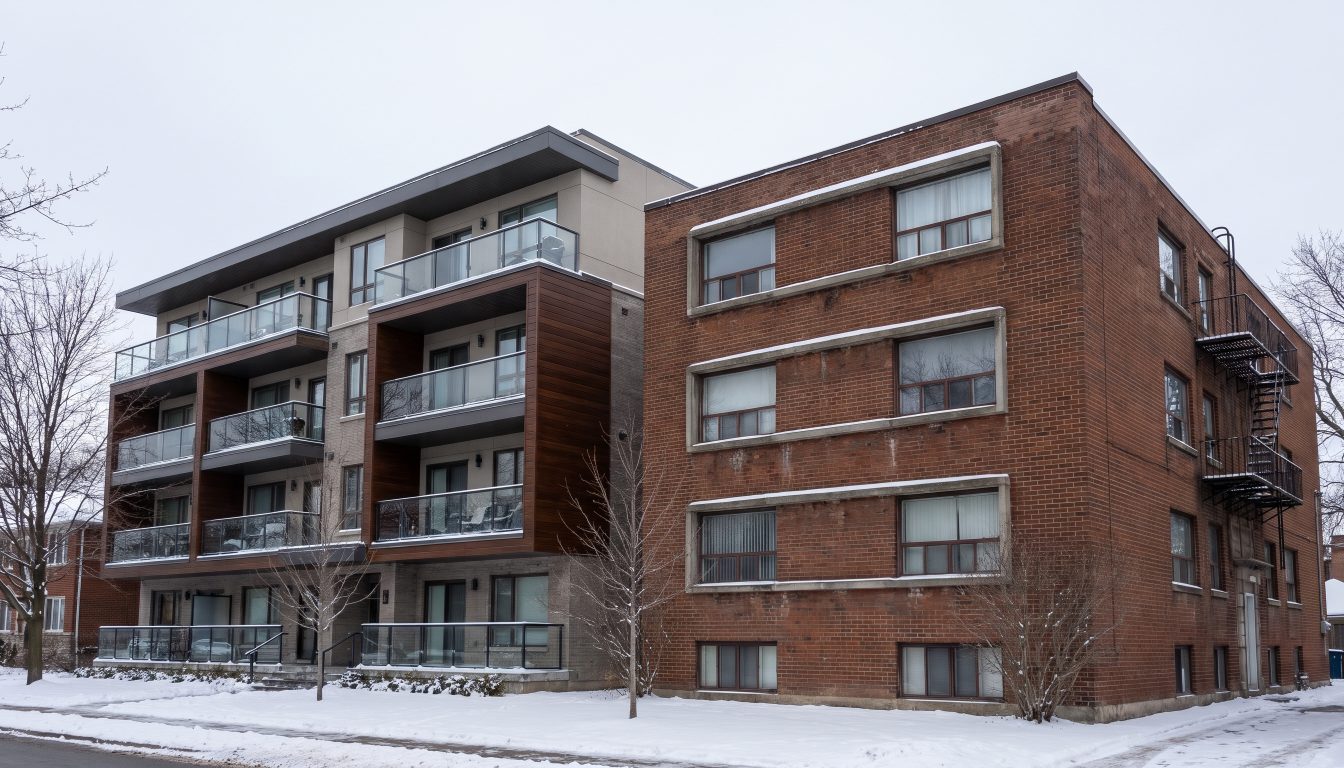
In Ontario, units first occupied for residential purposes after 15 November 2018 are exempt from the rent increase guideline, which is 1.9% for 2027. That covers new buildings, new additions and most new basement units. Landlords still need 90 days’ written notice and 12 months between increases, but there is no cap on the amount.
This guide is for investors who own, or plan to buy, rental units in Ontario and want to know which ones are free of rent control. You will learn the exact November 2018 test, how to prove a unit qualifies, what rules still apply, and how much the exemption is really worth in 2027.
What is Ontario’s rent control exemption for newer units?
Ontario caps yearly rent increases for sitting tenants with a guideline. The guideline is 2.1% for 2026 and 1.9% for 2027. Most units built before late 2018 must follow it.
Section 6.1 of the Residential Tenancies Act, 2006 (the RTA) carves out newer housing. If a unit was first occupied for residential purposes after 15 November 2018, the guideline does not cap rent increases on it. The landlord and tenant still agree on the starting rent, and later increases can be any amount the tenant accepts or the market supports.
The province’s own summary lists three groups: new buildings, additions to existing buildings, and most new basement apartments. The Landlord and Tenant Board (LTB) explained the change in January 2019. Landlords must still give 90 days’ written notice on an LTB form, and they can still raise the rent only once every 12 months. What disappears is the limit on the size of the increase.
For an investor, this one date splits the GTA rental stock into two different products. A 1965 walk-up and a 2022 condo tower can sit on the same street and follow different rent rules for as long as the law stays as it is.
Which rental units are exempt from rent control, and which are not?
The test looks at the first residential occupation of the building, the addition or the unit. It does not look at when the current tenant moved in, when you bought it, or when the unit was renovated.
| Situation | Guideline applies? | Why |
|---|---|---|
| Unit in a building where no part was lived in on or before 15 Nov 2018 | No | RTA s. 6.1(2), new building |
| Unit entirely inside an addition first lived in after 15 Nov 2018 | No | RTA s. 6.1(2), new addition |
| New self-contained unit in a house that had no more than two units on 15 Nov 2018, built in unfinished space or while the owner lived in another unit | No | RTA s. 6.1(3), new unit in a house |
| Unit in a building first occupied before the cut-off, even if gut-renovated since | Yes | The first-occupancy date does not reset |
| Resale condo in a tower first occupied in 2016 | Yes | The building was occupied before the cut-off |
| New unit, but the tenancy agreement was signed on or before 15 Nov 2018 | Yes, for that tenancy only | RTA s. 6.1(4) |
Source: Residential Tenancies Act, 2006, s. 6.1, as reproduced and explained by an Ontario tenancy law resource; Government of Ontario, Residential rent increases.
Two points catch investors. First, the test is about the whole building. One older apartment that was lived in before the cut-off keeps the rest of that building under the guideline, unless the newer units sit in a separate addition. Second, a renovation is not a new building. A full gut job on a 1970s suite does not make it exempt.
A building that was never lived in before the cut-off, such as a former office or warehouse converted to apartments, appears to fit the wording for new buildings. That is my reading of the text, not a ruling, so confirm it with your lawyer before you pay for that assumption.
How much is the rent control exemption worth to an investor?
The value comes from being able to move a sitting tenant to market rent at renewal. In a building under the guideline, a below-market rent can only catch up when the tenant leaves. Here is an illustrative example. Every number is an assumption except the guideline and the cap rate.
- Two similar units each rent for $2,400 a month in 2026.
- At the 2027 renewal, the market rent for the unit is $2,600.
- Unit A is under the guideline. Unit B is exempt.
| Illustrative | Unit A (controlled) | Unit B (exempt) |
|---|---|---|
| 2027 increase allowed | 1.9% | Market, here about 8.3% |
| New monthly rent | $2,445.60 | $2,600.00 |
| Difference per year | $1,852.80 | |
| Value of that gap at a 4.21% cap rate | About $44,000 per unit | |
Source: Illustrative assumptions; 2027 guideline of 1.9% (Government of Ontario, reported July 2026); 4.21% Toronto multifamily cap rate, Lee & Associates, Q3 2026.
The arithmetic: $2,400 × 1.019 = $2,445.60. The gap to $2,600 is $154.40 a month, or $1,852.80 a year. Divided by 0.0421, that is roughly $44,000 of value per unit. A cap rate is the yearly net operating income (NOI, the rent left after operating costs and before mortgage payments) divided by the price.
The flip side matters just as much. If the market rent for that unit is $2,300, the exemption earns you nothing. An exempt tenant can leave, and a controlled tenant paying below market will usually stay. The exemption is an option that pays off when market rents rise faster than the guideline.
To see what your own cash buys and how the cash flow compares across building types, use the calculator below. It is set to $5 million, but you can change every number.
Loading the investment calculator…
Is my building rent controlled? How do you prove the first-occupancy date?
If a tenant disputes it, the landlord must prove the exemption. The RTA puts the burden of proof on the landlord. The province suggests keeping the following records:
- building permits and occupancy permits;
- new-home warranty documents and builder records showing first occupancy;
- for a new unit inside a house: contractor invoices, plans and “before and after” photos showing the space was unfinished, or proof that the owner lived in another unit when the new one was first rented.
When you buy, these records should come with the property. For a new condo, the occupancy date in the purchase file and the condo’s registration documents usually tell the story. For a basement unit, ask the seller for the permit and final inspection. If the unit was built without a permit, you may struggle to prove when it was created, and you may have a bigger zoning or fire-safety problem than rent control.
For the Etobicoke and west-end version of this question, see my local guide on whether an Etobicoke rental is rent-controlled.
What rules still apply to a unit that is exempt from rent control?
The exemption removes the cap. It does not remove the RTA. Here is what stays the same:
- Notice: at least 90 days’ written notice of any increase, on an LTB form. Legal-information sites explain that the N2 form (Notice of Rent Increase, Unit Partially Exempt) tells the tenant the landlord believes the guideline does not apply.
- Timing: no more than one increase every 12 months.
- Evictions and repairs: the same notices, LTB process and maintenance duties apply.
- Above-guideline increases: the AGI sections of the RTA do not apply to exempt units, so there is nothing to apply for. You simply give notice of the new rent.
The RTA also changed in 2026. Under Bills 60 and 97, the notice period on an N4 for unpaid rent fell from 14 days to 7 for notices given on or after 21 September 2026, and an N12 with at least 120 days’ notice no longer needs one month’s compensation. Those rules apply to exempt and controlled units alike. I cover how AGIs work for older buildings in above-guideline rent increases in Ontario for 2027.
How does the November 2018 rule change what you should buy in 2027?
Newer condos and towns bought as rentals
Most condos completed in the last few years are exempt. That makes them simple to manage for rent, but they often carry thin cash flow because purchase prices were set in a stronger market. I walk through that maths in whether an investment condo cash flows.
Older apartment buildings
Almost every walk-up and mid-century tower in the GTA was occupied long before 2018, so the guideline applies to all its units. The opportunity there is the gap between in-place rents and market rents, which closes only on turnover, plus the AGI route for major capital work. The buyer is paying for a slow, predictable catch-up, not a quick one.
New purpose-built rental
Brand-new rental buildings carry the exemption from day one, which is one reason lenders and investors favour them. I cover the economics in build-to-rent in the GTA for 2027.
Adding units to what you own
A new addition, or a new unit in a house that had no more than two units in 2018, can be exempt even when the rest of the property is not. That is one reason multiplex conversions and garden suites appeal to investors. The permit file is your proof, so keep it.
I treat the exemption as upside, not as the reason to buy. When I underwrite a building with a client, I first make the numbers work at today’s in-place rents, then I look at what the exemption, or the turnover gap in an older building, adds over five years. If a deal only works by assuming large rent increases on exempt units, the price is too high.
What are the risks of relying on the rent control exemption?
Market rents can fall. Lee & Associates reported Toronto multifamily vacancy of 3.85% and an average asking rent of $2,222 per unit in Q3 2026, with rents easing after a steep run-up, mostly in higher-end buildings facing new supply. CMHC’s 2025 rental market survey put Toronto’s purpose-built vacancy at 3%, the first time it reached that level since the pandemic, and said turnover rents declined. Freedom to raise rent is worth little when tenants have choices.
Turnover costs money. Pushing an exempt tenant to the top of the market can trigger a move-out. A vacant month, cleaning, painting and leasing fees can wipe out a year of the higher rent.
Policy can change. The exemption exists because of a 2018 amendment, and a future government could narrow it. The law contains no promise that today’s exempt units stay exempt forever.
A listing that says “no rent control” is a claim, not proof. If any part of the building was lived in on or before 15 November 2018, or the basement unit was built without permits, the guideline may apply after all. Then the rents you were promised could be unlawful, and a tenant can dispute an improper increase at the LTB within 12 months. Ask for the occupancy and permit documents, and have your lawyer review them before you waive conditions.
How do you check rent control status during due diligence?
- Get the first-occupancy evidence: occupancy permit, warranty enrolment or builder records for each building or addition.
- Match each unit on the rent roll to its status: controlled, exempt, or exempt but covered by an old tenancy signed before the cut-off.
- Read the last rent-increase notice for each unit. An N1 suggests the landlord treated the unit as controlled; an N2 suggests exempt.
- Check that increases were at least 12 months apart with 90 days’ notice. A missed notice can make an increase void.
My full list is in the apartment building due diligence checklist for Ontario.
What to do next
- List every unit you own or plan to buy, and mark each one controlled or exempt with the document that proves it.
- Underwrite at in-place rents first; treat any exempt rent growth as a bonus, using today’s vacancy data.
- Ask for permits and occupancy records on any basement unit, addition or conversion before you firm up.
- Have your lawyer confirm status on anything unusual, such as a conversion or a mixed old-and-new building.
- Run the purchase through the calculator above, and book a call with me if you want to walk through a specific building and its rent roll.
Need help with this? Talk to me.
I’m Jatin Dua, Broker of Record at RE/MAX Quantum Realty, and I’m the best agent to do this kind of work for you in Toronto and across the GTA. Over $100 million in GTA sales and 100+ families helped sell. Feel free to contact me any time: call or text 833-330-1925 or email [email protected].
Frequently asked questions
Is my building rent controlled if it was built after 2018 in Ontario?
Usually not. Under section 6.1 of Ontario’s Residential Tenancies Act, units in a building that no one lived in on or before 15 November 2018 are exempt from the rent increase guideline, so the 2027 cap of 1.9% does not limit them. The landlord must still give 90 days’ written notice and wait 12 months between increases. If any part of the building was occupied before the cut-off, the exemption may not apply.
What does first occupied for residential purposes after November 15, 2018 mean?
It means the first time anyone lived in the unit, addition or building was after 15 November 2018. Ontario looks at that first residential use, not at when you bought the property, when the current tenant moved in or when it was renovated. A 1970s suite renovated in 2025 is still controlled. The landlord carries the burden of proving the date, usually with occupancy permits and builder records.
Are new condos in Toronto exempt from rent control?
Yes, if the condo building was first occupied after 15 November 2018. A rented condo in such a building is not capped by Ontario’s rent increase guideline, which is 1.9% for 2027. A resale condo in a tower first occupied in 2016 is still controlled. The usual RTA rules on notice, the 12-month gap between increases, repairs and evictions apply in both cases.
Can a landlord raise rent by any amount on an exempt unit in Ontario?
Yes. For units first occupied after 15 November 2018, Ontario sets no limit on the size of the increase. The landlord must still give at least 90 days’ written notice on a Landlord and Tenant Board form and can raise the rent only once every 12 months. In practice, the market limits the increase, because a tenant facing an above-market rent can move out.
Does the 2027 rent increase guideline of 1.9% apply to new buildings in Ontario?
No. Ontario’s 1.9% guideline for 2027 applies to most rental units first occupied on or before 15 November 2018. Units in buildings, additions and most new basement apartments first occupied after that date are exempt. The guideline also does not apply when a new tenant moves in, because the landlord and the new tenant agree on the starting rent.
Is a basement apartment built after 2018 exempt from rent control in Ontario?
Often, yes. A new self-contained unit in a house that had no more than two units on 15 November 2018 is exempt if it became a unit after that date and was built in unfinished space, or the owner lived in another unit when it was first rented. It needs its own kitchen, bathroom and lockable entrance. Keep permits, invoices and before-and-after photos as proof.
Can a landlord of an exempt unit apply for an above-guideline increase in Ontario?
No, and there is no need to. The RTA sections on above-guideline increases do not apply to units first occupied after 15 November 2018. The landlord of an exempt unit simply gives 90 days’ written notice of the new rent, no more than once every 12 months. AGIs matter for older, controlled buildings that need major capital work such as a roof or boiler.
Which form does a landlord use for a rent increase on an exempt unit in Ontario?
Landlords commonly use Form N2, the Notice of Rent Increase (Unit Partially Exempt), for units they believe are not covered by the guideline. Form N1 is used for controlled units. Either way, the notice must be in writing and given at least 90 days before the increase. Using the wrong form or giving short notice can make the increase invalid, so check the current form on the Tribunals Ontario site.
Does the rent control exemption apply to a tenant who signed before November 15, 2018?
No, not for that tenancy. Section 6.1(4) of Ontario’s Residential Tenancies Act says the exemption does not apply to a unit whose tenancy agreement was entered into on or before 15 November 2018. That tenant stays under the guideline, which is 1.9% for 2027. Once that tenancy ends, a later tenancy in a qualifying new unit can be exempt.
Sources
- Government of Ontario: Residential rent increases
- Tribunals Ontario (LTB): News release on rent increases for units first occupied after 15 November 2018 (24 Jan 2019)
- Residential Tenancies Ontario: Exemptions from the guideline for rent increases (RTA s. 6.1)
- Steps to Justice (CLEO): Find out if you’re covered by the guideline
- PayProp Canada: Market update July 2026, new rent increase guideline
- Lee & Associates: Toronto multifamily market report, Q3 2026
- CMHC: Canada’s vacancy rate rises amid historically high rental construction (Dec 2025)
- Gowling WLG: Ontario’s new LTB rules now in effect (Oct 2026)
Related reading
- How to Invest $5 Million in GTA Real Estate (2027): Your Real Options
- What $5 Million Buys in GTA Real Estate in 2027: Houses, Buildings, Plazas and Land
- A $5 Million House or a $5 Million Apartment Building in Toronto? The 2027 Math
- Commercial vs Residential Real Estate Investment in the GTA (2027)
About the author — Jatin Dua, Toronto and GTA real estate broker
I am Jatin Dua, Broker of Record and co-founder of RE/MAX Quantum Realty Inc., Brokerage, Unit 101, 799 The Queensway, Toronto. I work with buyers and sellers across Toronto and the GTA and have helped more than 100 families sell. Four-plus years of active GTA transactions and over $100 million in sales volume.
Reach me at [email protected] or 833-330-1925, or book a call.
More from the library
- How Much Is a Dental Practice Worth in Ontario? (2027)
- Buying an Apartment Building in Toronto and the GTA (2027): A Step-by-Step Guide
- Red Flags When Buying a Restaurant in Toronto: 12 Warning Signs to Check Before You Sign
- Long Branch vs Mimico: Which Lakeshore Village Suits You?
- Optometry Clinic Space in Ontario: Zoning, Building Code, Lease Terms and the Retail-Optical Question
- Charbonnel Townhomes, Avenue Rd: 3,400 Sq Ft With an Elevator and a Garage