
Published 2 November 2026 · By Jatin Dua, Broker of Record, RE/MAX Quantum Realty
What's Your Home Worth Right Now?
Get a free AI-powered price range for your property in under 90 seconds, based on recent GTA comparable sales. No name or address required.
Get My Free Estimate →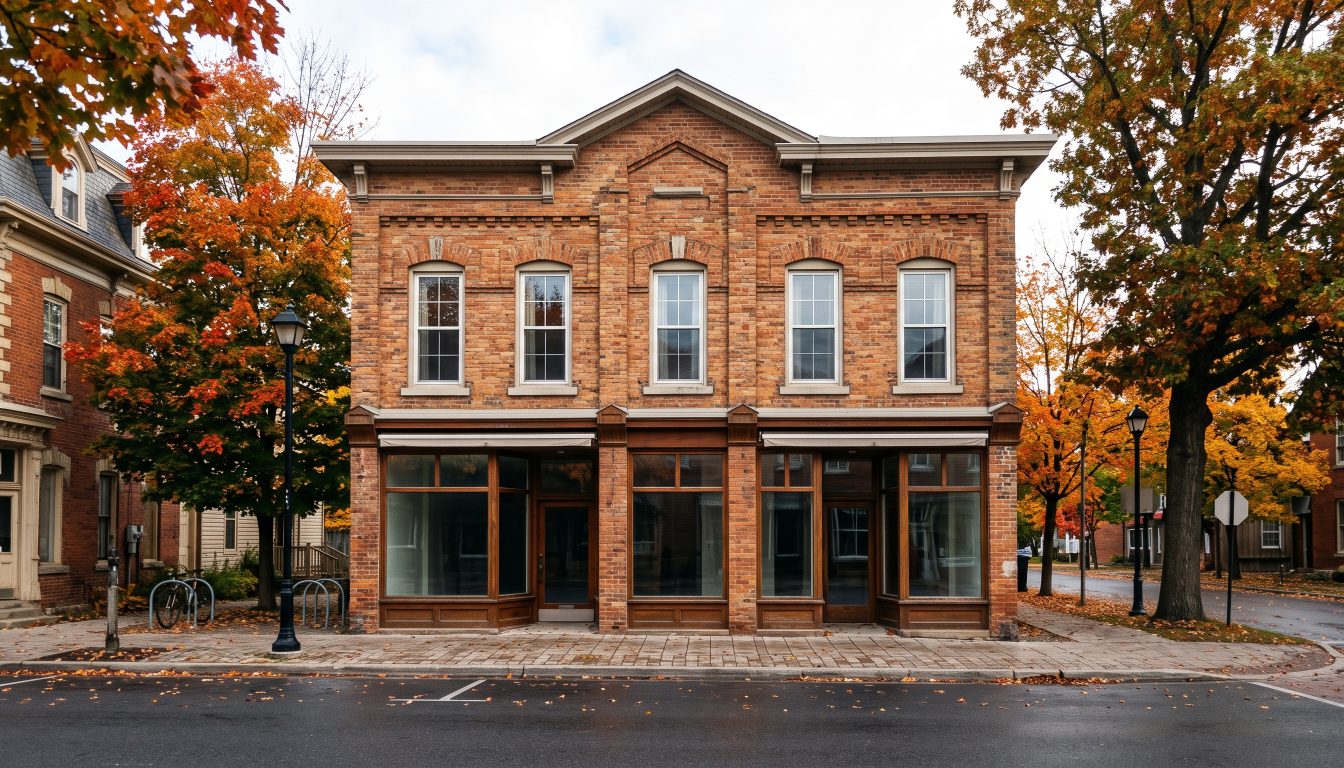
A mixed-use building pairs a commercial lease at street level with rent-controlled apartments above, so it carries two sets of rules. With Toronto retail and multifamily cap rates averaging 5.11% and 4.21% in Q3 2026, cash flow is usually thin, and one store lease can drive nearly half the income. Price it with the store empty.
This guide is for investors looking at the classic main-street building in Toronto or the wider GTA: a store or restaurant at street level with apartments above. You will learn which rules govern each part, how the income and financing really work, what taxes apply, and what to inspect before you buy.
What is a mixed-use building, and why do investors buy them?
A mixed-use building combines commercial space, usually ground-floor retail, with residential units in the same structure. On older main streets across Toronto and in the historic downtowns of GTA towns, the typical version is two or three storeys: one or two shops at grade and a handful of apartments above.
Investors like them for three reasons. They cost less than most apartment buildings, so they are a common first step up from condos and houses. They have two kinds of income, so a weak patch on one side does not always hit the other. And main-street sites often have long-term redevelopment value. The catch is that you are running two different businesses under one roof, with two sets of laws, two kinds of tenants and two kinds of lender rules.
Which rules apply to the stores and which to the apartments?
| Topic | Apartments above | Store at street level |
|---|---|---|
| Main law | Residential Tenancies Act, 2006 | Commercial Tenancies Act and the lease itself |
| Disputes | Landlord and Tenant Board | The courts |
| Rent increases | Capped at the guideline (2.1% for 2026, 1.9% for 2027) for units first occupied on or before 15 Nov 2018 | Whatever the lease says |
| Who pays taxes, insurance and upkeep | Landlord, built into rent | Often the tenant, on a net lease |
| Typical lease length | Month to month after the first term | Set by the lease, often several years with renewal options |
Source: Ontario rent increase guideline for 2026 and 2027 (Government of Ontario); Residential Tenancies Act, 2006; Commercial Tenancies Act. Confirm details with your lawyer.
The residential side is where new owners get surprised. You cannot raise rent on an older apartment above the guideline without approval, and ending a tenancy follows strict notice rules. In Toronto, a landlord who serves an N13 notice for renovations needs a city renovation licence within seven days, at $700 per unit. Read my guide to the rent control exemption for newer units before you count on rent growth. On the commercial side, the lease is almost everything, so read every clause. My notes on commercial lease clauses in Ontario list what to look for.
How does the math work on a mixed-use building?
Here is an illustrative example, not a real listing. The building has one 1,500 sq ft store and four apartments. The rents are market averages, not a real rent roll: the store at $36.87 per sq ft net, the average Toronto retail asking rent in Lee & Associates’ Q3 2026 report (CoStar data), and each apartment at $2,222 a month, the average Toronto multifamily asking rent in the same firm’s Q3 2026 report. I assume 3% residential vacancy and residential operating costs equal to 35% of collected apartment rent. The store tenant pays its own share of costs under a net lease.
| Line | Illustrative amount |
|---|---|
| Store rent (1,500 sq ft at $36.87, net) | $55,305 |
| Apartment rent (4 at $2,222 a month) | $106,656 |
| Less 3% residential vacancy | About $3,200 |
| Less residential operating costs (35%) | About $36,210 |
| Net operating income (NOI) | About $122,552 |
| Price at a 4.75% cap rate | About $2,580,000 |
| Mortgage (60% LTV, 5.6%, 30 years) | $1,548,000; about $106,641 a year |
| Debt service coverage ratio (DSCR) | About 1.15 |
| Cash flow after the mortgage | About $15,911 |
| Ontario plus Toronto land transfer tax | $96,150 |
Illustrative only. The 4.75% cap rate sits between the Q3 2026 Toronto multifamily (4.21%) and retail (5.11%) averages reported by Lee & Associates. Monthly compounding; legal, lender and inspection costs excluded.
A few definitions. NOI is rent collected minus the owner’s operating costs, before the mortgage. The cap rate is NOI divided by price. LTV (loan-to-value) is the loan as a share of the price. DSCR is NOI divided by yearly mortgage payments. If your lender wanted a DSCR of 1.20, the loan here would shrink to about $1,482,000, or about 57% of the price, and the cash-on-cash return would be under 2%. Notice something else: the store produces about 45% of the NOI from one tenant. That single lease drives much of the building’s value.
To see what your own cash buys and how the cash flow compares across building types, use the calculator below; it is set to $5 million but you can change every number.
Loading the investment calculator…
How are mixed-use buildings financed?
Most small mixed-use buildings are financed with conventional commercial mortgages, which look at the building’s income, the LTV and the DSCR. Insured apartment programs can help larger mixed-use buildings, with limits.
- CMHC standard rental housing insurance: CMHC’s page requires at least 5 rental units and that the project be at least 70% residential by both floor area and loan value, with a maximum LTV of 85% and amortization up to 40 years for existing buildings.
- New private insurance for 5 to 50 unit buildings: announced by Finance Canada and applying to lender applications from 1 February 2027. For existing buildings it allows up to 85% LTV and 40-year amortization, with a minimum DCR of 1.15 on 5-year terms and 1.10 on 10-year terms, and borrower net worth of at least 25% of the loan (minimum $100,000). Reports on the rules did not address commercial space, so ask each insurer how it treats a store at grade. Products will vary by insurer and lender. See my guide to the new insurance for 5 to 50 unit buildings.
The common main-street building with one store and two to four apartments is too small for either program, so plan on conventional terms and a larger down payment.
What taxes apply when you buy a mixed-use building?
HST
The sale is split in two for HST. A used residential part is generally exempt, while the commercial part is generally taxable. That means the price must be allocated reasonably between the two. A February 2026 Bennett Jones commentary on an Ontario court case showed how an unallocated price, with HST “included”, can leave the parties arguing over the tax after closing. Settle the allocation in the agreement and confirm it with your accountant.
Land transfer tax
If the building has three or more apartments, Ontario’s non-residential rates apply: 0.5% to $55,000, 1% to $250,000, 1.5% to $400,000 and 2% above. Inside Toronto the municipal tax doubles it, which is how the illustrative $2.58 million building reaches $96,150. If the building has only one or two apartments plus a store, Ontario requires the price to be apportioned between the residential part and the other use, and the residential part can attract the higher home rates. Check with your lawyer, or run figures in my land transfer tax calculator.
Property tax
Toronto’s 2026 total tax rates were about 0.77% of assessed value for the residential class, 1.21% for multi-residential and 2.30% for commercial. MPAC places buildings with seven or more self-contained units in the multi-residential class, so a small building with four apartments is not in it. Ask for the tax bill and assessment notice to see how the property is classed.
What should you check before buying a mixed-use building?
- Legal status of the apartments: confirm each unit is permitted, with proper fire separation from the store below. Unpermitted units can mean costly fixes or lost income.
- Residential rent roll: each unit’s rent, when it was last raised, whether it is guideline-exempt, and any open Landlord and Tenant Board files.
- Commercial lease: term, renewal options, use clause, who pays which costs, and any personal guarantee. Get a signed estoppel certificate confirming rent and term.
- The type of store: restaurants bring grease, ventilation and fire risk under apartments, and often higher insurance. Former dry cleaners or auto uses call for a Phase 1 ESA (environmental site assessment).
- Building condition assessment (BCA): roof, masonry, wiring and plumbing are often original on older main-street stock.
- Zoning: confirm the store’s use and any added density are permitted for the specific address.
I like mixed-use buildings for investors who want to move up from condos and are willing to be hands-on. Price the building as if the store were empty for a year, then see if you still like it. Buy the street as much as the building: a strong main street refills a vacant store far faster than a weak one.
What are the biggest risks with stores below and apartments above?
The store is the swing factor. In the example above, if the store sat empty, NOI would fall to about $67,247 and the DSCR to about 0.63, meaning the apartments alone would not cover the mortgage. You would also pick up the store’s share of taxes and insurance that the tenant had been paying.
Do not assume you can raise older apartment rents to market after you buy. For units first occupied before 16 November 2018, increases are capped at the guideline, 1.9% for 2027, and pushing tenants out to reset rent can lead to Landlord and Tenant Board claims and, in Toronto, renovation licence obligations. Underwrite the rents that exist today.
Rates are the other risk. The Bank of Canada raised its policy rate to 2.50% on 28 October 2026, and its next decision is on 9 December 2026. Stress-test your cash flow at a rate one point above your quote.
What to do next
- Pick two or three main streets you understand, and learn their typical store rents and vacancy.
- Ask for the full rent roll, every lease, the tax bill and the permit history before you make a firm offer.
- Rebuild the NOI yourself, then test it with the store empty for twelve months.
- Get a lender’s term sheet early, and ask about insured options if the building has five or more apartments.
- Have your lawyer set the HST and land transfer tax allocation in the agreement.
Try your own numbers in the calculator above, and if you have a specific main-street building in mind, book a call and I will walk through the leases and the math with you.
Need help with this? Talk to me.
I’m Jatin Dua, Broker of Record at RE/MAX Quantum Realty, and I’m the best agent to do this kind of work for you in Toronto and across the GTA. Over $100 million in GTA sales and 100+ families helped sell. Feel free to contact me any time: call or text 833-330-1925 or email [email protected].
Frequently asked questions
Is a mixed-use building a good investment in the GTA in 2027?
It can be, for a hands-on investor. A store with apartments above gives two income streams and often redevelopment value, and Toronto retail vacancy was just 2.34% in Q3 2026, per Lee & Associates using CoStar data. The risk is concentration: one store lease can produce close to half the income, and older apartments are rent-controlled, so price the building with the store empty.
What cap rate do mixed-use buildings sell at in Toronto?
There is no published Toronto average for mixed-use buildings alone. As a guide, Lee & Associates, using CoStar data, reported Q3 2026 averages of 4.21% for Toronto multifamily and 5.11% for retail, and a mixed-use building often prices between the two depending on its income mix. The store’s lease length and tenant quality move the price the most.
Does rent control apply to apartments above a store in Ontario?
Yes, the Residential Tenancies Act, 2006 covers the apartments the same as any rental. Units first occupied on or before 15 November 2018 are limited to the guideline increase, 2.1% for 2026 and 1.9% for 2027, while newer units are exempt from the cap. The store is a commercial tenancy, governed by its lease and the Commercial Tenancies Act.
Can I get CMHC insurance on a mixed-use building?
Sometimes, if it is large enough. CMHC’s standard rental housing page requires at least 5 rental units and that the project be at least 70% residential by floor area and loan value, with up to 85% loan-to-value. A typical main-street building with one store and two to four apartments does not qualify and is financed with a conventional commercial mortgage.
Do I pay HST when buying a building with stores and apartments?
Usually only on the commercial part. A used residential part is generally exempt from HST, while the commercial part is generally taxable, so the purchase price must be allocated reasonably between them. A registered buyer usually self-assesses the HST on the commercial part. Put the allocation in the agreement of purchase and sale and confirm it with your accountant.
What land transfer tax applies to a mixed-use property in Toronto?
With three or more apartments, both Ontario and Toronto use their non-residential rates, so a $2.58 million building pays $48,075 to each, or $96,150 total. With only one or two apartments plus a store, Ontario requires the price to be apportioned between the residential part and the other use, and the residential part can attract the higher home rates. Confirm with your lawyer.
How is a mixed-use building taxed in Toronto?
Each part can be taxed at a different rate. Toronto’s 2026 total tax rates were about 0.77% of assessed value for residential, 1.21% for multi-residential and 2.30% for commercial. MPAC uses the multi-residential class only for buildings with seven or more self-contained units, so check the assessment notice and tax bill to see how a smaller building is classed.
What happens to my cash flow if the store in a mixed-use building goes vacant?
It can turn negative fast. In this guide’s illustrative example, the store produced about 45% of a $122,552 NOI. With it empty, NOI fell to about $67,247 and the debt service coverage ratio to about 0.63, so the apartments alone could not cover the mortgage. You would also pay the taxes and insurance the store tenant had covered.
What should I check before buying a storefront with apartments above?
Check that every apartment is legal with proper fire separation, the residential rent roll and rent history, the commercial lease and an estoppel certificate, the store’s use and its fire and environmental risk, a building condition assessment, and the zoning. A restaurant under apartments, or a former dry cleaner, deserves extra inspection and insurance quotes before you firm up.
Sources
- Lee & Associates: Toronto Retail Market Report Q3 2026 (CoStar data)
- Lee & Associates: Toronto Multifamily Market Report Q3 2026 (CoStar data)
- CMHC: Standard rental housing mortgage loan insurance
- Department of Finance Canada: Mortgage insurance rule changes to support missing middle housing (5 Nov 2026)
- Bennett Jones: Mixed use, mixed signals, why purchase price allocations matter (Feb 2026)
- Government of Ontario: Calculating land transfer tax
- City of Toronto: Property tax rates and fees (2026)
- MPAC: Multi-residential property assessments
Related reading
- How to Invest $5 Million in GTA Real Estate (2027): Your Real Options
- What $5 Million Buys in GTA Real Estate in 2027: Houses, Buildings, Plazas and Land
- A $5 Million House or a $5 Million Apartment Building in Toronto? The 2027 Math
- Commercial vs Residential Real Estate Investment in the GTA (2027)
About the author — Jatin Dua, Toronto and GTA real estate broker
I am Jatin Dua, Broker of Record and co-founder of RE/MAX Quantum Realty Inc., Brokerage, Unit 101, 799 The Queensway, Toronto. I work with buyers and sellers across Toronto and the GTA and have helped more than 100 families sell. Four-plus years of active GTA transactions and over $100 million in sales volume.
Reach me at [email protected] or 833-330-1925, or book a call.
More from the library
- Selling a Dental Practice in Ontario: Taxes, Share Sales and the Capital Gains Exemption
- Buying a Retail Plaza in the GTA (2027): Tenants, Leases and Returns
- Medical Spa Premises in Ontario: Zoning, Inspected Premises, Public Health Rules and the Lease
- Mimico or Islington-City Centre West? A Condo Buyer’s Guide
- Day Spa Premises in Ontario: Zoning, Public Health Setting Rules, Sinks, Sterilizers and the Lease
- Signatures on Bloor, 55 Bloor St E: Hydro-Included Suites at Yonge
