
Published 7 September 2026 · Updated 29 September 2026 · By Jatin Dua, Broker of Record, RE/MAX Quantum Realty
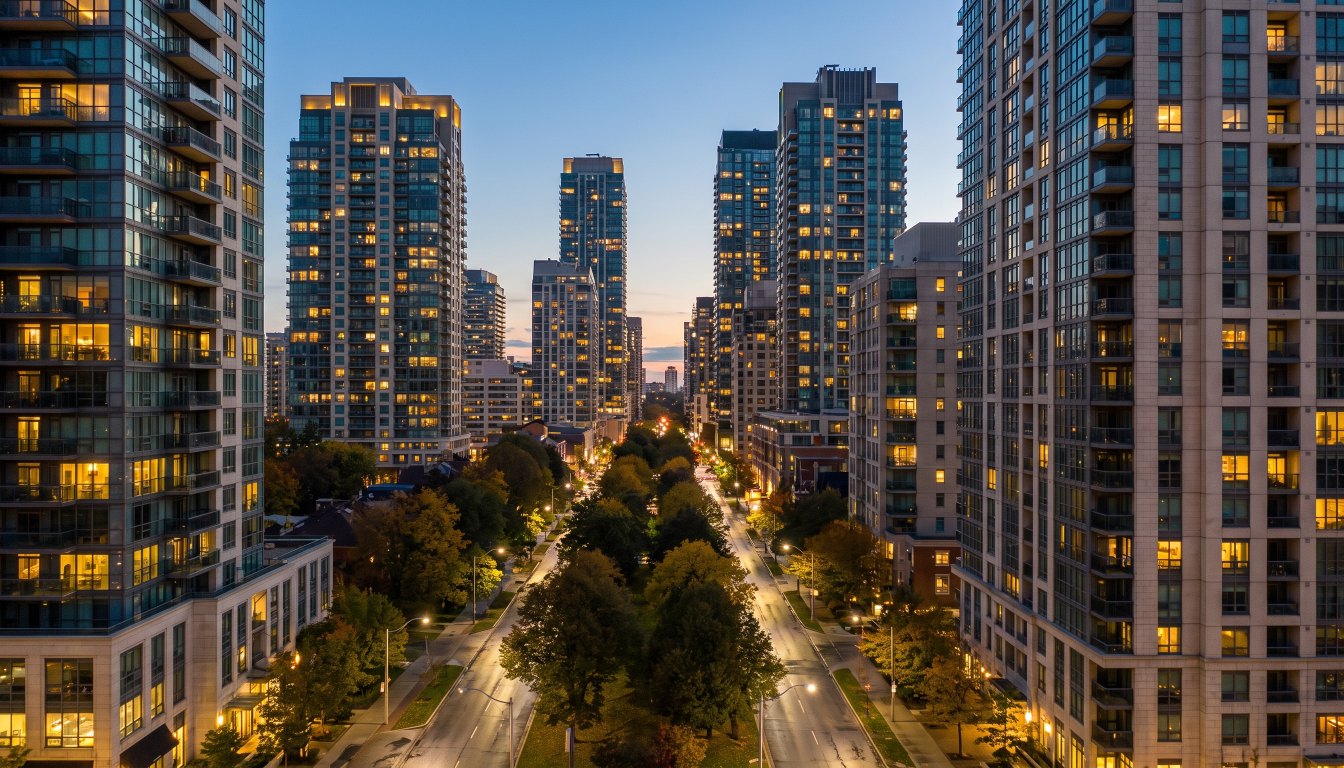
Two things that sound contradictory are both true. In the first quarter of 2026 the GTHA recorded zero new condominium project launches — the first quarter in thirty years with none — new condo sales of 246 units, down 52% year over year and 94% below the ten-year average, and a record 4,295 completed but unsold units with another 8,629 unsold under construction.
In the same period, $3 million-plus condominium sales in the Toronto core were on par with a year earlier, and $5 million-plus core condo sales doubled from two to four, one of them above $10 million. The investor-oriented condo market and the core luxury condo market are different economies that happen to share a property type.
The numbers, straight
| Q1 2026, GTHA new condominium market | Figure |
|---|---|
| New project launches | Zero — first quarter in 30 years with none |
| New condo sales | 246 units, down 52% year over year, 94% below the 10-year average |
| Sales at newly completed projects | 148 units, up 17% year over year — a four-year high |
| Completed but unsold inventory | 4,295 units — a record, more than double a year earlier |
| Unsold units still under construction | 8,629 |
| New construction average price | $1,189 per square foot, down 5% year over year |
| Resale average price | $859 per square foot, down about 25% from the early-2022 peak |
| Gap between new and resale | 38% — a record |
And in the same window, at the top of the market:
- $3 million-plus condominium sales in the Toronto core: on par with a year earlier
- $5 million-plus condominium sales in the Toronto core: 4, up from 2, one of them above $10 million
Why the two markets diverged
The condominium boom of the last fifteen years was built on investor demand for small units bought pre-construction and rented on completion. That model depends on three things: rising resale prices, rents that cover carrying costs, and a buyer waiting at the end. All three weakened at once.
The core luxury condominium market never ran on that model. It is owner-occupied, largely equity-funded, bought for space and location rather than yield, and supplied by a small number of buildings that are not being replicated. A full-floor residence in the core has more in common with a Rosedale house than with a 550 square foot unit in a 2019 tower.
What this means if you own a luxury condo
Three things are worth checking before you make any decision.
1. What is unsold in your own building
With 4,295 completed unsold units across the region and 8,629 more under construction, some buildings carry meaningful developer inventory. A developer with remaining units is a competitor with a different cost base and a marketing budget you do not have.
2. What your building’s reserve fund looks like
The status certificate discloses the reserve fund, the most recent reserve fund study, any special assessments levied in the current budget year, and any outstanding judgments or litigation. In a market where buyers are cautious, an underfunded reserve is a discount.
3. Whether your unit is genuinely in the top segment
Four sales above $5 million in the core in four months tells you how narrow the genuine top end is. A large, well-located, well-finished unit at $2 million is a good property in a soft market, not an immune one.
What this means if you are buying
Conditions in the broader condo market are more favourable to buyers than they have been in years. In the core luxury segment they are not, particularly, because supply there was never the problem.
Two practical points. First, the new-versus-resale gap means a comparable resale unit is often dramatically better value than a new one, and the trade-off is age and warranty rather than quality. Second, if you are buying resale in a building with unsold developer stock, use that: the developer’s pricing sets a visible ceiling in the building.
The practical takeaway
Stop reading “the Toronto condo market” as one thing. Ask which market a statistic describes before you act on it. The investor segment is in a genuine correction with record inventory; the core luxury segment produced four sales above $5 million in four months and did not soften. Owning in one and reading headlines about the other is the fastest way to a bad decision.
Frequently asked questions
Is the Toronto condo market crashing?
The new-construction and investor segments are under severe pressure: 246 new condo sales in Q1 2026, down 52% year over year, with a record 4,295 completed unsold units. The core luxury segment is not showing the same pattern — $3 million-plus core condo sales were flat year over year and $5 million-plus sales doubled from two to four in the same period. Which market you are in matters enormously.
Why did no new condo projects launch in Q1 2026?
Because the economics did not work. New construction averaged $1,189 per square foot while resale averaged $859 — a record 38% gap. When buyers can purchase an existing unit for far less than a developer needs to charge, launching a new project is not viable.
Is now a good time to buy a luxury condo in Toronto?
Conditions in the broader condo market are as buyer-friendly as they have been in years, with record completed unsold inventory and resale pricing down about 25% from the early-2022 peak. The genuine top end has not softened in the same way. Anyone telling you the whole condo market is on sale is not distinguishing between the two.
What is the gap between new and resale condo prices?
A record 38% in Q1 2026: $1,189 per square foot for new construction against $859 for resale. That gap is the central fact of the current market and explains most of what is happening in pre-construction.
How many luxury condos actually sell in Toronto?
Very few. In the January to April 2026 window, exactly four condominium units sold above $5 million in the Toronto core, one of them above $10 million. That is the entire ultra-luxury condo market for a third of a year.
Does record inventory affect luxury units in the same buildings?
It can. A top-end resale unit in a building that still has unsold developer inventory is competing with a seller who has different incentives, deeper pockets and a marketing budget. Check what remains unsold in the building before you list.
Thinking about buying or selling at the top end?
Send me the address, or the shortlist you are considering. I will tell you what the property is actually worth today, what the land is worth without the house, what the transfer tax and carrying costs will be, and whether the deal makes sense. Confidential, always.
[email protected] · 833-330-1925 · Book a free consultation
Confidential. Read personally and answered within 24 hours. I never share, sell or distribute your information.
Related reading
- Buying a luxury condo in Toronto: the 2026 buyer’s guide
- Pre-construction luxury condos: the risks nobody puts in the brochure
- Your Toronto condo is worth less than you paid. What to do about it
- What is my condo worth? Floor, view and parking, priced
- Free AI condo value estimator for Toronto
Sources
Everything above that is a rule, a rate or a published number comes from these. Verify anything that matters to your own deal.
- Real Estate Magazine — No new condo projects launched in Q1 2026 (Urbanation data)
- RE/MAX Canada — 2026 Spotlight on Luxury Real Estate, Greater Toronto
- Toronto Regional Real Estate Board — Market Watch, August 2026
About the author — Jatin Dua, Broker of Record
I’m the Broker of Record at RE/MAX Quantum Realty, 799 The Queensway in Etobicoke, and I work with buyers, sellers and investors across Toronto and the west GTA. A large part of my work sits in the upper end of the market, where the comparables are thin, the rules are heavier and the cost of a wrong number is measured in hundreds of thousands of dollars.
The free estimators on this site are mine. I built them because the first question every owner asks is “what is it worth?” and the honest answer starts with a number you can check yourself. [email protected] or 833-330-1925.