
Published 7 September 2026 · Updated 29 September 2026 · By Jatin Dua, Broker of Record, RE/MAX Quantum Realty
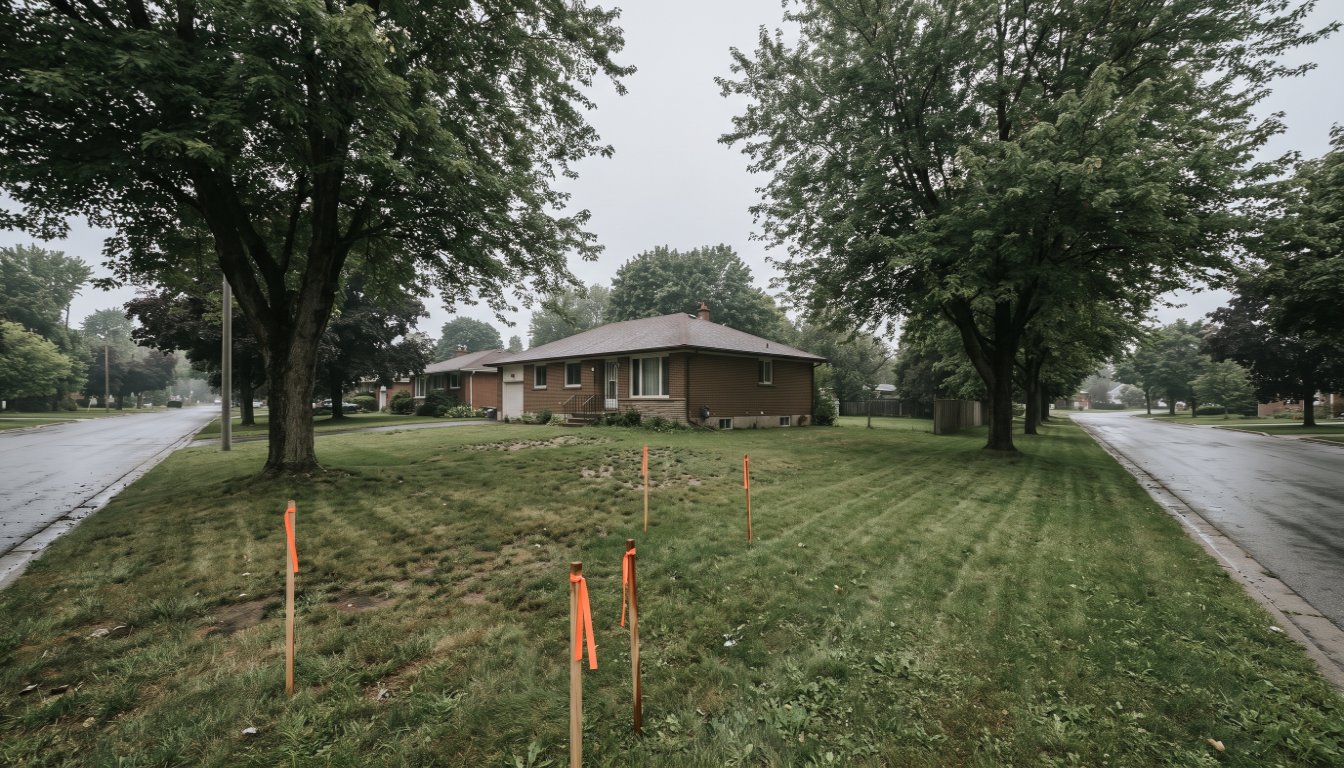
Severing a lot in Ontario means applying to your municipality’s committee of adjustment for a consent. Realistically it costs $25,000 to $80,000 all-in once you count the application fee, surveys, planning and legal work, parkland dedication and servicing, and it takes 9 to 24 months. Approval turns on three things: whether the resulting lots meet the zoning by-law’s minimum frontage and area, whether services can reach both, and whether the severance matches the pattern of the street.
Consent, not subdivision — and why that distinction matters
If you are creating one or two new lots from an existing one, you are asking for a consent under section 53 of the Planning Act, heard by your municipality’s committee of adjustment. If you are creating several, you are into a plan of subdivision, which is a different order of expense, time and professional involvement entirely.
For a homeowner with a wide lot, consent is the route. It is a public process, decided by a citizen committee, and it is appealable to the Ontario Land Tribunal by you or by a neighbour.
undefined
undefined
The three tests that decide it
Before you spend a dollar, measure your lot against these. If it fails any of them badly, the answer is almost certainly no.
- Frontage and area. Each new lot must independently satisfy the zoning by-law’s minimum lot frontage and lot area for that zone. If your by-law requires 12 metres of frontage and you have 22, you cannot make two conforming lots — you would need a variance for both.
- Servicing. Each new lot needs its own water, sanitary and storm connection, its own hydro, and legal driveway access. Whether the municipal mains can take another connection at that point on the street is a technical question, and the answer is sometimes simply no.
- Character and pattern of the street. This is the discretionary one. Committees look at whether lots of the proposed size already exist nearby. A 9-metre lot on a street of 9-metre lots is easy. The same 9-metre lot on a street of uniform 15-metre lots draws objections and often a refusal.
What it really costs
Application fees vary widely between municipalities. The fee is the small part; the conditions of approval are where the money goes.
| Item | Typical range | Notes |
|---|---|---|
| Consent application fee | $3,000 – $12,000 | Varies sharply by municipality |
| Reference plan and surveys | $4,000 – $9,000 | R-plan deposited on approval |
| Planning justification report | $5,000 – $15,000 | Not always required, often decisive |
| Legal fees | $4,000 – $10,000 | Application through to final registration |
| Servicing design and connections | $20,000 – $80,000+ | The single biggest and least predictable item |
| Parkland cash-in-lieu | $5,000 – $30,000+ | Charged per new residential lot in most municipalities |
| Arborist, tree compensation, grading | $3,000 – $20,000 | Mature trees near the new lot line are expensive |
| All-in, two-lot severance | $45,000 – $175,000 |
undefined
undefined
The timeline, stage by stage
Nine months is a good outcome. Two years is common, especially if a neighbour appeals.
| Stage | Typical duration |
|---|---|
| Pre-consultation with planning staff | 4 – 10 weeks |
| Surveys, drawings, reports | 6 – 14 weeks |
| Application filed to hearing date | 8 – 16 weeks |
| Decision and 20-day appeal period | 3 weeks |
| Satisfying conditions of approval | 6 months – 2 years |
| Certificate issued, R-plan registered | 2 – 6 weeks |
| Total, no appeal | 12 – 24 months |
Does the math actually work?
The honest test is straightforward: what is the wide lot worth as one property today, and what are two smaller lots worth once severed and serviced, less every cost above?
A rough GTA example on a 22-metre lot in an established neighbourhood:
- The uplift is real, but it is not free money — it is compensation for two years of carrying cost, professional fees and genuine approval risk.
- A refusal at the committee costs you the fees and reports with nothing to show. Budget as though there is a meaningful chance of that.
- Selling with a severance already approved but not yet completed is often the sweet spot: a builder will pay a premium for a de-risked lot without you having to fund the servicing.
| Amount | |
|---|---|
| Current value, one house on a wide lot | $1,450,000 |
| Value of house on retained lot after severance | $1,150,000 |
| Value of the new vacant building lot | $700,000 |
| Combined after severance | $1,850,000 |
| Less all-in severance costs | −$110,000 |
| Net gain | $290,000 |
undefined
undefined
Five things that quietly sink applications
Most refusals I have watched were predictable months in advance.
- An easement or right-of-way across the proposed new lot. Check the title before the survey.
- A city-owned tree at the front of the proposed driveway. Municipal tree removal is sometimes flatly refused.
- No sanitary main capacity at that point on the street, or a main on the far side requiring a full road cut.
- Organised neighbours. A committee that receives fifteen letters of objection behaves very differently from one that receives none. Talk to your immediate neighbours before you file.
- A heritage listing or a heritage conservation district you did not know applied, which adds a separate approval and its own timeline.
Common questions
How much does it cost to sever a lot in Ontario?
Realistically $45,000 to $175,000 all-in for a two-lot severance, once you count the application fee, surveys, planning and legal work, parkland cash-in-lieu and servicing connections. The application fee itself is usually only a few thousand dollars — the conditions of approval are where the money goes.
How long does a lot severance take?
Twelve to twenty-four months is typical from first pre-consultation to a registered reference plan. A neighbour’s appeal to the Ontario Land Tribunal can add a year or more.
Who decides my severance application?
Your municipality’s committee of adjustment, or a land division committee in some regions. It is a public hearing and the decision can be appealed to the Ontario Land Tribunal within twenty days.
Can I sell my property with the severance approved but not finished?
Yes, and it is often the smartest exit. Builders will pay a premium for an approved but uncompleted severance because you have removed the approval risk without them having to wait for it.
What happens if I miss the deadline to satisfy the conditions?
The consent lapses. In Ontario you generally have one year from the decision to meet all conditions and obtain the certificate, after which the approval expires and you have to reapply from the beginning.
Does severing a lot trigger capital gains tax?
Possibly. The principal residence exemption generally covers the land under and around your home up to half a hectare, but selling off a severed vacant lot can be treated as a taxable disposition, and in some cases as business income rather than a capital gain. Get an accountant involved before you sever, not after.
Wondering if your lot is wide enough to sever?
Send me the address. I will check your registered frontage against the zoning by-law’s minimum for your zone, look at what has actually been severed nearby, and tell you honestly whether it is worth pursuing before you spend anything on reports.
Ask Jatin about your lot or call or text 833-330-1925.
Free tool — AI land value estimator
Land Valuation
What’s your land
worth today?
Three quick steps. Land doesn’t price like a house — what you’re allowed to build on it, how far along the approvals are, and whether services reach the lot line move the number more than anything else. This weighs all of them.
Reading recent land sales…
Estimated land value
—
$0–$0
Most likely $0 · about $0 per acre · $0 per buildable sq ft
What moved the number
Starting from what comparable land in your municipality trades for, here’s what your specifics added or subtracted.
What would raise it
Approvals are the biggest lever on land. Here is what each next step is worth on this parcel.
—
Development sites are listed at $1
for a reason.
Sellers let the market price them — and the market only pays for what it can see: the planning file, the servicing letter, the environmental reports. A model can’t read your file. I can, and I know which developers are buying right now.
Related reading
- Toronto laneway suite cost, rules and payback
- Free AI land value estimator
- More Ontario real estate guides
- Ontario Planning Act, section 53 — consents, and section 51 — plans of subdivision
- Ontario Planning Act — lapsing of consent approvals and appeal rights to the Ontario Land Tribunal
- Municipal zoning by-laws — minimum lot frontage and lot area provisions
- Municipal parkland dedication and cash-in-lieu by-laws under the Planning Act
- Canada Revenue Agency — principal residence exemption and the half-hectare limit
Jatin Dua is Broker of Record and co-founder of RE/MAX Quantum Realty, Brokerage, Unit 101, 799 The Queensway, Etobicoke. Four-plus years in the GTA and more than $100M in sales volume.
General information about the Ontario consent process, not planning, legal or tax advice. Fees, by-law standards and servicing requirements differ in every municipality and change over time. Confirm your specific property with municipal planning staff, a land use planner and a lawyer before spending money.