Published 2 November 2026 · By Jatin Dua, Broker of Record, RE/MAX Quantum Realty
What's Your Home Worth Right Now?
Get a free AI-powered price range for your property in under 90 seconds, based on recent GTA comparable sales. No name or address required.
Get My Free Estimate →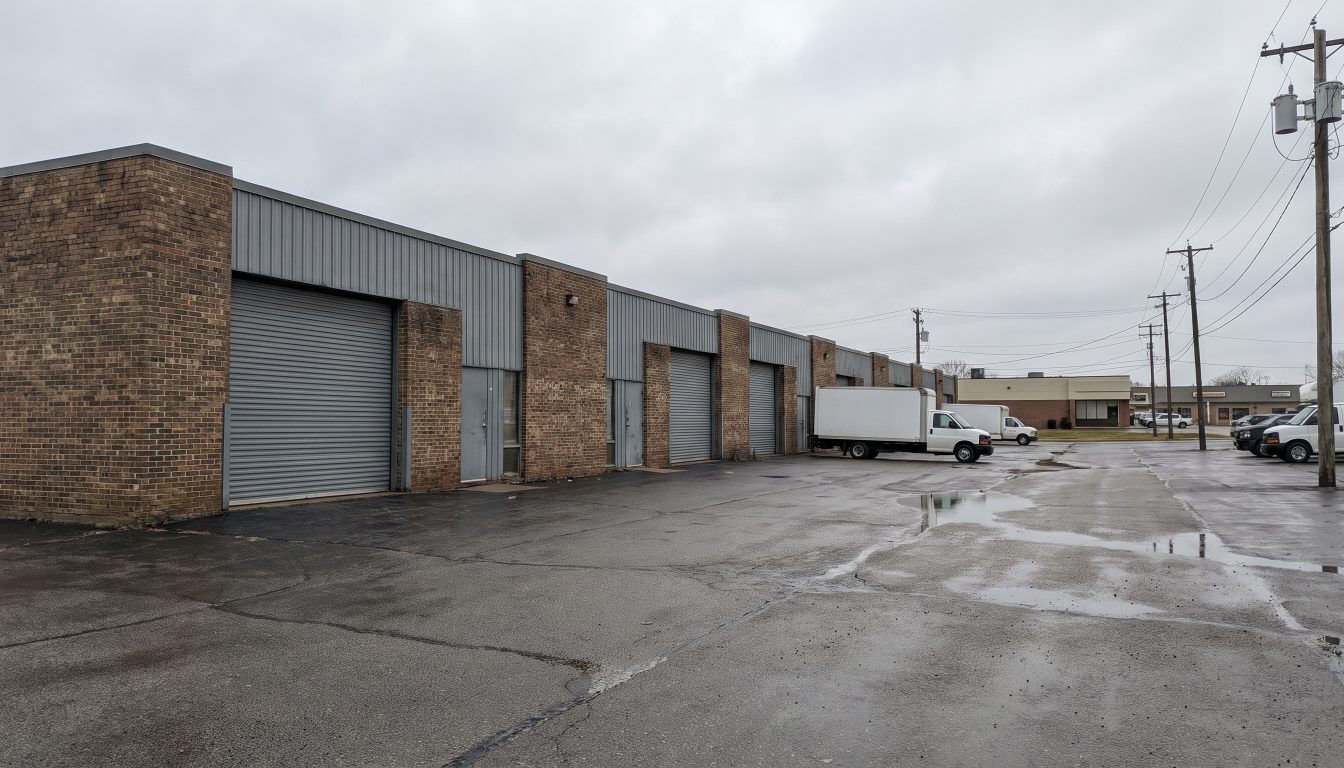
GTA industrial still draws investors, with $4.4 billion traded through Q3 2026, but rents have flattened at about $16 to $17 per sq ft and new supply is rising. Average buildings sold for roughly $356 to $378 per sq ft at cap rates near 4.8%, so expect thin early cash flow and buy for durable tenants, not rent jumps.
This guide is for investors with roughly $1 million to $10 million who are looking at GTA industrial property for the first time, whether that means a small-bay building with many tenants, a building leased to one company, or a building your own business will use. You will get the latest market numbers, a worked example with the arithmetic shown, and a checklist of what to inspect before you sign.
What is happening in the GTA industrial market heading into 2027?
Industrial is still the busiest commercial sector in the GTA by dollars. Altus Group counted $4.4 billion of industrial investment through the first three quarters of 2026, up 10% from a year earlier, out of $15.1 billion across all property types. But the leasing side has cooled. Rents have stopped climbing, and a lot of new space is still being built.
The tricky part is that research firms measure the market in different ways, so their headline numbers do not match. Here is what four of them reported for the third quarter of 2026.
| Source (Q3 2026) | Space measure | Rent measure | Absorption |
|---|---|---|---|
| Altus Group | Availability 5.3%, up 0.6 points in a year | Asking rents stable at $16 to $17 per sq ft | Turned negative in Q3 |
| CBRE | Availability 5.0%, unchanged for four quarters | 12th straight quarter of falling asking rents (small drop) | About 2.0M sq ft positive |
| Avison Young | Vacancy 2.6% | Average asking net rent $16.06 per sq ft, down 4.8% in a year | About 2.2M sq ft positive |
| Lee & Associates (CoStar data) | Vacancy 3.83% | Average net asking rent $18.75 per sq ft | About 12.5M sq ft over 12 months |
Source: Altus Group Toronto CRE update (29 Oct 2026); CBRE Toronto Industrial Figures Q3 2026; Avison Young Q3 2026 via Canadian Mortgage Professional (28 Oct 2026); Lee & Associates Toronto Industrial Q3 2026.
Why the gap? “Vacancy” counts empty space only. “Availability” also counts space that is still occupied but on the market, plus sublet space, so it always runs higher. Each firm also defines the GTA and the building inventory a little differently. The honest summary is this: there is more space on offer than in 2022, rents are flat to slightly down, and demand is still positive by most counts.
What do GTA industrial buildings sell for, and at what cap rates?
A cap rate (capitalization rate) is the building’s yearly net operating income divided by its price. Net operating income (NOI) is the rent you collect minus the costs you pay as owner, before mortgage payments. A lower cap rate means a higher price for each dollar of income.
- Lee & Associates, using CoStar data, put the average Toronto-area industrial sale price at $356.28 per sq ft and the average cap rate at 4.79% in Q3 2026.
- Avison Young reported an average sale price of $378 per sq ft in Q3 2026, up from $355 in Q2.
- The biggest public trade of the quarter was 750 Creditstone Rd and 121 Pippin Rd in Vaughan: two fully leased buildings, about 346,000 sq ft, for $115 million, or roughly $332 per sq ft, according to Altus.
Small buildings and small units usually sell for more per square foot than big distribution boxes, because more buyers can afford them, including business owners who want to own their space. For unit-by-unit pricing, see my guide to investing in commercial condo units. For how cap rates, NOI and lender ratios fit together, read how commercial property is valued in the GTA.
How does the math work on a GTA industrial building?
Here is an illustrative example, not a real listing. The assumptions: an older multi-tenant building in Vaughan priced at $8 million, a 5.0% cap rate (close to the 4.79% CoStar average), a 55% loan-to-value (LTV) mortgage, a 5.5% interest rate and a 25-year amortization. LTV is the loan as a share of the price. Amortization is how many years the payments are spread over.
| Line | Illustrative amount |
|---|---|
| Purchase price | $8,000,000 |
| NOI at a 5.0% cap rate | $400,000 |
| Mortgage (55% LTV) | $4,400,000 |
| Yearly mortgage payments (5.5%, 25 years) | About $324,238 |
| Debt service coverage ratio (DSCR) | About 1.23 |
| Cash flow after the mortgage | About $75,762 |
| Down payment | $3,600,000 |
| Ontario land transfer tax (outside Toronto) | $156,475 |
| Cash-on-cash return, year one | About 2.0% |
Illustrative only. Payments use monthly compounding; legal, lender, appraisal and inspection costs are not included. Land transfer tax per Ontario’s published rates for property that is not a one- or two-family home.
DSCR is NOI divided by yearly mortgage payments. Every lender sets a minimum DSCR, and at today’s cap rates that test, not the LTV, often caps how much you can borrow. If your lender’s minimum were 1.25, this building would support a loan of only about 54% of the price. Cash-on-cash return is cash flow divided by the cash you put in. A 2% cash-on-cash yield looks thin. Industrial buyers at these prices are also counting on principal paydown (about $84,000 in year one here) and on raising rents when older leases roll over. If those rents do not rise, the return stays thin. The 5.5% rate is an assumption: as of October 2026 the 5-year Government of Canada bond yield was 3.60%, and lender spreads sit on top of that, so get real quotes.
To see what your own cash buys and how the cash flow compares across building types, use the calculator below; it is set to $5 million but you can change every number.
Loading the investment calculator…
Small-bay, multi-tenant or single-tenant: which industrial building fits a $5 million investor?
Small-bay multi-tenant
A small-bay building is split into many small units, often a few thousand square feet each, with their own shipping door. Tenants are local trades, contractors, e-commerce sellers, auto shops and light manufacturers. Many tenants spread the risk: if one leaves, you lose a slice of income, not all of it. The trade-off is more work. You have more leases, more turnover, more small repairs and more rent to chase.
Single-tenant
One company leases the whole building, usually on a net lease where it pays the taxes, insurance and most upkeep. It is simple to run, but you have one tenant. When that lease ends, your income can go to zero until you re-lease. I cover this in my guide to single-tenant net lease property.
Owner-user
Here your own business occupies the building, or part of it. You stop paying rent to a landlord and pay down your own mortgage instead. This is common with business owners who have just sold one company and are growing another.
For a first industrial purchase with $2 million to $5 million of cash, I usually lean toward a smaller multi-tenant building with leases that end at different times. You give up some simplicity, but no single move-out can sink the year. I would rather own ten tenants paying fair rent than one tenant paying a rent the market no longer supports.
Should you buy an industrial building as an owner-user?
Owning your space can make sense if your business is stable and you plan to stay at least ten years. You lock in your occupancy cost, build equity, and you are not exposed to a landlord’s renewal terms. The risks are concentration (your business and your property are tied together) and less flexibility if you need to grow or shrink.
Two tax points to raise with your accountant. First, the CRA lets owners claim capital cost allowance (CCA), a yearly tax deduction for building wear. Most buildings are Class 1 at 4%. A building acquired after 18 March 2007 that was not used before that date can get a higher rate if you elect to put it in a separate class: 10% if at least 90% of it is used for manufacturing or processing, or 6% for other eligible non-residential use. Land is never depreciable. Second, the purchase of commercial property is generally subject to HST; a registered buyer usually self-assesses it instead of paying it to the seller. See my guide to HST on commercial property purchases, and confirm with your accountant.
What should you check before buying an industrial building in the GTA?
Industrial buildings are judged on function. A 2026 RENX market commentary noted that tenants want higher clear heights, ESFR sprinklers (early suppression, fast response), more power and deeper yards, and that older buildings without them are sitting empty longer. Avison Young found buildings with 30-plus feet of clear height averaged $16.84 per sq ft in asking rent in Q3 2026, against $14.86 for 18 to 21 feet.
- Building specs: clear height, number and type of shipping doors, truck court depth, power (amps and voltage), sprinkler type and roof age.
- Zoning: confirm the permitted uses with the city, not the listing. Some uses, like auto repair or food processing, may need specific zoning.
- Environment: order a Phase 1 ESA (environmental site assessment), a desk and site review of past uses that flags possible contamination. Ontario requires a Record of Site Condition before some changes to a more sensitive use, such as industrial to residential. See my guide to environmental clauses in Ontario deals.
- Rent roll: the list of every tenant, unit, rent, lease end date and deposit. Compare each rent to today’s market. Above-market rents are a risk, not a bonus.
- Estoppel certificates: signed statements from each tenant confirming their rent, term and that the landlord is not in default. They catch side deals the seller forgot to mention.
- Building condition assessment (BCA): an engineer’s report on the roof, structure, paving and mechanical systems, with a cost estimate for the next ten years.
Where in the GTA do industrial investors buy?
Industrial investors in the GTA mostly look in Peel (Mississauga and Brampton), York Region (Vaughan, Markham, Richmond Hill) and Toronto’s own employment areas. Avison Young’s Q3 2026 regional vacancy figures were 2.0% in the North, 2.4% in GTA Central, 2.6% in GTA West and 5.0% in the East. The May 2026 RENX commentary said leasing deals were concentrated in North York, Mississauga and Brampton, and that Oakville, Burlington and Hamilton were becoming more competitive for tenants. I search all of these areas, plus Hamilton and Kitchener-Waterloo when the numbers make more sense there.
Land transfer tax also differs by location. The illustrative $8 million building above pays $156,475 in Ontario tax in Vaughan. Inside the City of Toronto the municipal tax is added at the same rates, so the total doubles to $312,950. Run your own figure with my land transfer tax calculator.
What are the main risks for industrial investors in 2027?
Supply is the big one. Altus reported 43 projects totalling 12.3 million sq ft under construction in Q3 2026, with 63% still available, and expects that to push availability higher into early 2027. New, modern space competes directly with older buildings for the same tenants.
Look closely at leases that expire in the next two years. Many were signed in 2021 and 2022, when asking rents were at their peak. If a tenant’s rent is above today’s market, assume it will drop at renewal or that the unit sits empty while you re-lease it. Underwrite the building at market rent, not at the seller’s rent roll.
Rates matter too. The Bank of Canada raised its policy rate to 2.50% on 28 October 2026, and its next decision is on 9 December 2026. Commercial mortgages are usually priced off bond yields plus a spread, so check rates again at renewal time and stress-test your cash flow at a rate one point higher.
What to do next
- Decide your role: passive landlord with many tenants, single-tenant owner, or owner-user.
- Get a commercial lender’s view early on the DSCR and LTV they would accept for your cash and experience.
- Set a target area and building size, then compare buildings on cap rate and on price per square foot against the Q3 2026 ranges above.
- Build every offer around conditions for the rent roll, estoppels, a Phase 1 ESA, a BCA and financing.
- Bring in your lawyer and accountant before you waive conditions.
Try your own numbers in the calculator above, and if you have a specific building in mind, book a call and I will walk through the rent roll and the math with you.
Need help with this? Talk to me.
I’m Jatin Dua, Broker of Record at RE/MAX Quantum Realty, and I’m the best agent to do this kind of work for you in Toronto and across the GTA. Over $100 million in GTA sales and 100+ families helped sell. Feel free to contact me any time: call or text 833-330-1925 or email [email protected].
Frequently asked questions
Is industrial real estate a good investment in the GTA in 2027?
It can be, but buy for income, not for quick rent growth. Altus Group reported $4.4 billion of GTA industrial investment through Q3 2026, up 10%, while asking rents held at $16 to $17 per sq ft and 12.3 million sq ft was under construction. Buildings with modern specs and leases at market rent hold up best. Older buildings with above-market leases carry more risk in 2027.
What is the cap rate for industrial property in Toronto?
About 4.8% on average, based on Lee & Associates’ Q3 2026 Toronto report using CoStar data, which put the industrial cap rate at 4.79%. Individual buildings vary widely with age, size, tenant quality and lease length. Older multi-tenant buildings and short leases usually trade at higher cap rates than new single-tenant buildings with long leases. Always check the actual rent roll.
How much does an industrial building cost per square foot in the GTA?
Roughly $330 to $380 per sq ft on average in late 2026. Lee & Associates (CoStar data) reported $356.28 per sq ft and Avison Young reported $378 for Q3 2026, and a fully leased Vaughan portfolio sold for about $332 per sq ft. Small units and small buildings usually sell for more per square foot than large distribution buildings.
What is small-bay industrial?
Small-bay industrial is a building split into many small units, each with its own shipping door, leased to local businesses like trades, contractors and light manufacturers. In the GTA, investors like it because income comes from many tenants, so one move-out does not empty the building. The trade-off is more leases to manage, more turnover and more small repairs than a single-tenant building.
What is the industrial vacancy rate in the GTA?
Between about 2.6% and 5.3% in Q3 2026, depending on the measure. Avison Young reported 2.6% vacancy and Lee & Associates 3.83%, while CBRE reported 5.0% availability and Altus Group 5.3%. Availability is higher because it includes occupied space being marketed and sublet space. All sources agree that GTA rents have flattened since 2025.
How much down payment do I need for an industrial building in Ontario?
There is no fixed rule; it depends on the lender’s loan-to-value and debt service coverage limits. In this guide’s illustrative $8 million Vaughan example, at a 5.0% cap rate and 5.5% interest, a 1.25 coverage test would cap the loan near 54% of the price, so you would need about 46% down plus land transfer tax and closing costs. Ask lenders for terms early.
Do I pay HST when buying an industrial building in Ontario?
Usually yes, because commercial real property is generally a taxable supply under the Excise Tax Act. If you are an HST registrant, you normally self-assess the tax on your return rather than paying it to the seller, and may claim an input tax credit. A buyer who is not registered may need to file form GST60. Confirm the details with your accountant before closing.
What is the land transfer tax on an $8 million industrial building in Ontario?
$156,475 outside Toronto, based on Ontario’s rates for property that is not a one- or two-family home: 0.5% to $55,000, 1% to $250,000, 1.5% to $400,000 and 2% above that. Inside the City of Toronto, the municipal land transfer tax is added at the same rates, bringing the total to $312,950 for the same $8 million building.
Should my business buy its own industrial building instead of leasing?
It can make sense if your business is stable and you plan to stay ten years or more. Owning fixes your occupancy cost and builds equity, and a qualifying new building used at least 90% for manufacturing or processing can claim CCA at up to 10% with a separate-class election. The downside is tying your business and property together. Review it with your accountant.
Sources
- Altus Group: Toronto commercial real estate market update Q3 2026
- Lee & Associates: Toronto Industrial Market Report Q3 2026 (CoStar data)
- CBRE: Toronto Industrial Figures Q3 2026
- Canadian Mortgage Professional: GTA industrial rents fall in Q3 (Avison Young data, 28 Oct 2026)
- RENX: GTA industrial real estate, the floor is in but stabilization will be uneven (May 2026)
- Canadian Mortgage Professional: What persistently high bond yields could mean for the commercial mortgage market (Oct 2026)
- Canada Revenue Agency: Classes of depreciable property (CCA)
- Government of Ontario: Calculating land transfer tax
Related reading
- How to Invest $5 Million in GTA Real Estate (2027): Your Real Options
- What $5 Million Buys in GTA Real Estate in 2027: Houses, Buildings, Plazas and Land
- A $5 Million House or a $5 Million Apartment Building in Toronto? The 2027 Math
- Commercial vs Residential Real Estate Investment in the GTA (2027)
About the author — Jatin Dua, Toronto and GTA real estate broker
I am Jatin Dua, Broker of Record and co-founder of RE/MAX Quantum Realty Inc., Brokerage, Unit 101, 799 The Queensway, Toronto. I work with buyers and sellers across Toronto and the GTA and have helped more than 100 families sell. Four-plus years of active GTA transactions and over $100 million in sales volume.
Reach me at [email protected] or 833-330-1925, or book a call.
More from the library
- Buying vs Leasing a Dental Office in the GTA: Which Makes Sense?
- Above-Guideline Rent Increases in Ontario (2027): How AGIs Work for Building Owners
- Buying a Massage Therapy Clinic in Ontario: RMT Rules, Records You Cannot Buy, HST and Licensing
- Long Branch vs Bloor West Village: Which Side of the Humber?
- Buying a Medical Spa in Ontario: Who May Do Which Procedures, the Medical Director and What Transfers
- River & Fifth, 5 Defries St: A Podium Pool on the Lower Don