
Published 7 September 2026 · Updated 29 September 2026 · By Jatin Dua, Broker of Record, RE/MAX Quantum Realty
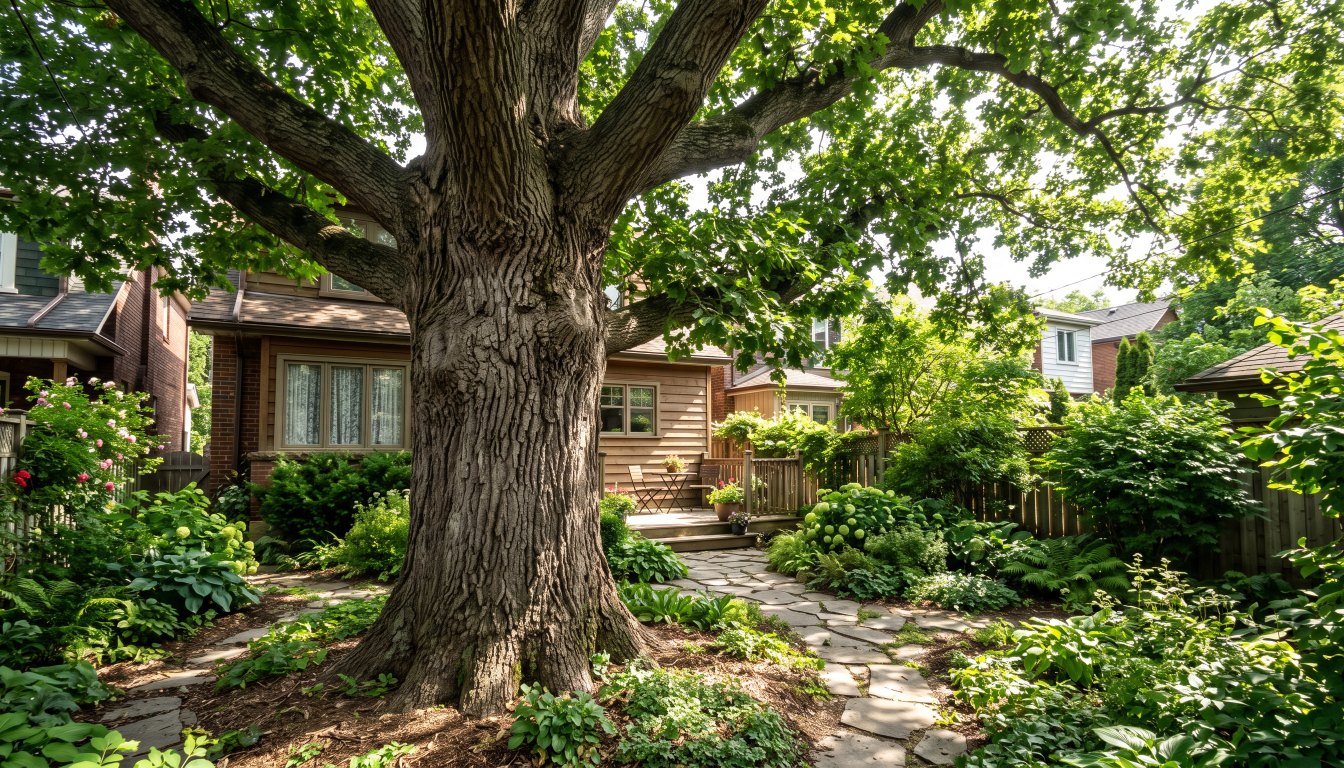
Under Municipal Code Chapter 813, a permit is required to injure, destroy or remove any privately owned tree with a trunk diameter of 30 centimetres or more. That threshold is far smaller than most people picture — a mature maple or oak on a Toronto lot passes it easily.
The penalties are the reason to take it seriously: $500 to $100,000 per tree on conviction, with a possible additional special fine of up to $100,000 under the City of Toronto Act, 2006. Where a permit is granted, replacement trees must be planted and kept in good condition for two years, and where replanting on site is not feasible, cash in lieu is charged at 120% of the cost of replanting plus two years of maintenance.
The threshold is smaller than you think
Thirty centimetres of trunk diameter is roughly 11.8 inches across. On a mature lot in Lawrence Park, the Kingsway, Rosedale, Humber Valley Village or Lytton Park, most of the significant trees exceed it, and many of the ordinary ones do too.
The bylaw covers three actions: injure, destroy and remove. That first word matters. Severe pruning, root damage during excavation, and grade changes that suffocate a root zone can all constitute injury.
The penalties
| Provision | Amount |
|---|---|
| Fine on conviction, per tree | $500 minimum to $100,000 maximum |
| Possible special fine, City of Toronto Act, 2006 | Up to an additional $100,000 |
| Replacement obligation | Replacement trees maintained in good condition for two years |
| Cash in lieu, where replanting is not feasible | 120% of the cost of replanting plus two years of maintenance |
When a permit is granted
Chapter 813 sets out grounds including:
- The tree is in poor condition or unsafe
- The tree is causing structural damage
- The tree is in an inappropriate location given the constraints of the site
- Removal is required for remediation of contaminated soil
- Removal forms part of an approved development project
Fee waivers exist for certain non-profit organisations and for owners below Statistics Canada’s low-income cutoff. Permit fees themselves are set separately in Chapter 441 and change; get the current figure from the City rather than from any article.
Where this collides with a luxury project
Almost every project that changes the outside of a house touches a tree:
- A pool needs excavation access and a clear footprint
- A rear addition takes root zone even where it takes no canopy
- A new or widened driveway compacts roots
- Regrading for drainage can change the soil level over a root system
- A demolition and rebuild touches nearly everything on the lot
Count and measure the trees before you design, not after. On a ravine lot, remember that Chapter 658 applies as well, with its own permit requirement for tree work, fill and grade alteration, and its own $500 to $100,000 per tree range.
Boundary trees
A tree straddling a property line requires notice to the co-owner before work. In practice these are among the most common neighbour disputes in Toronto’s established neighbourhoods, and they are best handled in writing, early, with the arborist’s assessment attached.
For buyers
Ask two questions before you commit to a property where your plans involve the outdoors:
- How many trees on this lot are 30 centimetres or more in trunk diameter, and where are they?
- Was any past tree work permitted? Unpermitted removals become the current owner’s problem.
The practical takeaway
Treat the tree inventory as part of your survey. On a mature Toronto lot, the trees decide as much about what you can build as the zoning does — and unlike zoning, the penalty for getting it wrong arrives per tree.
Frequently asked questions
What size tree needs a permit in Toronto?
Any privately owned tree with a trunk diameter of 30 centimetres or more, measured as set out in Chapter 813. That is roughly 11.8 inches across the trunk.
What are the penalties for removing a tree without a permit?
From a minimum of $500 to a maximum of $100,000 per tree on conviction, with a possible additional special fine of up to $100,000 under the City of Toronto Act, 2006.
Do I have to replant?
Where a permit authorises removal, replacement trees must be planted and kept in good condition for two years. Where replanting on site is not feasible, the City can accept cash in lieu calculated at 120% of the cost of replanting and two years of maintenance.
When will the City grant a permit?
Grounds include a tree in poor or unsafe condition, a tree causing structural damage, a tree in an inappropriate location given site constraints, a tree blocking contaminated soil remediation, and removal that forms part of an approved development project.
What if the tree is on the boundary?
A tree straddling a property line requires notice to the co-owner before work is carried out. Shared trees are a frequent source of neighbour disputes and should be handled carefully and in writing.
Does this apply on a ravine lot as well?
Yes, and the ravine bylaw applies in addition. Inside a mapped ravine protected area, Chapter 658 separately requires a permit to injure, destroy or remove a tree, place or dump fill, or alter the grade of land, with its own $500 to $100,000 per tree penalty range.
Thinking about buying or selling at the top end?
Send me the address, or the shortlist you are considering. I will tell you what the property is actually worth today, what the land is worth without the house, what the transfer tax and carrying costs will be, and whether the deal makes sense. Confidential, always.
[email protected] · 833-330-1925 · Book a free consultation
Confidential. Read personally and answered within 24 hours. I never share, sell or distribute your information.
Related reading
- Buying a ravine lot in Toronto: what the bylaw does to your plans
- TRCA permits: the approval that comes before your building permit
- Pools, tennis courts and guest houses: do they add value in Toronto?
- Toronto private tree bylaw permits and penalties
- Teardown or renovate? How to judge a $3M Toronto lot
Sources
Everything above that is a rule, a rate or a published number comes from these. Verify anything that matters to your own deal.
- City of Toronto — Municipal Code Chapter 813, Trees
- City of Toronto — When to apply for a tree or ravine permit
- City of Toronto — Municipal Code Chapter 658, Ravine and Natural Feature Protection
About the author — Jatin Dua, Broker of Record
I’m the Broker of Record at RE/MAX Quantum Realty, 799 The Queensway in Etobicoke, and I work with buyers, sellers and investors across Toronto and the west GTA. A large part of my work sits in the upper end of the market, where the comparables are thin, the rules are heavier and the cost of a wrong number is measured in hundreds of thousands of dollars.
The free estimators on this site are mine. I built them because the first question every owner asks is “what is it worth?” and the honest answer starts with a number you can check yourself. [email protected] or 833-330-1925.