
Published 2 November 2026 · By Jatin Dua, Broker of Record, RE/MAX Quantum Realty
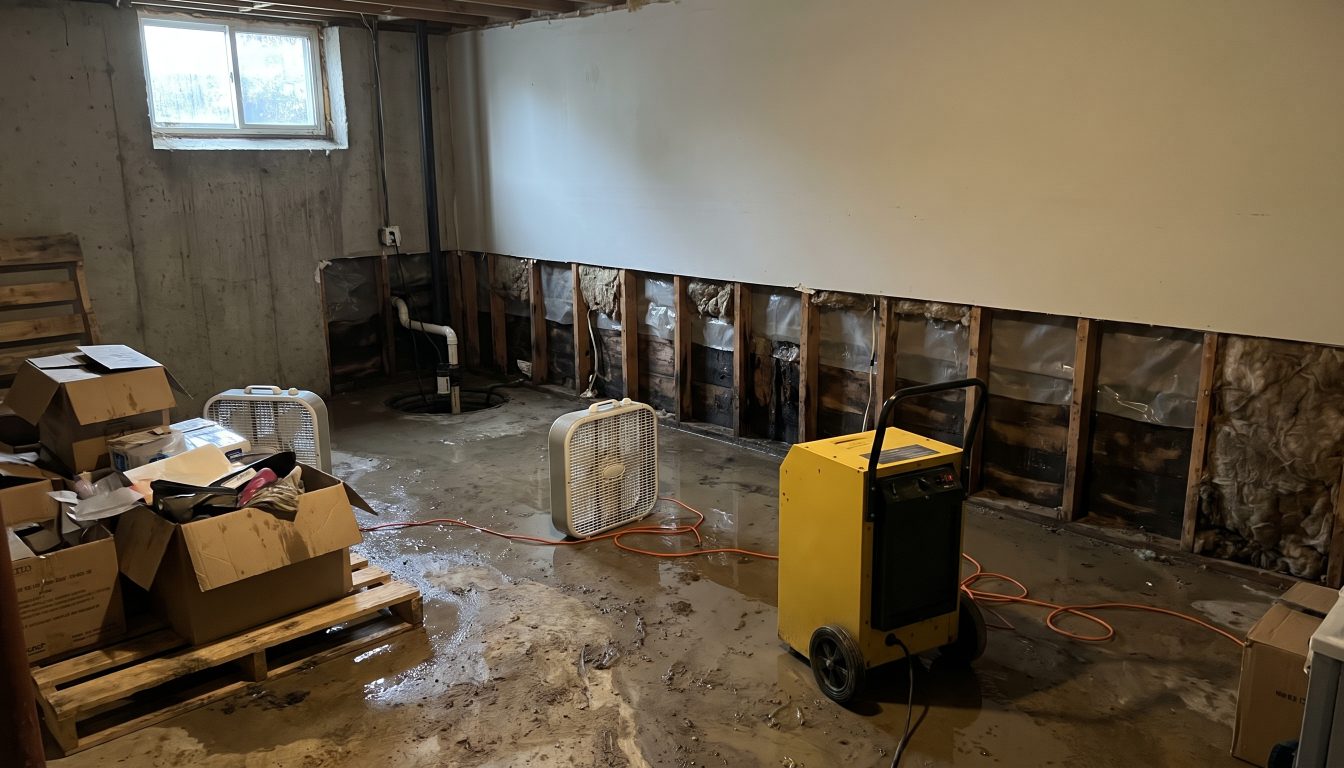
Make it safe first: stay out of water near power, call Toronto Hydro to cut power if needed, and stop using drains if it may be a sewer backup. Then call 311, call your insurer and photograph everything. Sewer backup is only insured if you bought that coverage, and Toronto’s subsidy pays up to $6,650 to flood-proof.
This guide is for Toronto homeowners, landlords and tenants who just found water in the basement, or want a plan before it happens. You will get a step-by-step list for the first 48 hours, how insurance and City claims really work, and the City of Toronto subsidy that pays for most of the fix, all as of November 2026.
What should I do first if my basement floods?
Safety comes before stuff. Water and electricity together can kill, and sewage water can make you sick. Work through these in order.
- Stay out of deep water near power. If water has reached outlets, cords or the electrical panel, do not walk in. The City of Toronto tells residents to call Toronto Hydro to have the power shut off.
- Think about gas. Water can put out the pilot light on a gas furnace or water heater. If you smell gas, leave the house right away and call the gas company from outside.
- Stop using the drains if it could be a sewer backup. If the water came up through a floor drain, toilet or shower, do not flush, run sinks or do laundry unless you must. Anything you send down the pipe can come right back up into the basement.
- Call 311. Report it by phone or through 311 online. This starts a City investigation and creates a record you may need later.
- Call your insurance company. Report the damage as soon as you can, even before you know the cause.
Keep children and pets upstairs until the cleanup is done.
How can I tell where the water came from?
The cause decides who pays, so it is worth a few minutes of careful looking before you start pumping and scrubbing. Toronto Water staff use simple clues when they investigate, and you can use the same ones.
- Clear water usually points to rain or melted snow getting in from outside: poor grading, a crack in the foundation, a window well, a failed weeping tile or a sump pump that stopped.
- Muddy or smelly water can point to a blocked sewer service line or a backup from the sanitary sewer.
- Where it entered. Water rising from a floor drain is different from water running down a wall or under a door.
- How long it took to go down. Write down when you found it and when it drained.
Take photos and short videos of the water level, the entry point and the drain before anything is cleaned. If a pipe burst inside the house, that is a different situation again, and many standard policies treat a sudden plumbing leak differently from a flood.
What happens when I call 311 about basement flooding?
A City water service technician is sent out. From the first 311 contact, the City says response is normally within four hours, though it can take longer during big storms when calls pile up. Technicians work around the clock.
The technician first checks the City sanitary sewer under the road, looking at maintenance holes upstream and downstream. If the City sewer is blocked, the City arranges emergency flushing and may run a camera down the line. If the problem is not in the City sewer, the technician knocks on your door and asks about the water: clear or muddy, any smell, where it came in, how fast it went away.
Two things surprise people. City staff will not go into a flooded basement for health and safety reasons. And the City says the 311 record and investigation results are used in its claims process. If you skip 311, you weaken any later claim against the City.
Who pays for basement flood damage in Toronto?
There are three possible payers, and most owners end up relying on the first one.
Your home insurance
According to Insurance Bureau of Canada (IBC), damage from sewers and drains backing up is typically not covered by a standard home policy. You need optional sewer backup coverage. Overland flood coverage, for surface water from heavy rain or melting snow, is also optional. Groundwater and seepage coverage is often not standard either. Sudden and accidental water damage from indoor plumbing is usually covered. Read your policy wording, or call your broker, before you assume anything.
The City of Toronto
The City is not your insurer. You can file a third-party claim using the City’s online form, but the City only pays if you can show its negligence caused the damage. The City says it is not responsible when its installation and maintenance standards were met, and that the majority of property damage claims against it are denied. Flood and sewer backup claims are typically finished within 90 days, longer after major storms.
You
The City is clear that if flooding comes from a blocked private drain pipe, leaking foundation walls or poor lot drainage on your property, the owner is responsible for repairs. Owners are responsible for the plumbing from the property line into the house.
What should I document for an insurance claim?
Insurers pay on proof. IBC’s claim steps line up with what I tell my own clients after a flood:
- Make a full list of damaged items, with receipts, manuals or warranties if you have them.
- Take photos of everything before it goes to the curb. Keep ruined items until the adjuster says you can discard them, unless they are a health hazard.
- Keep every receipt for emergency work, pumping, cleaning and hotel stays.
- Ask about Additional Living Expenses if the home is not livable. IBC notes that in a flood, this applies to people who bought sewer backup or overland flood coverage.
- Expect a proof of loss form. IBC says it is typically due within 30 days of being requested.
IBC also notes you legally have two years to report a loss, but it recommends reporting right away. Waiting only makes the paperwork harder.
Instant Home Valuation
What’s your home
worth today?
Answer six quick questions and get an instant value range built from current Toronto & GTA sale data — property type, size, condition, lot and location all weighted the way a real pricing conversation weighs them. Takes about ninety seconds.
Reading recent GTA sale data…
Building your estimate
Estimated market value
—
$0–$0
Most likely value $0 · roughly $0 per square foot
What moved the number
Starting from the area baseline for your property type, here’s what each answer added or subtracted.
Market context
Recent local averages for comparison.
—
A range is a starting point.
A strategy is what sells.
This model doesn’t know that your neighbour’s identical semi went $80,000 over asking last month, or which two upgrades actually pay back in your area. That conversation is free and takes twenty minutes.
How do I clean a flooded basement safely?
The City of Toronto’s health and safety advice for flooded basements is practical and specific. Flood water and leftover sludge can carry disease and irritants.
- Wear long sleeves and pants, gloves, eye protection, rubber boots and a mask.
- Consider a professional cleaning company that handles sewage-contaminated basements.
- Have a licensed electrical contractor check for hazards before you use anything electrical down there.
- Throw out anything contaminated that cannot be washed and disinfected, and any food that touched flood water.
- Wash surfaces with hot water and liquid detergent, rinse, then dry and ventilate the space.
- Sanitize walls and floors with one cup of household bleach in five gallons of water.
- Remove and discard drywall and insulation that were soaked by sewage or flood water.
- Wash the clothes you cleaned in with hot water and detergent.
Speed matters because wet materials keep getting worse. Run fans and a dehumidifier once the power is confirmed safe, and open windows when the air outside is dry.
How do I know if mould is a problem after a flood?
Look and smell for it in the weeks after. Musty odours, staining and discoloured patches on drywall or wood are the usual signs. Toronto Public Health gives a simple size rule, adapted from CMHC guidance:
- 1 square metre or less: you can usually clean it yourself with detergent and water, then dry it quickly.
- Up to 3 square metres: the occupant can handle it with proper precautions.
- 4 square metres or more: hire someone trained in mould remediation.
In every case, fix the moisture source, or the mould comes back. If you are buying or selling a home with a mould history, my guide to mould for Ontario buyers and sellers covers what to check and disclose.
What if I rent and the basement floods?
Tell your landlord in writing right away, with photos. Under Ontario’s Residential Tenancies Act, the landlord must keep the unit in a good state of repair and fit to live in, which includes fixing flood damage to the building. Your own furniture, clothes and electronics are a different matter. Those are usually covered only by your tenant insurance, if you have it. IBC notes tenant policies also include Additional Living Expenses after an insured loss.
Landlords should call their own insurer and their tenant the same day. My post on what your landlord must fix in Ontario explains the repair duty and what a tenant can do if repairs stall. If you own a rental, also read my guide to landlord insurance in Ontario, because a regular home policy may not fit a rented property.
How much will Toronto pay to flood-proof my basement?
Up to $6,650 per property. The City expanded its Basement Flooding Protection Subsidy Program on May 1, 2026, and the higher amounts apply to eligible work done on or after November 12, 2025. It covers up to 80 per cent of the invoiced cost, to these limits:
| Eligible work | City pays | Maximum |
|---|---|---|
| Home plumbing assessment (one time) | 80% of invoice | $500 |
| Backwater valve and alarm (up to 2 devices) | 80% of invoice | $1,600 per device |
| Sump pump and alarm (1 device) | 80% of invoice | $2,250 |
| Battery backup for sump pump | 80% of invoice | $300 |
| Weeping tile severance and capping | 80% of invoice | $400 |
| Total possible per property | $6,650 |
Source: City of Toronto, Basement Flooding Protection Subsidy Program, for work completed on or after November 12, 2025 (checked November 2026).
The rules matter as much as the money:
- You must be the registered owner of a single-family home, duplex, triplex or fourplex in Toronto.
- Your downspouts must be disconnected from the sewer, or you must have a City exemption.
- Your contractor and any sub-contractors need a valid City of Toronto business licence when the work is done. Check before work starts.
- A backwater valve needs a building permit and an inspection before it is covered up.
- Apply within two years of the work, with original itemized invoices marked paid in full. Payment can take up to 10 weeks, and funding is first-come, first-served.
I wrote a deeper walk-through in my Toronto basement flooding subsidy guide.
How do I stop my basement from flooding again?
Most repeat floods come from the same few weak spots. The City’s prevention list is a good checklist:
- Clean eavestroughs and downspouts, and make sure disconnected downspouts drain about two metres from the foundation.
- Make sure the ground slopes away from the house, without sending water onto a neighbour’s lot.
- Seal cracks in foundation walls, floors and window wells.
- Have a licensed plumber check whether your weeping tiles feed the sewer, and whether you need a backwater valve or sump pump.
- Keep the sump pump discharging onto grass or gravel at least two metres from the foundation, and consider battery backup for storm power cuts.
- Clean the backwater valve every year, and never use plumbing while it is closed.
- Never pour grease down the drain or flush wipes.
Water problems are expensive in any house. My piece on grading and drainage explains why outside fixes often matter more than inside ones.
After a flood, the owners who come out best are the ones with a paper trail: the 311 report, dated photos, plumber invoices, the permit for the backwater valve and the subsidy approval. When you sell later, a buyer’s inspector will likely spot old water staining. Being able to show what happened and exactly what was fixed turns a scary question into a reassuring answer.
Do not let a contractor start subsidy work until you have confirmed their City of Toronto business licence. The City says it will deny the subsidy if the contractor was not licensed when the work was done. Also check your sewer backup coverage now. Many people only learn it was optional when the claim is refused.
What to do next
- Today: make the space safe, call 311 and your insurer, and photograph everything.
- This week: get a licensed plumber to find the cause, and keep every receipt.
- Before the next big storm: book a home plumbing assessment and price a backwater valve or sump pump with a licensed contractor.
- Apply for the City subsidy within two years, with itemized paid invoices.
- Call your broker to add or confirm sewer backup and overland flood coverage.
Need help with this? Talk to me.
I’m Jatin Dua, Broker of Record at RE/MAX Quantum Realty, and I’m the best agent to do this kind of work for you in Toronto and across the GTA. Over $100 million in GTA sales and 100+ families helped sell. Feel free to contact me any time: call or text 833-330-1925 or email [email protected].
Frequently asked questions
What is the first thing to do when your basement floods?
Make it safe first. Do not step into water near outlets or the electrical panel, and in Toronto call Toronto Hydro to shut off power if water is near electrical equipment. If you smell gas, leave and call the gas company. Then stop using drains if it could be a sewer backup, call 311 to report it, and call your insurance company.
Does home insurance cover a flooded basement in Ontario?
Only sometimes. Insurance Bureau of Canada says sewer backup damage is typically covered only if you bought optional sewer backup coverage, and overland flooding from heavy rain or melting snow also needs optional coverage. Sudden, accidental leaks from indoor plumbing are usually covered by a standard policy. Check your policy wording with your broker, as every policy is different.
Will the City of Toronto pay for my basement flood damage?
Usually not. The City of Toronto only pays a flood or sewer backup claim if you can show its negligence caused the damage, and it says most property damage claims against it are denied because its standards were met. You can still file through the City’s claim form. Reporting the flood to 311 first matters, because that record is used in the claims investigation.
How long does the City take to respond to a basement flooding call in Toronto?
Normally within four hours of your first 311 contact, according to the City of Toronto. During heavy storms, when many people report flooding at once, it can take longer, and the City says it will tell you if the wait is expected to be more than four hours. Technicians work 24 hours a day but will not enter a flooded basement.
How much is the Toronto basement flooding subsidy in 2026?
Up to $6,650 per property, as of November 2026. The City of Toronto pays 80 per cent of eligible invoices, up to $1,600 per backwater valve (two maximum), $2,250 for a sump pump, $300 for battery backup, $500 for a plumbing assessment and $400 for weeping tile capping, for work done on or after November 12, 2025.
Who is responsible if my rented basement apartment floods?
In Ontario, the landlord must repair damage to the unit and building because the Residential Tenancies Act requires a good state of repair. The tenant’s own belongings are usually covered only by the tenant’s insurance. Tenants should report the flood to the landlord in writing with photos the same day, and landlords should call their insurer and arrange repairs quickly.
How can you tell if basement water is from the sewer?
Muddy or smelly water, or water coming up through a floor drain, toilet or shower, often points to a sewer backup. Clearer water usually points to rain or snowmelt getting in through cracks, poor grading or a failed sump pump. Toronto Water technicians use these same clues. A licensed plumber can confirm the cause, which affects who pays.
When should I hire a professional for mould after a flood?
For mould covering 4 square metres or more, according to Toronto Public Health guidance adapted from CMHC. Patches of 1 square metre or less can usually be cleaned with detergent and water, and areas up to 3 square metres can be handled by the occupant with precautions. In every case, fix the moisture source or the mould will return.
Do I need a permit to install a backwater valve in Toronto?
Yes. The City of Toronto requires a building permit for a backwater valve, and an inspection before the valve is enclosed or covered. Both are also conditions of the Basement Flooding Protection Subsidy, along with using a contractor that holds a valid City of Toronto business licence and applying within two years of the work.
Sources
- Basement Flooding (City of Toronto)
- Basement Flooding Protection Subsidy Program (City of Toronto)
- Flood Claims (City of Toronto)
- How to Prevent Basement Flooding (City of Toronto)
- Mould (Toronto Public Health)
- Flooding and Insurance (Insurance Bureau of Canada)
- Flood and Water Safety (Insurance Bureau of Canada)
- Residential Tenancies Act, 2006 (Ontario e-Laws)
Related reading
- Average Home Insurance Cost in Toronto and Ontario (2027)
- Tenant Insurance in Ontario: What It Covers and Can a Landlord Require It?
About the author — Jatin Dua, Toronto and GTA real estate broker
I am Jatin Dua, Broker of Record and co-founder of RE/MAX Quantum Realty Inc., Brokerage, Unit 101, 799 The Queensway, Toronto. I work with buyers and sellers across Toronto and the GTA and have helped more than 100 families sell. Four-plus years of active GTA transactions and over $100 million in sales volume.
Reach me at [email protected] or 833-330-1925, or book a call.