
Published 2 November 2026 · By Jatin Dua, Broker of Record, RE/MAX Quantum Realty
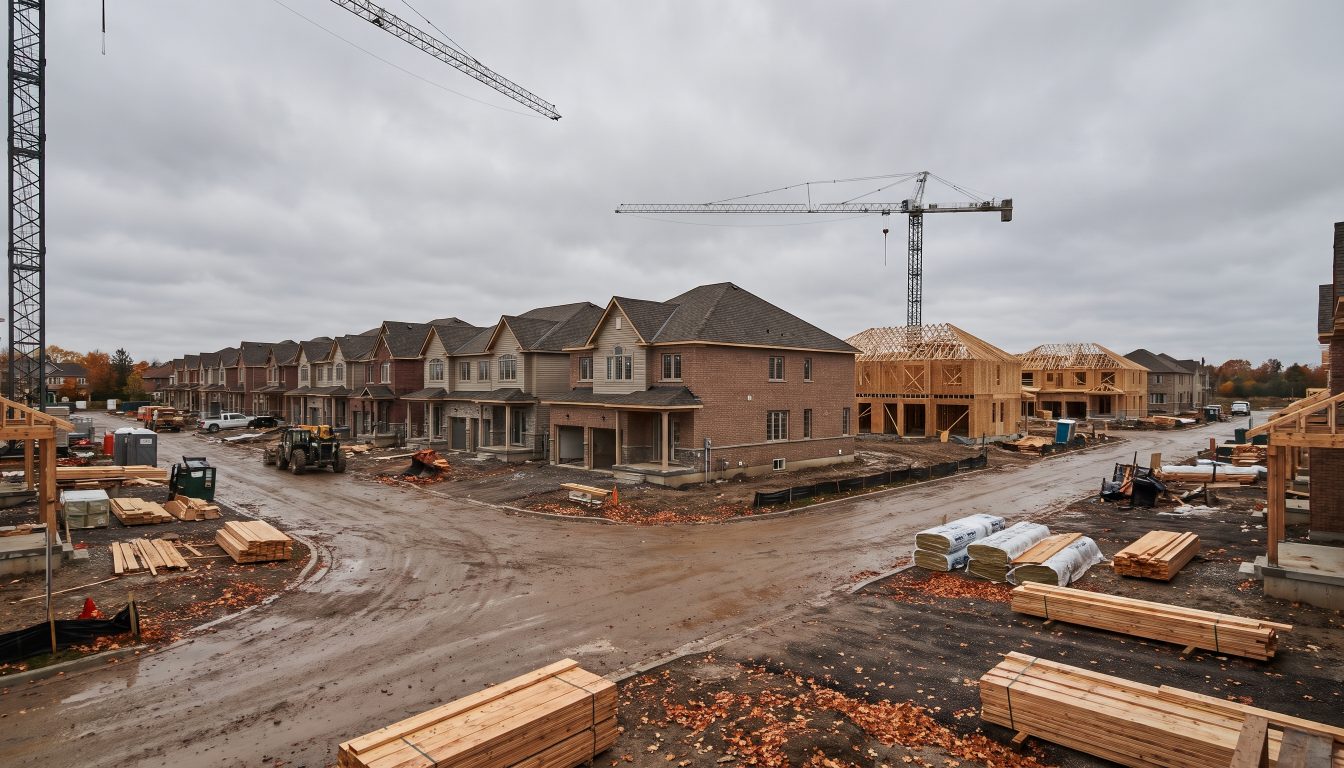
The fastest-growing GTA cities from 2021 to 2025 were East Gwillimbury (18.4%), Oshawa (16.5%), Pickering (14.3%), Milton (13.3%) and Brampton (13.1%), according to Statistics Canada estimates. Growth slowed sharply in 2025, when the Toronto area’s population was flat, but Ontario still projects the GTA to reach 8.9 million by 2051.
This guide is for buyers, investors and families who want to know where the GTA is growing fastest, and what that growth means for home prices in 2027. You get the five fastest-growing GTA cities from Statistics Canada’s latest estimates, what homes cost in each, and how the slowdown in 2025 changes the picture.
Which GTA cities are growing the fastest?
| City | Population July 2021 | Population July 2025 | Growth 2021 to 2025 | Growth July 2024 to July 2025 | Census growth 2016 to 2021 |
|---|---|---|---|---|---|
| East Gwillimbury | 36,311 | 42,989 | 18.4% | 1.8% | 44.4% |
| Oshawa | 183,273 | 213,592 | 16.5% | 2.8% | 10.0% |
| Pickering | 103,593 | 118,378 | 14.3% | 4.2% | 8.1% |
| Milton | 138,930 | 157,345 | 13.3% | 3.2% | 20.7% |
| Brampton | 687,462 | 777,759 | 13.1% | -0.7% | 10.6% |
| Caledon (6th) | 79,947 | 90,201 | 12.8% | 0.4% | 15.2% |
| Whitby (7th) | 144,558 | 162,413 | 12.4% | 2.3% | 7.9% |
| Toronto (8th) | 2,917,666 | 3,271,830 | 12.1% | -0.3% | 2.3% |
Source: Statistics Canada, Table 17-10-0155-01 (population estimates, July 1, by census subdivision, 2021 boundaries) and Table 98-10-0002-01 (2021 Census population counts). The 2021 estimates include an adjustment for people the census missed, so they are higher than census counts.
At the other end, Mississauga grew about 2.3% over the same four years, Burlington about 2.0% and Uxbridge about 1.1%.
How did I measure the fastest-growing cities?
I ranked all 25 municipalities in the GTA’s five parts, Toronto, Peel, York, Durham and Halton, by population growth from 1 July 2021 to 1 July 2025. These are Statistics Canada’s official yearly estimates, and 2025 is the latest year available. I also show the last census period, 2016 to 2021, and the latest single year, because the story changed sharply in 2025.
Growth here is a percentage. A small town can grow fast in percentage terms while adding far fewer people than a big city. I point out where that matters.
1. East Gwillimbury
The growth: East Gwillimbury, in northern York Region, grew 18.4% from 2021 to 2025, to about 43,000 people. That came after a 44.4% jump between the 2016 and 2021 censuses, the fastest in the GTA by far. Its growth slowed to 1.8% in the latest year.
Homes built: the 2021 Census counted 11,869 private dwellings, up 43.4% from 8,279 in 2016. Growth here came almost entirely from new subdivisions. Even so, the town had only about 141 people per square kilometre in 2021, so much of it is still rural.
Who it suits: buyers who want a newer detached home and do not mind a longer drive.
What it costs: the median detached home sold for $1,125,000 from January to October 2026, down 11.1%, the biggest drop of any GTA municipality outside Toronto. See my East Gwillimbury vs Newmarket comparison for how it stacks up next door.
What to check: with many similar new homes on the market, resale competition can be stiff. Look at how long comparable homes took to sell.
2. Oshawa
The growth: Oshawa added about 30,300 people from 2021 to 2025, growth of 16.5%, to about 213,600. It kept growing in the latest year, by 2.8%. Among Ontario municipalities with 50,000 or more people, only Kitchener grew faster over those four years.
Homes built: the number of private dwellings rose 6.8% between the 2016 and 2021 censuses, to 69,324, while the population grew 10.0%. When people grow faster than homes, each home holds more people, which in my view tends to support rental demand.
Who it suits: first-time buyers and investors looking for the lowest entry prices in the GTA.
What it costs: the median detached home was $730,000 from January to October 2026, down 8.8%, and the median condo apartment was $340,500. Both are among the lowest in the GTA. My Durham housing market outlook covers Oshawa alongside Pickering, Ajax and Whitby.
What to check: for a rental, compare the rent you can actually get with your full carrying cost before you buy.
3. Pickering
The growth: Pickering grew 14.3% from 2021 to 2025, to about 118,400 people. It was the fastest-growing GTA city in the latest year, up 4.2% from July 2024 to July 2025, while most of the GTA slowed sharply.
Homes built: private dwellings rose 8.5% between the 2016 and 2021 censuses, to 34,327, slightly faster than the population.
Who it suits: buyers who want to stay close to Toronto’s east end with a lower price than most of York Region.
What it costs: the median detached home was $1,039,999 from January to October 2026, down 8.0%. Freehold townhouses had a median of $789,000, and the median condo apartment was $470,000.
What to check: what is being built near the home. Strong growth means construction, and that can mean noise and traffic for a few years.
Instant Home Valuation
What’s your home
worth today?
Answer six quick questions and get an instant value range built from current Toronto & GTA sale data — property type, size, condition, lot and location all weighted the way a real pricing conversation weighs them. Takes about ninety seconds.
Reading recent GTA sale data…
Building your estimate
Estimated market value
—
$0–$0
Most likely value $0 · roughly $0 per square foot
What moved the number
Starting from the area baseline for your property type, here’s what each answer added or subtracted.
Market context
Recent local averages for comparison.
—
A range is a starting point.
A strategy is what sells.
This model doesn’t know that your neighbour’s identical semi went $80,000 over asking last month, or which two upgrades actually pay back in your area. That conversation is free and takes twenty minutes.
4. Milton
The growth: Milton grew 13.3% from 2021 to 2025, to about 157,300 people, and 3.2% in the latest year. Between the 2016 and 2021 censuses it grew 20.7%, second only to East Gwillimbury in the GTA.
Homes built: the 2021 Census counted 41,000 private dwellings, up 15.4% from 35,537 in 2016, one of the biggest building booms in the region.
Who it suits: young families who want Halton at a lower price than Oakville or Burlington.
What it costs: the median detached home was $1,130,000 from January to October 2026, down 6.6%. Freehold townhouses had a median of $810,000. My guide to the best neighbourhoods in Milton narrows it down.
What to check: in the newest subdivisions, check whether schools, parks and shops are built yet or only planned.
5. Brampton
The growth: Brampton added about 90,300 people from 2021 to 2025, more than any other GTA city outside Toronto, for growth of 13.1%. But it shrank 0.7% in the latest year, from about 783,600 to about 777,800.
Homes built: private dwellings rose 9.0% between the 2016 and 2021 censuses, to 189,086, a little slower than the population. Brampton is also dense for a suburb, with about 2,469 people per square kilometre in 2021.
Who it suits: buyers who want a big, busy city with detached homes under $1 million.
What it costs: the median detached home was $950,000 from January to October 2026, down 8.9%. Brampton was also the busiest detached market outside Toronto, with 2,280 sales. My Brampton housing market outlook has the details.
What to check: the recent dip in population may soften rental demand in some areas. If you are buying to rent out, test your numbers at a lower rent.
Is the GTA still growing in 2026 and 2027?
More slowly. Statistics Canada says the Toronto census metropolitan area’s population was essentially flat from July 2024 to July 2025, down 992 people, after record growth of about 269,100 the year before. The main reason was non-permanent residents, such as students and temporary workers. Their net number fell by about 44,800, after rising by about 228,000 the year before. The area also lost about 64,800 people, on net, to the rest of Ontario.
The long-term outlook still points up. Ontario’s Ministry of Finance, in its Summer 2026 projections, expects the GTA to grow from 7.7 million in 2025 to 8.9 million by 2051, about 16.4%. By region, it projects growth of 32.5% in Durham, 27.2% in Halton, 20.0% in York, 16.1% in Peel and 9.0% in Toronto. It also projects that Toronto’s population will drop by about 200,000 over the next three years before growing again.
Population growth does not guarantee rising prices. East Gwillimbury grew the fastest in percentage terms and still had the biggest drop in detached prices of any GTA municipality outside Toronto in 2026. Fast-growing towns also get a lot of new supply, and new homes compete directly with resales. Do not pay a premium today on the promise of future growth alone.
Does fast population growth push up home prices?
Not in 2026. Every one of the five fastest-growing cities saw its detached median fall from January to October 2026 compared with a year earlier, by between 6.6% and 11.1%. Across the GTA, TRREB reported October 2026 sales down 7.9% from a year earlier and the average price down 2.7%.
In my view, growth works on prices over years, not months. The people who arrived from 2021 to 2024 still need homes, and TRREB’s chief executive noted in November 2026 that the region’s permanent population will keep growing. In the short term, though, interest rates matter more. The Bank of Canada raised its policy rate to 2.50% on 28 October 2026, and that weighs on what buyers can borrow. For the wider picture, see my GTA housing market forecast for 2027.
If you are buying in a fast-growing city, use the growth to your advantage now, not as a reason to overpay. In 2026 these were buyer-friendly markets with falling prices and plenty of choice. Pick the street and the home on their own merits, and look for a resale home in a finished part of town rather than paying a premium for a brand-new one next to a construction site. If you are selling in one of these cities, price against the newest sales, because new-build competition is real.
What to do next
- Use the table to shortlist cities that fit both your budget and your commute.
- Check what is planned around any home you like: new subdivisions, schools, roads and transit.
- Compare resale prices with new-build prices in the same area.
- If you own now, get a value estimate before you decide whether to sell or hold through 2027.
Need help with this? Talk to me.
I’m Jatin Dua, Broker of Record at RE/MAX Quantum Realty, and I’m the best agent to do this kind of work for you in Toronto and across the GTA. Over $100 million in GTA sales and 100+ families helped sell. Feel free to contact me any time: call or text 833-330-1925 or email [email protected].
Frequently asked questions
What is the fastest growing city in the GTA?
East Gwillimbury is the fastest-growing municipality in the GTA. Its population rose 18.4% from July 2021 to July 2025, to about 43,000, according to Statistics Canada estimates, after a 44.4% jump between the 2016 and 2021 censuses. Among larger cities, Oshawa grew 16.5% and Pickering 14.3% over the same four years.
What is the fastest growing city in Ontario?
Among Ontario municipalities with at least 50,000 people, Kitchener grew fastest from July 2021 to July 2025, by about 20.4%, according to Statistics Canada estimates. Oshawa was second at 16.5%, making it the fastest-growing GTA city of that size. Smaller places such as East Gwillimbury grew faster in percentage terms, at 18.4%.
Is the GTA population still growing?
Barely, for now. Statistics Canada estimates the Toronto census metropolitan area lost 992 people from July 2024 to July 2025, after adding about 269,100 the year before, mainly because the number of non-permanent residents fell. Ontario’s Summer 2026 projections still have the GTA growing from 7.7 million in 2025 to 8.9 million by 2051.
Which part of the GTA will grow the most by 2051?
Durham Region is projected to grow the most. Ontario’s Ministry of Finance, in its Summer 2026 projections, expects Durham to grow 32.5% from 2025 to 2051, followed by Halton at 27.2%, York at 20.0%, Peel at 16.1% and Toronto at 9.0%. Projections are estimates and are updated regularly, with the next regional update due in 2027.
Is Brampton’s population still growing?
Not in the latest year. Statistics Canada estimates Brampton’s population fell 0.7% from July 2024 to July 2025, to about 777,800. Over four years it still grew 13.1%, adding about 90,300 people from 2021 to 2025, more than any other GTA city outside Toronto. Lower numbers of temporary residents drove the recent slowdown across the region.
Is Toronto’s population shrinking?
Slightly. Statistics Canada estimates the City of Toronto had about 3,271,800 people on 1 July 2025, down about 0.3% from a year earlier. Ontario’s Summer 2026 projections expect Toronto to lose about 200,000 people over the next three years before growing again to almost 3.6 million by 2051.
Which GTA city added the most people since 2021?
Toronto added the most people, about 354,200 from July 2021 to July 2025, according to Statistics Canada estimates. Outside Toronto, Brampton added the most, about 90,300. In percentage terms, smaller towns grew faster: East Gwillimbury grew 18.4%, Oshawa 16.5% and Pickering 14.3% over the same four years.
Why did GTA population growth slow down in 2025?
The main reason was a drop in non-permanent residents, such as international students and temporary workers. Statistics Canada says their net number in the Toronto metropolitan area fell by about 44,800 from July 2024 to July 2025, after rising by about 228,000 the year before. The area also lost people to other parts of Ontario.
Do house prices go up in fast-growing GTA cities?
Not in 2026. All five of the fastest-growing GTA cities saw their median detached price fall from January to October 2026, compared with the same months of 2025, according to TRREB MLS data via REALM. East Gwillimbury grew fastest and fell most, down 11.1%. New supply and higher interest rates outweighed population growth in the short term.
Sources
- Statistics Canada, Table 17-10-0155-01: Population estimates, July 1, by census subdivision, 2021 boundaries
- Statistics Canada, Table 98-10-0002-01: Population and dwelling counts, 2021 Census
- Statistics Canada, The Daily: Population estimates for CMAs and CAs, July 1, 2025 (14 January 2026)
- Ontario Ministry of Finance: Ontario Population Projections, 2025–2051
- TRREB news release: October 2026 market results (4 November 2026)
- Bank of Canada: policy rate announcement, 28 October 2026
Related reading
- Top 5 Best Neighbourhoods to Live in Mississauga in 2027
- Top 5 Best Neighbourhoods to Live in Brampton in 2027
- Top 5 Best Neighbourhoods to Live in Markham in 2027
- Top 5 Best Neighbourhoods to Live in Oakville in 2027
About the author — Jatin Dua, Toronto and GTA real estate broker
I am Jatin Dua, Broker of Record and co-founder of RE/MAX Quantum Realty Inc., Brokerage, Unit 101, 799 The Queensway, Toronto. I work with buyers and sellers across Toronto and the GTA and have helped more than 100 families sell. Four-plus years of active GTA transactions and over $100 million in sales volume.
Reach me at [email protected] or 833-330-1925, or book a call.