
Published 2 November 2026 · By Jatin Dua, Broker of Record, RE/MAX Quantum Realty
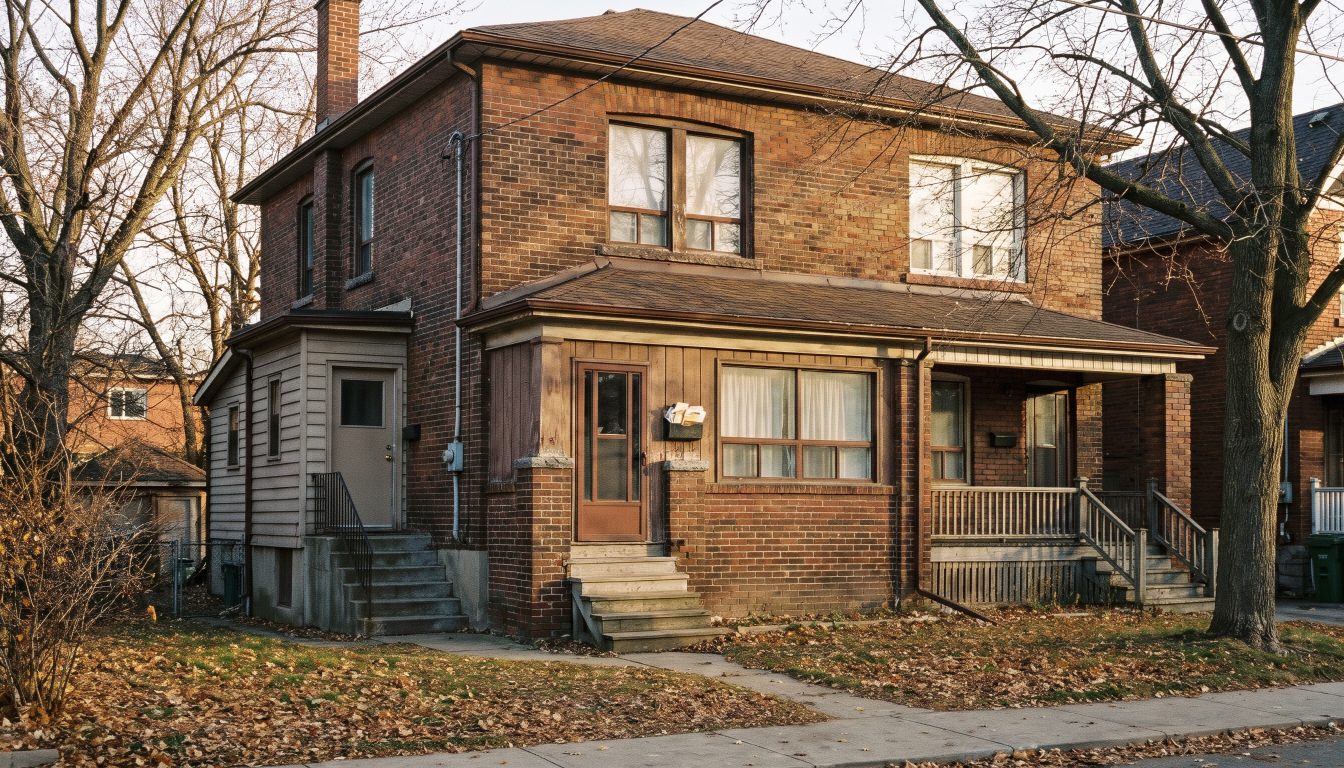
Your lease does not end. Under Ontario’s Residential Tenancies Act, the landlord’s heirs, estate trustee or a later buyer step into the landlord’s place, and your rent, terms and deposit continue. Keep paying rent until someone with proof of authority gives you new payment details in writing. You can only be made to leave through the Landlord and Tenant Board.
This guide is for Ontario tenants whose landlord has just died, and for the families and estate trustees who now own a rented home. You will learn whether the lease survives, who you pay rent to, what can and cannot change, and what the estate has to do before it sells.
Does a lease end when the landlord dies in Ontario?
No. Your tenancy carries on exactly as before. The Residential Tenancies Act, 2006 (the RTA) defines “landlord” to include the owner’s heirs, assigns, personal representatives and successors in title (s. 2(1)). In plain English, whoever takes over the property also takes over the landlord’s side of your lease.
Three other rules back this up:
- The promises in a lease “run with the land” (s. 18). They stay attached to the property, not to the person who signed.
- A tenancy can only end the ways the Act allows (s. 37). A death is not one of them.
- A fixed-term lease that runs out becomes month to month on the same terms (s. 38). You do not have to sign anything new to stay.
The death of a tenant is different. If a tenant dies and there are no other tenants, the RTA deems the tenancy ended 30 days after the death (s. 91). There is no matching rule for a landlord.
This is general information as of November 2026, not legal advice. For your own situation, talk to the Landlord and Tenant Board (LTB), a community legal clinic, a paralegal or a lawyer.
Who is my landlord now that the owner has died?
It depends on how the property was owned and whether there was a will. This table shows the usual paths.
| How the home was owned | Who steps into the landlord’s shoes | What to ask for |
|---|---|---|
| Jointly with a spouse or partner (joint tenancy) | The surviving owner, automatically | Written confirmation of the new name and address for notices |
| Alone, with a will | The estate trustee (executor) named in the will, for the estate | A copy of the page naming them, or their court certificate |
| Alone, with no will | An estate trustee appointed by the court | The court’s Certificate of Appointment of Estate Trustee |
| Owned by a company | The company is still the landlord | Who now signs for the company |
| Later sold by the estate | The buyer, from closing day | The buyer’s legal name and address for notices |
Source: Residential Tenancies Act, 2006, ss. 2(1), 18; Ontario Ministry of Finance, Estate Administration Tax page (joint assets passing to the other owner; estate certificates). Current as of November 2026.
Ontario’s Ministry of Finance notes that assets held jointly that pass automatically to the other owner are not counted in the estate for Estate Administration Tax. That is why a surviving joint owner usually takes over right away. If you are not sure how title was held, my guide to joint tenancy versus tenants in common explains the difference.
Who do I pay rent to after my landlord dies?
Keep paying your rent on time, the same way you always have, until someone with authority tells you in writing to change it. Rent is still owed. A death does not pause it.
Being late can hurt you even in a messy situation. Since 21 September 2026, Ontario’s regulation says persistent late payment includes paying more than seven days late at least three times within six months (O. Reg. 516/06, s. 8.1). That can be grounds for a landlord’s notice to end the tenancy.
When someone contacts you to collect rent:
- Ask for proof they have authority. An estate trustee can show the will or a court certificate. A family member with neither is not automatically your landlord.
- Ask for the legal name and address for notices. The RTA requires a written lease to set this out (s. 12), so you need the new details for any notice you might have to give.
- Ask for receipts. A landlord must give a free receipt for rent or any other payment when you ask (s. 109).
- Use a traceable method, such as e-transfer or cheque, and keep copies of every message.
If nobody comes forward for a while, do not simply stop paying. A practical approach, and the one I suggest, is to set each month’s rent aside in a separate account and keep a written record that you tried to reach the family or the property manager. That way you can pay the full amount the day someone with authority appears.
Can the estate or heirs raise my rent?
Only under the normal rules. The estate or heirs are now the landlord, so the same limits apply to them:
- At least 12 months since your last increase or since you moved in (s. 119).
- At least 90 days’ written notice (s. 116), usually on Form N1.
- No more than the provincial guideline: 2.1% for increases in 2026 and 1.9% for 2027, unless the LTB approves more.
- The guideline does not cap units first occupied for residential purposes after 15 November 2018.
My post on whether a landlord can raise rent every year walks through the 2027 numbers.
What happens to my last month’s rent deposit?
It stays yours and must be used for your last month. The RTA says a landlord must apply a rent deposit paid “to the landlord or to a former landlord” to the last rent period (s. 106(10)). A new landlord also cannot ask you for a second deposit if you already paid one to the previous landlord (s. 106(4)).
The deposit also earns interest every year at the guideline rate (s. 106(6)). If the interest is not paid when due, you can deduct it from a later rent payment (s. 106(9)). Ask the estate trustee to confirm in writing that they have a record of your deposit. Family members are not always aware of it.
Instant Home Valuation
What’s your home
worth today?
Answer six quick questions and get an instant value range built from current Toronto & GTA sale data — property type, size, condition, lot and location all weighted the way a real pricing conversation weighs them. Takes about ninety seconds.
Reading recent GTA sale data…
Building your estimate
Estimated market value
—
$0–$0
Most likely value $0 · roughly $0 per square foot
What moved the number
Starting from the area baseline for your property type, here’s what each answer added or subtracted.
Market context
Recent local averages for comparison.
—
A range is a starting point.
A strategy is what sells.
This model doesn’t know that your neighbour’s identical semi went $80,000 over asking last month, or which two upgrades actually pay back in your area. That conversation is free and takes twenty minutes.
Can an estate sell a house with a tenant in Ontario?
Yes. An estate can sell a tenanted home, and the sale does not end your tenancy. The buyer becomes your landlord on closing and takes the lease as it stands.
During the sale you must allow showings with proper notice. A landlord can enter with written notice given at least 24 hours ahead for listed reasons (s. 27). My guide to tenant rights when a rental unit is sold covers showings, lockboxes and photos.
There is one way a sale can lead to a move-out. If the home is a building with three or fewer residential units, or a single condominium unit, and the buyer or a close family member genuinely plans to live there for at least a year, the seller can give notice on the buyer’s behalf (s. 49). The notice must give at least 60 days and end on the last day of a rental period or the lease term. The tenant must receive one month’s rent as compensation, or another acceptable unit (s. 49.1). For a unit in a larger rental building that is not a condo, this route is not available.
Can the executor or heirs evict me to move in?
Only through the LTB, and only on a ground the Act allows. Moving in personally is one of those grounds, but it has strict conditions under s. 48:
- The person moving in must be the landlord, their spouse, a child or parent of either, or a live-in caregiver.
- They must want the unit in good faith for at least one year.
- The notice must give at least 60 days and end on the last day of a rental period or the lease term.
- The landlord must be an individual, and the unit must be owned at least partly by an individual (s. 48(5)).
- The tenant gets one month’s rent as compensation, unless the notice gives at least 120 days and ends on a period or term end date (s. 48.1, in force 21 September 2026).
Whether an estate, rather than an heir who now owns the home personally, can use s. 48 is a legal question. An estate trustee should get advice before serving that notice. My guide to the N12 notice for landlord’s own use explains the form and the bad-faith rules.
The heirs can also offer you money to leave on an agreed date (Form N11). The LTB says a landlord cannot require a tenant to sign one. Even with a valid notice, you do not have to leave until the LTB orders it, and only the Court Enforcement Office (the sheriff) can enforce an eviction order.
If someone arrives after a death and tells you to leave right away, changes the locks or shuts off a service, that is not how Ontario law works. The RTA makes it an offence to unlawfully recover possession of a unit (s. 234). There is one big exception to know about: if you shared a kitchen or bathroom with the owner, and the owner or a close relative lived in the building, the RTA may not apply to you at all (s. 5(i)). In that case, get legal advice quickly.
What does the estate pay before it can deal with the home?
Often the estate needs a court certificate, commonly called probate, before it can sell or refinance. The Ministry of Finance says Estate Administration Tax is charged only if an estate certificate is applied for and issued. It is $0 on the first $50,000 of the estate’s value and $15 for every $1,000 (or part) above that, with the value rounded up to the nearest thousand. Ontario real estate counts at its value at death, less any mortgage.
To show the scale, here is what the tax would be if a home at the 2026 median price were the estate’s only asset, with no mortgage.
| Area and home type | Median sold price, Jan–Oct 2026 | Estate Administration Tax on that value |
|---|---|---|
| Brampton, condo apartment | $415,000 | $5,475 |
| Mississauga, condo apartment | $485,000 | $6,525 |
| Toronto C01 (downtown), condo apartment | $600,000 | $8,250 |
| Brampton, detached | $950,000 | $13,500 |
| Mississauga, detached | $1,225,000 | $17,625 |
| Markham, detached | $1,420,000 | $20,550 |
Source: TRREB MLS data via REALM, January–October 2026 (median sold prices, municipality or Toronto district level); tax calculated with the Ontario Ministry of Finance Estate Administration Tax formula. Illustration only: real estates include other assets and debts.
For heirs, the tenancy matters to value and timing. My guides to selling a house after a death in Ontario and what has to be in place before you sell an inherited home cover the steps.
When I work with an estate that owns a rented condo or house, the first call I suggest is not to the tenant about moving out. It is a short letter introducing the estate trustee, giving the name and address for notices, explaining how to pay rent, and confirming the deposit on file. Tenants who get that letter keep paying and cooperate with showings. Tenants who hear nothing for months tend to stop paying or stop answering. For tenants, my advice is the mirror image: keep paying, keep records, and ask for that letter.
What to do next
- Find your lease and check the landlord’s name, address for notices and the rent deposit amount.
- Keep paying rent on the due date by a traceable method, or set it aside with a record if no one is collecting.
- Ask whoever contacts you for proof of authority and a written notice of the new name and address for notices.
- Do not sign an N11 or agree to move out until you understand your rights; call the LTB or a legal clinic first.
- If you are the estate trustee, write to every tenant early and get a market value for the home before you decide to sell or keep it.
Need help with this? Talk to me.
I’m Jatin Dua, Broker of Record at RE/MAX Quantum Realty, and I’m the best agent to do this kind of work for you in Toronto and across the GTA. Over $100 million in GTA sales and 100+ families helped sell. Feel free to contact me any time: call or text 833-330-1925 or email [email protected].
Frequently asked questions
Is my lease still valid if my landlord passed away in Ontario?
Yes. In Ontario a landlord’s death does not end a residential tenancy. The Residential Tenancies Act defines “landlord” to include the owner’s heirs, personal representatives and successors in title, and a tenancy can only end in ways the Act allows. Your rent, terms and deposit carry on. If your fixed term runs out, the lease simply continues month to month on the same terms.
Who do I pay rent to if my landlord died in Ontario?
Keep paying the same way you always have until someone with authority tells you in writing to change it. That person is usually the surviving joint owner or the estate trustee named in the will or by the court. Ask them for proof, and for the legal name and address for notices. Use a traceable payment method and ask for receipts, which the landlord must give free of charge.
Do I still have to pay rent if my landlord dies?
Yes. Rent is still owed in Ontario after a landlord dies, and the estate or heirs can collect it. If nobody is collecting, set each month’s rent aside in a separate account and keep a record of your attempts to reach the family. As of 21 September 2026, paying more than seven days late three times in six months counts as persistent late payment.
Can an executor evict a tenant in Ontario?
Only through the Landlord and Tenant Board, and only on a ground the Residential Tenancies Act allows. A death is not a ground. An executor cannot change the locks or order you out. Even with a valid notice, a tenant does not have to leave until the Board orders it, and only the Court Enforcement Office (the sheriff) can enforce an eviction order in Ontario.
Can the heirs raise my rent after my landlord dies in Ontario?
Only under the normal rules. The heirs must wait at least 12 months since your last increase, give at least 90 days’ written notice, and stay within the guideline, which is 2.1% for 2026 and 1.9% for 2027. Units first occupied after 15 November 2018 are not capped by the guideline, but the notice and 12-month rules still apply to them.
What happens to my last month’s rent deposit if my landlord dies?
It must still be used for your last month. Ontario’s Residential Tenancies Act says a landlord must apply a deposit paid to the landlord or to a former landlord to the final rent period. A new landlord cannot demand a second deposit if you already paid one. Ask the estate trustee to confirm your deposit in writing, because family members may not know about it.
Can an estate sell a rental property with a tenant in it in Ontario?
Yes. An estate can sell a tenanted home, and the buyer takes over the lease on closing. A move-out is possible only for a condo unit or a building with three or fewer units, when the buyer or close family genuinely plans to live there for at least a year. The tenant then gets at least 60 days’ notice and one month’s rent as compensation.
How much is probate tax on a rental property in Ontario?
Ontario’s Estate Administration Tax is $0 on the first $50,000 of an estate and $15 per $1,000 above that, as of November 2026. A rental home counts at its value at death, less any mortgage. For example, a mortgage-free Mississauga condo at the 2026 median of $485,000 would add $6,525 if it were the estate’s only asset. The tax applies only when an estate certificate is issued.
What if my landlord lived in the house and shared the kitchen with me?
Then the Residential Tenancies Act may not apply to you. Section 5(i) exempts living space where the occupant shares a kitchen or bathroom with the owner or the owner’s spouse, child or parent who lives in the building. If that describes your Ontario rental, your rights after the owner’s death are different, so contact a community legal clinic or a lawyer quickly.
Sources
- Residential Tenancies Act, 2006, S.O. 2006, c. 17 (e-Laws, current consolidation)
- O. Reg. 516/06 (General) under the Residential Tenancies Act
- Ontario Ministry of Finance: Estate Administration Tax
- Landlord and Tenant Board: How a Landlord Can End a Tenancy (updated 21 September 2026)
- Landlord and Tenant Board: A Guide to the Residential Tenancies Act
- Ontario: Guide to Ontario’s standard lease
Related reading
- Can My Landlord Enter Without Notice in Ontario?
- Can a Landlord Evict You Without Going to the LTB in Ontario?
- Can My Landlord Raise the Rent Every Year in Ontario? 2027 Rules
- Can a Landlord Put Security Cameras in or Outside a Rental in Ontario?
About the author — Jatin Dua, Toronto and GTA real estate broker
I am Jatin Dua, Broker of Record and co-founder of RE/MAX Quantum Realty Inc., Brokerage, Unit 101, 799 The Queensway, Toronto. I work with buyers and sellers across Toronto and the GTA and have helped more than 100 families sell. Four-plus years of active GTA transactions and over $100 million in sales volume.
Reach me at [email protected] or 833-330-1925, or book a call.