
Published 2 November 2026 · By Jatin Dua, Broker of Record, RE/MAX Quantum Realty
What's Your Home Worth Right Now?
Get a free AI-powered price range for your property in under 90 seconds, based on recent GTA comparable sales. No name or address required.
Get My Free Estimate →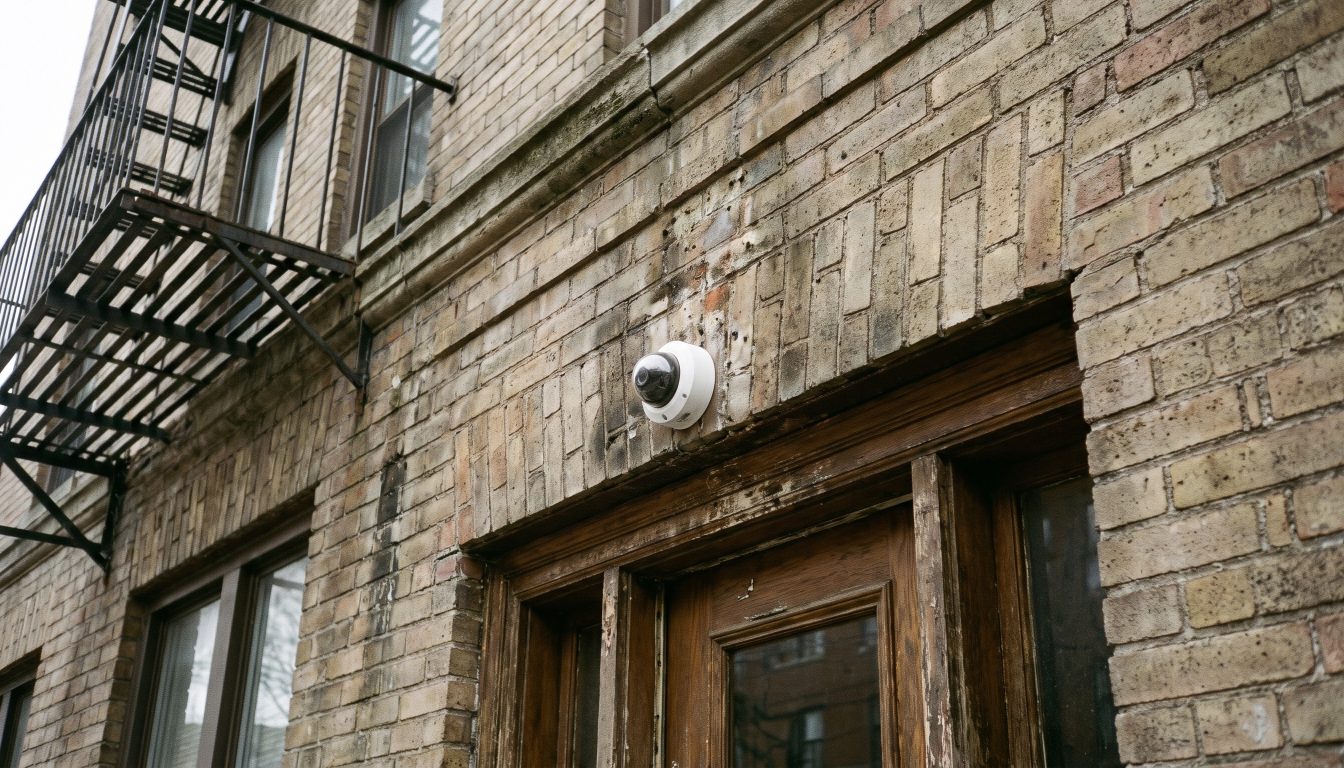
Usually yes outside and in true common areas like entrances, garages and hallways, if the camera is for security, is not aimed into windows or private spaces, and does not record audio. A camera inside a tenant’s unit is a serious risk under the Residential Tenancies Act, and secret recording in a bathroom or bedroom can be a crime.
This guide is for Ontario tenants who have spotted a camera and want to know if it is allowed, and for landlords who want security without crossing a legal line. You will get what the Residential Tenancies Act, 2006 (RTA), federal privacy guidance and the Criminal Code actually say, a placement table, and what to do if you have a problem. It is general information as of November 2026, not legal advice.
Can a landlord put security cameras on a rental property in Ontario?
Often yes, outside and in shared areas, if the cameras are for a real security reason, are placed sensibly, and do not look into a tenant’s private space. Inside a tenant’s own unit is a different story, and I explain why below.
The RTA has no section that names cameras. Instead, three general duties do the work:
- Section 22: a landlord must not substantially interfere with a tenant’s reasonable enjoyment of the unit or the building.
- Section 23: a landlord must not harass, obstruct, coerce, threaten or interfere with a tenant.
- Section 25: a landlord may enter a rental unit only as sections 26 and 27 allow.
Then federal privacy law and the Criminal Code add outer limits, especially for audio and for private spaces. Put together, the question is less “is there a camera” and more “where is it pointed, what does it record, and why”.
Can a landlord put cameras outside the house?
Generally yes, when they cover the landlord’s own building and common entry points for security: the front door of a multi-unit building, a shared driveway, a parking area or the garbage area. These are the kinds of spots where cameras are commonly used to deter break-ins and vandalism.
The limits come from placement. The Office of the Privacy Commissioner of Canada (OPC), in its guidelines for overt video surveillance by private-sector organizations, says cameras should not be aimed at places where people have a higher expectation of privacy, and gives windows as an example. It also says cameras should be positioned to avoid capturing people who are not the target.
So a camera on the porch of a house with a basement unit that covers the shared walkway is very different from one angled into the basement tenant’s bedroom window or that records the tenant’s private entrance and nothing else.
Can a landlord put cameras in common areas of an apartment or condo?
Usually yes, in true common areas like lobbies, hallways, elevators, parking garages and laundry rooms, as long as they are not in places like washrooms or change areas. The OPC guidelines specifically mention apartment buildings using cameras to detect vandalism and improve tenant security.
The OPC also sets a clear limit on use. Its example: footage from cameras put in an apartment parking garage for safety cannot be used to track tenants’ movements, though footage of a car break-in can be given to police. A landlord who reviews hallway footage to see when a tenant comes and goes, or how many guests they have, is moving from security toward monitoring.
In a condo, the building’s cameras usually belong to the condominium corporation, not the unit owner who rents to you. Check the condo’s rules and speak to management if you have a concern. My guide to Ontario condo rules explains how those rules work.
Can a landlord put cameras inside a rental unit?
In my view, no landlord should put a camera inside an occupied unit they rent to someone else. Here is why the risk is so high:
- The unit is the tenant’s home. A recording device inside it is very hard to square with the tenant’s right to reasonable enjoyment under section 22, and the LTB treats harassment and interference as fact-specific questions that look at the cumulative effect of the landlord’s conduct.
- Getting a camera in place requires entry, which must follow sections 26 and 27. Installing surveillance is not one of the listed reasons for entry with notice.
- Section 162 of the Criminal Code makes it a crime to secretly observe or record a person where they have a reasonable expectation of privacy and are in a place where people can be expected to be nude, such as a bathroom or bedroom, or to do so for a sexual purpose. The maximum on indictment is 10 years in prison.
If you find a hidden camera in your bedroom or bathroom, do not handle it more than you need to. Photograph it where it is and call the police.
Condo Valuation
What’s your condo
worth today?
Three quick steps. Condos don’t price like houses — your floor, your view, and whether you own parking move the number more than anything else. This weighs all of them.
Reading recent condo sales…
Estimated market value
—
$0–$0
Most likely $0 · about $0 per square foot
What moved the number
Starting from what comparable units in your area sell for, here’s what your specifics added or subtracted.
Market context
—
—
Two units, same floor plan,
$90,000 apart.
That happens constantly in condos — one has the parking, the right exposure, or a board that keeps the reserve fund healthy. A model can’t see your status certificate. I can.
Can a landlord’s camera record audio?
Audio is where many landlords get into trouble without knowing it. The OPC guidelines say sound should not be recorded unless there is a specific need, and that an organization using cameras that capture sound must consider the Criminal Code rules on private communications.
Section 184 of the Criminal Code makes it an offence to knowingly intercept a private communication using a device, unless one of the people in the conversation consents. The maximum on indictment is five years in prison. Many doorbell and indoor cameras record sound by default. If you are a landlord, turn audio off in shared spaces unless a lawyer has told you otherwise.
Where can a landlord put a camera? A quick placement guide
| Camera location | Generally reasonable? | What to watch |
|---|---|---|
| Main entrance or lobby of a multi-unit building | Usually yes | Signage, no audio, used only for security |
| Parking garage, shared driveway, garbage area | Usually yes | Not used to track a tenant’s comings and goings |
| Shared hallway or laundry room | Usually yes, with care | Avoid pointing straight at one unit’s door |
| Exterior of a house with a basement unit | Depends on angle | Must not look into windows or a private yard the tenant rents |
| A yard or entrance rented only to the tenant | Risky | Likely to be seen as watching the tenant, not the property |
| Inside the tenant’s unit | No | Reasonable enjoyment, entry rules and possible criminal liability |
| Bathroom or bedroom anywhere | Never | Criminal Code s. 162 (voyeurism) |
Source: Residential Tenancies Act, 2006, ss. 22, 23, 25; Office of the Privacy Commissioner of Canada, Guidelines for Overt Video Surveillance in the Private Sector; Criminal Code ss. 162 and 184. Placement ratings are my general guidance, not legal rulings.
Does privacy law apply to a landlord’s cameras?
Sometimes. The federal privacy law, PIPEDA, applies to organizations that collect personal information in the course of commercial activities, under section 4(1). Section 4(2) says it does not apply to an individual collecting information only for personal or domestic purposes. Whether a particular landlord’s cameras fall under PIPEDA depends on the facts, such as whether the landlord is running a rental business.
Even where PIPEDA may not strictly apply, the OPC’s ten practices are a sensible standard for any landlord:
- Consider less invasive options first, like better lighting or locks.
- Have a clear security reason and use footage only for that reason.
- Limit the field of view, and never aim into windows or private areas.
- Post clear signs so people know cameras are in use.
- Store recordings securely, limit who can see them, and delete them when no longer needed.
- Be ready to explain the system and give people access to footage of themselves.
A camera that is fine on day one can become a problem through how it is used. Sending a tenant clips of their guests, commenting on when they come home, or adding a camera right after a dispute can all look like harassment or interference to the Landlord and Tenant Board. Keep footage for security, and keep it out of the relationship.
What can a tenant do about a landlord’s camera?
Start with a written message asking what the camera covers, whether it records audio, who can see the footage and how long it is kept. Many issues are solved by moving or masking the view.
If that fails and you believe the camera substantially interferes with your reasonable enjoyment, or is part of a pattern of harassment, you can file a T2 Application about Tenant Rights at the LTB. Section 29 sets a one-year limit from the conduct. Section 31 lets the LTB order the conduct to stop, a rent abatement, out-of-pocket costs and an administrative fine. My guide to the T2 application explains the process. For a hidden camera in a private space, call the police.
Before acting, check whether the RTA covers you at all. Under section 5(i), it does not apply if you share a kitchen or bathroom with the owner or the owner’s close family who live there. Criminal law still applies in every case. If you have a dispute, contact the LTB, a community legal clinic or a licensed paralegal for advice on your facts.
Can a tenant install a doorbell camera?
The RTA does not address tenant cameras directly, so start with your lease and, in a condo, the building’s rules. A doorbell camera that only covers your own door is usually less of an issue than one that sweeps a shared hallway and records neighbours. Ask your landlord in writing first, especially if it needs drilling or wiring, and turn off audio in shared areas for the same Criminal Code reasons that apply to landlords. If neighbours are the real concern, my guide on noise complaints in Toronto homes covers other options.
For small landlords, cameras on the outside entry points and the parking area, with clear signs and no audio, are reasonable protection for the property. Cameras that watch the tenant rather than the building cost more in trust, and sometimes in LTB orders, than they save. If you rent out a basement unit in your own house, talk to the tenant before you install anything and put the camera locations in writing. Good tenant screening at the start does more than any camera. My guide to screening tenants in Ontario covers that.
What to do next
- Landlords: list each camera, what it covers, whether audio is on, who sees footage and how long it is kept.
- Landlords: post signs, turn off audio in shared spaces, and re-aim anything that looks into windows or a tenant’s private area.
- Tenants: ask your landlord in writing about any camera that concerns you, and keep the reply.
- If the issue is not resolved, contact the LTB, a community legal clinic or a licensed paralegal within one year, and call police about any hidden camera in a private space.
Need help with this? Talk to me.
I’m Jatin Dua, Broker of Record at RE/MAX Quantum Realty, and I’m the best agent to do this kind of work for you in Toronto and across the GTA. Over $100 million in GTA sales and 100+ families helped sell. Feel free to contact me any time: call or text 833-330-1925 or email [email protected].
Frequently asked questions
Can a landlord put cameras outside the house in Ontario?
Generally yes, if they cover the building and shared entry points for a real security reason. Ontario’s Residential Tenancies Act has no camera section, but the landlord must not substantially interfere with a tenant’s reasonable enjoyment or harass them. The federal Privacy Commissioner’s guidance says cameras should not be aimed into windows or other places where people expect privacy.
Can a landlord put a camera inside my apartment in Ontario?
It is very risky and, in my view, a landlord should never do it. A camera inside a tenant’s home is hard to square with the tenant’s right to reasonable enjoyment under section 22 of the Residential Tenancies Act, and installing one requires lawful entry. Secretly recording someone in a bathroom or bedroom can be voyeurism under section 162 of the Criminal Code.
Are cameras in apartment hallways legal in Ontario?
Usually yes, in true common areas like lobbies, hallways, garages and laundry rooms, used for security. The Office of the Privacy Commissioner of Canada says footage should be used only for that purpose, so cameras put in for safety should not be used to track tenants’ movements. Cameras pointed straight at one tenant’s door can raise reasonable enjoyment concerns.
Can my landlord’s camera record audio?
It should not in most cases. The Office of the Privacy Commissioner of Canada says sound should not be recorded unless there is a specific need. Section 184 of the Criminal Code makes it an offence to knowingly intercept a private communication with a device unless a party to the conversation consents, with up to five years in prison on indictment.
What can I do if my landlord’s camera invades my privacy in Ontario?
Ask the landlord in writing what the camera covers and request changes. If that fails, you can file a T2 application with the Landlord and Tenant Board within one year, claiming substantial interference or harassment, and the LTB can order it to stop plus abatement or a fine. For a hidden camera in a private room, call police. A legal clinic or paralegal can advise.
Do landlords have to post signs for security cameras?
There is no specific sign rule in Ontario’s Residential Tenancies Act. The Office of the Privacy Commissioner of Canada says most privacy laws require organizations using video surveillance to post clear notice before people enter the area, with a contact for questions. Posting signs is a good practice for any landlord and reduces disputes with tenants.
Does PIPEDA apply to landlords’ security cameras?
Sometimes. PIPEDA applies to organizations collecting personal information in the course of commercial activities, under section 4(1), and does not apply to an individual collecting it only for personal or domestic purposes. Whether a particular landlord is covered depends on the facts. Following the Privacy Commissioner’s video surveillance guidelines is sensible either way.
Can a tenant put up a doorbell camera in Ontario?
Ontario’s Residential Tenancies Act does not address tenant cameras directly, so check your lease and any condo rules, and ask the landlord in writing before installing anything that needs drilling or wiring. Point it at your own door rather than a shared hallway, and turn off audio in shared spaces because of Criminal Code rules on intercepting private conversations.
Sources
- Residential Tenancies Act, 2006, S.O. 2006, c. 17 (Ontario e-Laws)
- Guidelines for Overt Video Surveillance in the Private Sector (Office of the Privacy Commissioner of Canada)
- Criminal Code, s. 162 Voyeurism (Justice Laws)
- Criminal Code, s. 184 Interception of private communications (Justice Laws)
- Personal Information Protection and Electronic Documents Act, s. 4 (Justice Laws)
- LTB Interpretation Guideline 6: Tenant Rights
- LTB Interpretation Guideline 19: The Landlord’s Right of Entry into a Rental Unit
Related reading
- Can My Landlord Enter Without Notice in Ontario?
- Can a Landlord Evict You Without Going to the LTB in Ontario?
- Can My Landlord Raise the Rent Every Year in Ontario? 2027 Rules
- Can My Landlord Keep My Deposit or Charge for Cleaning in Ontario?
About the author — Jatin Dua, Toronto and GTA real estate broker
I am Jatin Dua, Broker of Record and co-founder of RE/MAX Quantum Realty Inc., Brokerage, Unit 101, 799 The Queensway, Toronto. I work with buyers and sellers across Toronto and the GTA and have helped more than 100 families sell. Four-plus years of active GTA transactions and over $100 million in sales volume.
Reach me at [email protected] or 833-330-1925, or book a call.