
Published 2 November 2026 · By Jatin Dua, Broker of Record, RE/MAX Quantum Realty
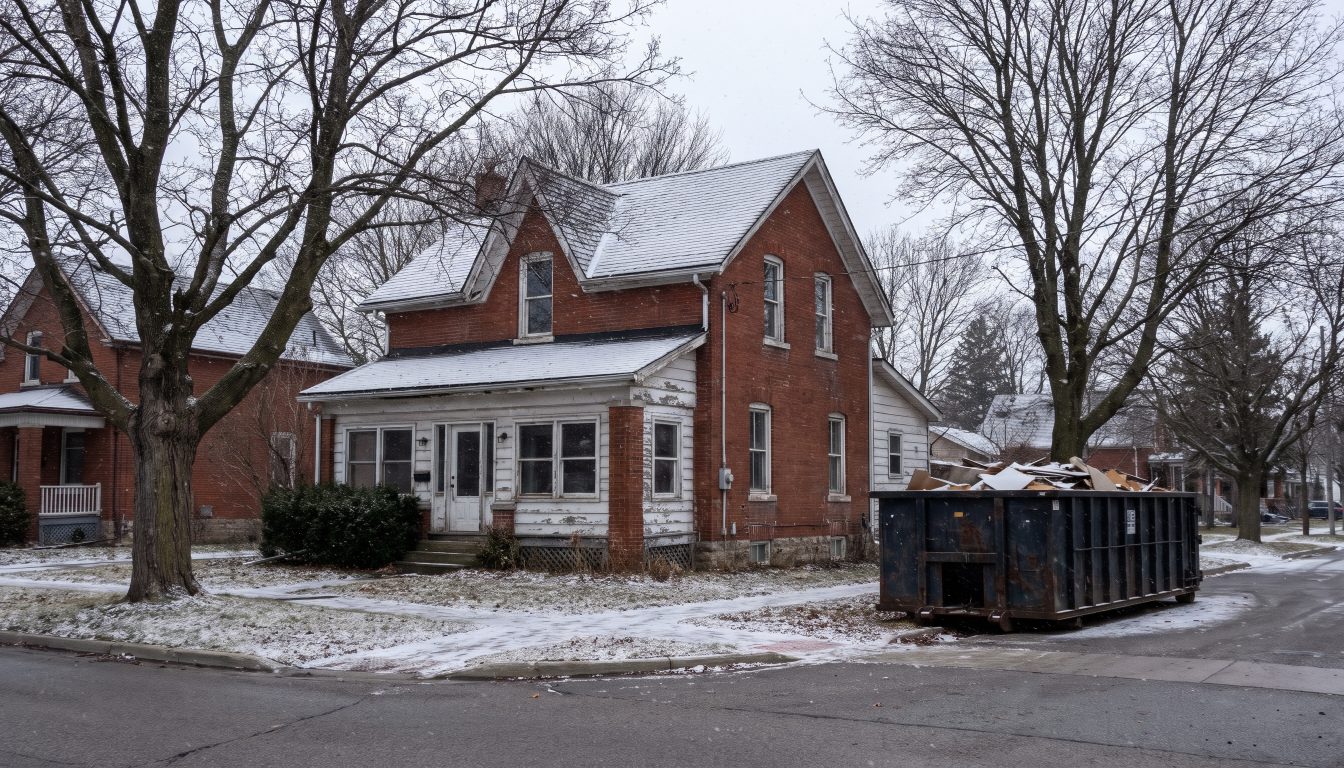
Yes, you can sell an Ontario house with a lien or tax arrears. Your lawyer pays each one from the sale proceeds on closing day so the buyer gets clean title. Act early: tax arrears grow by up to 1.25% a month, and a registered tax arrears certificate gives you one year to pay before a public tax sale.
This guide is for Ontario homeowners who need to sell while something is registered against their home or owed on it: unpaid property tax, a contractor’s construction lien, condo fee arrears, an old rental-equipment notice or a second mortgage. You will learn how each one is cleared at closing, the legal deadlines that matter, and what to do if the debts add up to more than the house is worth.
Can you sell a house with a lien or tax arrears in Ontario?
Yes. In most cases the lien or arrears is simply paid out of the sale proceeds on closing day. The buyer’s lawyer will insist on clean title, so your lawyer uses part of the money from the buyer to pay each creditor and then registers a discharge or deletion.
The problems start in three situations:
- The amount owed is disputed, so the creditor will not give a clean payout figure.
- The debts are bigger than your equity, so the sale price cannot pay everyone.
- The process has gone so far, such as a tax sale or a lender’s power of sale, that you are no longer in control of the timing.
The earlier you deal with it, the more of the sale you keep. Tell your lawyer and your agent about every debt tied to the property before you list.
What kinds of liens show up on Ontario homes?
Each type has its own rules and deadlines. Here is how the common ones work.
| Type | Who claims it | Key time rule | How it is usually cleared |
|---|---|---|---|
| Property tax arrears | Your municipality | A tax arrears certificate may be registered if taxes are still owing on January 1 of the second year after they became due; then one year to pay | Paid from proceeds; certificate cancelled |
| Construction lien | A contractor, subcontractor or supplier | Generally must be preserved within 60 days and perfected (a court action started) within 90 days after the last day it could be preserved | Paid, settled, or vacated by paying security into court |
| Condominium lien | Your condo corporation | Arises on unpaid common expenses; expires after three months unless a certificate of lien is registered, with 10 days’ notice to you first | Paid from proceeds; discharge registered |
| Notice of security interest on consumer goods | A water heater, furnace or HVAC rental or finance company | Notices already registered for consumer goods were deemed expired when the Homeowner Protection Act, 2024 received Royal Assent | Deleted by application; the contract itself still has to be dealt with |
| Second mortgage or private loan | The lender | Set by the loan terms | Paid from proceeds per a payout statement |
Source: Municipal Act, 2001, s. 373; City of Toronto Act, 2006, s. 344; Construction Act, ss. 31, 36, 44 and 87.3; Condominium Act, 1998, s. 85; Personal Property Security Act, s. 54 (Ontario e-Laws, read November 2026).
How do property tax arrears work in Ontario?
Unpaid property tax grows quickly. The Municipal Act, 2001 (and the City of Toronto Act, 2006 for Toronto) lets a municipality charge a penalty of up to 1.25% on the first day of default and interest of up to 1.25% a month on taxes due and unpaid. The City of Toronto applies 1.25% on the first day of default and again on the first day of each month the taxes stay unpaid, and says these charges cannot be waived.
Two more rules matter to a seller:
- The debt follows the land. Section 349 of the Municipal Act lets a municipality recover taxes from the original taxpayer and from any later owner. That is why a buyer’s lawyer will not close until the tax account is paid up to date.
- Toronto’s collection steps start early. The City says unpaid residential accounts get a Final Notice in April giving 21 days to pay, and go to a bailiff in early May when the prior year’s balance is $100 or more.
On a normal sale the tax owing to closing is shown on the statement of adjustments and paid from your proceeds. My guide to property tax clauses in Ontario agreements explains how lawyers handle tax that is billed after closing.
What happens if my house is heading to a tax sale?
A tax sale is the municipality’s last resort, and it follows a set timeline in the Municipal Act, 2001 (sections 373 to 380) and the matching sections of the City of Toronto Act, 2006.
- Arrears build. If any part of the tax arrears is still owing on January 1 of the second year after the taxes became owing, the treasurer may register a tax arrears certificate on title.
- Notice. The treasurer must notify the owner and others with an interest within 60 days of registration.
- Final notice. If the cancellation price is still unpaid 280 days after registration, a final notice is sent warning that the land will be advertised for sale.
- Public sale. If the cancellation price is not paid within one year of registration, and there is no extension agreement, the property is offered by public auction or tender.
The cancellation price covers the taxes, penalties, interest, fees and costs. Anyone can pay it before the year ends. After a tax sale, the proceeds go first to the cancellation price, then to others with an interest in the land such as mortgage lenders, and only then to the former owner, with the money paid into court.
Instant Home Valuation
What’s your home
worth today?
Answer six quick questions and get an instant value range built from current Toronto & GTA sale data — property type, size, condition, lot and location all weighted the way a real pricing conversation weighs them. Takes about ninety seconds.
Reading recent GTA sale data…
Building your estimate
Estimated market value
—
$0–$0
Most likely value $0 · roughly $0 per square foot
What moved the number
Starting from the area baseline for your property type, here’s what each answer added or subtracted.
Market context
Recent local averages for comparison.
—
A range is a starting point.
A strategy is what sells.
This model doesn’t know that your neighbour’s identical semi went $80,000 over asking last month, or which two upgrades actually pay back in your area. That conversation is free and takes twenty minutes.
A tax sale is not a normal listing. The municipality’s process is built to recover the taxes, not to get the best price for you. If a tax arrears certificate is already on title, the one-year clock is running. Selling through the open market before that year ends lets you choose your price and closing date, and the arrears are simply paid from the proceeds.
How do you sell a house with a construction lien in Ontario?
Construction liens usually come from a renovation dispute: a contractor says they were not paid, and the owner says the work was incomplete or defective. Under the Construction Act, a lien must be preserved, usually by registering a claim for lien on title, within strict time limits, and it expires unless perfected within 90 days after the last day it could have been preserved. For a contractor, the preservation period is generally 60 days after the contract is completed, abandoned or terminated, or after a certificate of substantial performance is published. Contracts signed before July 1, 2018 still follow the older version of the Act, so have your lawyer check which rules apply.
You have three ways to clear it before closing:
- Pay it. If the claim is fair, paying from proceeds is the simplest route.
- Settle it. Negotiate a lower amount and get a signed discharge.
- Vacate it. Under section 44, a court must order the lien removed from title if you pay into court, or post security for, the full amount claimed plus the lesser of $250,000 or 25% of that amount as security for costs. The dispute then continues against the money, not your house.
Expired liens can also be removed. Under section 45, if a lien was not preserved or perfected in time, the court can order it off title on a motion supported by a title search showing the claim.
What about condo fee arrears when selling a condo?
Under section 85 of the Condominium Act, 1998, when an owner falls behind on common expenses the corporation has a lien on the unit for the unpaid amount, interest and reasonable collection costs. The lien expires three months after the default unless the corporation registers a certificate of lien, and it must give the owner at least 10 days’ written notice first.
Any buyer’s lawyer will see arrears quickly. Section 76 requires the status certificate to state the common expenses for the unit and any default in paying them. Expect the arrears, interest and the corporation’s legal costs to be paid from your proceeds at closing, with a discharge registered afterwards.
What about rental water heater or furnace notices on title?
For years, some rental and financing companies registered a notice of security interest (NOSI) on homeowners’ titles for water heaters, furnaces and air conditioners. Ontario changed this. Under section 54 of the Personal Property Security Act, as amended by the Homeowner Protection Act, 2024, these notices can no longer be registered for consumer goods (except as regulations allow), and notices already registered for consumer goods were deemed expired on the day the Act received Royal Assent. An expired notice can be deleted by registering an application with the land registry.
The contract itself does not disappear. If you rent or financed the equipment, you still need to pay it out or arrange for the buyer to take it over. My guide to rental water heater and furnace contracts when selling covers those choices.
Most liens I see on title are fixable and do not stop a sale. The ones that hurt are the ones a seller finds out about after accepting an offer, when there is no time to negotiate. Before I list a home, I ask the seller to have their lawyer run a title search and get a current tax certificate. If something shows up, we deal with it on our schedule, not the buyer’s. With prices lower than in 2024, every month of interest and penalty eats into equity that is already thinner.
What if the liens add up to more than the house is worth?
This is more common than it was two years ago, because prices have fallen while debts have not.
| City | Detached median Jan to Oct 2024 | Detached median Jan to Oct 2026 | Two-year change |
|---|---|---|---|
| Brampton | $1,127,250 | $950,000 | -15.7% |
| Richmond Hill | $1,774,400 | $1,485,000 | -16.3% |
| Mississauga | $1,371,085 | $1,225,000 | -10.7% |
| Oshawa | $835,000 | $730,000 | -12.6% |
| Whitby | $1,065,000 | $977,000 | -8.3% |
Source: TRREB MLS data via REALM, January to October 2026 vs the same period of 2024; median sold prices, detached, municipality level.
If the sale price will not cover everything, every creditor whose claim is registered has to agree to accept less, or you have to bring cash to closing. Lenders and lien claimants sometimes accept a reduced payout if the alternative is a forced sale that would recover even less. Your lawyer negotiates these discharges; a lawyer who also handles insolvency matters can explain options if the shortfall is large. If a mortgage lender has already started enforcement, read my guide to power of sale in Ontario, because the timelines are short.
What to do next
- Ask your lawyer to search title and get current payout figures for every mortgage, lien and tax account before you list.
- If property tax is in arrears, call your municipality for the full balance and check whether a tax arrears certificate has been registered.
- For a construction lien, check the registration date with your lawyer, then decide whether to pay, settle or vacate it.
- Delete any expired rental-equipment notice and decide how to handle the underlying contract.
- Get a realistic price for your home now, so you know whether the sale covers every debt.
Need help with this? Talk to me.
I’m Jatin Dua, Broker of Record at RE/MAX Quantum Realty, and I’m the best agent to do this kind of work for you in Toronto and across the GTA. Over $100 million in GTA sales and 100+ families helped sell. Feel free to contact me any time: call or text 833-330-1925 or email [email protected].
Frequently asked questions
Can I sell my house if I owe property taxes in Ontario?
Yes. Unpaid property tax is normally paid from your sale proceeds on closing day, and the buyer’s lawyer will require it, because section 349 of Ontario’s Municipal Act, 2001 lets a municipality collect unpaid taxes from later owners. Penalties and interest of up to 1.25% a month keep growing until it is paid, so selling sooner usually leaves you more equity.
How long before a tax sale in Ontario?
Usually more than two years from the first missed taxes. Under section 373 of Ontario’s Municipal Act, 2001, a tax arrears certificate may be registered if taxes are still owing on January 1 of the second year after they became due. The owner then has one year to pay the cancellation price before the property can be sold by public auction or tender.
Can you sell a house with a construction lien in Ontario?
Yes. The lien can be paid from proceeds, settled for a signed discharge, or vacated from title by court order. Under section 44 of Ontario’s Construction Act, a court must vacate a lien when the full amount claimed plus security for costs, the lesser of $250,000 or 25% of the claim, is paid into court or posted as security.
How long does a contractor have to register a lien in Ontario?
Generally 60 days. Under Ontario’s Construction Act, a contractor’s lien usually expires 60 days after the contract is completed, abandoned or terminated, or after a certificate of substantial performance is published, unless it is preserved by registration. A preserved lien then expires unless perfected within 90 days after the last day it could have been preserved. Contracts signed before July 1, 2018 follow the older rules.
What happens to condo fee arrears when you sell a condo in Ontario?
They are paid from your sale proceeds at closing. Under section 85 of Ontario’s Condominium Act, 1998, the corporation has a lien for unpaid common expenses, interest and reasonable collection costs, and can register a certificate of lien within three months. The status certificate a buyer orders must show any default, so arrears cannot stay hidden.
Do I have to remove a water heater rental notice from title before selling in Ontario?
Usually it can be deleted. Under section 54 of Ontario’s Personal Property Security Act, as amended by the Homeowner Protection Act, 2024, notices of security interest on consumer goods such as water heaters and furnaces were deemed expired, and they can be deleted by an application to the land registry. You still need to pay out or transfer the rental or finance contract.
What happens if my house sells for less than the liens on it in Ontario?
Each registered creditor must agree to accept less, or you must pay the shortfall in cash at closing, because the buyer’s lawyer requires clear title. Creditors sometimes accept a reduced payout to avoid a forced sale. With GTA detached medians down 8% to 16% in many cities from 2024 to 2026, have your lawyer get payout figures before you list.
Who pays the liens when a house is sold in Ontario?
The seller does, out of the sale proceeds. In Ontario the seller’s lawyer receives the buyer’s funds on closing, pays each mortgage, lien, tax arrears or condo arrears from that money, and registers discharges so the buyer gets clean title. Whatever remains after those payments, commission and legal fees is the seller’s net proceeds.
Can the city sell my house for unpaid taxes in Toronto?
Yes, as a last resort. The City of Toronto says sale proceedings begin once taxes have been in arrears for at least two years: it registers a tax arrears certificate, and the owner has one year to pay the cancellation price. If it is not paid and there is no extension agreement, the City must proceed with a sale of the property.
Sources
- Municipal Act, 2001 (sections 345, 349, 373 to 380)
- City of Toronto Act, 2006 (sections 310, 344 and 350)
- City of Toronto: Penalty, interest and fee charges on late tax bill payments
- Construction Act (sections 31, 36, 44, 45 and 87.3)
- Condominium Act, 1998 (sections 76 and 85)
- Personal Property Security Act (section 54)
Related reading
- Seller Closing Costs in Ontario for 2027: Every Fee Before You Get Paid
- How to Sell a House in Toronto, Step by Step (2027)
- Closing Costs on a New Build in Ontario: What Builders Add
- How Much Is My House Worth in Caledon? (2027)
About the author — Jatin Dua, Toronto and GTA real estate broker
I am Jatin Dua, Broker of Record and co-founder of RE/MAX Quantum Realty Inc., Brokerage, Unit 101, 799 The Queensway, Toronto. I work with buyers and sellers across Toronto and the GTA and have helped more than 100 families sell. Four-plus years of active GTA transactions and over $100 million in sales volume.
Reach me at [email protected] or 833-330-1925, or book a call.