
Published 2 November 2026 · By Jatin Dua, Broker of Record, RE/MAX Quantum Realty
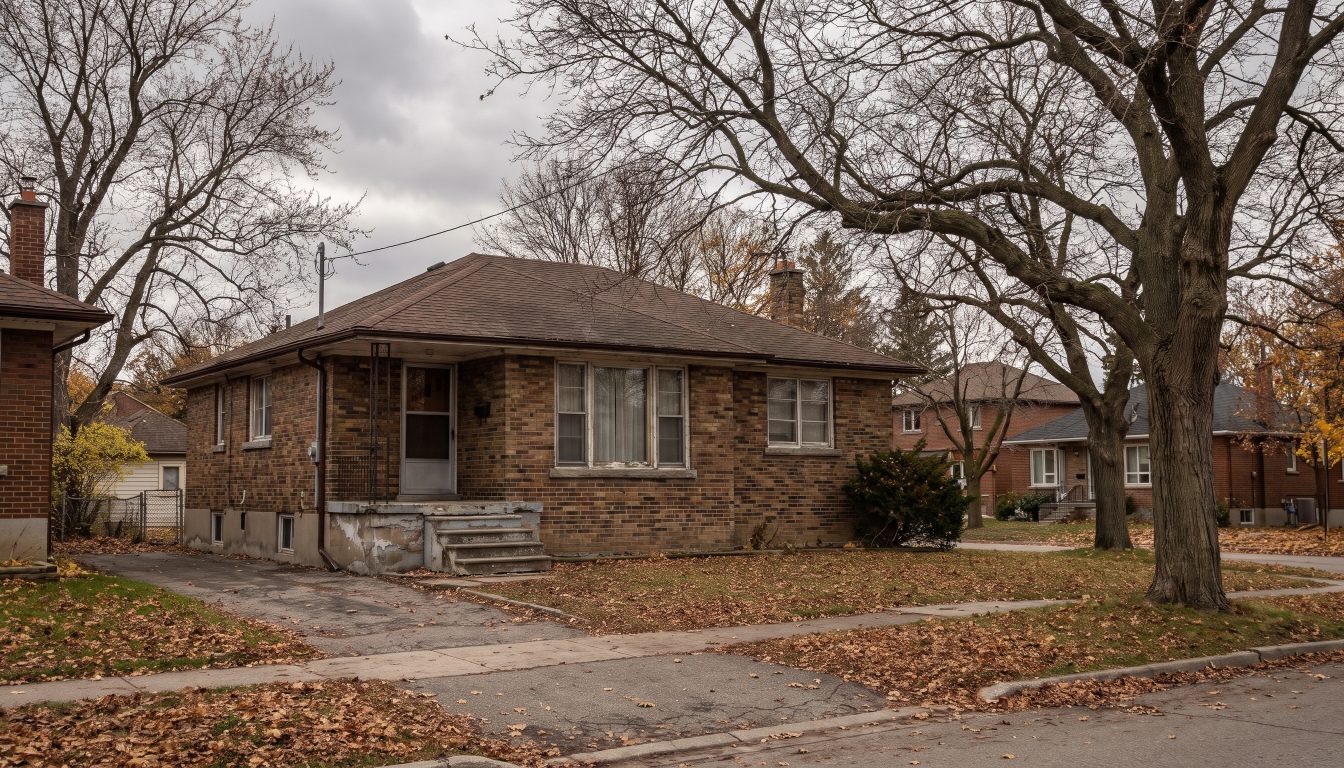
Yes, you can sell a house as-is in Ontario: you make no repairs and give no promises about condition. But as-is does not let you hide a known latent defect that makes the home dangerous or unfit to live in, and anything you say about the home must be true. Expect buyers to inspect and price in repairs.
This guide is for Ontario homeowners who want to sell in 2027 without fixing everything first, such as estate trustees, landlords, and owners of older homes. You will learn what “as-is” really means, what Ontario courts and rules still expect you to disclose, the honest pros and cons, and how to protect your price.
What does selling a house “as-is” mean in Ontario?
Selling as-is means you offer the home in its current condition. You will not make repairs before closing, and you do not promise that the roof, furnace, foundation or anything else is in good shape. The buyer agrees to rely on their own inspection and judgment.
As-is is not a special legal form. It is a choice you make and write into the listing and the agreement of purchase and sale. That wording should be drafted or reviewed by your real estate lawyer, because it limits what you are promising. What it cannot do is cancel duties the law already places on sellers, which are covered below.
Do I have to disclose defects when selling as-is in Ontario?
Sometimes, yes. Ontario starts from “buyer beware” (caveat emptor). The Ontario Court of Appeal’s decision in Krawchuk v. Scherbak (2011) shows how this works in practice. Where there are no warranties about the home’s condition, buyer beware is the starting point. A buyer can get around it in two main ways: by showing the seller deliberately hid a latent defect, or by showing the seller knew of a defect that made the home uninhabitable, dangerous or potentially dangerous.
| Situation | Example | What it generally means for the seller |
|---|---|---|
| Patent defect | Sloped floors or visible cracks a reasonable inspection would find | The buyer is expected to notice it and price it in |
| Latent defect you did not know about | A hidden problem that never showed while you lived there | Buyer beware usually applies |
| Latent defect you knew about and covered up | Painting over water stains or hiding a crack behind boxes | Real risk of being sued, as-is or not |
| Known defect that makes the home dangerous or unfit | A serious structural or safety problem you were aware of | Disclose it to buyers |
| Anything you say or write | Answers on a property information statement, the listing, or replies to questions | Must be true and complete, or you risk a misrepresentation claim |
Source: Ontario Court of Appeal, Krawchuk v. Scherbak, 2011 ONCA 352 (summary of the principles discussed). General information only, not legal advice.
Your agent has duties too. Under Ontario Regulation 567/05, if a seller has a legal obligation to disclose a fact and the seller’s agent knows it, the agent must disclose that fact to every buyer who shows interest. So telling your agent about a serious problem and asking them to keep quiet does not work. For more depth, see my post on latent and patent defects.
Should I fill out a property information statement if I am selling as-is?
You do not have to. RECO, the provincial real estate regulator, explains that a statement can be just for your agent, to help them identify what you are legally required to disclose, or it can be prepared for buyers. If you give your agent a statement meant for buyers, the agent must tell every interested buyer it exists and hand over a copy on request.
The big risk is accuracy. In Krawchuk, the sellers filled in a Seller Property Information Statement that understated foundation problems and said there were no plumbing problems, when they had regular sewer backups. The court upheld the finding that they were negligent and liable, even though they had not set out to mislead. The court said that filling in the form is optional, but once you do, you must answer honestly and accurately. My post on the SPIS in Ontario covers when to use one.
What are the pros of selling a house as-is?
- No repair bills or delays. You do not spend money and weeks managing trades before you list.
- Simpler for estates and absentee owners. An estate trustee who never lived in the home, or an owner who lives far away, can sell without supervising renovations.
- Clear expectations. Buyers know from the start that the price reflects the condition, which can mean fewer arguments after the inspection.
- A wider pool of value buyers. Renovators and investors actively look for homes that need work.
What are the cons of selling a house as-is?
- A lower price. Buyers subtract the cost of repairs, and usually a cushion for the unknown on top.
- Fewer buyers. Many first-time buyers cannot afford a home and a renovation at the same time.
- Inspection conditions still happen. As-is does not stop a buyer from making the offer conditional on an inspection, and then asking for a lower price.
- Legal risk does not disappear. As the table above shows, concealment and false statements can still lead to a lawsuit.
Instant Home Valuation
What’s your home
worth today?
Answer six quick questions and get an instant value range built from current Toronto & GTA sale data — property type, size, condition, lot and location all weighted the way a real pricing conversation weighs them. Takes about ninety seconds.
Reading recent GTA sale data…
Building your estimate
Estimated market value
—
$0–$0
Most likely value $0 · roughly $0 per square foot
What moved the number
Starting from the area baseline for your property type, here’s what each answer added or subtracted.
Market context
Recent local averages for comparison.
—
A range is a starting point.
A strategy is what sells.
This model doesn’t know that your neighbour’s identical semi went $80,000 over asking last month, or which two upgrades actually pay back in your area. That conversation is free and takes twenty minutes.
How much less will an as-is house sell for in the GTA in 2027?
No official source tracks an “as-is discount” for Ontario, so be wary of anyone who quotes a fixed percentage. The discount depends on what is wrong, what it costs to fix, and how many buyers are competing for homes like yours.
Competition was soft heading into 2027. TRREB said many GTA buyers stayed on the sidelines in October 2026 because of inflation and borrowing costs. The Bank of Canada raised its policy rate to 2.50% on 28 October 2026. With more than four months of inventory in most regions, buyers had room to negotiate, and they will use repair costs to do it.
| Region | Median price, Oct 2026 | Avg sale-to-list | Months of inventory | 1% of the median |
|---|---|---|---|---|
| All TRREB areas | $860,000 | 97% | 4.6 | $8,600 |
| City of Toronto | $835,000 | 98% | 4.6 | $8,350 |
| York Region | $1,050,000 | 97% | 5.0 | $10,500 |
| Halton Region | $953,750 | 96% | 4.2 | $9,538 |
| Peel Region | $831,000 | 97% | 4.9 | $8,310 |
| Durham Region | $740,000 | 98% | 3.6 | $7,400 |
Source: TRREB Market Watch, October 2026 (all home types). The last column is simple arithmetic to show what each 1% of price is worth; it is not an estimate of any as-is discount.
The practical question is not “as-is or not.” It is whether a specific repair would raise your price by more than it costs. A $3,000 fix that removes a scary line from an inspection report can be worth far more than $3,000 to a nervous buyer. A $60,000 kitchen usually is not.
Who buys as-is houses in the GTA?
In my experience, as-is homes draw four main groups:
- Renovators and small builders who budget the work and want a discount for it.
- Investors adding units. In Toronto, up to four units have been allowed as of right across the city since May 2023, so a tired house on a decent lot can appeal to someone planning a multiplex.
- End buyers who want a project and would rather choose their own finishes.
- Cash buyers and “we buy houses” companies, who offer speed and certainty but usually price well below the open market.
Listing on the open market lets all four groups compete. Selling directly to one investor removes that competition.
How do you sell as-is and still get a fair price?
Get your own facts first
Ontario’s consumer guidance notes that an inspection can help a seller work out the value of their home. A pre-listing inspection tells you what buyers will find before they find it. Add contractor quotes for the big items, so buyers see real numbers instead of guessing high. See my guide to home inspection costs in Ontario.
Check for open permits and paperwork
Open building permits and unpermitted work scare lenders and buyers. RECO also recommends that listing details be backed by invoices, receipts or other documents. Gather what you have. My post on unpermitted work and open permits explains how to check.
Price it on as-is comparables
Compare your home with recent sales of homes in similar condition, not with renovated ones down the street. Overpricing an as-is home is the fastest way to make it sit.
I rarely advise a pure “touch nothing” sale. Fix the cheap, scary items like a missing handrail, a leaking tap or an obvious safety hazard, clean and empty the home, then sell the rest as-is with the inspection report available. Buyers pay more when they feel they know what they are getting.
Never cover up a known problem before listing, such as painting over water stains or blocking a crack with furniture. As-is wording will not protect a seller who deliberately hides a latent defect, and an inaccurate statement can make you liable even if you did not mean to mislead. Speak with your real estate lawyer about what to disclose.
What about as-is sales by estates and other special sellers?
Estate trustees often sell as-is because they never lived in the home and cannot answer detailed questions. That is reasonable. The safest approach is to say only what you actually know, and to say “unknown” rather than guess. The same honesty rules apply. See my guide for an executor selling a home in Ontario.
What to do next
- Write down every problem you know about, and talk to your real estate lawyer about which ones must be disclosed.
- Book a pre-listing inspection and get quotes for the big repairs.
- Decide which small, cheap fixes remove the most buyer fear.
- Get a value based on as-is comparable sales, and compare it with the lightly repaired value.
- List with clear as-is wording, honest answers and your documents ready for buyers.
Need help with this? Talk to me.
I’m Jatin Dua, Broker of Record at RE/MAX Quantum Realty, and I’m the best agent to do this kind of work for you in Toronto and across the GTA. Over $100 million in GTA sales and 100+ families helped sell. Feel free to contact me any time: call or text 833-330-1925 or email [email protected].
Frequently asked questions
Can you sell a house as-is in Ontario in 2027?
Yes. In Ontario you can sell a house as-is, meaning you make no repairs and give no promises about its condition, and the buyer relies on their own inspection. Your lawyer should review the as-is wording. As-is does not protect you if you hide a known latent defect that makes the home dangerous or unfit to live in, or if you make false statements about the home.
Do you have to disclose defects when selling a house in Ontario?
Sometimes. Ontario starts from buyer beware, so sellers generally do not have to point out visible defects a buyer could find. But under Ontario case law, a seller who knows of a latent defect that makes the home dangerous or uninhabitable, or who hides a defect, can be liable. Anything you choose to say about the home must be accurate and complete.
What is a latent defect in Ontario real estate?
A latent defect is a problem a buyer would not find through a reasonable inspection, such as hidden structural damage or recurring sewer backups. A patent defect is one that is visible, like cracks or sloped floors. In Ontario, sellers who know of a latent defect that makes the home dangerous or unfit, or who conceal one, risk being sued after closing.
Does an as-is clause protect the seller from being sued in Ontario?
Only partly. An as-is clause tells the buyer you are not promising anything about condition, which helps with defects you did not know about. It does not protect a seller who deliberately conceals a latent defect or makes false statements. In Krawchuk v. Scherbak, Ontario sellers were held liable for inaccurate answers on a property information statement.
Do I have to fill out an SPIS when selling my house in Ontario?
No. A Seller Property Information Statement is optional in Ontario. If you complete one for buyers, your agent must tell every interested buyer it exists and give a copy on request. Ontario’s Court of Appeal has said that once a seller fills one out, the answers must be honest and accurate, so many as-is sellers skip it or answer only what they know.
How much less do as-is houses sell for in the GTA?
There is no official figure. The discount depends on the repairs needed and how many buyers want homes like yours. In October 2026, TRREB reported GTA homes selling at about 97% of list price with 4.6 months of inventory, so buyers had room to negotiate. Get repair quotes so buyers price real costs, not worst-case guesses.
Can a buyer still inspect a house sold as-is?
Yes. An as-is sale in Ontario does not stop a buyer from inspecting the home or making their offer conditional on an inspection. Most buyers will want one. Sharing a recent pre-listing inspection report can reduce surprises, but buyers may still hire their own inspector and use the findings to negotiate in 2027.
Does my real estate agent have to tell buyers about defects?
Yes, in some cases. Under Ontario Regulation 567/05, if a seller has a legal obligation to disclose a fact and the seller’s agent knows about it, the agent must disclose it to every buyer who expresses interest. An agent also cannot help a seller hide a problem. Tell your agent and lawyer everything you know before you list.
Is it better to fix up a house or sell as-is in Ontario?
It depends on the repair. Small, cheap fixes that remove safety worries, like a leaking tap or a missing handrail, often pay back because they calm buyers. Large renovations rarely return their full cost before a sale. For 2027, get a value for the home as-is and lightly repaired, then compare the difference with the repair cost.
Sources
- Ontario Court of Appeal: Krawchuk v. Scherbak, 2011 ONCA 352
- Ontario Regulation 567/05 (General), Trust in Real Estate Services Act, 2002
- RECO: Property information statements
- RECO: Seller’s checklist
- Government of Ontario: What to know before buying a home (home inspections)
- TRREB Market Watch, October 2026
- TRREB news release: Inflation and borrowing costs impacted October GTA real estate market (4 November 2026)
- Bank of Canada: Policy rate announcement, 28 October 2026
Related reading
- Seller Closing Costs in Ontario for 2027: Every Fee Before You Get Paid
- How to Sell a House in Toronto, Step by Step (2027)
- Closing Costs on a New Build in Ontario: What Builders Add
- How Much Is My House Worth in Caledon? (2027)
About the author — Jatin Dua, Toronto and GTA real estate broker
I am Jatin Dua, Broker of Record and co-founder of RE/MAX Quantum Realty Inc., Brokerage, Unit 101, 799 The Queensway, Toronto. I work with buyers and sellers across Toronto and the GTA and have helped more than 100 families sell. Four-plus years of active GTA transactions and over $100 million in sales volume.
Reach me at [email protected] or 833-330-1925, or book a call.