
Published 2 November 2026 · By Jatin Dua, Broker of Record, RE/MAX Quantum Realty
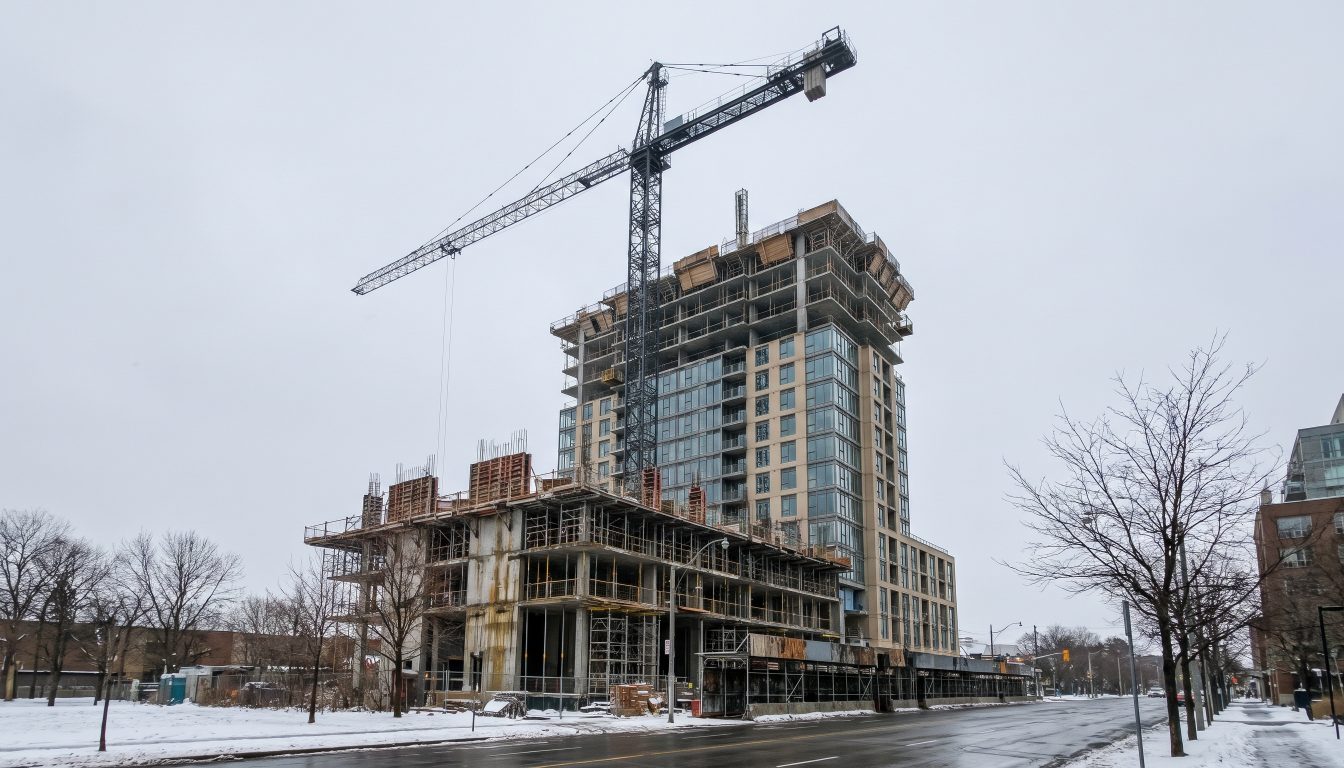
Not yet, for most. As of November 2026 the federal ban still covers new and pre-construction condos, with exceptions such as work permits with 183+ days left. Budget 2026 proposes exempting new homes, but the details are not law. Foreign buyers in Toronto still pay Ontario’s 25% NRST plus Toronto’s 10% MNRST.
This guide is for people who are not Canadian citizens or permanent residents and want to buy a new or pre-construction condo in Toronto in 2027, and for families helping them. You will learn what the law allows today, what Budget 2026 proposes for new homes, the taxes that apply on a new Toronto condo, and the checks to make before you put down a deposit.
Can a foreigner buy a pre-construction condo in Toronto right now?
In most cases, no. As of November 2026, the federal Prohibition on the Purchase of Residential Property by Non-Canadians Act still applies to new homes in the same way it applies to resale homes. A condo unit is “residential property” under the Act, and Toronto is inside a census metropolitan area, so the ban covers it.
People often assume a pre-construction contract is not a purchase until closing. The regulations say otherwise. A “purchase” includes getting a legal or equitable interest in a residential property, with or without conditions. Signing an agreement with a builder gives you that kind of interest. Taking over someone else’s contract through an assignment does too. So a non-Canadian who does not fit an exception cannot sign for a new Toronto condo under the law in force today.
Two other points are worth knowing. A breach can lead to a fine of up to $10,000 for the buyer and for anyone who knowingly helps, and a court can order the unit sold. And the federal ban is only one layer. Ontario and Toronto add their own taxes, which apply even when the federal ban does not.
What does Budget 2026 propose for new homes?
Budget 2026 was tabled on 5 November 2026. It proposes to extend the ban on foreign purchases of existing residential properties to 1 January 2029, while exempting new residential properties. The government says this keeps most of the market for Canadians while drawing more investment into new housing. It also says legislation and a regulatory process will follow “in short order”.
Three things are still unknown as of 10 November 2026:
- The definition of “new”. The budget does not say whether pre-construction agreements, completed units still held by builders, or assignments of new units will count.
- The start date. It does not say whether the exemption will apply by the date you sign or the date you close.
- The timing against the current law. Under the Act as amended in 2024, its repeal takes effect on 1 January 2027 unless Parliament changes that first. The budget proposes a different path, but the bill was not public when the budget came out.
For how the ban works today, including the property types it does not cover, read my explainer on what the foreign buyer ban actually catches.
Which foreign buyers can already buy a new condo in Toronto?
Some non-citizens can buy today, new or resale, because the Act and regulations exempt them:
- Permanent residents. They are not non-Canadians at all, even if they live outside Canada.
- Work permit holders with 183 days or more left on their permit or work authorization on the purchase date, buying no more than one residential property. With pre-construction, ask your lawyer which date counts as the purchase date for your contract.
- International students who filed tax returns for each of the five previous years, spent at least 244 days in Canada in each of those years, buy for $500,000 or less and buy only one property.
- Protected persons and certain refugee claimants whose claims have been referred for a hearing.
- A non-Canadian buying with a spouse or common-law partner who is a citizen, permanent resident, registered Indian, protected person or exempt temporary resident.
If you hold a work permit, my guide to buying in Ontario on a work permit in 2027 covers mortgages and taxes in more detail.
How much tax does a foreign buyer pay on a new Toronto condo?
A foreign national pays two speculation taxes on a Toronto condo, new or resale, unless they qualify for an exemption:
- Ontario’s Non-Resident Speculation Tax (NRST): 25% of the value of the consideration, since 25 October 2022.
- Toronto’s Municipal Non-Resident Speculation Tax (MNRST): 10% of the value of the consideration, since 1 January 2025. The City says there is no grandfathering for agreements signed before that date.
Both sit on top of the regular Ontario and Toronto land transfer taxes. For a new home, Ontario counts extras and upgrades that form part of the home, such as upgraded flooring, cabinets or a lot premium, in the value the tax is charged on.
| Example: $700,000 new condo in Toronto | Foreign national, no exemption | Citizen or permanent resident (not first-time) |
|---|---|---|
| Ontario land transfer tax | $10,475 | $10,475 |
| Toronto municipal land transfer tax | $10,475 | $10,475 |
| Ontario NRST (25%) | $175,000 | $0 |
| Toronto MNRST (10%) | $70,000 | $0 |
| Total land taxes | $265,950 | $20,950 |
Source: my calculation using Ontario Ministry of Finance land transfer tax and NRST rates and City of Toronto MLTT and MNRST rates, as of November 2026. The $700,000 price is an example only. HST treatment, development charges and legal fees are separate.
The exemptions are the same for both taxes: an Ontario Immigrant Nominee Program nominee, a protected person, or a foreign national buying with a spouse who is a citizen, permanent resident, nominee or protected person. For more on the provincial tax, see who pays the NRST and who is exempt.
Condo Valuation
What’s your condo
worth today?
Three quick steps. Condos don’t price like houses — your floor, your view, and whether you own parking move the number more than anything else. This weighs all of them.
Reading recent condo sales…
Estimated market value
—
$0–$0
Most likely $0 · about $0 per square foot
What moved the number
Starting from what comparable units in your area sell for, here’s what your specifics added or subtracted.
Market context
—
—
Two units, same floor plan,
$90,000 apart.
That happens constantly in condos — one has the parking, the right exposure, or a board that keeps the reserve fund healthy. A model can’t see your status certificate. I can.
When is the NRST paid on a pre-construction condo?
The NRST and MNRST are paid when the transfer is registered. The City of Toronto says its taxes for foreign buyers are due on registration. With a new condo, registration happens at final closing, after the building is registered as a condominium. That can be months after you move in during interim occupancy, and years after you sign.
That gap matters. Ontario says that if you have applied for permanent residence but do not have that status when your purchase closes, you must pay the NRST unless you qualify for an exemption. If you become a permanent resident after closing, Ontario offers a rebate when status is granted within four years of registration. The tax still has to be paid in cash first.
I could not confirm from the City of Toronto’s pages whether the 10% MNRST has a similar permanent resident rebate. Ask your lawyer before you count on getting it back.
Do not sign a builder’s agreement on the promise that “new homes are exempt now”. As of 10 November 2026 the exemption is a budget proposal, the definition of a new home is not published, and the current federal law still covers pre-construction contracts. Even with a federal exemption, a foreign buyer in Toronto would owe 35% in speculation taxes at closing. If you cannot fund that in cash, you may not be able to close, and you could lose your deposit.
Can a foreign buyer get the HST rebates on a new condo in Ontario?
It depends on how the condo will be used and on your status. The Canada Revenue Agency’s Notice 346 explains the Ontario enhanced new housing rebate for agreements signed from 1 April 2026 to 31 March 2027. It can refund the full 8% Ontario part of the HST up to $80,000 on homes up to $1 million, a flat $80,000 up to $1.5 million, and a partial amount up to $1.85 million. The notice also refers to Ontario’s New Home Affordability Payment of up to $50,000 toward the federal part.
The key condition is that the home is for use as the primary place of residence of the buyer or a relation. A foreign investor who plans to rent the unit out would not meet that test. A work permit holder who will live in the unit may be in a different position. The federal First-Time Home Buyers’ GST rebate is limited to Canadian citizens and permanent residents. See my guide to Ontario’s HST rebate on new homes, and confirm your eligibility with your lawyer before you rely on any rebate.
Can a foreigner get a mortgage on a new Toronto condo?
Insured mortgages are limited. CMHC offers mortgage loan insurance to non-permanent residents only if they are legally authorized to work in Canada and the purchase is not prohibited under the federal Act. The home must have one to four units, with at least one lived in by the owner. Borrowed down payments, such as personal loans or lines of credit, are not accepted for non-permanent residents.
A buyer who lives abroad without status in Canada does not fit those rules, so any mortgage would be uninsured and on the lender’s own terms. With pre-construction, the lender approves you close to final closing, not when you sign. Build a plan that works if the lender asks for more down payment than you expected.
What protections do new condo buyers have in Ontario?
- A 10-day rescission period. Under section 73 of the Condominium Act, 1998, a buyer of a new condo from a builder can cancel by written notice within 10 days of the latest of receiving the disclosure statement, the condominium guide and the signed agreement. The builder must refund the money promptly with interest. See pre-construction rescission rights in Ontario.
- Use those 10 days for a legal review. Ask your lawyer to check your immigration status against the federal Act, the NRST and MNRST, the deposit schedule and the closing adjustments.
- Know your status on two dates. Your status when you sign decides the federal question. Your status when the transfer is registered decides the NRST question.
If you are on a work permit and your permanent residence application is moving, a pre-construction condo can line up well, because final closing often comes years later. If you become a permanent resident before the transfer registers, Ontario’s guidance points to no NRST. But never sign on that hope alone. If the timing slips, you need a plan that still works. For buyers outside Canada with no status, the federal exemption may open a door, but the 35% Toronto tax bill makes most deals hard to justify, in my view.
What to do next
- Confirm your immigration status and your permit expiry date, and keep copies ready for your lawyer.
- Ask an Ontario real estate lawyer to confirm in writing whether the federal Act allows your purchase today.
- Add the NRST and MNRST to your budget, and work out how much cash you would need at final closing.
- Speak to a lender about what they will offer someone with your status before you sign anything with a builder.
- Watch for the federal bill and regulations promised in Budget 2026 before relying on the new-home exemption.
Need help with this? Talk to me.
I’m Jatin Dua, Broker of Record at RE/MAX Quantum Realty, and I’m the best agent to do this kind of work for you in Toronto and across the GTA. Over $100 million in GTA sales and 100+ families helped sell. Feel free to contact me any time: call or text 833-330-1925 or email [email protected].
Frequently asked questions
Can foreigners buy pre-construction condos in Toronto in 2027?
Not under the law in force in November 2026, unless they meet an exception such as a work permit with at least 183 days left. Budget 2026 proposes exempting new residential properties from the federal foreign buyer ban, but the bill and the definition of a new home were not published. Any foreign buyer in Toronto would still pay Ontario’s 25% NRST and Toronto’s 10% MNRST.
Is there a foreign buyer exemption for new homes in Canada?
Only as a proposal so far. Budget 2026, tabled on 5 November 2026, says new residential properties would be exempt while the ban on existing homes is extended to 1 January 2029. The government promised legislation and regulations soon. Until they pass, the Prohibition on the Purchase of Residential Property by Non-Canadians Act applies to new and resale homes alike.
Can a non-Canadian buy a new condo in Toronto?
Yes, if they fit an exception, such as a work permit holder with 183 or more days left buying one home, a qualifying student, a protected person, or someone buying with a Canadian or permanent resident spouse. Permanent residents are not covered by the ban at all. Non-Canadians without an exception cannot buy a Toronto condo, new or resale, as of November 2026.
Do foreigners pay NRST on a pre-construction condo in Ontario?
Yes. Ontario’s 25% Non-Resident Speculation Tax applies to condo units, new or resale, and it is paid when the transfer is registered, which for a new condo is final closing. Ontario says a buyer who has applied for permanent residence but does not have it when the purchase closes must pay. A rebate is available if permanent residence follows within four years.
How much is the foreign buyer tax on a $700,000 Toronto condo?
$245,000 in speculation taxes, as of November 2026: $175,000 for Ontario’s 25% NRST and $70,000 for Toronto’s 10% MNRST. Regular Ontario and Toronto land transfer taxes of about $10,475 each come on top, for a total near $265,950. Nominees, protected persons and buyers with a Canadian or permanent resident spouse can be exempt from both speculation taxes.
Can a foreigner assign a pre-construction condo in Toronto?
Buying an assignment is a purchase under the federal rules, because the buyer takes over an interest in the unit. So a non-Canadian without an exception cannot buy an assignment under the law in force in November 2026. Whether assignments of new units will fall under the Budget 2026 new-home exemption is not yet known. Ontario’s NRST and Toronto’s MNRST would still apply.
Can foreign buyers get the Ontario HST rebate on a new condo?
Only if the home will be their own or a relation’s primary place of residence. CRA Notice 346 sets that condition for Ontario’s enhanced new housing rebate on agreements signed from 1 April 2026 to 31 March 2027. A foreign investor renting the unit out would not qualify. The federal First-Time Home Buyers’ GST rebate is limited to citizens and permanent residents.
Can a foreigner get a mortgage for a new condo in Toronto?
Insured mortgages are limited to non-permanent residents who are authorized to work in Canada and whose purchase is allowed under the federal Act, according to CMHC. Buyers living abroad without status would need an uninsured mortgage on the lender’s own terms. With pre-construction, the lender approves the mortgage near final closing, so plan for stricter terms than expected.
Does Toronto’s 10% foreign buyer tax apply to condos bought before 2025?
Yes, if the transfer registers on or after 1 January 2025. The City of Toronto says there is no grandfathering of the Municipal Non-Resident Speculation Tax for agreements signed before that date, and the tax is due on registration. That matters for pre-construction buyers whose condos close in 2026 or 2027. Nominees, protected persons and buyers with a qualifying spouse can be exempt.
Sources
- Budget 2026, Chapter 3 (Government of Canada)
- Prohibition on the Purchase of Residential Property by Non-Canadians Act (Justice Laws)
- Prohibition on the Purchase of Residential Property by Non-Canadians Regulations, SOR/2022-250 (Justice Laws)
- Non-Resident Speculation Tax (Ontario Ministry of Finance)
- Municipal Land Transfer Tax and Municipal Non-Resident Speculation Tax (City of Toronto)
- GST/HST Info Sheet Notice 346: Ontario enhanced new housing rebate (Canada Revenue Agency, August 2026)
- Mortgage loan insurance for newcomers (CMHC)
- Condominium Act, 1998, s. 73 (Ontario e-Laws)
Related reading
- Foreign Buyer Ban 2027: What Budget 2026 Changes (Extension to 2029, New Homes Exempt)
- Foreign Buyer Ban Exemptions in Canada for 2027: Who Can Still Buy
- Can International Students Buy a Home in Ontario in 2027?
- Ontario Non-Resident Speculation Tax (NRST) in 2027: 25%, Refunds and Exemptions
About the author — Jatin Dua, Toronto and GTA real estate broker
I am Jatin Dua, Broker of Record and co-founder of RE/MAX Quantum Realty Inc., Brokerage, Unit 101, 799 The Queensway, Toronto. I work with buyers and sellers across Toronto and the GTA and have helped more than 100 families sell. Four-plus years of active GTA transactions and over $100 million in sales volume.
Reach me at [email protected] or 833-330-1925, or book a call.