
Published 2 November 2026 · By Jatin Dua, Broker of Record, RE/MAX Quantum Realty
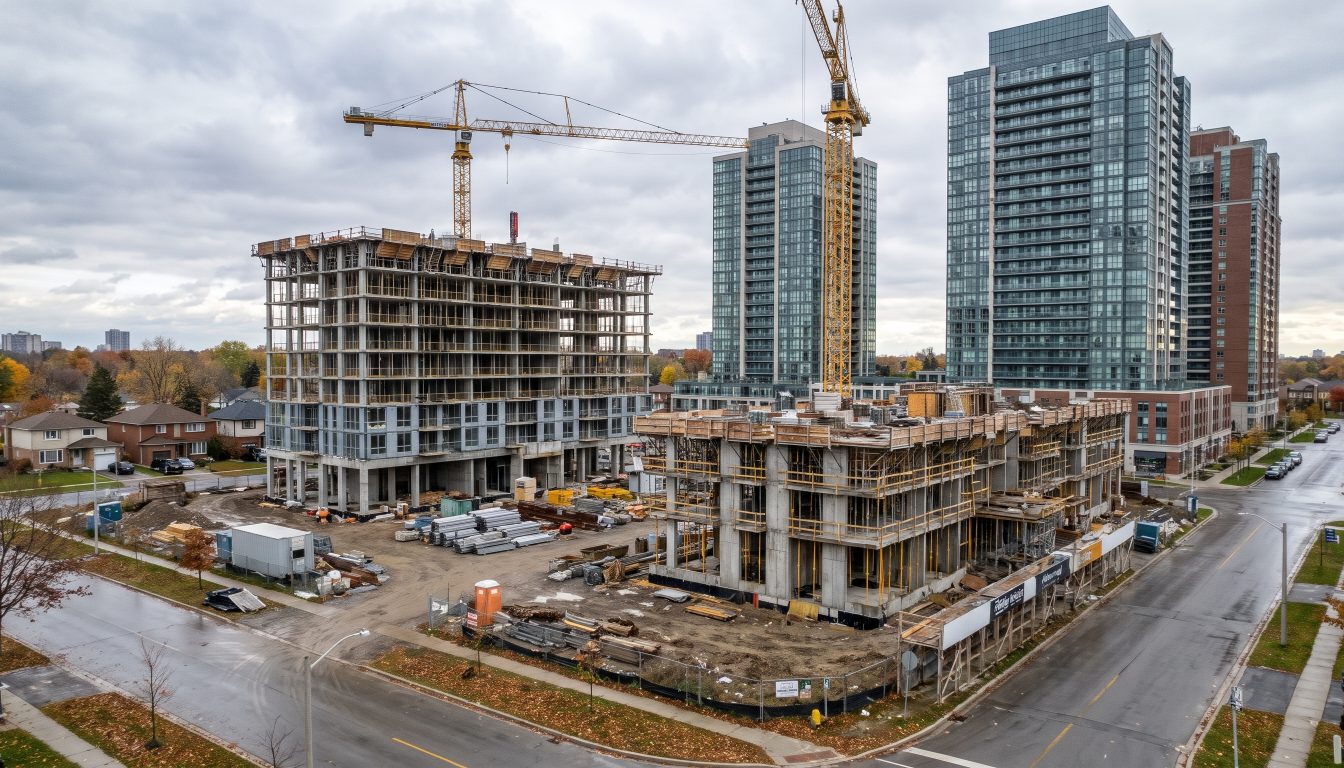
In 2027 non-Canadians can still buy if they hold a work permit with 183+ days left, meet the strict student test, are protected persons, or buy with a citizen or permanent resident spouse. Budget 2026 proposes extending the ban on existing homes to 1 January 2029 and exempting new homes, but that is not law yet.
This guide is for people who are not Canadian citizens or permanent residents and want to buy a home in Canada in 2027, and for the Canadian family members helping them. You will get a plain checklist of every exemption in the federal foreign buyer ban as the law stands on 10 November 2026, what the November 2026 federal budget proposes to change, and the Ontario and Toronto taxes that still apply when you are exempt.
Is the foreign buyer ban still in force in 2027?
Here is the honest answer in two parts: what the law says today, and what Ottawa has proposed.
The law today. The Prohibition on the Purchase of Residential Property by Non-Canadians Act has applied since 1 January 2023. In February 2024 the Department of Finance extended it to 1 January 2027. The Act’s own repeal clause is still listed as “not in force” on the federal Justice Laws site, and the regulations (SOR/2022-250) are written to end on the same day the Act is repealed.
The proposal. Budget 2026, tabled on 5 November 2026, proposes two changes. First, extend the ban on existing and resale homes for two more years, to 1 January 2029. Second, exempt new residential properties from the ban. The budget says Ottawa will table legislation and start a regulatory process “in short order”. As of today, neither the bill nor the regulations have been published, so we do not yet know how “new” will be defined.
That leaves one open question for early 2027 closings. If Parliament has not passed the extension by 1 January 2027, the law as written today would let the ban lapse on that date. The budget text does not say how a gap would be handled. If your purchase or closing falls near the turn of the year, ask your lawyer to check the status that week, not the week you made the offer.
Who is not a “non-Canadian” under the ban?
The ban only applies to a “non-Canadian”. If you are not one, you need no exemption at all. Under section 2 of the Act, these buyers are outside the definition:
- Canadian citizens, wherever they live. A citizen living in Dubai or London is not caught.
- Permanent residents of Canada.
- People registered as an Indian under the Indian Act.
- Canadian corporations whose shares are listed on a designated Canadian stock exchange.
Corporations need care. A company incorporated outside Canada is a non-Canadian. So is a private Canadian company that is controlled by non-Canadians. The regulations set the control test low: owning 10% or more of the equity value or voting rights, or having control in fact, counts. A numbered Ontario company owned by a foreign investor does not get around the ban.
Which temporary residents are exempt from the foreign buyer ban?
Section 5 of the regulations lets two groups of temporary residents buy. Each group has its own test, and you must meet every condition in your group.
| Group | Conditions you must meet | How many homes |
|---|---|---|
| Workers: hold a work permit, or are authorized to work under section 186 of the immigration regulations | 183 days or more of validity left on the permit or authorization on the date of purchase | Not more than one residential property |
| Students: enrolled in a program at a designated learning institution | Filed all required Canadian tax returns for each of the 5 tax years before the year of purchase; physically in Canada at least 244 days in each of those 5 calendar years; purchase price of $500,000 or less | Not more than one residential property |
Source: Prohibition on the Purchase of Residential Property by Non-Canadians Regulations, SOR/2022-250, section 5, current to 19 October 2026 (Justice Laws).
The worker test used to include tax-filing and work-history conditions. Those were repealed in March 2023, so the 183-day rule and the one-property limit are the whole test now. I cover the worker route in detail in my guide to buying a house in Ontario on a work permit.
The student test is much harder. For a purchase in 2027, a student would need tax returns for 2022 to 2026 and at least 244 days in Canada in each of those five years. Most students simply have not been here that long.
Are refugees, protected persons and diplomats exempt?
Yes, several groups are carved out by the Act and its regulations:
- Protected persons under the Immigration and Refugee Protection Act.
- Refugee claimants whose claim has been found eligible and referred to the Refugee Protection Division.
- Foreign nationals given temporary status under a public-policy exemption to provide safe haven to people fleeing conflict, where the Minister considers the exemption justified on that basis.
- Diplomats and consular officials whose passport carries a valid acceptance from the federal Chief of Protocol.
- Foreign states buying for diplomatic or consular purposes.
There is also an exception where applying the ban would conflict with Aboriginal and treaty rights under section 35 of the Constitution Act, 1982.
Can a non-Canadian buy a home with a Canadian spouse?
Yes. Section 4(2)(c) of the Act lets a non-Canadian buy together with a spouse or common-law partner who is a Canadian citizen, a permanent resident, a registered Indian, a qualifying temporary resident or a protected person. Under the federal Act, a common-law partner means someone you have lived with in a conjugal relationship for at least one year.
Be careful here, because Ontario uses a different test for its own tax. For the 25% Non-Resident Speculation Tax (NRST), a “spouse” is someone you are married to, or have lived with for at least three years, or are in a relationship of some permanence with as the parents of a child. So a couple who have lived together for 18 months could pass the federal test and still owe Ontario’s tax. Both spouses must be on title, and for the NRST exemption every buyer must move in as their principal residence within 60 days.
Instant Home Valuation
What’s your home
worth today?
Answer six quick questions and get an instant value range built from current Toronto & GTA sale data — property type, size, condition, lot and location all weighted the way a real pricing conversation weighs them. Takes about ninety seconds.
Reading recent GTA sale data…
Building your estimate
Estimated market value
—
$0–$0
Most likely value $0 · roughly $0 per square foot
What moved the number
Starting from the area baseline for your property type, here’s what each answer added or subtracted.
Market context
Recent local averages for comparison.
—
A range is a starting point.
A strategy is what sells.
This model doesn’t know that your neighbour’s identical semi went $80,000 over asking last month, or which two upgrades actually pay back in your area. That conversation is free and takes twenty minutes.
Which properties are outside the foreign buyer ban?
The ban only covers “residential property” as the Act defines it. These are outside it:
- Buildings with four or more dwelling units. The definition stops at three units. CMHC states plainly that larger buildings are not prohibited.
- Property outside a census metropolitan area or census agglomeration. CMHC runs an online map where you can type an address and check. Most of the GTA sits inside one of these areas, so do not assume a GTA address is outside.
- Vacant land. The rule that brought some vacant residential land into the ban was repealed in March 2023.
- Property bought for development. The regulations exclude acquisitions by a non-Canadian for the purposes of development.
“Outside the ban” is not the same as “tax-free”. A fourplex in Mississauga is outside the federal ban, but Ontario’s NRST covers land with one to six single family residences, so a foreign national would still pay 25% on it unless an Ontario exemption applies.
Which ways of getting a home do not count as a “purchase”?
The regulations treat acquiring a legal or equitable interest in a home, with or without conditions, as a purchase. But they list things that are not purchases, so the ban does not apply to them:
- Receiving an interest through a death, divorce, separation or gift.
- Renting a home as a tenant.
- A transfer under a trust created before the Act came into force.
- A transfer when a lender enforces its security.
The Act also does not apply where the buyer became bound by an agreement of purchase and sale before 1 January 2023. These are narrow rules. A “gift” that is really a purchase paid for by the foreign buyer is exactly the kind of arrangement the Act’s “directly or indirectly” wording is aimed at.
What would Budget 2026 change for buyers in 2027?
If the budget proposal becomes law as described, the picture in 2027 and 2028 would look like this:
- Existing and resale homes: the ban and all the exemptions above would carry on to 1 January 2029.
- New residential properties: non-Canadians would be able to buy them without needing an exemption.
Three things are still unknown: the exact definition of a new residential property (for example, whether an assignment of a pre-construction contract counts), the start date, and whether any conditions are attached. The budget says the aim is to bring more investment into new housing supply while keeping most of the market for Canadians.
For anyone looking at pre-construction, read my view on whether a pre-construction condo is a good investment in Toronto in 2027 before you treat this as an opening. A federal green light does not change the provincial and city taxes below.
Do not sign anything that depends on the budget proposal until the legislation and regulations are published and in force. Budgets are plans, and details change. If you already qualify under an existing exemption, such as a work permit with 183 days left or a citizen spouse, you do not need to wait for Ottawa. Your bigger decision is usually the Ontario tax, so price that first.
Do exempt buyers still pay Ontario’s 25% NRST and Toronto’s 10% tax?
Usually, yes. The federal ban, Ontario’s NRST and Toronto’s Municipal Non-Resident Speculation Tax (MNRST) are three separate laws. Ontario says plainly that being exempt from the federal ban does not make you exempt from its tax. Here is how they line up for common situations.
| Buyer | Federal ban (existing homes) | Ontario NRST (25%) | Toronto MNRST (10%) |
|---|---|---|---|
| Canadian citizen or permanent resident | Not caught | Not charged | Not charged |
| Work permit holder, 183+ days left, first home | Exempt | Charged unless an exemption applies | Charged in Toronto unless an exemption applies |
| Student meeting the five-year test, price up to $500,000 | Exempt | Charged unless an exemption applies | Charged in Toronto unless an exemption applies |
| Protected person | Exempt | Exempt (with occupancy rule) | Exempt (with occupancy rule) |
| Foreign national buying with a citizen or PR spouse | Exempt (common-law: 1 year) | Exempt if Ontario’s spouse test and occupancy rule are met | Exempt on the same terms |
| Ontario Immigrant Nominee Program nominee | Needs a federal exception, such as a work permit | Exempt (with occupancy rule) | Exempt (with occupancy rule) |
| Foreign national living abroad | Prohibited | Charged | Charged in Toronto |
Source: Justice Laws (Act and SOR/2022-250); Ontario Ministry of Finance NRST exemptions page; City of Toronto MNRST page; as of 10 November 2026. The occupancy rule means every buyer must occupy the home as their principal residence within 60 days of registration.
On a $600,000 condo in the City of Toronto, the two speculation taxes add $210,000 before regular land transfer tax. My explainer on the Non-Resident Speculation Tax covers the exemptions and the permanent resident rebate in detail.
What happens if you break the foreign buyer ban?
A non-Canadian who buys in breach of the Act can be fined up to $10,000 on conviction. The same fine can apply to anyone who knowingly counsels, induces, aids or abets the purchase, which includes agents, lawyers and relatives. Directors and officers of a corporation can be held liable too.
A court can also order the property sold. If that happens, the regulations say the non-Canadian gets back no more than the price they paid. Costs, unpaid fines and other people with a claim are paid first, and anything left over goes to the federal government.
Do not put a home in a Canadian relative’s name while you supply the money and keep the benefit. The Act catches purchases made “directly or indirectly”, and Ontario audits trusts where a Canadian holds property for a foreign national. If you would not be comfortable explaining the arrangement to a judge, do not do it. Get a written opinion from an Ontario real estate lawyer before you sign.
What to do next
- Write down your exact status: citizenship, permit type, permit expiry date, and your spouse’s status.
- Match yourself to one row in the exemption table above, and confirm it with an Ontario real estate lawyer before you make an offer.
- Check the property: number of units, and whether it is inside a census metropolitan area using CMHC’s map.
- Price the Ontario NRST and, inside Toronto, the MNRST into your budget, even if you are exempt from the ban.
- If you are waiting on the Budget 2026 new-home exemption, watch for the bill and the regulations, and read my newcomer guide to buying in the GTA while you wait.
Need help with this? Talk to me.
I’m Jatin Dua, Broker of Record at RE/MAX Quantum Realty, and I’m the best agent to do this kind of work for you in Toronto and across the GTA. Over $100 million in GTA sales and 100+ families helped sell. Feel free to contact me any time: call or text 833-330-1925 or email [email protected].
Frequently asked questions
Who is exempt from the foreign buyer ban in Canada?
As of November 2026, exemptions cover work permit holders with 183 or more days left on their permit (one home), students who meet a five-year tax and residence test and buy for $500,000 or less, protected persons, eligible refugee claimants, diplomats, and non-Canadians buying with a Canadian citizen or permanent resident spouse. Citizens and permanent residents are not caught at all.
Is the foreign buyer ban extended to 2029?
Not yet. Budget 2026, tabled on 5 November 2026, proposes extending the ban on existing and resale homes to 1 January 2029 while exempting new residential properties. That needs new legislation and regulations. Until they pass, the law on the books still ends the ban on 1 January 2027, so check the status with a lawyer before you sign.
Can a non-Canadian buy a new pre-construction home in Canada in 2027?
Possibly, but only once the Budget 2026 change becomes law. The budget proposes exempting new residential properties from the ban, but as of November 2026 the bill and regulations, including the definition of a new home, had not been published. Ontario’s 25% NRST and Toronto’s 10% MNRST would still apply to a foreign national.
Can a work permit holder buy a house in Canada in 2027?
Yes, in most cases. A work permit holder can buy one residential property if the permit or work authorization has at least 183 days of validity left on the date of purchase. In Ontario they will still pay the 25% Non-Resident Speculation Tax, plus 10% inside Toronto, unless an exemption such as a citizen spouse applies.
Can international students buy property under the foreign buyer ban?
Only a few can. A student must have filed Canadian tax returns for each of the five years before the purchase year, been in Canada at least 244 days in each of those five years, pay $500,000 or less and buy only one property. For a 2027 purchase, that means 2022 to 2026. Ontario’s 25% NRST still applies.
Does the foreign buyer ban apply to a fourplex?
No. The federal Act defines residential property as buildings with not more than three dwelling units, plus condo units, semis and townhouses, so a fourplex is outside the ban. But Ontario’s 25% NRST covers land with one to six single family residences, so a foreign national buying a fourplex in Ontario in 2027 would usually still pay it.
Can a foreigner buy a house in Canada with a Canadian spouse?
Yes. The federal Act lets a non-Canadian buy with a spouse or common-law partner who is a citizen, permanent resident or other eligible person; common-law means one year of living together. Ontario’s NRST spouse exemption uses a stricter test of marriage, three years together, or parents of a child, and both must move in within 60 days.
Are refugees exempt from the foreign buyer ban?
Yes. Protected persons under the Immigration and Refugee Protection Act are exempt, and so are refugee claimants whose claims have been found eligible and referred to the Refugee Protection Division. In Ontario, protected persons are also exempt from the 25% NRST and Toronto’s 10% MNRST if every buyer occupies the home as a principal residence within 60 days.
Does a foreign buyer ban exemption also exempt me from the NRST?
No. Ontario’s Ministry of Finance says people who fit an exception to the federal ban may still owe its 25% Non-Resident Speculation Tax. The NRST has only three exemptions: Ontario Immigrant Nominee Program nominees, protected persons, and spouses of citizens, permanent residents, nominees or protected persons. Toronto’s 10% tax follows the same exemptions in 2026 and 2027.
What is the penalty for breaking the foreign buyer ban in Canada?
The fine is up to $10,000 on summary conviction, and it can also apply to anyone who knowingly helps, including agents and relatives. A court can order the home sold, and the non-Canadian would get back no more than the price they paid. These penalties apply for as long as the ban is in force.
Sources
- Justice Laws: Prohibition on the Purchase of Residential Property by Non-Canadians Act
- Justice Laws: Prohibition on the Purchase of Residential Property by Non-Canadians Regulations (SOR/2022-250)
- Budget 2026, Chapter 3: A more affordable life (foreign buyer ban proposal)
- Budget 2026 (full document, Annex 3 legislative measures)
- Department of Finance Canada: Two-year extension to ban on foreign ownership of Canadian housing (4 February 2024)
- CMHC: Prohibition on the Purchase of Residential Property by Non-Canadians Act
- Ontario Ministry of Finance: Non-Resident Speculation Tax exemptions
- City of Toronto: Municipal Land Transfer Tax and Municipal Non-Resident Speculation Tax
Related reading
- Foreign Buyer Ban 2027: What Budget 2026 Changes (Extension to 2029, New Homes Exempt)
- Can Foreigners Buy New Construction Condos in Toronto in 2027?
- Can International Students Buy a Home in Ontario in 2027?
- Ontario Non-Resident Speculation Tax (NRST) in 2027: 25%, Refunds and Exemptions
About the author — Jatin Dua, Toronto and GTA real estate broker
I am Jatin Dua, Broker of Record and co-founder of RE/MAX Quantum Realty Inc., Brokerage, Unit 101, 799 The Queensway, Toronto. I work with buyers and sellers across Toronto and the GTA and have helped more than 100 families sell. Four-plus years of active GTA transactions and over $100 million in sales volume.
Reach me at [email protected] or 833-330-1925, or book a call.