Published 2 November 2026 · By Jatin Dua, Broker of Record, RE/MAX Quantum Realty
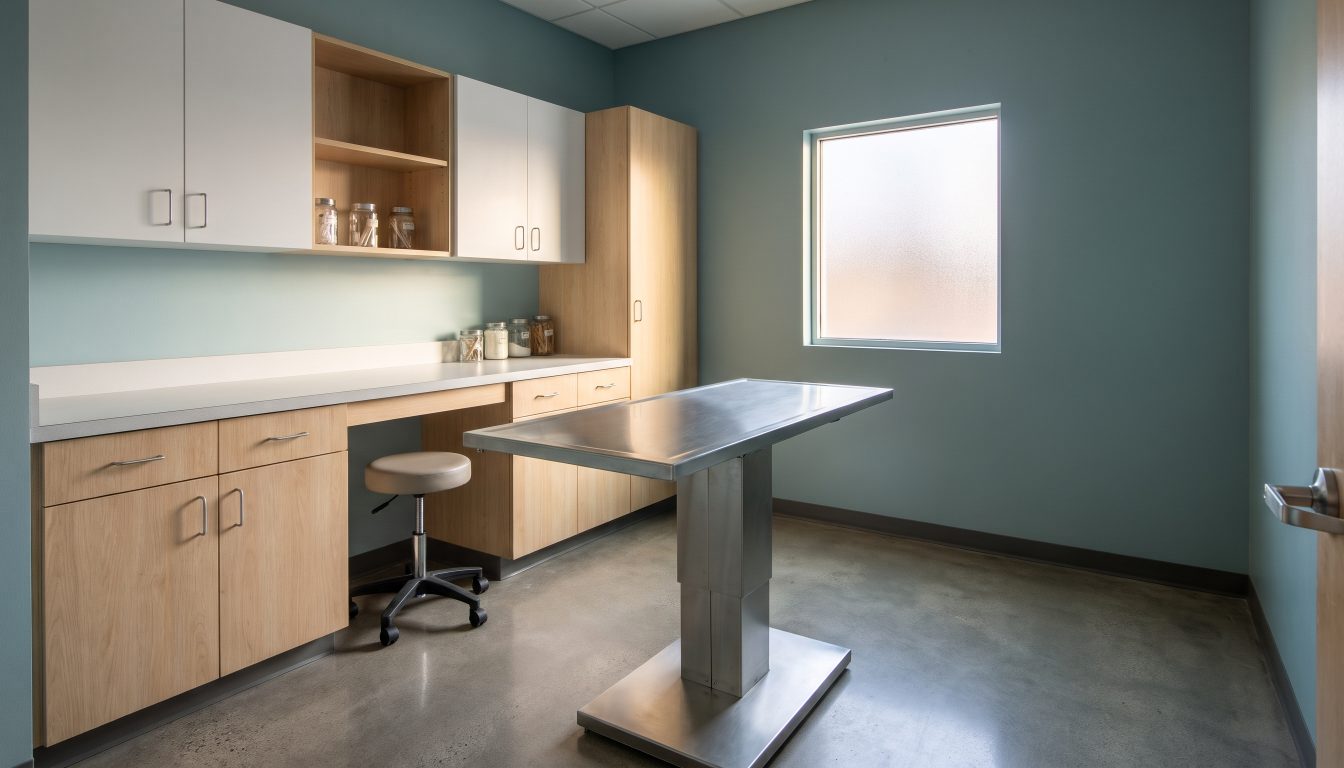
To sell a veterinary practice in Ontario, prepare early: clean up your financials, secure the lease, get a formal valuation, then market it confidentially to associates, other veterinarians or corporate groups. After a purchase, the new facility director files the CVO’s purchase form and contacts Radiation Protection Service about the x-ray. The Veterinarians Act still applies as of November 2026.
This guide is for Ontario veterinarians who are thinking about selling a practice in 2027, whether to retire, cut back or join a larger group. You will get the steps in order, the College of Veterinarians of Ontario (CVO) paperwork that follows a sale, and the places where deals usually stall.
How long does it take to sell a veterinary practice in Ontario?
There is no set timeline, and nobody can promise you a closing date. The sale itself moves at the speed of the buyer’s lender, the landlord and the lawyers. The part you control is preparation, and that is where most of the value is won or lost.
Buyers and their banks read your last few years of financial statements. If you want to add an associate, sign a longer lease or fix an accreditation gap, those changes need time to show up in the numbers and in the building. A rushed sale usually means you sell the practice as it is today, not as it could be.
A quick word on my role. I am a commercial broker. I handle the sale of the business and the real estate side, I check zoning and lease terms, and I work alongside your lawyer, your accountant, the buyer’s lender and, where needed, a practice appraiser. I am not a lawyer, an accountant, an appraiser or a regulator, so the legal, tax and valuation points below are things to confirm with those professionals.
Step 1: How do you get a vet practice ready to sell?
Start with what a buyer’s banker and a buyer’s veterinarian will check first.
- Clean financial statements. Separate personal spending from practice costs so the real profit is easy to see. Buyers price on profit, so hidden profit is lost value.
- Owner dependence. If most of the revenue comes from your own appointments, a buyer worries that clients will leave with you. An associate who already has a following makes the practice easier to sell.
- Staff. A stable team of registered veterinary technicians and front-desk staff reassures buyers. Their years of service can carry over to a buyer, so their seniority is part of the deal.
- Equipment and records. List major equipment with its age and service history, and make sure your x-ray registration, drug registers and medical records are in order.
- Accreditation. Check the expiry date on your certificate of accreditation. Under Regulation 1093 a certificate runs five years from issue or renewal. Walk the clinic against the College’s accreditation standards before a buyer does. My guide to veterinary facility premises lists the items that most often fail, such as a sink in the surgical suite.
Fix the lease before you list
The lease is often the single biggest risk in a clinic sale. A short remaining term, no renewal option or a landlord relocation clause can scare off a buyer or their lender. Relocation matters more for vets than for most tenants, because Regulation 1093 says a certificate of accreditation expires early if the facility is relocated. One more point that surprises landlords: the CVO’s conflict-of-interest guidance says rent based on the clinic’s revenue is not permitted. My commercial lease clauses guide covers the assignment and renewal terms to fix early.
Step 2: How do you find out what your practice is worth?
Most veterinary practices are priced as a multiple of adjusted profit, often called EBITDA (earnings before interest, taxes, depreciation and amortization), after paying every veterinarian, including you, a fair market wage. The multiple then moves up or down with size, growth, staffing, the lease, the facility and the local market.
Published ranges are wide. A 2021 Veterinary Practice News Canada article put Canadian offers at about 3 to more than 13 times adjusted earnings, with corporate groups usually offering higher multiples than individual buyers. The same article noted that the very top multiples go only to the most strategic practices. Treat any multiple as a starting point, not a price.
For a real sale you need a formal valuation from a qualified practice valuator, built on your statements, production reports and active client numbers. If you own the building, value it separately. A clinic building is valued like other commercial property, which I explain in my guide to cap rates, NOI and DSCR.
Talk to more than one type of buyer before you choose a path. I often see owners accept the first serious offer because it came early. A corporate group and an associate can value the same clinic very differently, and the terms (how long you stay, how much is paid at closing, what happens to your team) can matter as much as the headline price.
Own your clinic unit or building? See what it could sell or rent for with the estimator below.
Step 3: Who buys veterinary practices in Ontario?
Most sellers end up talking to three kinds of buyers.
- Your own associate. The smoothest handover for clients and staff. The deal depends on what their bank will lend, so ask early whether they are pre-approved.
- Another veterinarian. Often a nearby owner who wants more clients, or a younger vet buying a first practice.
- A corporate group. Groups buy profitable practices to add to a network. They often ask the seller to keep working for a set period, and part of the price may be paid later or in shares of the group.
Ownership works differently in veterinary medicine than in dentistry. Regulation 1093 expressly contemplates a facility director who is not an owner, and corporate groups own hundreds of Canadian clinics. But the same regulation has conflict-of-interest rules on veterinarians who work for an employer who is not a veterinarian, and the CVO says such an employer must never control clinical decisions. How a group structures its Ontario clinics is a question for your lawyer to review. A veterinary professional corporation is different: the CVO’s rules require its shareholders, including any holding company behind them, to be licensed veterinarians. My guide to buying a veterinary practice explains what a buyer is actually acquiring.
Step 4: How do you sell a vet clinic without staff and clients finding out?
Keep it quiet until a deal is firm. News of a sale can unsettle your team and your clients long before anything is signed.
- Share a short, unnamed summary first: general area, number of exam rooms and veterinarians, species served and a revenue range.
- Get a signed confidentiality agreement before you share anything detailed.
- Release client-level detail last, and only what the buyer truly needs.
- Book tours after hours or on days the clinic is closed.
Client information is personal information under PIPEDA, the federal privacy law the CVO points veterinarians to. Section 7.2 lets you disclose personal information to a prospective buyer without consent only if it is needed for the deal and the buyer signs an agreement to use it only for the transaction, protect it, and return or destroy it if the deal dies. After closing, clients must be told within a reasonable time that the practice changed hands and their information moved with it.
Step 5: What goes into the offer and purchase agreement?
The offer sets the price, but the agreement decides how smooth the handover will be. Your lawyer drafts it. These are the business points I make sure we have talked through first:
- Structure. Whether the buyer purchases assets or shares. This changes tax, HST and liability, and a non-veterinarian cannot buy shares of a veterinary professional corporation.
- How the price is paid. Cash at closing, payments over time, a part tied to future results, or shares in the buyer’s group.
- Your role after closing. How long you stay, how many days a week and what you are paid.
- The facility director. Who takes over the role on closing day, and when the College is told.
- Staff. Who is offered a job and on what terms. Ontario’s employment standards rules can carry your staff’s years of service over to the buyer, which my buying guide explains.
- The x-ray, drugs and records. Who registers the x-ray, how drug inventory is counted, and your right to see records later if a complaint arises.
- Lease and landlord consent. Most deals are conditional on the landlord approving an assignment or a new lease.
Regulation 1093 says a certificate of accreditation expires early if the facility no longer has a facility director, or no longer has a licensed veterinarian practising there who could apply for it. If you are the facility director and you walk out on closing day, the certificate is exposed. Name the successor in the agreement and have them ready to notify the College immediately.
Step 6: What does the CVO require when a practice changes hands?
The College’s steps are short, but each has an owner and a timing. Here is what its own pages and Regulation 1093 say.
| Task | Who does it | Timing |
|---|---|---|
| Change of Information for Accreditation Facility, Purchase form | The new facility director, through the Professional Practice Portal | On the purchase |
| Contact Radiation Protection Service, because x-ray ownership has changed | The new facility director | On the purchase |
| Notice of a change in facility director | Certificate holder | Immediately; no inspection needed for this change alone |
| Practice name change form, if the name changes | Facility director | When the name changes; no fee or inspection |
| Notice of change for a professional corporation, such as new shareholders | The corporation | Within 30 days; no fee |
| Keep medical records | The veterinarian responsible | At least 5 years after the last entry, or until 2 years after the vet stops practising, whichever comes first |
Source: CVO Renewal and Changes page; CVO Changes to a Professional Corporation page; R.R.O. 1990, Reg. 1093, ss. 12, 13 and 22. Confirm current details with the College and your lawyer.
The College’s page lists inspections for relocations and new facilities. It does not say that a purchase triggers one automatically, so ask the College how it will treat your deal before conditions come off.
How are taxes handled when you sell a vet practice?
Tax can change your take-home amount more than a few points of price. The CRA lists the lifetime capital gains exemption at $1,275,000 for 2026, up from $1,250,000 for 2025. It can apply to shares of a qualified small business corporation, and your accountant has to test whether your corporation qualifies well before the sale. The figure for 2027 sales will be the one the CRA publishes for 2027.
That is one reason sellers often prefer a share sale and buyers often prefer an asset purchase. On an asset sale, ask your accountant whether the GST/HST election for the sale of a business applies to your deal. This section is general information, not tax advice, so confirm every point with your accountant.
Does the Veterinary Professionals Act, 2024 change anything for a 2027 sale?
Not yet. The Act passed in June 2024, but as of November 2026 e-Laws shows sections 1 to 98 still waiting for a proclamation date, and the Veterinarians Act still governs. When it takes effect, the College will continue as the College of Veterinary Professionals of Ontario.
One point helps sellers: section 103 of the new Act deems existing certificates of accreditation to carry over on the transition date. The regulations that will do most of the practical work have not been made yet, so if your sale or a staged payout runs past the changeover, ask your lawyer to deal with that risk in the agreement.
What to do next
- Pull your last three years of financial statements and list the revenue you produce personally versus your associates.
- Read your lease for its remaining term, renewal options, relocation and assignment clauses, and talk to your landlord early.
- Check your accreditation expiry date and walk the clinic against the CVO standards.
- Meet your accountant and lawyer about share or asset structure before you speak to buyers.
- Book a formal valuation, and if you own the building, get a separate value for the real estate.
Need help with this? Talk to me.
I’m Jatin Dua, Broker of Record at RE/MAX Quantum Realty, and I’m the best agent to do this kind of work for you in Toronto and across the GTA. Over $100 million in GTA sales and 100+ families helped sell. Feel free to contact me any time: call or text 833-330-1925 or email [email protected].
Frequently asked questions
How do I sell my veterinary practice in Ontario?
You sell an Ontario veterinary practice in stages: prepare your financials, lease and accreditation, get a formal valuation, market it confidentially, negotiate an offer, then close with your lawyer. In 2027 most buyers are associates, other veterinarians or corporate groups. After a purchase, the new facility director files the CVO’s purchase form and contacts Radiation Protection Service about the x-ray.
Can a non-veterinarian buy a vet clinic in Ontario?
Often yes, with the right structure. Regulation 1093 contemplates owners who are not the facility director, and corporate groups own many Ontario clinics. A licensed veterinarian must be the facility director, the CVO says a non-veterinarian employer must not control clinical decisions, and only licensed vets can hold shares of a veterinary professional corporation. Have a lawyer review the buyer’s structure.
Does a certificate of accreditation transfer when a vet practice is sold?
A sale is not listed as a reason for early expiry in Regulation 1093, but the certificate does expire early if the clinic relocates or loses its facility director. When an Ontario practice is purchased, the new facility director files the CVO’s Change of Information, Purchase form. Ask the College how it will treat your specific deal, and confirm with a lawyer.
Do I have to tell clients I sold my vet clinic?
In most sales, yes. Section 7.2 of PIPEDA, the federal privacy law, allows client information to move to an Ontario buyer without consent only if, after closing, clients are told within a reasonable time that the sale happened and their information was disclosed. Most sellers send a letter or email introducing the new owner once the deal closes, so clients hear it from you first.
How long do I keep veterinary medical records after selling in Ontario?
Regulation 1093 requires Ontario veterinary records to be kept at least five years after the last entry, or until two years after the veterinarian stops practising, whichever comes first. The CVO also says radiographs must be kept as long as the patient record. Your purchase agreement should say who keeps the records and give you access if a complaint arises later.
What happens to my staff when I sell my vet practice?
If the buyer keeps your Ontario staff, their years of service can carry over to the new owner under Ontario’s employment standards rules, which affects vacation, notice and severance later. That makes long-serving technicians part of the price discussion. Agree in writing who is offered a job and on what terms, and ask your lawyer how the rules apply to your deal.
Is the Veterinary Professionals Act in force in 2026?
No, not in full. The Veterinary Professionals Act, 2024 received Royal Assent in June 2024, but as of November 2026 e-Laws shows sections 1 to 98 waiting for proclamation, and the Veterinarians Act still governs. Existing certificates of accreditation are deemed to carry over when the new Act takes effect.
Can I use the lifetime capital gains exemption when I sell my vet practice?
Possibly. The CRA lists the lifetime capital gains exemption at $1,275,000 for 2026, and it can apply to qualified small business corporation shares. That usually means a share sale, and only licensed veterinarians can buy shares of a veterinary professional corporation in Ontario. Your accountant must test whether your shares qualify before you agree on structure.
Should I sell my vet clinic building with the practice?
Not always. In Ontario you can sell the building with the practice, keep it and lease it to the buyer, or sell it separately later. Keeping it gives you rent, but the lease must not tie rent to clinic revenue, because the CVO says revenue-based leases are not permitted for veterinarians. Value the building separately from the practice before you decide.
Sources
- CVO: Renewal and Changes (purchasing an existing veterinary facility)
- Ontario e-Laws: R.R.O. 1990, Reg. 1093 (General), Veterinarians Act
- CVO: Changes to a Professional Corporation
- Justice Laws: PIPEDA section 7.2, prospective business transactions
- CRA: Adjustment of personal income tax and benefit amounts (LCGE 2026)
- Ontario e-Laws: Veterinary Professionals Act, 2024
- Veterinary Practice News Canada: Canada’s veterinary consolidator market (2021)
- CVO: Guide to the Professional Practice Standard, Conflicts of Interest
Related reading
- Where Can You Open a Dental Clinic in the GTA? Zoning by City (2027)
- Buying a Commercial Condo Unit for a Dental Clinic in the GTA (2027)
- Selling Your Dental Practice, Your Building, or Both: Options for Ontario Dentists in 2027
- The Canadian Dental Care Plan in 2027: What It Means for Buying, Selling or Opening a GTA Dental Practice
About the author — Jatin Dua, Toronto and GTA real estate broker
I am Jatin Dua, Broker of Record and co-founder of RE/MAX Quantum Realty Inc., Brokerage, Unit 101, 799 The Queensway, Toronto. I work with buyers and sellers across Toronto and the GTA and have helped more than 100 families sell. Four-plus years of active GTA transactions and over $100 million in sales volume.
Reach me at [email protected] or 833-330-1925, or book a call.
More from the library
- Buying a Dry Cleaner in Ontario: Perc Rules, Equipment, Licences and the Environmental Question
- Entertainment Venue Premises in Ontario: Escape Rooms, Simulators, Axe Throwing and the Lease
- Best Places to Open a Vet Clinic in the GTA (2027)
- What Happens When a Luxury Home Is Priced Too High in Toronto
- Selling Your Home in Retirement: The Tax Side (Ontario, 2026)
- 8 Hawthorn Avenue: 13 Suites in South Rosedale, Fireplaces and a Roof Deck
How this estimate is produced
The estimate blends recent selling prices for comparable units in the area with the details you entered: size, bedrooms, floor, exposure, parking, locker and condition. It is a statistical estimate, not an appraisal and not a formal opinion of value.
What it cannot see
- Interior condition and upgrades beyond what you told it
- Unit-specific issues: noise, an obstructed view, a pending special assessment
- Your reserve fund and where the maintenance fee is heading
- What is competing with you in your own building right now
What moves the number most
- Floor and exposure, which can separate otherwise identical units
- Parking and locker, each priced separately by buyers
- Kitchen and bathroom condition
- Maintenance fee per square foot against the rest of the building
Treat it as a range, not a price
A single figure to the dollar would be false precision. Use the estimate to decide whether a move is worth exploring. Before you price anything for the market, the number needs checking against what is actually selling and sitting in your building this month, and that takes a person. I will do that for you at no cost and with no obligation.
Market data is sourced from the Toronto Regional Real Estate Board. Information is deemed reliable but is not guaranteed. This tool does not provide an appraisal or a formal opinion of value, and it is not a substitute for advice on your specific property. Jatin Dua, Broker of Record, RE/MAX Quantum Realty.