Published 2 November 2026 · By Jatin Dua, Broker of Record, RE/MAX Quantum Realty
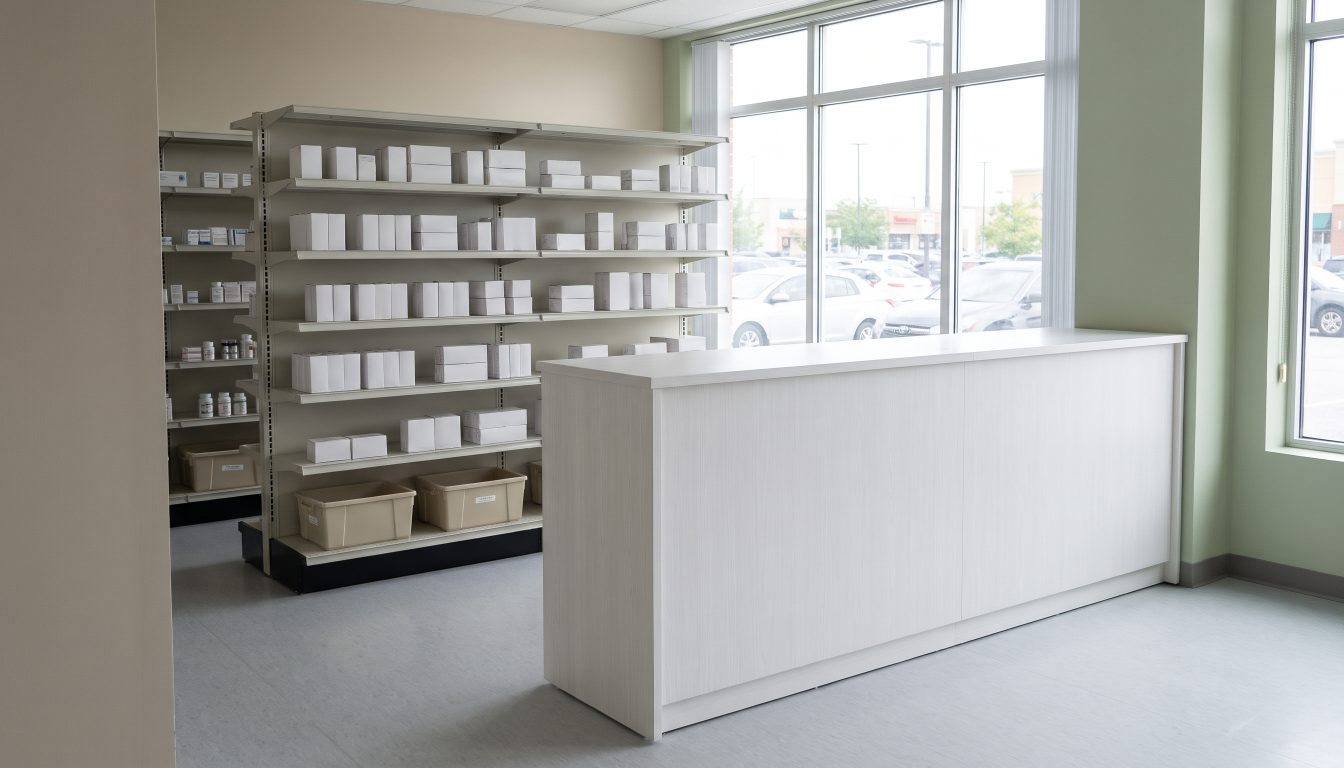
No official multiple exists for Ontario pharmacies. Buyers price goodwill as a negotiated multiple of normalized EBITDA, then add inventory and operating assets, and value any building separately. Public 2026 deals ranged from about $3 million average per store to $8.1 million for one Ontario pharmacy, but a formal valuation is the only reliable number.
This guide is for Ontario pharmacy owners who want a realistic sense of what their pharmacy could sell for in 2027, and for pharmacists weighing a purchase. You will get the method buyers actually use, the 2026 deal figures that are public, and the drug-plan changes that move value up or down.
How much is a pharmacy worth in Ontario?
There is no official price list or published multiple for Ontario pharmacies. None of the College, Ministry or government sources I checked publish what pharmacies sell for. What exists is a common method: buyers put a price on goodwill as a multiple of the pharmacy’s normalized earnings, then add inventory and other operating assets. The multiple itself is negotiated deal by deal.
A few real numbers are public. Public companies often announce their deals, and in 2026 one listed pharmacy buyer disclosed prices for Canadian pharmacies ranging from about $3 million on average to about $8 million for a single Ontario store. Those are larger, established pharmacies, and the releases did not say what profit each one earned. So treat them as proof that strong pharmacies attract serious money, not as a price for yours.
A word on my role. I am a commercial broker. I help owners sell the business and the real estate, and I work with your accountant, lawyer and lender. I am not an appraiser. For a sale price you can rely on, you need a formal valuation from a qualified business valuator.
How do buyers calculate the price of a pharmacy?
MNP, the Canadian accounting firm, describes the usual approach in its pharmacy ownership series: start with EBITDA (earnings before interest, taxes, depreciation and amortization) from the financial statements, normalize it, price goodwill as a multiple of that normalized figure, then add inventory and other day-to-day operating assets. MNP stresses that each deal is unique and each buyer weighs risk differently, which is why the multiple moves.
| Part of the price | What it is | What buyers check |
|---|---|---|
| Goodwill | Normalized EBITDA times a negotiated multiple | Script trends, payer mix, prescriber base, lease, staff |
| Inventory | Drugs and front-store stock, counted near closing | Expired, slow or damaged stock is usually excluded or discounted |
| Other operating assets | Fixtures, equipment, software, working capital items | Age, condition and what the lease lets you remove |
| Real estate (if owned) | The building or condo unit, valued separately | Market rent, cap rate, zoning |
Source: MNP, The path to pharmacy ownership, part two (January 2022), republished by the University of Waterloo School of Pharmacy. Structure of the table is my summary.
What is normalized EBITDA, and why does it matter so much?
Normalizing means adjusting the reported profit so it shows what a new owner would actually earn. Buyers remove personal costs that run through the business, one-time costs, and pay that is above or below market for the work done. A rent that will change on renewal is also adjusted.
Here is a simple example with made-up figures, only to show the arithmetic. Say your statements show EBITDA of $400,000. You pay yourself $90,000 to run the dispensary, but a buyer would have to hire a manager at, say, $140,000, so subtract $50,000. Add back a $12,000 personal car lease and an $8,000 one-time legal bill. Normalized EBITDA is now $370,000. Every point of the multiple is then applied to $370,000, not $400,000. That is why the normalization line by line is often where seller and buyer disagree most.
What did real pharmacy sales in Canada show in 2026?
PharmaCorp Rx, a Canadian pharmacy acquisition company listed on the TSX Venture Exchange, published these deals in 2026:
- On 6 July 2026 it reported buying the shares of eight PharmaChoice-bannered pharmacies in Eastern Canada for an aggregate price of about $24.2 million. Simple division gives an average of about $3.0 million per pharmacy, though the stores were not identical.
- On 31 July 2026 it reported closing the purchase of a PharmaChoice-bannered pharmacy in Ontario for about $8.1 million.
- The same updates mentioned a deal to buy only the prescription files and patient records of a nearby pharmacy, which shows that file purchases are a separate, smaller kind of sale.
None of these releases gave the EBITDA, script counts or rent of the stores, so you cannot work out a multiple from them. They do show that buyers with capital are active in 2026, including in Ontario.
Want a private range for the space your pharmacy occupies, or a building you own, before you talk to buyers? Try the estimator below.
Which numbers move a pharmacy’s value the most?
Start by comparing your pharmacy with the provincial average. Neighbourhood Pharmacies’ July 2026 benchmarks, built on IQVIA data, put the average Ontario pharmacy at about 58,100 prescriptions a year, roughly 1,100 a week, with an average drug cost of $54.69 per prescription. Ontario prescriptions grew 3.2% from 2024 to 2025, while the number of pharmacies grew 2.2%.
Beyond volume, buyers and their lenders focus on:
- Payer mix. The split between ODB, private plans and cash, and how exposed you are to any one plan.
- Prescriber concentration. A store that depends on one clinic is worth less if that clinic’s lease is short.
- Contracts. Long-term care or retirement home contracts add volume but can end, so their terms matter.
- Front store. Margin and trend, not just sales.
- The lease. Years left, renewal options and whether the landlord must consent to an assignment.
- People. Whether a designated manager and staff pharmacists will stay after you leave.
The fastest way to lose value is a short lease. A buyer’s bank will not lend comfortably against goodwill that depends on a location you may have to leave in two years. If you are within three years of selling, secure your renewal or extension first, then talk price.
How do ODB fees and generic drug prices affect value in 2027?
Ontario’s dispensing fee is set in regulation. Under O. Reg. 201/96, the ODB program pays most pharmacies a dispensing fee of $8.83 per listed prescription, with higher fees of $9.93 to $13.25 for some rural pharmacies based on distance to the next pharmacy. The amendment history shown for that fee table ends in 2015, so rising wage and rent costs have had to come out of the same fee.
Generic prices matter too. In June 2026 the pan-Canadian Pharmaceutical Alliance and the Canadian Generic Pharmaceutical Association extended their generic pricing agreement for two years from 1 October 2026. Benefits and Pensions Monitor reported that the arrangement keeps the rule from 2023 under which a new single-source generic is listed at 75% of the brand price and drops to 55% after about three months. Lower drug prices are good for patients and plans, but they can reduce revenue per prescription, so buyers look at trends per script, not just total sales.
Will national pharmacare change what my pharmacy is worth?
Not yet in Ontario. The federal Pharmacare Act passed in 2024, and Ottawa signed bilateral deals with British Columbia, Manitoba, Prince Edward Island and Yukon to cover diabetes medications and contraception. Ontario has not signed one. In May 2026, an analysis of the federal Spring Economic Update by the Canadian Centre for Policy Alternatives concluded there would be no new federal money for more pharmacare deals. Benefits and Pensions Monitor reported that the November 2026 federal budget was silent on national pharmacare.
My view, and it is only a view: pharmacare is unlikely to change Ontario pharmacy values in 2027. If a program does arrive later, it would mostly change who pays for certain drugs, and buyers would price in whatever fee rules come with it. Watch for news, but do not delay a sale because of it.
Be wary of rule-of-thumb prices such as a dollar figure per prescription or a share of sales. Two pharmacies with the same volume can have very different profits once rent, staffing, payer mix and front-store margin are counted. If someone quotes you a number without asking for your financial statements, it is not a valuation.
Does owning the building change the value of a pharmacy?
Yes, but it is valued separately. The business is priced on its earnings, and the real estate is priced on market rent and the return an investor wants, often expressed as a cap rate. My guide to how commercial property is valued explains that in plain terms.
Before you sell, make sure the pharmacy pays itself a market rent on paper. If it pays you below-market rent, the business looks more profitable than it will be for a buyer who pays real rent, and a careful buyer will adjust for that. You can sell the building with the pharmacy, keep it and lease it to the buyer, or sell it to an investor. My guide to selling and renting back shows how the leaseback choice works, and the office space value estimator gives a first range for a unit.
What to do next
- Pull three years of financial statements and prescription reports, and list every personal or one-time cost that a buyer will add back.
- Compare your annual prescription count with the Ontario average of about 58,100, and look at your payer mix and top prescribers.
- Check your lease term and renewal options, and fix the lease before you talk price.
- Commission a formal valuation from a qualified business valuator, and ask your accountant whether a share sale could qualify for the capital gains exemption.
- Book a call with me to review the real estate side, whether you rent or own your location.
Need help with this? Talk to me.
I’m Jatin Dua, Broker of Record at RE/MAX Quantum Realty, and I’m the best agent to do this kind of work for you in Toronto and across the GTA. Over $100 million in GTA sales and 100+ families helped sell. Feel free to contact me any time: call or text 833-330-1925 or email [email protected].
Frequently asked questions
How much is my pharmacy worth in Ontario?
It depends mainly on its normalized profit. In 2027, buyers of Ontario pharmacies usually price goodwill as a negotiated multiple of normalized EBITDA, then add inventory and other operating assets, and value any real estate separately. No official multiple is published. Public 2026 deals show strong pharmacies selling for millions, but only a formal valuation built on your own statements gives a number you can rely on.
What multiple of EBITDA do pharmacies sell for in Canada?
There is no published standard multiple. MNP, the accounting firm, says retail pharmacy deals usually price goodwill as a multiple of normalized EBITDA, but the multiple varies with each deal and each buyer’s view of risk. Public 2026 deal announcements in Canada gave total prices without the earnings behind them, so a multiple cannot be worked out from them. Treat any quoted multiple as one adviser’s view.
Is a pharmacy valued on revenue or profit?
Mostly on profit. Buyers and lenders in Ontario in 2027 focus on normalized EBITDA, meaning earnings adjusted for personal costs, one-time items and market-rate pay and rent. Revenue matters only through the profit it produces. Two pharmacies with the same sales can be worth very different amounts once rent, staffing, payer mix and front-store margins are counted, which is why price-per-sales rules of thumb mislead.
How many prescriptions does an average Ontario pharmacy fill?
About 58,100 a year. Neighbourhood Pharmacies’ July 2026 benchmarks, based on IQVIA data, put the average Ontario pharmacy at roughly 58,100 prescriptions annually, or about 1,100 a week, with an average drug cost of $54.69 per prescription. Ontario prescription volume grew 3.2% from 2024 to 2025. Comparing your own count with this average is a useful first check on value.
What is the ODB dispensing fee in Ontario in 2027?
$8.83 for most pharmacies. Ontario Regulation 201/96 under the Ontario Drug Benefit Act sets the ODB dispensing fee at $8.83 per listed prescription for most pharmacies, and $9.93 to $13.25 for some rural pharmacies, depending on distance to the nearest other pharmacy. The fee table’s amendment history ends in 2015. Check the current regulation before relying on these figures.
Does national pharmacare affect what my pharmacy is worth?
Not much yet in Ontario. The Pharmacare Act passed in 2024, but only British Columbia, Manitoba, Prince Edward Island and Yukon signed deals, and Ontario has not. A May 2026 analysis found no new federal money planned for more deals, and the November 2026 federal budget was silent on it. Any future program would mainly change who pays for some drugs.
How much is a pharmacy prescription file worth?
There is no published price. Some Canadian buyers purchase only a pharmacy’s prescription files and patient records and move them to their own nearby store, as one listed buyer described in a July 2026 update. The price is negotiated and usually reflects how many patients are likely to keep filling at the new location. A file sale normally means the selling pharmacy closes.
How do generic drug prices affect pharmacy value?
They can lower revenue per prescription. Canada’s public plans and generic makers extended their pricing agreement for two years from 1 October 2026, keeping the rule that a new single-source generic is listed at 75% of the brand price and drops to 55% after about three months. Buyers of Ontario pharmacies in 2027 look at revenue and margin per script, not just volume.
Should I get a formal valuation before selling my pharmacy?
Yes. A formal valuation by a qualified business valuator, built on your normalized financial statements and prescription data, is the only reliable basis for a price on an Ontario pharmacy in 2027. It also lets you judge an unsolicited offer quickly instead of guessing. Ask the valuator to show the normalization adjustments line by line, because that is where buyers will push back.
Sources
- MNP: The path to pharmacy ownership, part two, start-ups and acquisitions (University of Waterloo School of Pharmacy, January 2022)
- PharmaCorp Rx news release: Closes eight-store acquisition (6 July 2026, BNN Bloomberg)
- PharmaCorp Rx news release: Closes Ontario pharmacy acquisition (31 July 2026)
- Neighbourhood Pharmacy Association of Canada: Pharmacy Performance Benchmarks (July 2026)
- O. Reg. 201/96, General, under the Ontario Drug Benefit Act (Ontario e-Laws)
- Benefits and Pensions Monitor: Canadian pharma companies extend generic drug pricing agreement to 2028 (June 2026)
- HRD Canada: Is Ottawa stepping back from national pharmacare? (May 2026)
- Benefits and Pensions Monitor: Federal budget falls short on pharmacare and savings (November 2026)
Related reading
- Where Can You Open a Dental Clinic in the GTA? Zoning by City (2027)
- Buying a Commercial Condo Unit for a Dental Clinic in the GTA (2027)
- Selling Your Dental Practice, Your Building, or Both: Options for Ontario Dentists in 2027
- The Canadian Dental Care Plan in 2027: What It Means for Buying, Selling or Opening a GTA Dental Practice
About the author — Jatin Dua, Toronto and GTA real estate broker
I am Jatin Dua, Broker of Record and co-founder of RE/MAX Quantum Realty Inc., Brokerage, Unit 101, 799 The Queensway, Toronto. I work with buyers and sellers across Toronto and the GTA and have helped more than 100 families sell. Four-plus years of active GTA transactions and over $100 million in sales volume.
Reach me at [email protected] or 833-330-1925, or book a call.
More from the library
- Banquet Hall Premises in Ontario: Zoning, Occupant Load, Fire Code and Parking
- Pawn Shop and Second-Hand Dealer Premises in Ontario: Licences, Records, Security and Lease
- Opening a New Pharmacy in Ontario in 2027: Licence, Costs and Timeline
- TRCA Permits: The Approval That Comes Before Your Building Permit
- How Much Is My Condo Worth in Oakville? August 2026 Prices and What Moves Yours
- Lofts on Frederick, 180 Frederick St: 12 Hard Lofts Off King East
How this estimate is produced
The estimate blends recent selling prices for comparable units in the area with the details you entered: size, bedrooms, floor, exposure, parking, locker and condition. It is a statistical estimate, not an appraisal and not a formal opinion of value.
What it cannot see
- Interior condition and upgrades beyond what you told it
- Unit-specific issues: noise, an obstructed view, a pending special assessment
- Your reserve fund and where the maintenance fee is heading
- What is competing with you in your own building right now
What moves the number most
- Floor and exposure, which can separate otherwise identical units
- Parking and locker, each priced separately by buyers
- Kitchen and bathroom condition
- Maintenance fee per square foot against the rest of the building
Treat it as a range, not a price
A single figure to the dollar would be false precision. Use the estimate to decide whether a move is worth exploring. Before you price anything for the market, the number needs checking against what is actually selling and sitting in your building this month, and that takes a person. I will do that for you at no cost and with no obligation.
Market data is sourced from the Toronto Regional Real Estate Board. Information is deemed reliable but is not guaranteed. This tool does not provide an appraisal or a formal opinion of value, and it is not a substitute for advice on your specific property. Jatin Dua, Broker of Record, RE/MAX Quantum Realty.