
Published 7 September 2026 · Updated 29 September 2026 · By Jatin Dua, Broker of Record, RE/MAX Quantum Realty
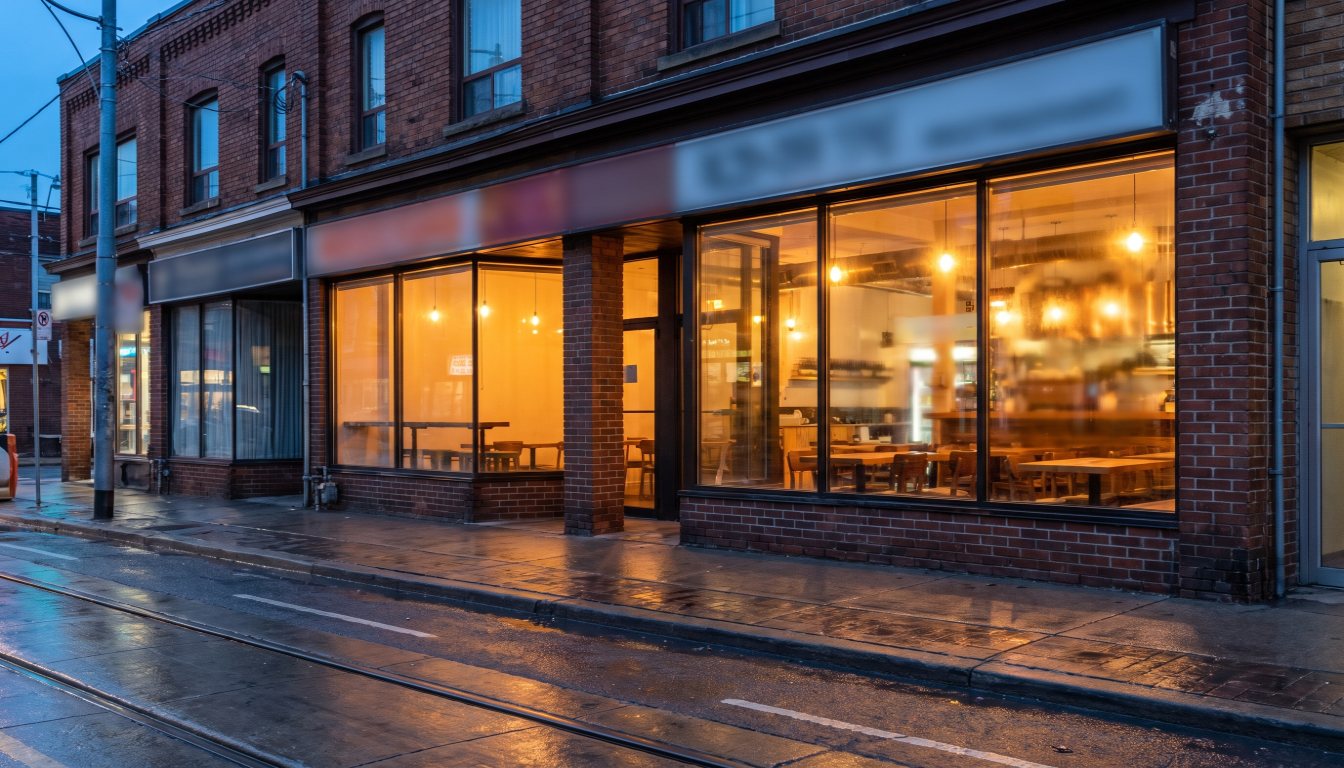
Buyers pay for seven things: provable earnings, a lease that outlives their financing, a kitchen that does not need rebuilding, a business that runs without you, a stable trend, a clean location and a concept that transfers. They do not pay for your revenue figure, your reviews, your renovation cost, your recipes or your potential. Sellers achieved about 85 percent of asking price on the median 2025 restaurant sale ($225,000 sold against $265,000 asked), and the ones who got closer to ask were the ones who priced on the seven things. The free AI restaurant value estimator prices on them too.
The seven things buyers pay for
1. Provable seller’s discretionary earnings
The price of a restaurant is a multiple of the cash the owner takes out, and the operative word is provable. Two years of clean statements, tax filings that match, and point-of-sale reports that match both. If your earnings live in a shoebox or in cash, the buyer discounts them to what they can see, and the bank lends on nothing else.
2. A lease that outlives the buyer’s loan
The lease is the business. A buyer financing over five years needs at least five years of term, options included, at a rent that leaves margin — ideally under ten percent of sales. A landlord who will not consent to assignment, or who uses the assignment to renegotiate, can kill the sale in a week. Before you list, read your assignment clause and talk to the landlord.
3. A kitchen they will not have to rebuild
Hoods, fire suppression, walk-ins, ovens and the line are capital, and a buyer subtracts what they will have to spend in year one almost dollar for dollar. In the estimator a kitchen that needs replacing takes about 0.4 off the multiple, which on $150,000 of SDE is $60,000 off the price. A kitchen renovated in the last three years adds about 0.18.
4. A business that runs without you
This is the biggest single lever. If a manager runs the place and you show up twice a week, the buyer is buying a system, and the multiple moves up by roughly 0.6 in the model. If you are the chef, the host and the bookkeeper, the buyer is buying a job and pricing it as one. Build the team before you list, even if it costs margin for a year.
5. A stable or rising trend
Buyers pay for the next three years. Sales trending up adds about 0.32 to the multiple; sales trending down takes about 0.42 off, and the worst version is a decline you cannot explain. If the last year was soft, be ready with the reason and the fix.
6. A clean, visible location
Parking, signage, foot traffic, and no construction hoarding out front for the next eighteen months. Location is priced into the earnings already, but a buyer will look for reasons the earnings might not persist, and the street is the first place they look.
7. A concept that transfers
Quick-service and cafés transfer most easily and carry a small premium; full-service is neutral; bars, banquet halls and delivery-only kitchens carry discounts because their earnings are more fragile or more owner-dependent. A franchise transfers with the franchisor’s approval and fee, which the buyer prices in.
The five things buyers do not pay for
- Revenue. Nobody buys a top line. A $1.5 million restaurant with $40,000 of SDE is worth less than a $700,000 one with $150,000.
- What you spent on the build-out. The $400,000 renovation is worth what it produces in earnings today, not what it cost. This is the hardest one for owners to hear.
- Reviews, followers and awards. They get buyers in the door. They do not move the multiple, because the buyer knows they belong to you and your chef, not to the premises.
- Recipes and “secret sauce.” Unless earnings prove they matter, they are worth nothing on paper.
- Potential. “A new owner could do brunch” is the buyer’s upside, not yours. If it were easy money you would have done it.
| Item | Where it shows up in the price | What to do before listing |
|---|---|---|
| Clean statements | Sets the SDE the multiple is applied to | Run the business to show earnings for two years; reconcile POS, statements and tax |
| Lease term and rent | Supports or drags the multiple; can kill financing | Confirm assignment terms with the landlord; extend if under five years |
| Kitchen condition | −0.40 to +0.18 on the multiple | Replace what is failing; do not renovate what merely looks dated |
| Owner dependence | Up to +0.60 on the multiple | Install a manager and step back for at least six months before listing |
| Sales trend | −0.42 to +0.32 | Fix the decline or be ready to explain it with numbers |
| Inventory | Added at cost on closing | Count it; do not overstock before the sale |
Pricing and the 85 percent rule
On the median 2025 restaurant sale, the seller asked $265,000 and got $225,000 — about 85 percent. Ask too high and you get no offers and a stale listing; ask at the number and you leave nothing for the negotiation buyers expect. The estimator returns a likely sale range and then a suggested asking price above it, calibrated to that sold-to-ask ratio, which is a sensible place to start.
The six-month plan
If you want to sell in 2027, the work starts now: two clean years of statements, a manager in place, a lease conversation with the landlord, the failing equipment replaced, and an honest number from the estimator so you know what you are working toward. Sellers who do that get closer to ask and close faster. Sellers who list on a feeling in a slow month sell for less, or do not sell.
Free tool — AI restaurant value estimator
Restaurant valuation
What is your restaurant
actually worth?
Restaurants don’t sell on revenue — they sell on what the owner takes home, multiplied by how easy the business is to hand over. Your lease and your rent do more damage or more good than anything on the menu. This weighs all of it in about two minutes.
Reading comparable restaurant sales…
Indicative business value
—
$0$0
Most likely sale price $0 · Implied multiple 0×
Where I’d list it
$0
Comparable restaurants sell for about 85% of asking. Price to that, not to hope.
How the number is built
Your owner earnings, multiplied by what buyers pay for a business like yours — then adjusted line by line.
What the market pays
Benchmarks from completed restaurant sales.
What a buyer will ask for
- Three years of financials — statements and tax returns, not just POS reports.
- The lease, with the assignment clause and every option in writing.
- Proof of your add-backs. Lenders reject the ones you cannot document, and that is the single biggest reason deals reprice.
- Equipment list showing what is owned outright and what is leased or financed.
- Licences — AGCO, food premises, patio, and whether each one transfers.
- WSIB, HST and payroll accounts in good standing.
Want the number a buyer
would actually sign?
Send me three years of financials and your lease and I will price it properly — normalised earnings, real comparables, a defensible asking price and a confidential marketing plan that never tips off your staff or your landlord.
Frequently asked questions
How long does it take to sell a restaurant in Toronto?
Typically several months from listing to closing once the business is priced correctly and the paperwork is clean. Landlord consent to the lease assignment and buyer financing are the usual causes of delay, which is why both should be addressed before listing.
Do I need to tell my staff I am selling the restaurant?
Not until the deal is firm. Restaurant sales are done confidentially — no address in the listing, a non-disclosure agreement before financials are shared, and showings outside service hours — because losing staff or regulars reduces the earnings you are selling.
Can I sell a restaurant if my lease has two years left?
It is much harder. A buyer financing over five years needs at least that much term including options, and their bank will insist. Talk to your landlord about an extension or a new lease before you list.
Is inventory included in a restaurant sale price?
Normally no. Food and beverage inventory is counted at closing and added to the price at cost. Equipment is included unless it is leased, in which case the lease transfers or is paid out.
What is a fair asking price for a restaurant?
Start from the likely sale value — a multiple of seller’s discretionary earnings — and set the ask modestly above it. Sellers achieved about 85 percent of asking on the median 2025 sale, so an ask roughly 15 percent above the expected sale price is the usual starting point.
Thinking about selling in the next year?
Run the estimator, then send me the statements and the lease. I will tell you what a buyer will pay today, what they would pay after six months of preparation, and whether the difference is worth the wait. Confidential, always.
[email protected] · 833-330-1925 · Book a free consultation
Confidential. Read personally and answered within 24 hours. I never share, sell or distribute your information.
Related reading
- Free AI Restaurant Value Estimator
- How much is my restaurant worth? The SDE multiple explained
- Free AI Land Value Estimator
- All free calculators and tools
Sources
Every figure on this page traces to one of these, and each was read on 7 September 2026. Where a number is a model calibration rather than a published statistic, the page says so.
- 2025 business-for-sale marketplace data behind the jatindua.com Restaurant Value Estimator — 8,692 completed restaurant sales; median sale $225,000; median asking $265,000; median sold-to-ask 0.849.
- Calibration tables of the jatindua.com Restaurant Value Estimator (owner-role, trend, kitchen, concept and years-open adjustments as listed above). These are model rules of thumb, not published statistics.
About the author — Jatin Dua, Broker of Record
I’m the Broker of Record at RE/MAX Quantum Realty, 799 The Queensway in Etobicoke, and I work with buyers, sellers, investors and business owners across the west GTA. I list restaurants and food businesses confidentially across the west GTA, and the sellers who do best are the ones who start the preparation a year before they start the listing.
The free estimators on this site are mine. I built them because the first question every owner asks is “what is it worth?” and the honest answer starts with a number you can check yourself. [email protected] or 833-330-1925.