
Published 7 September 2026 · Updated 29 September 2026 · By Jatin Dua, Broker of Record, RE/MAX Quantum Realty
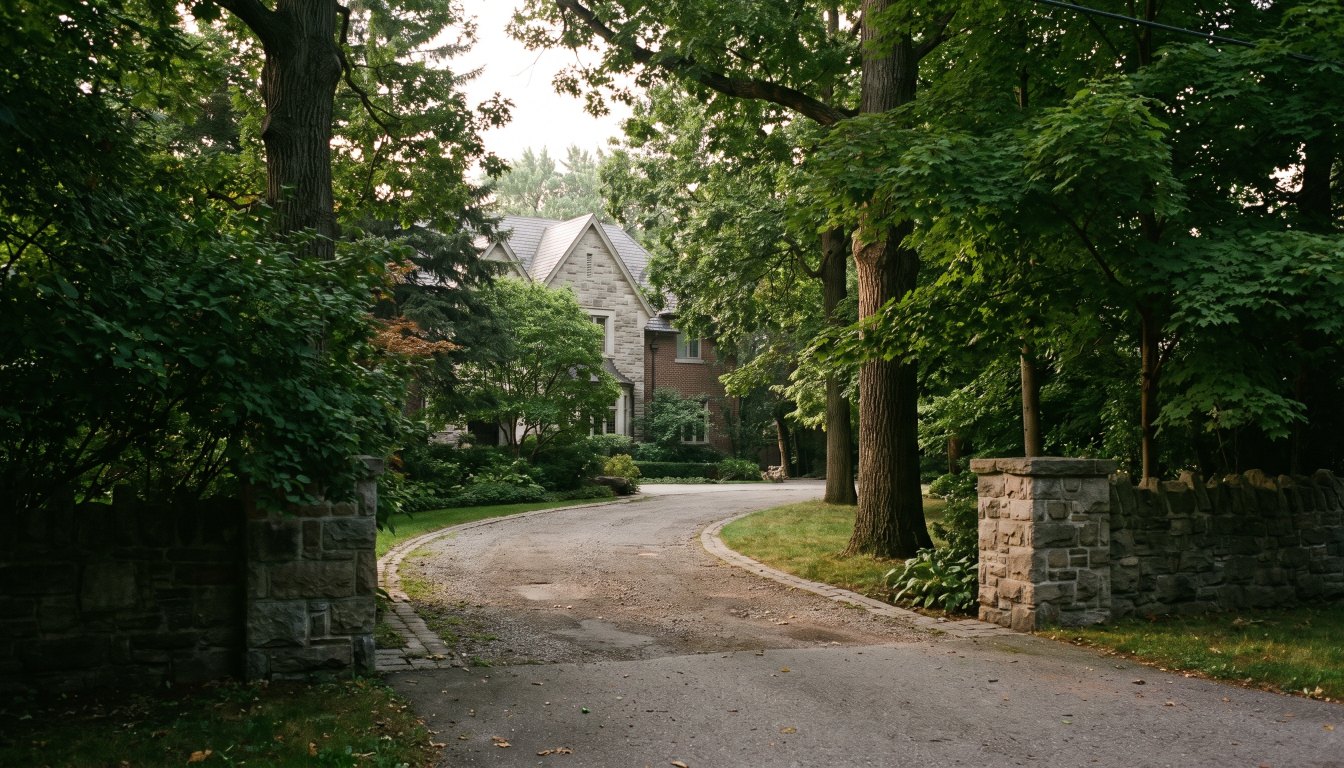
Privacy and exposure are more separable than most sellers assume. What produces competition is that the right buyers know the property is available. What creates exposure risk is what is published about the interior, the contents and the household. You can have the first without much of the second.
The practical controls are: edit the photography so it sells the house and not your life, control the showing protocol with appointment-only access and qualification requirements, remove identifying detail from the property before any photography, and manage the sequence so that only genuinely qualified buyers ever come through the door.
Separate the two decisions
| Decision | Effect on price | Effect on privacy |
|---|---|---|
| Who knows the property is for sale | Large — this is where competition comes from | Moderate |
| What is published about the interior and contents | Small, if handled well | Large |
| Who is permitted to view, and how | Small | Large |
| What information is shared, and when | Small | Moderate |
Most sellers who want privacy reach straight for the first row and restrict distribution, which is the one that costs money. The other three deliver most of the privacy at almost no cost to the result.
Photography: sell the house, not the household
Before the photographer arrives, remove:
- Personal photographs, correspondence, awards and certificates
- Collections of any kind
- Medication and anything medical
- Security equipment, panels and anything showing coverage
- Anything identifying children — school items, names, sports equipment
- Calendars, schedules and anything revealing routine
Photograph the principal spaces properly and omit the rooms that add nothing to the sale. A listing does not need every bedroom.
Showing protocol
- Appointment only, with reasonable notice
- Evidence of financial capacity required before an appointment is confirmed — standard at this level, and applied consistently to everyone
- Accompanied showings, always
- No open houses. At $3 million and above they generate traffic, not buyers.
- Valuables and personal papers secured before every appointment
Information sequencing
Not everything needs to be published at once. A reasonable sequence:
- Public listing: exterior, principal interiors, floor plan, lot dimensions, the facts.
- On appointment: the documented property package — survey, permits, mechanical ages, renovation history.
- On serious interest: anything more detailed, where appropriate under a confidentiality agreement your lawyer has approved.
What you cannot control, and should plan for
If the property is publicly listed, the address is public and the sale price will eventually be known within the industry. If that is genuinely unacceptable, an exclusive listing is one of the few situations where restricting distribution is the right answer — and you should go into it knowing that it costs competition in a market with roughly 300 sales above $3 million across four months.
During negotiation
Under TRESA you may direct disclosure of the substance of competing offers — the number of them, whether the listing brokerage represents any competing buyer, and commission arrangements that could affect acceptance. Personal information about competing buyers is not disclosed either way. Your own reasons for selling are not something anyone is entitled to, and they should not be volunteered.
The practical takeaway
Control the photography, the protocol and the sequence, and you keep almost all of your privacy while keeping full market exposure. Restrict distribution only where the privacy issue is the address itself — and price that decision honestly.
Frequently asked questions
Can I sell without publishing photographs of the interior?
You can limit them, and there is a trade-off. Buyers shortlist from photography and floor plans, so a listing with very few interior images will get fewer showings. A middle path — architectural photography of the principal spaces, no personal contents, no children’s rooms, no security detail — usually preserves most of the benefit.
How do I keep my address off the internet?
You largely cannot, if the property is publicly listed, and that is a real consideration for some sellers. What you can control is what is shown about the interior, the contents and the household. If address privacy is genuinely essential, that is one of the few sound reasons to consider an exclusive listing, accepting the exposure cost.
Can I require buyers to be qualified before viewing?
Requiring evidence of financial capacity before an appointment is common at the top of the market and entirely reasonable. It reduces casual traffic and protects the property, and it should be set out clearly so that every buyer is treated consistently.
Should I use a confidentiality agreement?
Some sellers do, particularly where detailed information or plans are shared. Whether one is appropriate and enforceable in your situation is a question for your lawyer, and it should not become a barrier that discourages genuine buyers.
What should be removed before photography?
Personal photographs, correspondence, awards, collections, medication, security equipment, anything identifying children, and anything that reveals routine or occupancy patterns. Do this before the photographer arrives rather than editing afterwards.
Does privacy cost me money?
Restricting who knows the property is available costs competition. Restricting what is published about your household generally does not. Separate the two decisions and you keep most of the market exposure while giving up very little.
Thinking about buying or selling at the top end?
Send me the address, or the shortlist you are considering. I will tell you what the property is actually worth today, what the land is worth without the house, what the transfer tax and carrying costs will be, and whether the deal makes sense. Confidential, always.
[email protected] · 833-330-1925 · Book a free consultation
Confidential. Read personally and answered within 24 hours. I never share, sell or distribute your information.
Related reading
- Off-market and exclusive listings: when privacy actually costs you money
- Staging a $4 million home: what actually changes the price
- Marketing a luxury listing in Toronto: what real exposure looks like
- Selling a luxury home in Toronto: the complete 2026 playbook
Sources
Everything above that is a rule, a rate or a published number comes from these. Verify anything that matters to your own deal.
- RECO — Information Guide
- RECO — About open offers
- RE/MAX Canada — 2026 Spotlight on Luxury Real Estate, Greater Toronto
About the author — Jatin Dua, Broker of Record
I’m the Broker of Record at RE/MAX Quantum Realty, 799 The Queensway in Etobicoke, and I work with buyers, sellers and investors across Toronto and the west GTA. A large part of my work sits in the upper end of the market, where the comparables are thin, the rules are heavier and the cost of a wrong number is measured in hundreds of thousands of dollars.
The free estimators on this site are mine. I built them because the first question every owner asks is “what is it worth?” and the honest answer starts with a number you can check yourself. [email protected] or 833-330-1925.