

Published 29 September 2026 · By Jatin Dua, Broker of Record, RE/MAX Quantum Realty
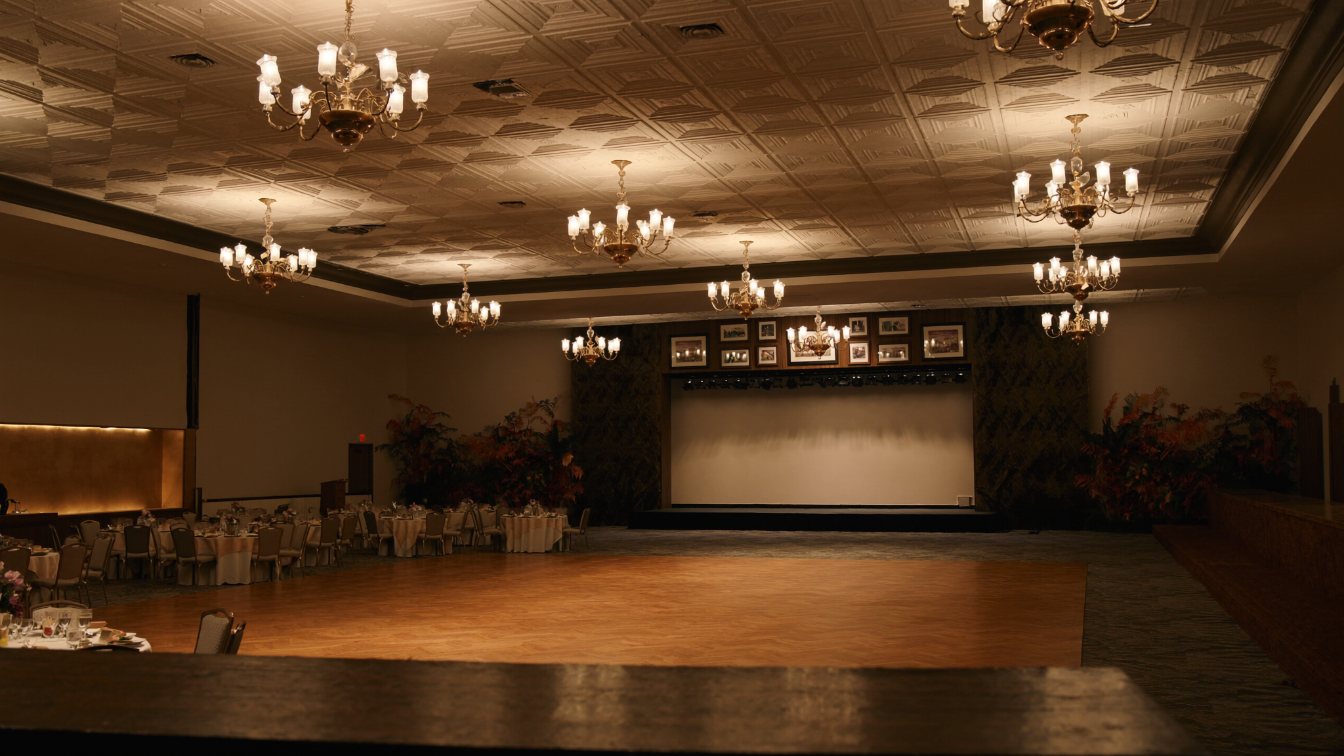
A banquet hall’s licences do not simply come with the keys. If the hall holds an AGCO liquor sales licence, a new owner, or anyone acquiring 10 percent or more of the licensee’s shares, needs an AGCO transfer ($1,000), and may not operate until the Registrar issues an Authorization to Contract Out. Many halls instead rely on clients’ special occasion permits, which cost $150 a day for a sale permit. City licences are issued to a person and do not transfer: in Toronto a banquet hall or event venue needs an Entertainment Place of Assembly licence ($453.44 to start); in Brampton, a Place of Public Assembly licence ($280 a year, $2,000,000 insurance). You also inherit the booking book, with deposits for future weddings. No Canadian primary source publishes sale multiples for banquet halls.
What you are really buying
| Piece | How it moves | What to check |
|---|---|---|
| AGCO liquor sales licence | Transfer application, or share-transfer approval | Licensed areas and capacity on the licence, compliance history |
| City licence (Toronto, Brampton and others) | New licence in the buyer’s name | Zoning, fire and insurance conditions |
| Food premise | New notice to the medical officer of health | Inspection results, kitchen equipment |
| Future bookings and deposits | By the purchase agreement | Every contract, every deposit held |
| Staff | Those you keep bring their service | Hire dates, pay, tips policy |
| Lease or building | Assignment with consent, or a real property purchase | Term, use clause, parking |
The space itself, zoning, occupancy and fire, is covered in banquet hall premises in Ontario. This post is about the business.
The liquor licence: transfer, not inheritance
The AGCO requires a transfer when there is a prescribed change of ownership: a new officer or director of a corporate licensee, a change of partner, anyone acquiring a beneficial interest that gives them 10 percent or more of the outstanding shares or of a class of shares, or a non-licensee becoming entitled to the profits. So a share purchase does not avoid the AGCO; it changes the application.
- Fees: a licence transfer is $1,000 and a share transfer is $1,000. Fees are paid through iAGCO and are not refunded if the application is withdrawn or refused.
- Operating during the transfer: the applicant may not operate until it receives an Authorization to Contract Out from the Registrar. It ends when the licence is transferred, expires, or a notice of proposal to refuse the transfer is issued. Both the old licensee and the applicant are responsible for compliance in the meantime.
- Documents: entity and personal disclosures, proof of possession of the premises, and the seller’s signed consent to transfer.
- Keep it alive: an expired licence cannot be renewed. Check the expiry date before you close.
- Growth: increasing capacity or adding a licensed area needs its own application ($815 with public notice, $685 without).
If the seller has let the licence lapse, you are applying new: $1,055 for two years or $1,355 for four with public notice, plus compliance letters from the building department, fire and public health. My liquor licence transfer guide walks through the same AGCO process for restaurants.
Licensed hall or special occasion permits?
Some halls hold a liquor sales licence and sell drinks themselves. Others rent the room and have each client obtain a special occasion permit for a private event: invited guests only, a permit area that can be told apart from the rest of the building, an applicant 19 or older, and not in a dry area if liquor is sold. The AGCO charges $150 a day for a sale permit and $50 a day for a non-sale permit.
This changes what you are buying. A licensed hall earns bar revenue and carries the licence risk. A permit-based hall depends on clients handling the paperwork, and its revenue is mostly room rental and catering. Ask the seller for bar sales by event, not just a total.
The city licence
Toronto folded banquet halls into its Entertainment Place of Assembly licence, which covers a space offered to others to host entertainment or performances, including banquet halls or event venues. The application fee is $226.72 and the licence fee $226.72, $453.44 in total, with renewal at $261.04. Applicants file an occupancy declaration signed by the property owner, an insurance declaration and a criminal record and judicial matters check. A Zoning Review for Business Licence is required first, unless you are taking over a business with a valid licence, or one expired less than three years ago, in the same category.
Chapter 545 adds more: if you run past midnight on most days in any seven-day period, hold a liquor licence and have an occupant load over 150, you need the expanded activity version. Liquor licence changes must be reported to the City within 14 days, and liability insurance of at least $1,000,000 is required. Toronto licences belong to the City and are not transferred except as the chapter allows.
Brampton licenses banquet halls as a Class A Place of Public Assembly: zoning approval, fire department approval, a $2,000,000 general liability certificate, and an annual fee of $280 expiring 31 January. Mississauga, Vaughan and other cities have their own by-laws; check before you budget.
Food, kitchen and staff
Anyone intending to start operating a food premise must notify the medical officer of health (Health Protection and Promotion Act, s. 16(2)), and the Food Premises regulation requires at least one trained food handler or supervisor on site every hour the kitchen operates (O. Reg. 493/17, s. 32). If catering is contracted out, ask for the catering agreement and whether it survives a sale.
Under section 9 of the Employment Standards Act, 2000, employees you keep bring their years with the seller: for notice, severance and vacation it is one continuous employment. Hire them more than 13 weeks after the earlier of their last day and the sale date and the rule does not apply. Banquet staffing is often part-time and on-call; get the full list with hire dates, not just the managers.
The booking book: deposits you inherit
The most valuable and most dangerous document in a hall sale is the calendar. Weddings are booked a year or more ahead, with deposits already paid to the seller. Before you sign, get:
- Every signed event contract for the next 24 months, with the price, deposit paid and balance due.
- The cancellation and refund terms in those contracts.
- A reconciliation of deposits held against the bank account.
In an asset purchase, the agreement should either transfer the deposits to you or reduce the price by the amount of service you will deliver without being paid for it. In a share purchase, those obligations stay with the company you are buying. If the calendar relies on the seller’s personal relationships with planners and families, ask for a transition period.
HST and the building
If you buy all or substantially all of the property needed to run the hall, you and the seller can jointly elect under section 167 of the Excise Tax Act so no HST is charged on the business assets. The buyer files form GST44. It is not available where the seller is registered and the buyer is not.
If the building is part of the deal, it is a taxable sale of commercial real property. Where the buyer is an HST registrant, the seller does not collect (s. 221(2)) and the buyer self-assesses (s. 228(4)). Ontario land transfer tax applies too; above $400,000 it is 2 percent less $3,525, so $56,475 on a $3,000,000 building by my arithmetic, doubled inside Toronto by the municipal tax.
Documents to demand, and no multiple
No Canadian primary source publishes sale prices or multiples for banquet halls. Build the price from what can be proved:
- Three years of statements, with revenue split into room rental, food, bar and extras.
- Event counts by month and by day of week, with average guest numbers.
- The liquor licence, its licensed areas and capacity, and any AGCO compliance history.
- The city licence, insurance and the last fire and health inspections.
- The booking book and deposit reconciliation.
- The lease, or title, survey and property tax bills if the building is included.
If you are also comparing other venue businesses, see buying a gym in Ontario, and for AGCO transfers in another regulated trade, buying a cannabis store in Ontario. When you have a hall in view, book a call or phone 833-330-1925.
Frequently asked questions
Does a liquor licence transfer when you buy a banquet hall in Ontario?
Not automatically. A new owner needs an AGCO transfer, and a share purchase that gives someone 10 percent or more of the licensee’s shares is also a prescribed change. The transfer fee is $1,000. The buyer may not operate until the Registrar issues an Authorization to Contract Out.
Do banquet halls need a liquor licence in Ontario?
Not always. Some halls hold an AGCO liquor sales licence. Others rely on clients obtaining a special occasion permit for a private event, which the AGCO says can be held at a banquet hall. A sale permit costs $150 a day.
What licence does a banquet hall need in Toronto?
Toronto licenses banquet halls and event venues as an Entertainment Place of Assembly. The application and licence fees total $453.44, with renewal at $261.04. Halls running past midnight on most days with a liquor licence and an occupant load over 150 need the expanded activity licence.
What happens to wedding deposits when a banquet hall is sold?
In a share sale the contracts and deposits stay with the company, so the new owner must deliver the events. In an asset sale the purchase agreement should move the deposits to the buyer or reduce the price by the value of the events still owed.
Is there HST on buying a banquet hall business?
The business assets can be sold without HST if buyer and seller elect under section 167 of the Excise Tax Act and the buyer is registered. If the building is included, it is a taxable real property sale; a registered buyer self-assesses instead of paying the seller.
How much is a banquet hall worth?
No Canadian primary source publishes sale prices or multiples for banquet halls. Value depends on proven profit, the booking book, the licence status and, often most of all, the lease or the real estate. Ask for revenue split into room rental, food and bar, and event counts by month.
Sources
- AGCO — Guide section 7, transferring a liquor sales licence — prescribed ownership changes, Authorization to Contract Out
- AGCO — Liquor licensing fees — transfer $1,000; SOP $150 per day
- AGCO — Manage your liquor sales licence — capacity and area changes; expired licences cannot be renewed
- AGCO — Municipal approval requirements for a liquor sales licence — building, fire and health letters stating occupant load
- AGCO — Special occasion permit guide — private events, permit areas, applicant 19+
- City of Toronto — Entertainment Place of Assembly licence — includes banquet halls and event venues; $453.44 to start
- City of Toronto Municipal Code, Chapter 545 Licensing — consolidated to 1 January 2025
- City of Brampton — Place of Public Assembly licence prerequisites — Class A banquet hall; $280 a year; $2,000,000 insurance
- Health Protection and Promotion Act — e-Laws — s. 16(2), notice before operating a food premise
- O. Reg. 493/17, Food Premises — e-Laws — s. 32, a trained food handler on site
- Employment Standards Act, 2000 — e-Laws — s. 9, sale of a business and continuity of employment
- Excise Tax Act, section 167 — Justice Laws Website — election on the sale of a business; not available where a registrant sells to a non-registrant
Related reading
- Banquet hall premises in Ontario
- Buying a gym in Ontario
- Liquor licence transfer in Ontario
- Buying a cannabis store in Ontario
- Asset sale vs share sale
- AI restaurant valuation tool
- Land transfer tax calculator
About the author — Jatin Dua, Toronto and GTA real estate broker
I am Jatin Dua, Broker of Record and co-founder of RE/MAX Quantum Realty Inc., Brokerage, Unit 101, 799 The Queensway, Toronto. I work with buyers and sellers across Toronto and the GTA and have helped more than 100 families sell. Four-plus years of active GTA transactions and over $100 million in sales volume. Every figure here comes from a published table, regulator or statute linked in the sources, so you can check all of it without asking me.
Reach me at connect@jatindua.com or 833-330-1925, or book a call.