Published 2 November 2026 · By Jatin Dua, Broker of Record, RE/MAX Quantum Realty
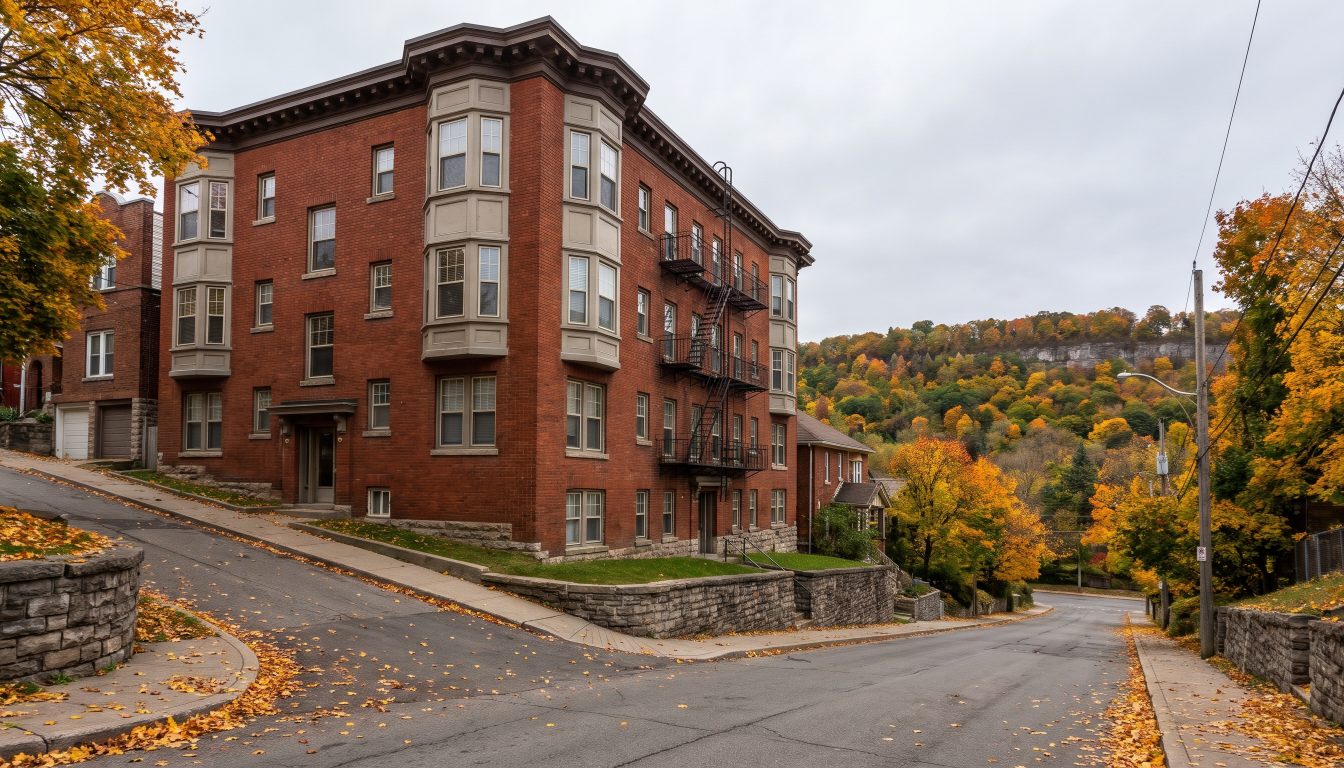
They can, but only at the right price per door. CMHC puts average apartment rent at $1,541 in Hamilton and $1,726 in Kitchener-Waterloo versus $1,912 in Toronto. To match Toronto’s roughly 5.8% gross yield, you would need to pay under about $316,000 a door in Hamilton or $354,000 in Kitchener-Waterloo.
This guide is for investors with $1 million to $10 million who are priced out of Toronto apartment buildings, or unimpressed by their yields, and are looking west to Hamilton and Kitchener-Waterloo. It compares rents and vacancy using CMHC’s latest survey, shows the price per door at which these cities beat Toronto on yield, and covers the local rules that change the math.
Do apartment buildings in Hamilton and Kitchener-Waterloo yield more than Toronto?
They can, but only if you buy at the right price per door. Rents are lower outside Toronto, so a building only yields more if its price is lower by a bigger margin than its rent.
CMHC’s October 2025 Rental Market Survey puts the average rent for a purpose-built apartment at $1,541 a month in the Hamilton metro area and $1,726 in Kitchener-Cambridge-Waterloo, against $1,912 in the City of Toronto. That makes Hamilton about 19% cheaper to rent and Kitchener-Waterloo about 10% cheaper.
Now compare prices. Lee & Associates, using data that includes CoStar, put the average Toronto multifamily sale price at $392,524 per unit in Q3 2026. Using Toronto’s average rent, that is a gross rent yield of about 5.8% before expenses. Here is a rough break-even test. It mixes two data sources and uses averages, so treat it as a screen, not a valuation:
- For a Hamilton building to match that gross yield on Hamilton’s average rent, you would need to pay no more than about $316,000 a door.
- For Kitchener-Waterloo, the matching figure is about $354,000 a door.
Pay less than that and the building out-yields an average Toronto building on rent alone. Pay more and you have taken on a smaller market without a yield reward. My guide to apartment building price per door in the GTA explains how to compare doors fairly.
What do apartments rent for in Hamilton, Kitchener-Waterloo and Toronto?
| Purpose-built rentals, October 2025 | Hamilton CMA | Kitchener-Cambridge-Waterloo CMA | City of Toronto |
|---|---|---|---|
| Vacancy rate, 2025 (2024) | 3.6% (2.4%) | 4.1% (3.6%) | 2.8% (2.3%) |
| Average rent, all units | $1,541 | $1,726 | $1,912 |
| Average rent, 2-bedroom | $1,656 | $1,832 | $2,055 |
| 2-bedroom rent, vacant units | $1,967 | $2,077 | $2,567 |
| 2-bedroom rent, occupied units | $1,647 | $1,822 | $2,044 |
Source: CMHC Rental Market Survey, October 2025 data tables for Hamilton, Kitchener-Cambridge-Waterloo and Toronto (private apartments).
Three things stand out. Vacancy rose in all three markets, and it is higher in Hamilton and Kitchener-Waterloo than in Toronto. Inside the City of Hamilton itself, CMHC measured 4.2% vacancy. And in every market, vacant units are listed well above what sitting tenants pay, which is the rent gap discussed below.
What are cap rates for Hamilton and Kitchener-Waterloo apartment buildings?
A cap rate is a building’s net operating income (NOI), meaning rent minus operating costs before the mortgage, divided by its price. It is the yield you would earn paying all cash.
Here is what I can verify from public sources:
- Toronto multifamily: an average cap rate of 4.21% in Q3 2026, with 3.85% vacancy and $2,222 average asking rent per unit (Lee & Associates).
- Canada, all property types: an average cap rate of 6.56% in Q3 2026, and multifamily was the only class where cap rates rose slightly (CBRE).
I could not find a current public cap-rate survey for Hamilton apartments. CBRE’s quarterly survey covers Waterloo Region, but the figures sit in the full report rather than on its public page. So I will not quote a number. Cap rates also move with interest rates, building age, location and how far in-place rents sit below market, so two buildings in the same city can trade at very different cap rates. When someone tells you “Hamilton trades at X%”, ask for the sales behind it: address, date, price, units and the actual NOI. My post on GTA cap rates for 2027 shows how to check a quoted cap rate.
To test your own numbers by city and building type, use the calculator below. It shows what your own cash buys and how the cash flow compares across building types; it is set to $5 million but you can change every number.
Loading the investment calculator…
How much does a higher cap rate change cash flow and DSCR?
Lenders care about the debt service coverage ratio (DSCR): NOI divided by yearly mortgage payments. Below 1.0, the rent does not cover the mortgage.
Illustrative example. These are assumptions, not Hamilton or Kitchener-Waterloo market rates. A $10,000,000 building, a 65% loan-to-value (LTV) mortgage of $6,500,000 at 5.25% (inside the roughly 4.9% to 5.6% range for conventional multifamily implied by Q3 2026 bond yields and spreads), and a 30-year amortization. Yearly payments are about $427,992.
| Cap rate (assumed) | NOI | DSCR | Cash flow after mortgage |
|---|---|---|---|
| 4.21% (Toronto Q3 2026 average) | $421,000 | 0.98 | about -$7,000 |
| 4.71% | $471,000 | 1.10 | about $43,000 |
| 5.21% | $521,000 | 1.22 | about $93,000 |
Source: Jatin Dua illustrative calculation (semi-annual compounding), November 2026. Toronto cap rate from Lee & Associates Q3 2026; rate range derived from Canadian Mortgage Professional reporting of Avison Young Q3 2026 spreads.
At Toronto’s average cap rate, 65% leverage does not work at today’s rates. A buyer would need more cash down. Each half-point of cap rate on a $10 million building adds $50,000 of NOI, which is why investors look west. The question is whether the extra yield is real or just reflects older buildings, higher vacancy and more capital spending.
What does it cost to buy an apartment building outside Toronto?
Purchase taxes are lower. Hamilton and Kitchener-Waterloo do not charge a municipal land transfer tax, so a $5,000,000 apartment building pays only the Ontario land transfer tax of $96,475. The same building in Toronto pays $192,950, because Toronto’s municipal tax is added on top.
Financing works the same way in all three cities: the same lenders, the same CMHC programs and the same bond-based pricing. Two federal points matter for 2027:
- CMHC-insured multifamily loans were priced at roughly 55 to 100 basis points over the 5-year Government of Canada yield in Q3 2026, versus 130 to 200 for conventional loans, according to Canadian Mortgage Professional’s report of Avison Young data.
- Budget 2026 lets private insurers insure loans on 5 to 50 unit buildings for applications from 1 February 2027, with up to 85% LTV and 40-year amortization for existing buildings, a minimum DCR of 1.15 on 5-year terms, and borrower net worth of at least 25% of the loan. It is announced and products may vary by insurer and lender. See my post on mortgage insurance for 5 to 50 unit buildings.
What rules do apartment landlords face in Hamilton?
Hamilton has added two by-laws that every buyer should price in:
- Renovation Licence and Relocation By-law (in force 1 January 2025). A landlord must apply for a renovation licence within seven days of serving an N13 notice. Tenants who keep their right to return must be offered comparable temporary housing or rent-gap payments based on CMHC average market rent.
- Safe Apartment Buildings By-law (in force 1 January 2026). Rental buildings with two or more storeys and six or more units must register every year, at $60 plus HST per unit. City officers evaluate each building. A score of 50% or lower triggers a mandatory audit, with a $2,123 plus HST fee paid by the owner.
Neither rule stops a good operator. Both add cost and time to a “buy, renovate, re-lease” plan.
What rules do apartment landlords face in Kitchener-Waterloo?
The City of Waterloo’s Rental Housing Renovation Licence By-law took effect on 1 July 2026. Where an N13 notice is given, the landlord must apply for a licence within seven days, give tenants an information package, provide compensation or temporary accommodation to tenants returning to the unit, and pay a one-time $1,000 moving payment. Kitchener and Cambridge are separate cities with their own by-laws, so check the specific address with your lawyer.
Province-wide rules apply in all three cities. Units first occupied for residential purposes after 15 November 2018 are exempt from the rent increase guideline; older units can rise by no more than the guideline, which is 1.9% for 2027. My guide to the Ontario rent control exemption explains how this affects value.
The rent gap between sitting tenants and new tenants is real, but in Hamilton and Waterloo, plans that depend on emptying units for renovation now need licences, tenant compensation and time. Do not pay a price that only works if you turn over units quickly. Underwrite on the rent roll you are buying, and treat any increase as upside.
Is the Hamilton resale market a guide to apartment values?
Only loosely, but it shows direction. TRREB MLS data via REALM for January to October 2026, compared with the same period of 2025, shows Hamilton’s median detached price down 5.5% to $736,750 and its median condo apartment price down 9.5% to $380,000. These figures cover Hamilton sales reported through TRREB’s system, not every sale in the city. In my view, falling resale prices tend to soften small multiplex values and give buyers of four- to six-unit buildings more room to negotiate.
Hamilton and Kitchener-Waterloo can beat Toronto on yield, but the advantage comes from buying well, not from the postcode. I would rather own a well-maintained building at a price per door below the break-even figures above than chase a higher headline cap rate on a building that needs a new roof and boilers. I search MLS and approach owners off-market in Hamilton and Kitchener-Waterloo for investors, underwrite the rent roll with them, and work alongside their lawyer, accountant, lender and inspectors.
What to do next
- Set your price-per-door ceiling for each city using rent rolls, not averages.
- Ask for actual sales comparables behind any cap rate you are quoted.
- Price in local licensing and registration costs for the address.
- Get lender terms early, including whether CMHC or the new private insurance could improve your leverage.
- Run the building in the calculator above, and if you want to walk through a specific Hamilton or Kitchener-Waterloo building, book a call.
Need help with this? Talk to me.
I’m Jatin Dua, Broker of Record at RE/MAX Quantum Realty, and I’m the best agent to do this kind of work for you in Toronto and across the GTA. Over $100 million in GTA sales and 100+ families helped sell. Feel free to contact me any time: call or text 833-330-1925 or email [email protected].
Frequently asked questions
Are Hamilton apartment buildings a better investment than Toronto?
Not automatically. Hamilton apartments rent for about 19% less than City of Toronto apartments on average, according to CMHC’s October 2025 survey, so a Hamilton building only yields more if its price per door is lower by a bigger margin. A rough screen suggests paying under about $316,000 a door to match an average Toronto building’s gross yield in 2027.
What are Hamilton cap rates for apartment buildings?
I could not find a current public cap-rate survey for Hamilton apartment buildings, so I do not quote one. For comparison, Toronto multifamily averaged a 4.21% cap rate in Q3 2026 according to Lee & Associates, and the Canadian average across all property types was 6.56% according to CBRE. Ask for the actual Hamilton sales behind any cap rate you are quoted.
What is the vacancy rate for apartments in Kitchener-Waterloo?
CMHC measured a 4.1% purpose-built apartment vacancy rate in the Kitchener-Cambridge-Waterloo area in October 2025, up from 3.6% in 2024. Average rent across all units was $1,726 a month, and two-bedroom units averaged $1,832. That is higher vacancy than the City of Toronto, where CMHC measured 2.8% in 2025.
Is Kitchener-Waterloo good for multifamily investment in 2027?
It can be at the right price. CMHC data shows Kitchener-Waterloo rents about 10% below the City of Toronto, with higher vacancy at 4.1%. Using Toronto’s Q3 2026 average price per unit as a benchmark, a Kitchener-Waterloo building needs to cost under about $354,000 a door to match Toronto’s gross rent yield. Check local renovation licence rules too.
Is there land transfer tax on an apartment building in Hamilton?
Yes, but only the Ontario land transfer tax. Hamilton has no municipal land transfer tax, so a $5,000,000 apartment building pays $96,475 in Ontario tax. The same building in Toronto pays $192,950, because Toronto adds its own municipal land transfer tax at the same rates for buildings with more than two units.
What is Hamilton’s renoviction by-law?
Hamilton’s Renovation Licence and Relocation By-law took effect on 1 January 2025. Landlords must apply for a renovation licence within seven days of serving an N13 notice, and must offer tenants who keep their right to return either comparable temporary housing or rent-gap payments based on CMHC average market rent. It adds cost and time to renovation plans in 2027.
Do I need a licence to own an apartment building in Hamilton?
Under Hamilton’s Safe Apartment Buildings By-law, in force since 1 January 2026, rental buildings with two or more storeys and six or more units must register each year at $60 plus HST per unit. City officers evaluate building condition, and a score of 50% or lower triggers a mandatory audit with a $2,123 plus HST fee. Condos and some housing types are excluded.
Can I get CMHC financing for an apartment building in Hamilton or Kitchener?
Yes, CMHC multifamily programs and the same lenders operate in Hamilton and Kitchener-Waterloo as in Toronto. In Q3 2026, CMHC-insured multifamily loans were priced roughly 55 to 100 basis points over the 5-year Canada yield. From 1 February 2027, private insurers can also insure loans on 5 to 50 unit buildings under new federal rules.
Sources
- CMHC: Rental Market Reports, major centres (2025 data tables for Hamilton, Kitchener-Cambridge-Waterloo, Toronto)
- Lee & Associates: Toronto Multifamily Market Report, Q3 2026
- CBRE: Canada Cap Rates and Investment Insights, Q3 2026
- Canadian Mortgage Professional: What persistently high bond yields could mean for the commercial mortgage market
- Department of Finance Canada: Mortgage insurance rule changes to support missing middle housing (5 Nov 2026)
- Canadian Real Estate Magazine: Hamilton’s new renovation licence and relocation by-law
- The Hamilton Independent: Safe Apartment Buildings by-law comes into effect
- City of Waterloo: Rental Housing Renovation Licence Bylaw
Related reading
- How to Invest $5 Million in GTA Real Estate (2027): Your Real Options
- What $5 Million Buys in GTA Real Estate in 2027: Houses, Buildings, Plazas and Land
- A $5 Million House or a $5 Million Apartment Building in Toronto? The 2027 Math
- Commercial vs Residential Real Estate Investment in the GTA (2027)
About the author — Jatin Dua, Toronto and GTA real estate broker
I am Jatin Dua, Broker of Record and co-founder of RE/MAX Quantum Realty Inc., Brokerage, Unit 101, 799 The Queensway, Toronto. I work with buyers and sellers across Toronto and the GTA and have helped more than 100 families sell. Four-plus years of active GTA transactions and over $100 million in sales volume.
Reach me at [email protected] or 833-330-1925, or book a call.
More from the library
- Selling or Closing a Medical Practice in Ontario in 2027: Patients, Records and the Clinic Space
- Buying an Accounting Practice in Ontario: The Registrar Decides
- Buying a Hair Salon or Barbershop in Ontario: Licences, Certified Stylists, Chairs and What You Are Paying For
- Bloor West Village vs Liberty Village: Freehold or Condo?
- Buying a Tattoo Studio in Ontario: Public Health Rules, Toronto Licensing, Insurance, Records and the Artists
- Tannery Lofts, 736 Dundas St E: A 1913 Factory Turned 45 Lofts