

Published 12 September 2026 · By Jatin Dua, Broker of Record, RE/MAX Quantum Realty
What's Your Home Worth Right Now?
Get a free AI-powered price range for your property in under 90 seconds, based on recent GTA comparable sales. No name or address required.
Get My Free Estimate →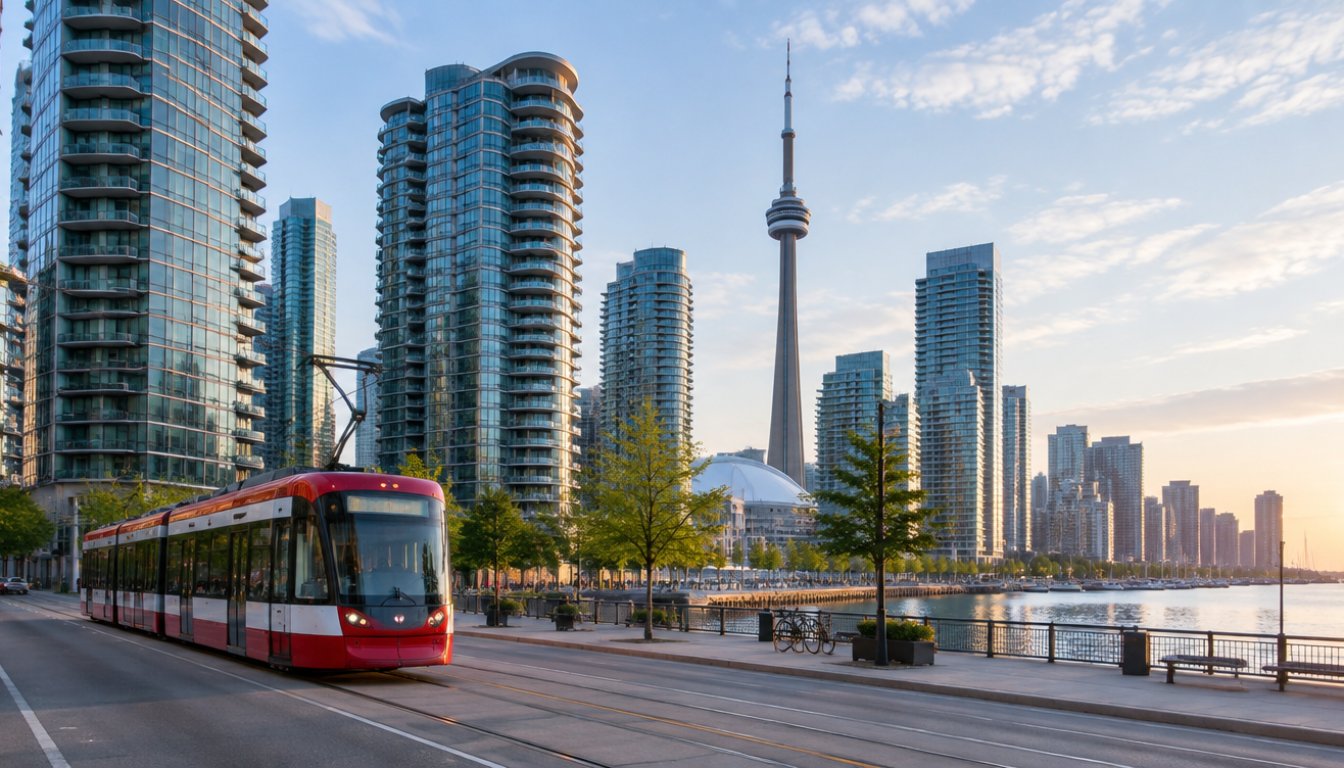
Judge a Downtown Toronto agent on things you can check yourself. Confirm their registration on RECO’s public register. Ask how the RECO Information Guide and client versus self-represented status will apply to you. Then ask local questions with verifiable answers — TRREB district C01 recorded 231 sales in August 2026 at an average of $778,870 and a median of $610,000. Marketing titles are unregulated; registration and numbers are not.
What does “best realtor in Downtown Toronto” actually mean?
Legally, nothing. “Best realtor in downtown toronto” is a search phrase, not a regulated title. There is no official ranking of agents in Downtown Toronto, and no body that certifies one. Every list you find online was assembled by someone with an incentive — a lead-generation site charging for placement, a brokerage promoting its own people, or an agent promoting themselves.
That is not a reason to abandon the question. It is a reason to change it. Instead of asking who is best, ask what you can independently verify about the person in front of you: registration and category, disciplinary history, what representation you are being offered, how commission is structured, and whether their knowledge of Downtown Toronto survives three specific questions. This guide is those checks. It does not name or rank other agents, because a ranking from me would be worth exactly as much as a ranking from anyone else selling the same service — use the checklist on me too.
How do I check an agent’s registration with RECO?
Anyone trading in real estate in Ontario must be registered with the Real Estate Council of Ontario, and RECO keeps a public register searchable by name or brokerage. It takes about ninety seconds and it is the highest-value check a consumer has. Look for four things: whether the person is registered at all and under which legal name; which brokerage they trade for, because the brokerage — not the individual — is the party to your agreement; their registration category, explained next; and whether RECO has published any disciplinary decisions against them. Someone who bristles at being asked to confirm their registration has told you something.
Broker, broker of record, salesperson: what is the difference?
These are registration categories, not marketing tiers.
| Category | What it is | What it does not tell you |
|---|---|---|
| Salesperson | The entry registration category. Trades on behalf of a brokerage under its supervision. | Nothing about experience. A salesperson may have twenty years of transactions; a broker may have three. |
| Broker | A registrant who has completed the additional broker qualification. Still trades on behalf of a brokerage. | That they run a brokerage or are responsible for one. |
| Broker of record | The one broker a brokerage designates as responsible for its compliance with Ontario’s real estate legislation. Every brokerage must have one. | That they personally handle more deals or handle them better. It tells you where regulatory responsibility sits. |
Category tells you about qualification and responsibility, not about skill on your street. Do not treat the word “broker” as a scoring system, and do not let anyone present it to you as one.
Thinking about buying or selling in Downtown Toronto?
I work across Toronto every week and I will give you a straight answer, including when the answer is to wait. No pressure, and no drip campaign you cannot get out of.
Call or text 833-330-1925 Send me a message
Jatin Dua, Broker of Record — RE/MAX Quantum Realty Inc., Brokerage. Not intended to solicit buyers or sellers currently under contract with another brokerage.
What did TRESA change about who the agent works for?
The Trust in Real Estate Services Act took effect on 1 December 2023 and removed the old “customer” middle ground. There are now two statuses. A client is represented and owed full fiduciary duties — loyalty, confidentiality, advice, advocacy. A self-represented party is not represented; the brokerage may give factual information and help with paperwork but must not advise. Brokerages must provide the RECO Information Guide before assisting you, and TRESA permits designated representation, where two agents at one brokerage each act for opposite sides of the same deal. The question to ask is not “do you work with buyers and sellers” but “if a buyer for my home is also your client, what happens, and will I see it in writing first?”
What is Downtown Toronto actually like as a market?
Downtown is Toronto’s condo market in concentrated form: high-rise towers along the waterfront and the rail corridor, mid-century apartment stock north of Queen, and pockets of Victorian and Edwardian houses in Kensington, Cabbagetown and the streets off Bathurst. The buyer here is usually comparing units, not streets, and the numbers are driven almost entirely by condo apartments.
Condo apartments dominate both districts by a wide margin, which is why the average price sits below the City of Toronto average even though the land under it is the most expensive in the country. Freehold is scarce and expensive; a Victorian row house in Cabbagetown or a laneway-facing semi off Queen West trades in a completely different price band from the towers two blocks away.
Getting around. Line 1 (Yonge–University) loops through the core, Line 2 runs along Bloor at its northern edge, and the 501 Queen, 504 King, 505 Dundas, 506 Carlton, 509 Harbourfront and 510 Spadina streetcars cover the grid. Union Station handles all GO lines and the UP Express. The Ontario Line, with stations planned at Exhibition, King–Bathurst, Queen–Spadina, Osgoode, Queen, Moss Park and Corktown, is under construction with no published opening date.
Which questions expose real Downtown Toronto knowledge?
Anyone can recite a neighbourhood’s reputation. These three questions can only be answered well by someone who has worked Downtown Toronto recently. Listen for specifics — addresses, dates, ratios, by-law names — and for the willingness to say “I’d have to check” when that is the honest answer.
1. Which building am I actually buying into — and what is in its status certificate?
A downtown agent should be able to tell you the corporation number for the building you are considering, whether it is a recent registration or a 1980s–90s tower with an ageing envelope, and what to look for in the status certificate: the reserve fund balance and the most recent reserve fund study, any special assessments, pending litigation, and the insurance deductible schedule. “It’s a great building” is not an answer; a status certificate is.
2. How does this unit price against the same floor plan in the same tower over the past twelve months?
The most comparable sale for a downtown condo is almost always another unit in the same building with the same layout, adjusted for floor, exposure and parking. An agent who works the core should be able to pull that history quickly and explain any gap between the ask and the last three same-plan sales. If the comparison jumps to a different tower on the first try, ask why.
3. What is the Ontario Line going to do to this block during construction, and after?
The honest answer separates the two. During construction there are closures, noise and staging areas around the future stations; after opening, proximity generally supports values. An agent should know where the nearest planned station is, what the current construction footprint looks like on that block, and that no opening date has been announced — not a date they read on a marketing board.
What do the C01 and C08 numbers look like right now?
TRREB splits the core into two districts: C01 west of Yonge (Entertainment District, King West, Queen West, Harbourfront, CityPlace, Kensington, Little Italy) and C08 east of Yonge (Financial District east, St. Lawrence, Corktown, Cabbagetown, Regent Park, Moss Park).
Here is what TRREB’s August 2026 Market Watch reports for these districts. Monthly district figures come from small samples and move around; use them to check an agent’s claims, not to price a specific home.
| TRREB district | Sales | Average price | Median price | New listings | Active listings | Months of inventory | Avg SP/LP | Avg days on market |
|---|---|---|---|---|---|---|---|---|
| C01 (Downtown west of Yonge) | 231 | $778,870 | $610,000 | 602 | 1,215 | 5.0 | 96% | 39 |
| C08 (Downtown east of Yonge) | 135 | $692,887 | $575,000 | 375 | 814 | 5.9 | 97% | 37 |
For context, the MLS® Home Price Index composite benchmark for C01 was $647,600, −6.26% year over year, with the detached benchmark at $1,640,800 and the apartment benchmark at $553,900. the MLS® Home Price Index composite benchmark for C08 was $553,600, −7.37% year over year, with the detached benchmark at $1,954,500 and the apartment benchmark at $499,900. The City of Toronto composite benchmark was $918,400, down 3.73% year over year, and the GTA-wide average sale price across all home types was $993,410. An agent who knows Downtown Toronto should be able to tell you, without looking it up, roughly where the last few comparable sales sat against these figures and why.
What should an agent check before you buy or sell in Downtown Toronto?
Beyond the standard conditions, these are the Downtown Toronto-specific diligence points a competent agent raises before an offer is firm, not after:
- Status certificate reviewed by a lawyer before the condition is waived — reserve fund, special assessments, litigation, and the corporation’s rules on short-term rentals and pets.
- Toronto’s short-term rental rules: only a principal residence can be rented short-term, and it must be registered with the City. If the plan involves Airbnb income, the corporation’s declaration and the City rules both need checking.
- Parking and locker titles: confirm whether they are owned units, exclusive-use common elements or simply assigned, because each transfers differently.
Are “top 1%” and “#1 agent” claims regulated?
No. “Top 1%”, “#1 agent” and “award-winning” are marketing claims, not designations RECO issues or verifies. RECO’s advertising rules require claims to be accurate and not misleading, but the comparison group, time period and metric behind most rankings are unstated. Replace them with questions that produce comparable evidence: how many homes the agent sold in this neighbourhood and price band in the past year, their list-to-sale ratio against the district, and days on market measured on both the listing and the property.
How does commission work in Ontario, and is it negotiable?
Commission is negotiated between you and the brokerage; no law and no board sets a rate in Ontario. When you compare proposals, look past the headline percentage to how the total is split with the buyer’s brokerage, whether HST is inside the quoted figure, what marketing is included, how long the holdover clause runs, and how you can end the agreement. A lower rate that produces a lower price is not a saving, and a higher rate is not a guarantee. Ask what the agent will actually do for the fee, in writing.
The takeaway
Verify the registration. Settle your representation status in writing. Ask the three Downtown Toronto questions and the commission questions, and weigh the answers against TRREB’s C01 and C08 figures rather than against adjectives. The agent who welcomes that scrutiny is usually the one to hire.
How to check the same things about me
It would be inconsistent to publish that checklist and then ask you to take my word for anything, so here is my side of it, plainly.
I am Jatin Dua, Broker of Record at RE/MAX Quantum Realty Inc., Brokerage, working out of Unit 101, 799 The Queensway in Etobicoke and across Toronto and the GTA, including Downtown Toronto. Broker of record means I am the broker my brokerage has designated as responsible for its compliance with Ontario’s real estate legislation — it is a responsibility, not a rank, and you should treat it that way. My registration and my brokerage’s registration are on RECO’s public register; look them up rather than taking this paragraph as evidence. I have been actively transacting in the GTA for more than four years, with over $100 million in sales volume. I do not claim a market share or a ranking, because I cannot show you the working behind one.
Ask me the three Downtown Toronto questions above. Ask for the three most comparable properties I have sold, with addresses and dates. Ask what my commission proposal includes and what happens if your home does not sell. If I cannot answer those cleanly, use someone who can.
Interviewing agents in Downtown Toronto?
Send me your address and what you are trying to do, and I will send back the current numbers for your specific district and property type — sales, average, median, days on market — along with what I would do and what I would charge. Use it to compare, whether or not you use me.
connect@jatindua.com · 833-330-1925 · Book a free consultation
Confidential. Reviewed personally and answered within 24 hours. I never share, sell or distribute your information.
Frequently asked questions
How do I check if a real estate agent is licensed in Ontario?
Search RECO’s public register at reco.on.ca by the person’s name or the brokerage name. Anyone trading in real estate in Ontario must be registered with RECO. The register shows the registration category — salesperson, broker or broker of record — and the brokerage they trade for. RECO also publishes disciplinary decisions.
Is real estate commission negotiable in Ontario?
Yes. Commission is negotiated between you and the brokerage; no law or real estate board sets a standard rate in Ontario. Compare proposals on the total and its split with the buyer’s brokerage, HST treatment, included marketing, the holdover clause and cancellation terms.
What is the difference between a client and a self-represented party?
Under TRESA, in force since 1 December 2023, a client is represented and owed fiduciary duties including advice and confidentiality. A self-represented party is not represented, and the brokerage may only provide factual information and paperwork assistance. The old “customer” category no longer exists.
Does “top 1% agent” mean anything official?
No. It is a marketing claim, not a regulated designation, and RECO does not issue or verify it. The comparison group, time period and metric are usually unstated. Ask for transaction-level evidence in your neighbourhood and price band instead.
Which TRREB districts cover downtown Toronto?
C01 west of Yonge Street and C08 east of it. C01 runs from the waterfront to Bloor between Yonge and roughly Dufferin, taking in the Entertainment District, King West, Queen West, CityPlace, Harbourfront, Kensington Market and Little Italy. C08 covers the east side of the core: St. Lawrence, Corktown, Regent Park, Moss Park and Cabbagetown.
Why is the downtown average price lower than the Toronto average?
Because condo apartments make up most downtown sales, and a condo apartment costs less than a detached or semi-detached house. The average tells you about the mix of what sold, not that downtown land is cheap. Compare within property type, and ideally within the same building, rather than against the city-wide average.
Sources
- Real Estate Council of Ontario — public register of registrants and brokerages, registration categories and published disciplinary decisions. Accessed 12 September 2026.
- RECO — Information for consumers, including the RECO Information Guide — client versus self-represented party status. Accessed 12 September 2026.
- Ontario — Trust in Real Estate Services Act, 2002 — the statutory framework in force since 1 December 2023. Accessed 12 September 2026.
- TRREB Market Watch, August 2026 — the City of Toronto municipal breakdown and MLS® Home Price Index tables used for every C01 and C08 figure on this page. Accessed 12 September 2026.
- Metrolinx — project status for the Ontario Line, the Scarborough Subway Extension, the Eglinton Crosstown West Extension and GO services. Accessed 12 September 2026.
- City of Toronto — Heritage Register, Application Information Centre, ravine (Chapter 658) and tree (Chapter 813) by-laws, laneway suite rules and multi-tenant house licensing. Accessed 12 September 2026.
Related reading
- Who does your real estate agent actually work for under TRESA?
- Designated representation and multiple representation in Ontario
- How RECO complaints and discipline work in Ontario
- Top realtors in Etobicoke: how to judge one properly
- Toronto community guide
About the author — Jatin Dua, Toronto real estate broker
I am Jatin Dua, Broker of Record at RE/MAX Quantum Realty Inc., Brokerage, Unit 101, 799 The Queensway, Etobicoke, working across Toronto and the GTA. Four-plus years of active transactions and over $100 million in sales volume. Every market figure on this page comes from TRREB’s published August 2026 tables and every regulatory statement from RECO or Ontario legislation, so you can check all of it without asking me.
Reach me at connect@jatindua.com or 833-330-1925.