
Published 2 November 2026 · By Jatin Dua, Broker of Record, RE/MAX Quantum Realty
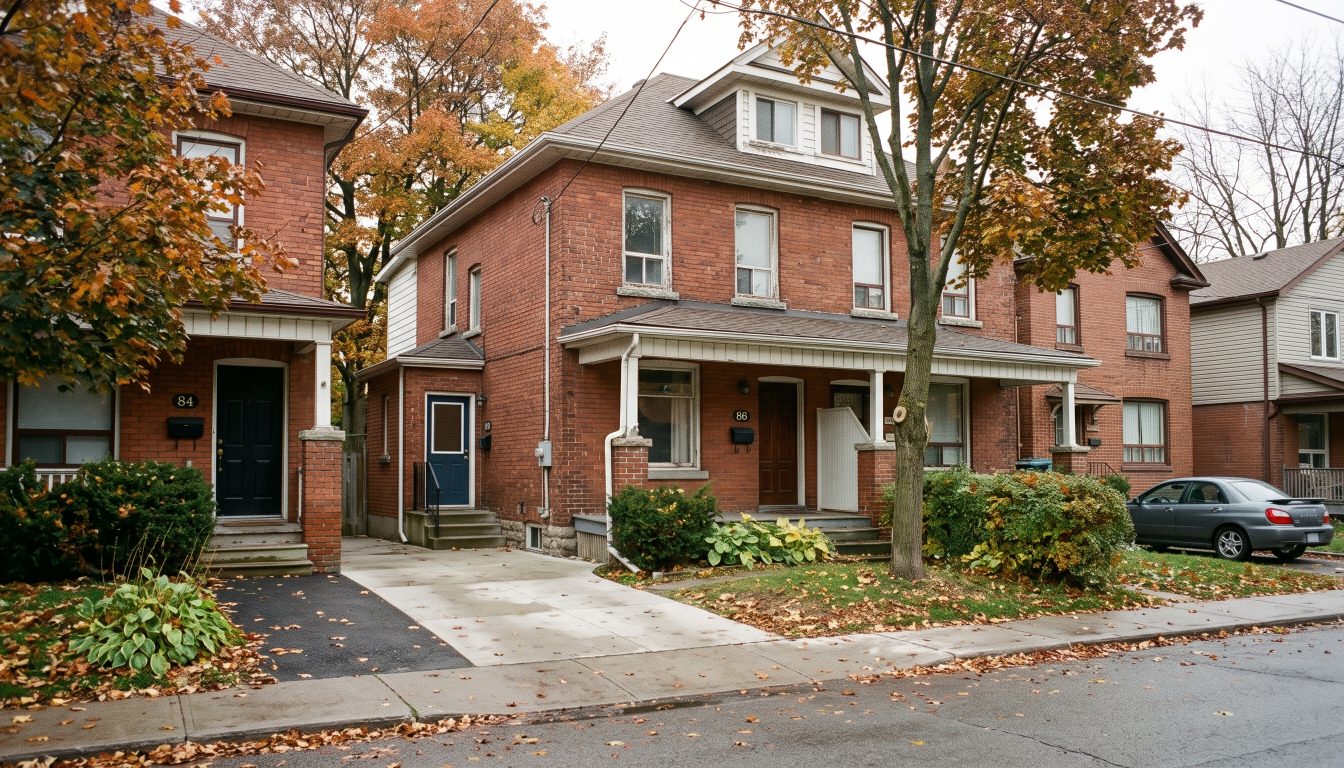
When you buy a tenanted Ontario house, the tenancy carries over and you become the landlord. You can only have it ended if you or a close family member will live in that unit, the house has three or fewer units, and the seller serves an N12 with at least 60 days’ notice ending on the last day of a rental period. The seller pays the tenant one month’s rent.
This guide is for buyers looking at an Ontario house, semi, duplex or triplex that has a tenant living in it, whether you want to move in yourself or keep the rental income. You will learn what the Residential Tenancies Act lets you do, the timelines in 2027, who pays the tenant, and how to protect yourself if the tenant does not leave on time.
What happens to the tenant when you buy a house in Ontario?
Nothing changes for the tenant on closing day. Under the Residential Tenancies Act (RTA), a tenancy runs with the property, so the sale does not end it. On closing you step into the seller’s shoes as landlord, with the same rent, the same lease terms and the same obligations to repair and maintain.
A few money items move to you as well:
- The last month’s rent deposit. It is usually credited to you on closing. You cannot ask the tenant for a new deposit if they already paid one to the seller.
- Interest on that deposit. You owe the tenant interest each year at the rent increase guideline rate, which is 1.9% for 2027.
- The rent increase clock. Rent can only rise once every 12 months, with at least 90 days’ written notice, so check when the last increase happened.
For the tenant’s side of the same sale, see my post on tenant rights when a rental unit is sold.
Can you evict a tenant after buying a house in Ontario?
Only for a reason the RTA allows. The one that applies to buyers is section 49, “purchaser personally requires unit”. The seller, as current landlord, gives the tenant an N12 notice on your behalf. Every one of these must be true:
| Requirement | What it means for a house buyer |
|---|---|
| Signed agreement of purchase and sale | The seller can only serve the N12 once you have a deal. |
| No more than three residential units | A house, duplex or triplex qualifies. A fourplex does not (condo units have a separate rule). |
| Genuine residential use by an eligible person | You, your spouse, your or your spouse’s child or parent, or a caregiver for one of them if the person receiving care will live in the building. |
| Good faith | You must really intend to live there. The person moving in must swear an affidavit if the case goes to the LTB. |
| At least 60 days’ notice | The termination date must also be the last day of a rental period, or the end of a fixed-term lease. |
| One month’s rent compensation | Paid by the seller to the tenant by the termination date, or the seller offers another unit the tenant accepts. |
Source: Residential Tenancies Act, 2006, sections 49, 49.1, 55.1 and 72 (current consolidation), and the Landlord and Tenant Board brochure “How a Landlord Can End a Tenancy”, checked November 2026.
If you plan to keep renting the house to someone else, or to renovate and resell, section 49 does not apply. My guide to the N12 notice covers when it is valid in more detail.
How much notice does a tenant get when a house is sold?
At least 60 days, and often more. The termination date on the N12 must fall on the last day of a rental period. For a month-to-month tenant paying on the first, that means the last day of a month at least 60 days away. For a tenant still in a fixed-term lease, it must be the end of the term.
That second rule surprises buyers. If the tenant signed a one-year lease that ends next August, an N12 cannot end the tenancy before August, even if your closing is in April. Ask for the lease before you write your offer and set your closing date to match.
The tenant can leave earlier if they choose. Once they receive an N12, they can give you at least 10 days’ written notice and move out on an earlier date.
Who pays the tenant compensation when a house is sold?
The seller does. Section 49.1 says the landlord who gives the N12 on the buyer’s behalf must pay the tenant one month’s rent, or offer another acceptable unit, and that the obligation stays with that landlord and does not pass to the buyer. It is due no later than the termination date in the notice.
Watch for a common mix-up in 2027. Since 21 September 2026, a landlord who serves an N12 for their own family’s use can skip the compensation if they give at least 120 days’ notice ending on the last day of a period or term. The LTB says that exemption does not apply to an N12 for a purchaser. When a house is sold, the one month’s rent is always owed by the seller, though the agreement can deal with who ultimately bears the cost. My post on the N12 120-day rule explains the change.
Instant Home Valuation
What’s your home
worth today?
Answer six quick questions and get an instant value range built from current Toronto & GTA sale data — property type, size, condition, lot and location all weighted the way a real pricing conversation weighs them. Takes about ninety seconds.
Reading recent GTA sale data…
Building your estimate
Estimated market value
—
$0–$0
Most likely value $0 · roughly $0 per square foot
What moved the number
Starting from the area baseline for your property type, here’s what each answer added or subtracted.
Market context
Recent local averages for comparison.
—
A range is a starting point.
A strategy is what sells.
This model doesn’t know that your neighbour’s identical semi went $80,000 over asking last month, or which two upgrades actually pay back in your area. That conversation is free and takes twenty minutes.
What if the tenant does not move out before closing?
An N12 does not evict anyone by itself. If the tenant stays past the termination date, the landlord must apply to the Landlord and Tenant Board on Form L2, no later than 30 days after that date, with the affidavit of the person who will move in. The tenant can dispute it at a hearing. Only the Court Enforcement Office (the sheriff) can enforce an eviction order.
All of that takes time, and closing dates do not wait. This is where buyers get hurt:
- If your agreement promises vacant possession and the tenant is still there, the seller cannot deliver what was promised, and both sides end up dealing with lawyers.
- If you sold your own home and need to move, you may be paying for two places or for storage.
Protect yourself with clear clauses. Ask for a copy of the served N12 and proof of service, set the closing date after the termination date with a buffer, and spell out in the agreement what happens if vacant possession is not available. My guide to clauses for tenanted properties has wording to discuss with your lawyer. Some sellers instead negotiate a voluntary move-out with the tenant using an N11 agreement, sometimes with a cash payment; see my post on N11 and cash for keys.
Can you evict only the basement tenant?
Only if you, or an eligible family member, will actually live in the basement unit, or you genuinely need the whole house as one home. The N12 is about the space you will occupy. Section 49 lets the purchaser require possession of “the residential complex or the unit”, but the LTB looks hard at good faith.
- You will live upstairs and keep the basement rented: the basement tenant stays. You become their landlord.
- Your parents will move into the basement: an N12 for that unit can work, if it is genuine.
- You want both units vacant to renovate: section 49 is not the tool. Renovation evictions have their own rules and, in Toronto, a licence requirement.
If you plan to keep a tenant, the rent can help you qualify. CMHC lets lenders add up to 100% of the gross rent from an owner-occupied two-unit house to your income, and up to 50% for three or four units. CMHC’s minimum down payment is 5% to 10% for one or two units and 10% for three or four.
Can you raise the rent after buying a tenanted house?
Only within the normal rules. Most units are capped at the guideline, 1.9% for increases taking effect in 2027, at least 12 months after the last increase, with 90 days’ written notice. Units first occupied as a residence after 15 November 2018, including most newer basement apartments, are exempt from the guideline, though the 12-month and 90-day rules still apply. Ask the seller when the unit was first rented and when the rent last went up.
What happens if a buyer gives an N12 and does not move in?
The former tenant can apply to the LTB on Form T5 within one year of moving out. If the LTB finds the notice was given in bad faith and no eligible person moved in within a reasonable time, it can order:
- the extra rent the tenant pays elsewhere for one year,
- general compensation of up to 12 months of the last rent,
- reasonable moving and storage costs, and
- an administrative fine of up to the greater of $10,000 and the Small Claims Court limit.
The LTB brochure notes that a tenant can file if the person named in the notice does not move in within 60 days after the tenant leaves. Plan to move in promptly and keep proof that you did.
Decide before you offer whether you want the tenant to stay or go, because it changes everything: the closing date, the clauses and even the price you should pay. If you need the house vacant, make that the seller’s job and get it in writing, with the N12 already served and the lease end date known. If you are happy to keep the tenant, ask for the lease, rent history and deposit details up front and treat the rent as part of your financing.
Never assume the tenant will leave on the N12 date. LTB hearings can take months; see how long the LTB actually takes. Do not firm up a purchase, or sell your own home, on the basis of a vacant possession date that depends on a tenant’s cooperation alone.
What to do next
- Get the lease, rent ledger, deposit amount and last rent increase date before you write an offer.
- Decide whether you will occupy the house, and which unit, and tell your agent and lawyer.
- If you need vacant possession, have the seller serve the N12 and pay the one month’s rent, with proof.
- Set a closing date after the termination date, with a buffer, and clear clauses if the tenant stays.
- If you are keeping the tenant, ask your lender how much rent it will count.
Need help with this? Talk to me.
I’m Jatin Dua, Broker of Record at RE/MAX Quantum Realty, and I’m the best agent to do this kind of work for you in Toronto and across the GTA. Over $100 million in GTA sales and 100+ families helped sell. Feel free to contact me any time: call or text 833-330-1925 or email [email protected].
Frequently asked questions
Can I evict a tenant after buying a house in Ontario?
Only if you, your spouse, a child or parent, or a caregiver will genuinely live in the unit, and the house has three or fewer units. The seller serves an N12 on your behalf after you sign the agreement, with at least 60 days’ notice ending on the last day of a rental period or lease term. The tenant can dispute it at the LTB.
Does a lease transfer to the new owner in Ontario?
Yes. In Ontario a residential tenancy runs with the property, so when a house is sold the tenant stays on the same rent and terms and the buyer becomes the landlord on closing. The last month’s rent deposit is credited to the buyer, who then owes the tenant yearly interest on it at the guideline rate, 1.9% in 2027.
How much notice does a tenant get if the house is sold in Ontario?
At least 60 days. The N12 termination date must also be the last day of a rental period, or the end of a fixed-term lease, so a tenant with a lease ending in August cannot be required to leave before then. The tenant may leave earlier by giving at least 10 days’ written notice.
Does the buyer or the seller pay N12 compensation in Ontario?
The seller pays. Under section 49.1 of Ontario’s Residential Tenancies Act, the landlord who serves the N12 on the buyer’s behalf must pay the tenant one month’s rent, or offer another acceptable unit, by the termination date. The law says this obligation does not pass to the buyer, although the agreement may adjust the cost between the parties.
Does the 120-day N12 rule apply when a house is sold?
No. Since 21 September 2026, a landlord who gives an N12 for their own family’s use with at least 120 days’ notice ending on the last day of a period does not owe compensation. The Landlord and Tenant Board says this exemption does not apply to an N12 given for a purchaser, so one month’s rent is still owed.
What happens if the tenant won’t leave before closing in Ontario?
The landlord must file an L2 application with the Landlord and Tenant Board within 30 days after the N12 termination date, with the occupant’s affidavit. A hearing follows, and only the sheriff can enforce an eviction order. This can take months, so buyers should set closing after the termination date and include clear clauses on vacant possession.
Can a buyer use an N12 on a fourplex in Ontario?
No. Section 49 of Ontario’s Residential Tenancies Act only lets a seller give an N12 for a purchaser when the residential complex has no more than three residential units. A buyer of a fourplex or larger building takes the tenancies as they are. Condominium units are the exception, under a separate subsection, regardless of building size.
Can I raise the rent after buying a house with a tenant in Ontario?
Only within the usual rules: at least 12 months after the last increase, with 90 days’ written notice, and by no more than the guideline of 1.9% for 2027 for most units. Units first occupied as a residence after 15 November 2018, including most newer basement apartments, are exempt from the guideline cap.
What happens if I use an N12 and don’t move in?
The former tenant can apply to the LTB on Form T5 within one year of leaving. If the notice was in bad faith, the Board can order up to 12 months’ rent in general compensation, the tenant’s extra rent for a year, moving costs, and a fine up to the greater of $10,000 and the Small Claims Court limit in Ontario.
Sources
- Residential Tenancies Act, 2006 (e-Laws, current consolidation)
- Landlord and Tenant Board: How a Landlord Can End a Tenancy
- Ontario: Residential rent increases (2027 guideline)
- CMHC: Rental income (approaches for qualification)
- CMHC: CMHC Purchase (down payment by number of units)
Related reading
- Biggest Condo Developers in Toronto: Track Records Buyers Should Check
- Is It a Good Idea to Buy a Condo in Toronto in 2027?
- Buying a House in Ontario on a Work Permit (2027): What the Foreign Buyer Ban Allows
- Can You Buy a House With No Down Payment in Ontario?
About the author — Jatin Dua, Toronto and GTA real estate broker
I am Jatin Dua, Broker of Record and co-founder of RE/MAX Quantum Realty Inc., Brokerage, Unit 101, 799 The Queensway, Toronto. I work with buyers and sellers across Toronto and the GTA and have helped more than 100 families sell. Four-plus years of active GTA transactions and over $100 million in sales volume.
Reach me at [email protected] or 833-330-1925, or book a call.