

Published 28 August 2026 · Updated 5 October 2026 · By Jatin Dua, Broker of Record, RE/MAX Quantum Realty
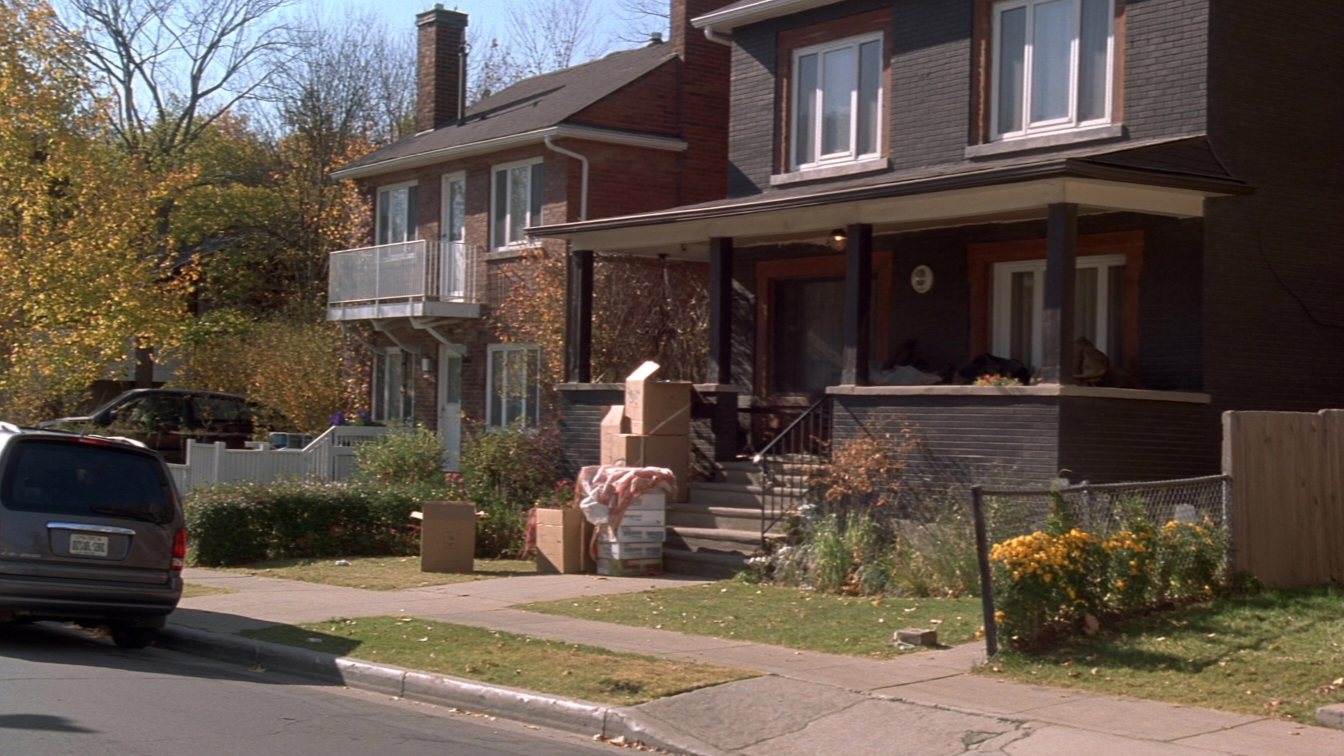
Toronto’s Vacant Home Tax is 3% of a property’s Current Value Assessment, and it applies to a home unoccupied for more than six months in a calendar year. There are eight published exemptions. None of them covers moving out, and none covers a home sitting empty while it is listed for sale. If you do not file the annual declaration, the City deems the property vacant and bills you.
Buying before selling is normal and often sensible. But in Toronto it carries a specific, expensive risk that most people only discover after the fact. Here is the whole picture, from the City’s own pages and federal sources.
General information, current as at 28 August 2026, with every source dated below. Not legal, tax or mortgage advice — your accountant, your lawyer and your mortgage broker each own a piece of this.
The trap, precisely
A property is treated as vacant if it was “unoccupied for more than six months during the previous calendar year” and is not the owner’s principal residence, occupied by an eligible resident, or covered by an exemption.
The City publishes eight exemptions. These are their exact names:
- Death of a registered owner
- Principal resident is in care
- Repairs or renovations
- Transfer of legal ownership
- Occupancy for full-time employment
- Court order
- Vacant new inventory
- Secondary residence for medical reasons
Read them against the situation you are actually in.
“Transfer of legal ownership” is written from the buyer’s side
It requires that “the closing date of the purchased property was in the taxation year being declared” and that the sale involved a 100 per cent transfer — explicitly excluding name changes, adding an owner, or removing an owner.
It is keyed to the property you bought. There is no exemption named for a property you have sold, and none for one you are trying to sell.
“Repairs or renovations” has a high bar
Occupation must be prevented by the work for at least six months of the year, all necessary permits must have been issued, and the City must be satisfied the work is “being actively carried out without unnecessary delay.” Painting and staging a house to sell it does not qualify.
“Vacant new inventory” is not for you
It covers developer-owned newly constructed units actively offered for sale. It does not cover a private owner’s empty house that is on the market.
The scenario that costs real money
You buy in February and move. Your Etobicoke house is empty, staged, and on the market. It takes a while — it happens. The sale closes in January of the following year.
Your old home was unoccupied for more than six months of that calendar year. None of the eight exemptions applies. The bill is 3% of its Current Value Assessment, and it lands on the property you no longer own but were responsible for declaring.
Two further points that make this worse:
- Every residential owner in Toronto must file the declaration annually — even if you live in the home, and even if you are claiming an exemption. There is no “nothing to report” option.
- If you do not declare, the property is deemed vacant. Silence is treated as an admission.
- A false declaration, or failing to provide requested information, carries a fine of up to $10,000 on top of the tax.
The 2025 taxation year declaration period ran from 3 November 2025 to 30 April 2026. The equivalent dates for the 2026 taxation year had not been posted when I checked, so watch for them rather than assuming.
What is your home actually worth today?
I will give you a real number based on comparable sales on your street — not an automated estimate. No obligation, and I will tell you plainly if now is the wrong time to sell.
Get my home valuation Call or text 833-330-1925
Jatin Dua, Broker of Record — RE/MAX Quantum Realty Inc., Brokerage. Not intended to solicit buyers or sellers currently under contract with another brokerage.
What the financing side actually allows
Down payment, by price band
- $500,000 or less — 5% of the purchase price
- $500,000 to $1.5 million — 5% of the first $500,000, plus 10% of the portion above $500,000
- $1.5 million or more — 20% of the purchase price
A correction worth making. The federal consumer page that publishes those bands also still says mortgage loan insurance is unavailable where the price is “$1 million or more” — which contradicts its own $1.5 million band. CMHC’s own program page says the maximum is “below $1,500,000”, and Finance Canada confirms the cap rose from $1 million to $1.5 million effective 15 December 2024. Use $1.5 million. If someone quotes you the $1 million figure, they are reading a page that has not been updated.
The stress test
For uninsured mortgages, OSFI requires qualifying at the greater of the contract rate plus 2%, or 5.25%. CMHC applies the same formula to insured mortgages, with maximum debt service ratios of 39% GDS and 44% TDS and a minimum credit score of 600 for at least one borrower.
One change worth knowing: since 21 November 2024, OSFI no longer prescribes the qualifying rate for an uninsured borrower doing a straight switch to a new federally regulated lender at renewal — same amortization, same loan amount. That does not help you buy before you sell, but it does mean the advice you got before late 2024 may be out of date.
Bridge financing — and an honest gap
This is the product people reach for when the purchase closes before the sale. I checked the Financial Consumer Agency of Canada and CMHC, and neither publishes any consumer explanation of bridge financing. There is no official Canadian source describing what it is secured against, how long it typically runs, or what it costs.
I am not going to fill that gap with a bank’s marketing page and present it as guidance. What I will say is the practical consequence: because no regulator publishes a standard, the terms are entirely your lender’s. Get them in writing before you make an unconditional offer — the rate, the fees, what happens if the sale is delayed, and what happens if it falls through.
Two alternatives that are officially documented
- Porting. A portable mortgage lets you transfer your existing mortgage when you sell one home to buy another, which can preserve favourable terms or avoid a prepayment penalty. Eligibility and restrictions are lender-specific.
- Assuming. An assumable mortgage lets a buyer take over your mortgage and the property. It is generally available on fixed-rate mortgages, not on variable-rate mortgages or home equity lines of credit, and the lender must approve the person assuming.
The tax side is usually fine — here is why
Only one property per family unit can be designated as a principal residence for any given year since 1982. That sounds like a problem when you own two homes in the same calendar year. It usually is not, because of the “plus one” in the exemption formula: the calculation is (years designated + 1) ÷ years owned. That extra year is designed precisely to absorb the overlap year in a straightforward buy-and-sell.
Where it stops being straightforward is if you keep the old home and rent it out. Changing a property from personal use to income-producing use is a deemed disposition — CRA treats you as having sold it at fair market value and immediately reacquired it. There is an election, under subsection 45(2), made by attaching a signed letter to your return for the year of the change: no gain is reported on conversion, no capital cost allowance may be claimed, and the property can still be designated principal residence for up to four years while rented. Miss the election and you have an unreported deemed disposition.
And one thing that does not exist
There is no Ontario or Toronto land transfer tax relief, rebate or deferral for buying before you sell. Ontario publishes a first-time homebuyers refund and a non-resident speculation tax rebate; Toronto publishes a first-time buyer rebate, a 2007 grandfathering exemption and a non-resident rebate. Nothing addresses a purchaser who owns two homes for a period.
So you pay both land transfer taxes on the new home in full, on closing, in cash. On a $1,000,000 purchase in Toronto that is $32,950 plus the administration fee — before you have sold anything.
The order I would work through
- Get a realistic number on your current home first, and a net proceeds figure after commission, legal fees and any mortgage discharge. That number, not the list price, is what funds the purchase.
- Get bridge terms in writing if you need them, including what happens if the sale is delayed.
- Count the months. If your old home will stand empty past six months in a calendar year, price in 3% of its assessed value or change the plan.
- Diarise the Vacant Home Tax declaration for both properties, for every year you own them. Non-filing is the expensive mistake, and it is entirely avoidable.
Working out whether you can buy before you sell_
Send me your address and what you are looking at. I will give you a realistic price range on your current home, a net proceeds estimate, and a straight answer on whether the timing works — including whether you are walking into a Vacant Home Tax problem. If the honest answer is sell first, I will tell you that.
Run your own numbers first: free instant home valuation · net proceeds calculator · land transfer tax calculator. The valuation tool gives you an instant estimate from market data — useful as a starting point, not an appraisal. Here is the difference between the three, and why it matters.
[email protected] · 833-330-1925 · Book a free consultation
Confidential. Answered personally within 24 hours. I never share, sell or distribute your information.
Frequently asked questions
Does Toronto’s Vacant Home Tax apply if my old house is empty while it is listed for sale?
Yes, potentially. The City publishes eight exemptions and none covers moving out or a home standing empty while listed. The closest, Transfer of legal ownership, is keyed to the closing date of the property you purchased falling in the taxation year, with a 100 per cent transfer. The tax is 3% of Current Value Assessment.
What happens if I do not file the Toronto Vacant Home Tax declaration?
The property is deemed vacant and the tax is applied. Every residential owner must declare annually, even if they live in the home or are claiming an exemption. A false declaration or failure to provide requested information carries a fine of up to $10,000, plus payment of the tax.
What is the maximum home price eligible for mortgage loan insurance in Canada?
Below $1,500,000, per CMHC’s program page. Finance Canada confirms the cap rose from $1 million to $1.5 million effective 15 December 2024. Note that one federal consumer page still shows the outdated $1 million figure.
Is there official guidance on bridge financing in Canada?
No. Neither the Financial Consumer Agency of Canada nor CMHC publishes a consumer explanation of bridge loans. Because no regulator sets a standard, the terms are entirely your lender’s – get the rate, the fees, and what happens if your sale is delayed or falls through, in writing before you go unconditional.
Can I claim the principal residence exemption on two homes in the same year?
Only one property per family unit can be designated for any year since 1982. The plus one in the exemption formula – years designated plus one, divided by years owned – is designed to absorb the overlap year in a straightforward buy-and-sell, so a normal move is usually fully sheltered.
What is your home actually worth today?
I will give you a real number based on comparable sales on your street — not an automated estimate. No obligation, and I will tell you plainly if now is the wrong time to sell.
Get my home valuation Call or text 833-330-1925
Jatin Dua, Broker of Record — RE/MAX Quantum Realty Inc., Brokerage. Not intended to solicit buyers or sellers currently under contract with another brokerage.
Sources
- City of Toronto — Vacant Home Tax. The 3% rate on Current Value Assessment from the 2024 taxation year, the annual declaration requirement, and the deeming of a property as vacant where no declaration is filed. Page last updated 22 July 2026. Accessed 28 August 2026.
- City of Toronto — Vacant Home Tax declaration. The eight named exemptions and their conditions, including the Transfer of legal ownership closing-date and 100 per cent transfer requirements and the Repairs or renovations permit and active-progress requirements. Page last updated 22 July 2026. Accessed 28 August 2026.
- Financial Consumer Agency of Canada — How much you need for a down payment. The minimum down payment bands by purchase price. Date modified 15 October 2025. Note this page also carries a superseded statement about a $1 million insurance cap. Accessed 28 August 2026.
- CMHC — Mortgage loan insurance homeownership programs, purchase. The maximum purchase price below $1,500,000, and the debt service ratio and qualifying rate rules for insured mortgages. Accessed 28 August 2026.
- Department of Finance Canada — Mortgage reforms come into force. Confirmation that the insured mortgage price cap increased from $1 million to $1.5 million effective 15 December 2024. Published 15 December 2024. Accessed 28 August 2026.
- OSFI — Minimum qualifying rate for uninsured mortgages. The requirement to qualify at the greater of the contract rate plus 2% or 5.25%. Last review date 29 January 2026. Accessed 28 August 2026.
- OSFI — Exemption for uninsured mortgage straight switches. The straight-switch exemption effective 21 November 2024 and its conditions. Accessed 28 August 2026.
- Financial Consumer Agency of Canada — Choosing a mortgage that is right for you. Portable and assumable mortgages. Date modified 15 October 2025. Checked for bridge financing guidance; the page does not address it. Accessed 28 August 2026.
- Canada Revenue Agency — Principal residence and other real estate. The one-property-per-family-unit rule since 1982 and the plus one in the exemption formula. Date modified 5 February 2026. Accessed 28 August 2026.
- Canada Revenue Agency — Changes in use. The deemed disposition on a change in use and the subsection 45(2) election, how it is made and its effects. Accessed 28 August 2026.
- Ontario — Refunds and rebates, land transfer tax. The complete list of Ontario land transfer tax refunds and rebates, confirming no relief for buying before selling. Updated 10 July 2025. Accessed 28 August 2026.
- City of Toronto — MLTT rebate opportunities. The complete list of Toronto municipal land transfer tax reliefs, confirming no relief for buying before selling. Updated 18 December 2025. Accessed 28 August 2026.
Related reading
- Land transfer tax on an Etobicoke purchase, and the two rebates
- Downsizing in Etobicoke: the filing that catches long-time owners
- What is my home worth in Toronto and the GTA?
- Etobicoke or Mississauga? The costs that differ across Highway 427
About the author — Jatin Dua, Etobicoke real estate agent
I’m the Broker of Record at RE/MAX Quantum Realty, 799 The Queensway in Etobicoke, a few minutes from every building on this page. I work with buyers, sellers and investors across Mimico, Humber Bay Shores, New Toronto, Long Branch, Alderwood and the Stonegate–Queensway corridor. I write these building guides the way I’d brief a client at my own kitchen table: what is documented, what isn’t, and where the published numbers disagree with each other.
Questions about a specific suite? [email protected] or 833-330-1925.