
Published 2 November 2026 · By Jatin Dua, Broker of Record, RE/MAX Quantum Realty
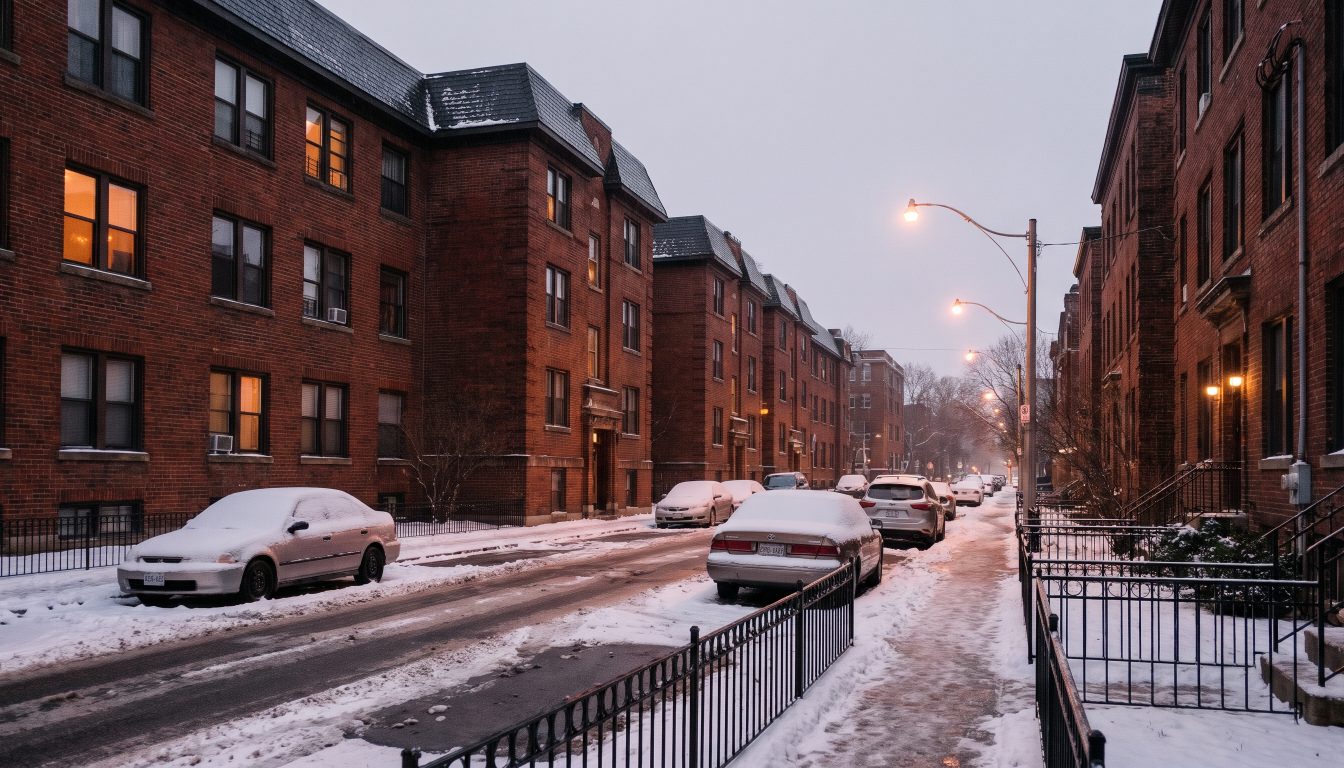
Yes. Ontario has no winter eviction ban, so a landlord can end a tenancy any month by following the Residential Tenancies Act. But a landlord cannot evict you on their own: they need a Landlord and Tenant Board order, and only the sheriff can enforce it. Heat and utility protections still apply all winter.
This guide is for Ontario tenants worried about losing their home in the cold months, and for landlords who want to know whether winter changes anything. You will get a straight answer on the so-called winter eviction ban, the steps a legal eviction must follow, the protections that really do apply in winter, and where to get help.
Can a landlord evict you in the winter in Ontario?
Yes. Ontario has no rule that stops evictions between November and April. The Residential Tenancies Act, 2006 (RTA) sets out the reasons and steps for ending a tenancy, and none of them depend on the season. A landlord who follows the process can get an eviction order in January just as in July.
What the law does control is how an eviction happens. A landlord cannot simply tell you to leave, change the locks or put your things outside. Under section 39 of the RTA, a landlord can only take back a unit if you move out or abandon it, or if the Landlord and Tenant Board (LTB) issues an eviction order. Even then, the LTB says only the Court Enforcement Office, often called the sheriff, can carry out that order.
Is there a winter eviction ban in Ontario?
No, not as of November 2026. People often search for one because other places have them, and because Ontario did pause evictions once.
That pause was tied to the pandemic, not the season. When Ontario’s stay-at-home order took effect on January 14, 2021, the province paused the enforcement of residential eviction orders for the length of the state of emergency, with exceptions for urgent cases such as illegal activity. The LTB kept holding hearings and issuing orders during that time. The pause ended with the emergency.
Nothing in the RTA ties evictions to the season. If Ontario ever adds a winter ban, it would come as a new law or regulation announced by the province, so check for updates before you rely on old news stories.
What steps must a landlord follow to evict a tenant in winter?
The same steps as any other time of year:
- Give you the correct written notice (an “N” form) for a reason the RTA allows.
- Wait for the notice period, and any period you have to fix the problem, to run out.
- File an application with the LTB, usually an L1 for unpaid rent or an L2 for other reasons.
- Attend a hearing, where you can respond, and get an order.
- File the order with the Court Enforcement Office, which schedules and carries out the eviction.
Here are the notice periods for the most common reasons as of November 2026:
| Reason | Notice form | Minimum notice | Can the tenant fix it and stay? |
|---|---|---|---|
| Unpaid rent | N4 | 7 days (served on or after Sept. 21, 2026) | Yes, by paying all arrears plus new rent before the landlord files |
| Damage, disturbing others, too many people | N5 | 20 days (first notice) | Yes, by correcting it within 7 days |
| Wilful damage | N7 | 10 days | No |
| Persistent late rent | N8 | 60 days (28 for weekly or daily) | No |
| Landlord or family moving in | N12 | 60 days, to the end of a rental period | No |
| Demolition, conversion or major repairs | N13 | 120 days, to the end of a rental period | No |
Source: LTB brochures “How a Landlord Can End a Tenancy” and “If a Tenant Does Not Pay Rent”; Tribunals Ontario, legislative changes effective September 21, 2026.
A notice on its own does not force you out. If you stay past the date on the notice, the landlord still has to win at the LTB. My step-by-step guide to evicting a tenant the legal way covers each form in more depth.
What can a landlord not do to a tenant in winter?
Winter makes some illegal shortcuts more dangerous, and the law treats them seriously.
- No lockouts. Changing the locks without giving you a key, unless the sheriff has enforced an order, is illegal. See whether a landlord can evict you without the LTB.
- No cutting heat or other vital services. Section 21 of the RTA says a landlord must not withhold a vital service it is responsible for, or deliberately interfere with it, until the day an eviction order is carried out. That applies even if you owe rent.
- No harassment. Pressuring you to leave through threats or by making the unit hard to live in breaks the RTA.
Offences under the RTA carry fines of up to $100,000 for an individual and $500,000 for a corporation (section 238).
How warm must a Toronto rental be?
The City of Toronto requires landlords to keep rental units at a minimum of 21°C from October 1 to May 15. In the shoulder seasons (September 15 to October 15, and May 1 to June 1), the heat can be off if the unit stays at 21°C without it. The City says landlords must respond to urgent heat requests within 24 hours, and tenants can then call 311 to have the City investigate. Other GTA municipalities have their own standards, so check your city’s by-law.
Instant Home Valuation
What’s your home
worth today?
Answer six quick questions and get an instant value range built from current Toronto & GTA sale data — property type, size, condition, lot and location all weighted the way a real pricing conversation weighs them. Takes about ninety seconds.
Reading recent GTA sale data…
Building your estimate
Estimated market value
—
$0–$0
Most likely value $0 · roughly $0 per square foot
What moved the number
Starting from the area baseline for your property type, here’s what each answer added or subtracted.
Market context
Recent local averages for comparison.
—
A range is a starting point.
A strategy is what sells.
This model doesn’t know that your neighbour’s identical semi went $80,000 over asking last month, or which two upgrades actually pay back in your area. That conversation is free and takes twenty minutes.
Can the LTB delay an eviction because it is winter?
The LTB can delay an eviction, but winter is not an automatic reason. Under section 83 of the RTA, the Board must look at all the circumstances before it orders an eviction. It can refuse the eviction, or postpone when it can be enforced.
The rules for delays changed on September 21, 2026. Tribunals Ontario says the LTB can now delay an eviction if the landlord agrees. If the landlord does not agree, the LTB must be satisfied that a delay would not be unfair to the landlord or other tenants and that there are compelling reasons. For N12 and N13 cases, only the fairness test applies.
At the hearing, a tenant can explain how the timing affects them. For example, you might explain a disability, that you are a single parent, or that you have not been able to find affordable housing. If moving in mid-winter would cause real hardship, say so clearly, with specifics, and ask for a date that gives you time to move. The Board must also refuse an eviction in some cases, such as when the landlord is in serious breach of their own duties or the case is retaliation for asserting your rights.
How can a tenant stop a winter eviction for unpaid rent?
Most evictions start with unpaid rent, and this is also the one you can most often fix.
- Before the landlord files: paying the arrears on the N4 plus any rent that has since come due makes the notice void. The earliest a landlord can file an L1 is the day after the N4’s termination date.
- After the landlord files: you can still pay everything owed, including the landlord’s filing fee, before the LTB issues an order, or work out a payment plan. The LTB now requires its Payment Agreement Form for these plans.
- If you want to raise other problems at the hearing, such as repairs, for L1 applications filed on or after September 21, 2026 you must pay the landlord half the arrears claimed at least 7 days before the hearing, and keep a receipt.
Where can Toronto tenants get money to catch up?
The Toronto Rent Bank, run with Neighbourhood Information Post, gives grants of up to $5,000 for rent arrears, and up to $2,000 to $3,500 for rental deposits depending on unit size. Income limits apply; for a single person the limit is $46,500 a year. People on Ontario Works or ODSP are directed to a different fund. The City says processing usually takes five to seven business days. Outside Toronto, ask your region or 211 about local rent bank programs.
Do not ignore an LTB hearing notice because you think winter will protect you. If you miss the hearing, the Board can order the eviction without hearing your side. If an order is issued without a hearing, the LTB brochure says a motion to set it aside must generally be made within 10 days.
Can my hydro or gas be shut off in the winter?
Here there is a real winter rule. The Ontario Energy Board (OEB) bans electricity and natural gas utilities from disconnecting residential customers for non-payment over the winter. For 2025 to 2026, the ban ran from November 15, 2025 to April 30, 2026. Utilities can still charge late fees during the ban, so keep paying what you can.
Two limits matter for tenants. The ban covers customers of electricity and gas utilities; it does not apply to multi-unit buildings billed by unit sub-meter providers, which set their own rules. And if your landlord pays the utility, the RTA’s vital services rule applies: a landlord whose unpaid bill leads to a shut-off is treated as having withheld the service.
What should landlords know about evicting in winter?
For landlords, winter changes nothing legally, but it does change the practical picture.
- Use the right form and new versions. The LTB replaced several N and L forms on September 21, 2026, and says old versions will not be accepted after November 30, 2026.
- Plan for delay. A tenant can ask for more time, and the LTB weighs hardship. In my view, offering a reasonable spring move-out date can avoid a long fight over a postponement.
- File with the sheriff on time. Under section 81, an eviction order expires if it is not filed with the sheriff within six months of taking effect. My guide on what to do when the tenant is still there covers that step.
- Consider an agreement. A signed N11 with a move-out date that suits both sides, sometimes with a payment, is often faster than a hearing. See what an N11 is really worth.
In my experience, winter evictions are where both sides lose the most. Tenants face a harder move, and landlords face more delay and risk. If you are a landlord, talk to the tenant before you file anything; a payment plan or a spring move-out date agreed in writing often costs less than months of lost rent. If you are a tenant, open every letter from the LTB, act on it, and get free advice early.
What to do next
- Tenants: read any notice closely and check the form, the dates and the reason against the table above.
- Tenants behind on rent: work out exactly what you owe and apply to the Toronto Rent Bank or your local program right away.
- Tenants with a hearing date: attend, bring documents, and explain any hardship a winter move would cause.
- Landlords: confirm your reason and form, use the current LTB forms, and keep heat and other services running.
- Either side: get advice from a lawyer, paralegal or community legal clinic before a deadline passes.
Need help with this? Talk to me.
I’m Jatin Dua, Broker of Record at RE/MAX Quantum Realty, and I’m the best agent to do this kind of work for you in Toronto and across the GTA. Over $100 million in GTA sales and 100+ families helped sell. Feel free to contact me any time: call or text 833-330-1925 or email [email protected].
Frequently asked questions
Does Ontario have a winter eviction ban in 2027?
No. As of November 2026, Ontario has no law that stops evictions during winter. The only recent pause came in January 2021, when the province paused enforcement of eviction orders during the pandemic state of emergency. Landlords must still follow the Residential Tenancies Act, get a Landlord and Tenant Board order and use the sheriff.
Can you be evicted in December in Ontario?
Yes. An Ontario landlord can evict a tenant in December, or any other month, if they have a valid reason, serve the right notice, win at the Landlord and Tenant Board and have the sheriff enforce the order. A tenant can ask the Board for more time and explain any hardship that a December move would cause.
Can a landlord turn off the heat to make a tenant leave in Ontario?
No. Section 21 of Ontario’s Residential Tenancies Act bans landlords from withholding or deliberately interfering with vital services such as heat until an eviction order is carried out, even when rent is owed. In Toronto, landlords must keep rental units at 21°C or more from October 1 to May 15.
Can the sheriff evict you in winter in Ontario?
Yes. The Court Enforcement Office, often called the sheriff, can enforce an Ontario eviction order in any season once the landlord files it. Only the sheriff can carry out the order; a landlord cannot change the locks first. The order expires if the landlord does not file it within six months of it taking effect.
How long does a landlord have to give you to move out in Ontario in winter?
The same notice periods apply in winter as the rest of the year. In Ontario, an N4 for unpaid rent served on or after September 21, 2026 needs 7 days, a first N5 needs 20 days, an N12 needs 60 days, and an N13 needs 120 days. After notice, the landlord still needs an LTB order.
Can hydro be disconnected in winter in Ontario?
Not for most homes. The Ontario Energy Board bans electricity and natural gas utilities from disconnecting residential customers for non-payment over the winter; the 2025 to 2026 ban ran from November 15 to April 30. It does not cover buildings billed by unit sub-meter providers, and late fees can still be charged.
Can the LTB give me more time to move out in winter?
Possibly. Under section 83 of Ontario’s Residential Tenancies Act, the Landlord and Tenant Board can postpone an eviction. Since September 21, 2026, if the landlord does not agree, the Board must find that a delay is not unfair to the landlord and that there are compelling reasons. Explain your hardship clearly at the hearing.
What help is there in Toronto if I am behind on rent this winter?
The Toronto Rent Bank offers grants of up to $5,000 toward rent arrears for eligible tenants, as of 2026. It is run with Neighbourhood Information Post, has income limits such as $46,500 for a single person, and usually processes requests in five to seven business days. Ontario Works and ODSP recipients use a different fund.
Can my landlord evict me in winter to sell the house in Ontario?
Only in limited cases, and season does not matter. In Ontario, a landlord can serve an N12 for a buyer who will move in only for buildings with three or fewer units, or condo units, after a firm sale, and must compensate the tenant. Otherwise, a buyer takes over the tenancy and the tenant can stay.
Sources
- Residential Tenancies Act, 2006, ss. 21, 39, 81, 83, 238 (Ontario e-Laws)
- Tribunals Ontario: LTB legislative changes effective September 21, 2026
- LTB brochure: How a Landlord Can End a Tenancy
- LTB brochure: If a Tenant Does Not Pay Rent
- City of Toronto: Heat and other vital services in rental units
- Ontario Energy Board: Winter disconnection ban, November 15, 2025 to April 30, 2026
- City of Toronto: Toronto Rent Bank
- Global News: Ontario pauses enforcement of residential evictions (January 2021)
Related reading
- Can My Landlord Enter Without Notice in Ontario?
- Can a Landlord Evict You Without Going to the LTB in Ontario?
- Can My Landlord Raise the Rent Every Year in Ontario? 2027 Rules
- Can a Landlord Put Security Cameras in or Outside a Rental in Ontario?
About the author — Jatin Dua, Toronto and GTA real estate broker
I am Jatin Dua, Broker of Record and co-founder of RE/MAX Quantum Realty Inc., Brokerage, Unit 101, 799 The Queensway, Toronto. I work with buyers and sellers across Toronto and the GTA and have helped more than 100 families sell. Four-plus years of active GTA transactions and over $100 million in sales volume.
Reach me at [email protected] or 833-330-1925, or book a call.