
Published 2 November 2026 · By Jatin Dua, Broker of Record, RE/MAX Quantum Realty
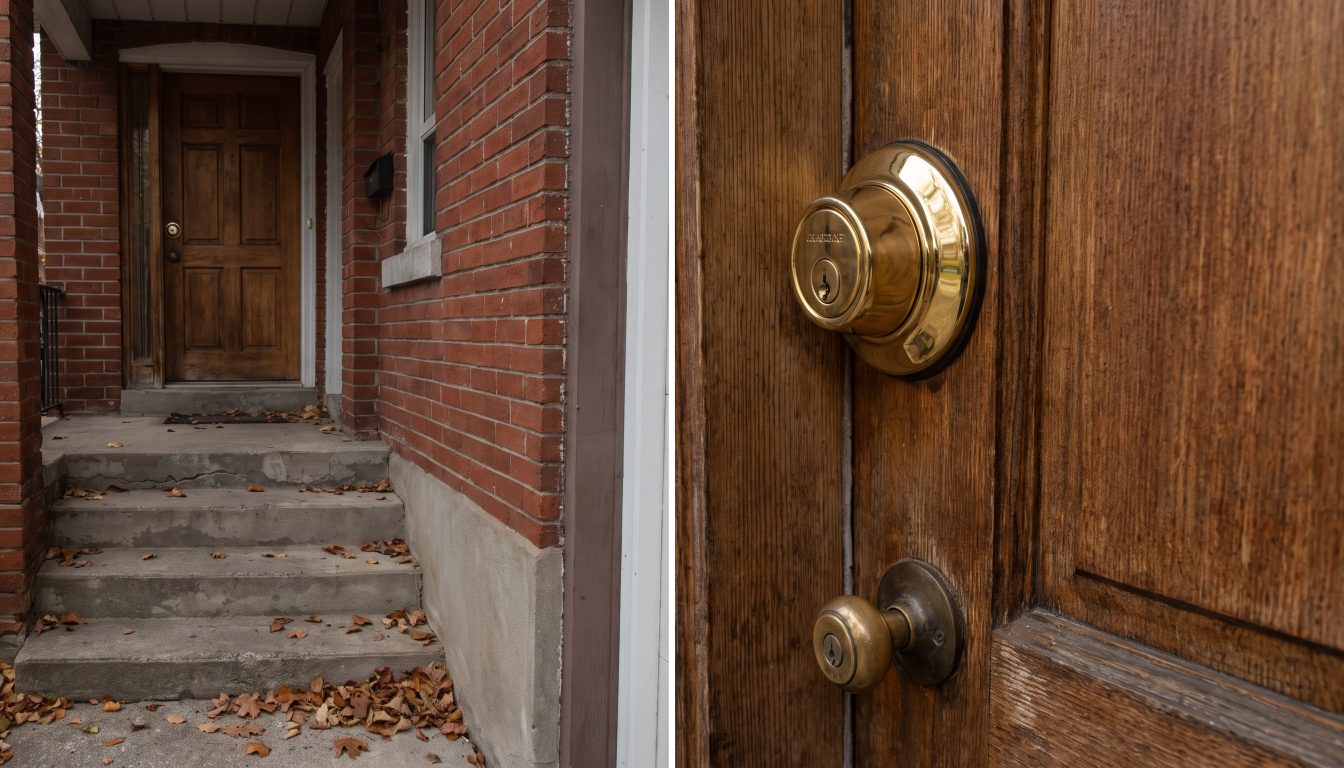
No. In Ontario a landlord cannot change the locks on a tenant who still lives in the unit without giving them a new key. Only the sheriff can lock a tenant out, and only after the Landlord and Tenant Board issues an eviction order. The main exceptions are a truly abandoned unit and rooms shared with the owner.
This guide is for Ontario tenants who came home to a new lock, and for landlords who are tempted to change one. You will get the rule from the Residential Tenancies Act, 2006 (RTA), the few situations where a lockout is legal, what to do in the first 24 hours, and what the Landlord and Tenant Board (LTB) can order. It is general information as of November 2026. Confirm your own case with the LTB, a licensed paralegal or a lawyer before you act.
Can a landlord change the locks while you still live there?
Only if you get a new key. Section 24 of the RTA says a landlord must not change the locking system on a door into your unit or the building while you live there without giving you replacement keys. Changing a lock for security or after a repair is fine. Changing it and keeping you out is not.
You also should not pay for those keys. Ontario Regulation 516/06 lets a landlord charge for extra or replacement keys only at direct cost, and not when the landlord changed the locks on their own initiative.
The rule runs both ways. Under section 35, a tenant cannot change the locks without the landlord’s consent. If a tenant does, the landlord can apply to the LTB on Form L8, and the Board can order the tenant to hand over keys or pay the cost of changing the lock back.
When is a lockout legal in Ontario?
Almost never by the landlord’s own hand. Section 39 says a landlord cannot take back a rented unit unless the tenant has moved out or abandoned it, or an LTB eviction order allows it. The LTB’s brochure on ending a tenancy lists only two exceptions to the lock rule: the sheriff has evicted the tenant, or the landlord is sure the tenant has abandoned the unit.
| Situation | Can the landlord change the locks? | What the law requires |
|---|---|---|
| Sheriff enforces an LTB eviction order | Yes | The Court Enforcement Office (sheriff) removes the tenant and changes the locks |
| Tenant has truly abandoned the unit | Yes, with care | Landlord must be sure; the LTB says a unit is not abandoned if all rent is paid |
| Rent is unpaid | No | Serve an N4 notice, then apply to the LTB |
| A notice to end the tenancy has expired | No | Apply to the LTB for an eviction order |
| Tenant signed an N11 or gave notice, then stayed | No | Apply to the LTB on Form L3 |
| Fixed-term lease ended | No | The tenancy continues month to month under section 38 |
| Occupant shares a kitchen or bathroom with the owner who lives there | The RTA does not apply | Other law applies; get legal advice before acting |
Source: Residential Tenancies Act, 2006, ss. 5, 24, 38 and 39; LTB brochure “How a Landlord Can End a Tenancy”. As of November 2026.
The last row matters in the GTA, where many people rent a room in a house. Clause 5(i) of the RTA says the Act does not cover a living space where the occupant must share a kitchen or bathroom with the owner, or the owner’s spouse, child or parent, who lives in the building. A basement unit with its own kitchen and bathroom is usually covered, even if the owner lives upstairs.
Can a landlord lock you out for not paying rent?
No. Unpaid rent is a reason to start the legal process, not to change the locks. The landlord serves Form N4. Since September 21, 2026, the N4 termination date can be as little as 7 days after the notice is given for every tenancy. If the tenant does not pay or move, the landlord applies to the LTB and waits for a hearing and an order. My guide to the N4 notice for non-payment of rent covers each step.
A landlord also cannot hold your things as security. Section 40 abolished the old practice of seizing a tenant’s property for unpaid rent, and section 233 makes it an offence.
If you are behind on rent in Toronto, the City’s eviction page points renters to the Toronto Rent Bank, which gives grants to eligible residents who are behind. Ask early, before the arrears grow.
Can a landlord cut off heat, water or power instead?
No. A shutoff used to push someone out is treated much like a lockout. Section 21 bars a landlord from withholding, or deliberately interfering with, a vital service the landlord is supposed to supply. The RTA defines vital services as hot or cold water, fuel, electricity, gas and, for part of the year, heat. Regulation 516/06 sets that heating period as September 1 to June 15.
The City of Toronto’s renter page says a landlord cannot shut off these services even when rent is unpaid. A short shutoff for repairs is allowed, but tenants must be told. My post on what your landlord must fix covers heat and other services in detail.
Instant Home Valuation
What’s your home
worth today?
Answer six quick questions and get an instant value range built from current Toronto & GTA sale data — property type, size, condition, lot and location all weighted the way a real pricing conversation weighs them. Takes about ninety seconds.
Reading recent GTA sale data…
Building your estimate
Estimated market value
—
$0–$0
Most likely value $0 · roughly $0 per square foot
What moved the number
Starting from the area baseline for your property type, here’s what each answer added or subtracted.
Market context
Recent local averages for comparison.
—
A range is a starting point.
A strategy is what sells.
This model doesn’t know that your neighbour’s identical semi went $80,000 over asking last month, or which two upgrades actually pay back in your area. That conversation is free and takes twenty minutes.
What should you do the day you are locked out?
Move quickly and keep records. The LTB’s lockout brochure and the City of Toronto list these steps:
- Write down what happened. Note the date and time, take photos of the new lock, and save every text or email from the landlord.
- Call the police if you need help right away. Bring ID that shows your address. The LTB says police may be able to get the landlord to let you back in.
- Contact the Rental Housing Enforcement Unit. This provincial office can call the landlord to explain the law and can investigate if the landlord does not cooperate.
- File a T2 Application about Tenant Rights. Ask for an order letting you back in. File a Request to Shorten Time to get an earlier hearing, and ask for an interim order that stops the landlord from re-renting the unit or disposing of your things.
- Get free legal help. Community legal clinics and Tenant Duty Counsel advise tenants. In Toronto, the City lists the Federation of Metro Tenants’ Associations and the Centre for Immigrant and Community Services as tenant support contacts.
The T2 fee is $53, or $48 through the Tribunals Ontario Portal, and the LTB has a fee waiver request for people with low income. My step-by-step T2 guide walks through filing.
Speed decides whether you get your home back. The LTB says that once another tenant has moved in, it cannot order the landlord to let you back in. If you win an order to move back in, section 31 says it expires 15 days after it is issued unless you file it with the sheriff in that time. Do not wait a week to see if things calm down.
What can the LTB order after an illegal lockout?
Quite a lot. Under section 31 of the RTA and the LTB’s lockout brochure, the Board can:
- order the landlord to let you back in, if the unit is still vacant;
- order a rent abatement for the time you were locked out;
- order payment for property that was damaged or thrown away, and other reasonable out-of-pocket costs;
- if the landlord’s conduct pushed you to move, order the landlord to cover some or all of your higher rent for one year, plus moving and storage costs;
- order the landlord to pay the Board an administrative fine, which the LTB says can be up to $50,000;
- order the landlord not to do it again to any tenant in the building.
You have one year from the lockout to file a T2, under section 29. Waiting that long makes getting back in unlikely, but you can still claim money. The LTB hearing guide explains what happens on the day.
What happens to your belongings after a lockout or eviction?
It depends on how the tenancy ended.
After a legal eviction by the sheriff
Section 41 says the landlord must keep your property for 72 hours after the sheriff enforces the order. During that time it must be available for pickup at a location close to the unit, during set hours. Only after 72 hours can the landlord sell, keep or dispose of it.
After the landlord believes you abandoned the unit
Section 42 requires either an LTB order ending the tenancy or a notice to the tenant and to the LTB. Unsafe or unhygienic items can go right away. Other items must be held for 30 days. If you say you want them within that time, the landlord must make them available near the unit, and can ask you to pay rent arrears and reasonable moving and storage costs first.
After an illegal lockout
None of those rules help a landlord who skipped the process. Keeping a tenant’s things without legal process is an offence, and the LTB can order the landlord to return them or pay for them.
What are the penalties for an illegal lockout in Ontario?
Section 233 makes it an offence to knowingly change the locks contrary to section 24, seize a tenant’s property, withhold a vital service, or harass a tenant into leaving. Section 234 adds unlawfully recovering possession of a unit. The Ontario government’s rental offences page lists changing the locks without giving the tenant a new key as an offence.
Under section 238, the maximum fine on conviction is $100,000 for an individual and $500,000 for a corporation. Those maximums rose on July 1, 2026. A prosecution is separate from the LTB case, so a landlord can face both.
Most landlords I meet are small owners with one condo or one basement unit. When rent stops, changing the locks feels like the fastest fix. It is the slowest one. It hands the tenant a strong case, and it can delay the very eviction the landlord wanted. If you own a rental, serve the right notice, file early and talk to a paralegal. If a mutual move-out makes sense, an N11 agreement done properly ends things cleanly. Tenants, if this happens to you, act the same day.
What to do next
- Tenants: check whether you share a kitchen or bathroom with the owner. If not, the RTA almost certainly protects you.
- If you are locked out, call the police if needed, then the Rental Housing Enforcement Unit, and file a T2 the same week.
- Keep photos, messages and receipts in one folder.
- Landlords: never change locks without handing over new keys. Use the N4, N12 or other LTB form that fits your reason.
- Either side: confirm the details for your own case with the LTB, a community legal clinic or a licensed paralegal.
Need help with this? Talk to me.
I’m Jatin Dua, Broker of Record at RE/MAX Quantum Realty, and I’m the best agent to do this kind of work for you in Toronto and across the GTA. Over $100 million in GTA sales and 100+ families helped sell. Feel free to contact me any time: call or text 833-330-1925 or email [email protected].
Frequently asked questions
Can a landlord change the locks without notice in Ontario?
Only if the tenant gets new keys. Under section 24 of Ontario’s Residential Tenancies Act, a landlord who changes the lock on a tenant’s unit or building must give the tenant replacement keys, and cannot charge for them when the landlord chose to change the locks. A lock change that keeps a tenant out is an illegal lockout unless the sheriff is enforcing an LTB eviction order. This is the rule as of November 2026.
Is it illegal to lock out a tenant for not paying rent in Ontario?
Yes. In Ontario in 2026, unpaid rent never allows a landlord to change the locks. The landlord must serve Form N4, apply to the Landlord and Tenant Board, and get an eviction order, which only the sheriff can enforce. Seizing a tenant’s belongings for unpaid rent is also banned under section 40 of the Residential Tenancies Act.
What do I do if my landlord changed the locks in Toronto?
Act the same day. In Toronto, call police if you need immediate help, contact the province’s Rental Housing Enforcement Unit, and file a T2 Application about Tenant Rights with the LTB, asking for an earlier hearing and an interim order. The City of Toronto also lists tenant support groups that can help. The LTB cannot put you back in once a new tenant moves in. That is the position in Ontario as of November 2026.
Can the police make my landlord let me back in?
Sometimes. The Landlord and Tenant Board says police may be able to get a landlord to let a locked-out tenant back in, and it helps to show ID with your address. Police do not decide tenancy disputes, though. If the landlord refuses, the lasting fix in Ontario is an LTB order under a T2 application, enforced by the sheriff if needed. These rules are current as of November 2026.
How long do I have to file a T2 after an illegal lockout in Ontario?
One year. Section 29 of Ontario’s Residential Tenancies Act says a tenant or former tenant must apply within one year of the landlord’s conduct. To get back into the unit, though, you should file within days, because the LTB cannot restore you once someone else has moved in. Money claims, such as abatement and moving costs, can still be made later within the year. This reflects Ontario law as of November 2026.
Can a landlord lock out a roommate who shares the kitchen?
It depends on who you share with. Ontario’s Residential Tenancies Act does not apply if you share a kitchen or bathroom with the owner, or the owner’s spouse, child or parent, and that person lives in the building. Then the LTB has no role. If you share only with other tenants, the Act usually applies. Get legal advice before anyone acts. This is the rule as of November 2026.
Can my landlord keep my belongings after locking me out?
No. In Ontario a landlord cannot seize a tenant’s property for unpaid rent or any other reason without legal process, and doing so is an offence. After a legal sheriff eviction, the landlord must make your things available near the unit for 72 hours. After a true abandonment, items other than unsafe ones must be held for 30 days after notice. That is the position in Ontario as of November 2026.
How much is the fine for an illegal lockout in Ontario?
Up to $100,000 for an individual and $500,000 for a corporation on conviction, under section 238 of Ontario’s Residential Tenancies Act, as of July 1, 2026. Separately, the Landlord and Tenant Board can order an administrative fine, which its brochure says can be up to $50,000, along with rent abatement and compensation to the tenant.
Can a tenant change the locks without the landlord’s permission in Ontario?
No. Section 35 of Ontario’s Residential Tenancies Act says a tenant needs the landlord’s consent to change the lock on the unit or building. If a tenant does it anyway, the landlord can file Form L8 with the Landlord and Tenant Board, which can order the tenant to provide keys or pay the reasonable cost of changing the lock. These rules are current as of November 2026.
Sources
- Residential Tenancies Act, 2006 (e-Laws, consolidated from September 21, 2026)
- LTB brochure: If You are Locked out of Your Unit – Information for Tenants
- LTB brochure: How a Landlord Can End a Tenancy
- O. Reg. 516/06 under the Residential Tenancies Act
- Government of Ontario: Rental housing offences
- City of Toronto: Renter Rights & Landlord Information
- City of Toronto: Understand & Prevent Evictions
- Tribunals Ontario: LTB forms, filing and fees
Related reading
- Can My Landlord Enter Without Notice in Ontario?
- Can a Landlord Evict You Without Going to the LTB in Ontario?
- Can My Landlord Raise the Rent Every Year in Ontario? 2027 Rules
- Can a Landlord Put Security Cameras in or Outside a Rental in Ontario?
About the author — Jatin Dua, Toronto and GTA real estate broker
I am Jatin Dua, Broker of Record and co-founder of RE/MAX Quantum Realty Inc., Brokerage, Unit 101, 799 The Queensway, Toronto. I work with buyers and sellers across Toronto and the GTA and have helped more than 100 families sell. Four-plus years of active GTA transactions and over $100 million in sales volume.
Reach me at [email protected] or 833-330-1925, or book a call.