

Published 25 August 2026 · Updated 5 October 2026 · By Jatin Dua, Broker of Record, RE/MAX Quantum Realty
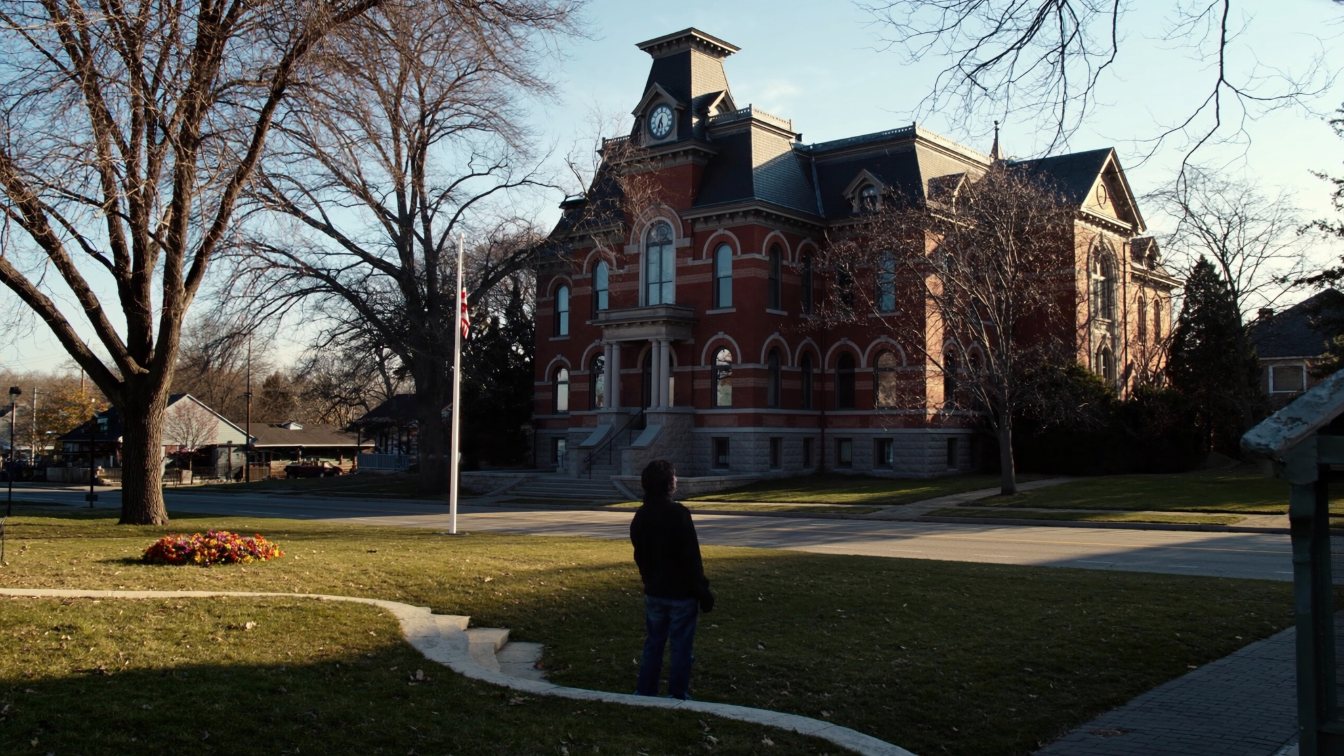
No. Etobicoke has not been a municipality since 1 January 1998, when six local governments and the Metropolitan Toronto regional government were merged into the single amalgamated City of Toronto.
What's Your Home Worth Right Now?
Get a free AI-powered price range for your property in under 90 seconds, based on recent GTA comparable sales. No name or address required.
Get My Free Estimate →The name survives everywhere — on street signs, in addresses, in listing descriptions, in how people describe where they live — but it has no legal existence. Etobicoke has no council, no mayor, no by-laws and no tax rate of its own. That is a genuinely confusing state of affairs, and it has real consequences for anyone buying or selling here.
Every rate on this page was taken from the government source that publishes it, on 25 August 2026, and each source is listed at the bottom with the date that page states. Rates change. Confirm them before you rely on them, and take your own legal and tax advice — I am a Realtor, not a lawyer or an accountant.
What actually happened
The amalgamation was created by Bill 103, the City of Toronto Act, 1997, and took effect on 1 January 1998. The municipalities merged were East York, Etobicoke, North York, Scarborough, the former City of Toronto and York, together with the Metropolitan Toronto regional government that had sat above them since 1953.
Before that date, Etobicoke set its own residential tax rate, ran its own planning department and passed its own zoning by-laws. Since that date, it has done none of those things.
Consequence one: you pay Toronto’s property tax rate
There is one residential rate for the whole city. For 2026 it is 0.767311% — a 0.605295% city rate, the 0.153000% provincial education rate and a 0.009016% City Building Fund levy.
A home in Long Branch, a home in Rexdale and a home on Bloor Street West are all taxed at the same rate. The bills differ because the assessed values differ, not because the areas are treated differently. If someone tells you one part of Etobicoke has a different tax rate from another, they are mistaken.
Consequence two: you pay Toronto’s municipal land transfer tax
This is the consequence with the biggest number attached. Because Etobicoke is inside the City of Toronto, buyers here pay the Toronto Municipal Land Transfer Tax on top of the provincial land transfer tax. On a $1,000,000 purchase that is an extra $16,475 at closing, calculated from the published brackets.
Cross Highway 427 into Mississauga, or the Humber into York Region, and the municipal tax disappears. This is the single largest financial difference amalgamation created for an Etobicoke buyer, and it is why the boundary matters so much more than the name does.
Want these numbers run for a specific property?
Send me the address or the price range and I will put together the full cost picture — land transfer tax, closing costs, rebates you qualify for — on one page.
Call or text 833-330-1925 Email me your numbers
Jatin Dua, Broker of Record — RE/MAX Quantum Realty Inc., Brokerage. Not intended to solicit buyers or sellers currently under contract with another brokerage.
Consequence three: Toronto is single-tier, and that cuts the other way
Toronto is a single-tier municipality — it is not inside a regional government. Mississauga sits inside the Region of Peel, Markham inside York Region, Oakville inside Halton.
Those regional governments levy their own portion of the property tax. In Mississauga for 2026 the Region of Peel portion alone is 0.538760% — more than Toronto’s entire city rate. It is the main reason Mississauga’s total residential rate of 1.087901% is well above Toronto’s.
So amalgamation produced a trade: a higher one-time cost when you buy, and a lower annual cost while you own.
Consequence four: the Vacant Home Tax applies to you
Toronto’s Vacant Home Tax, at 3% of current value assessment from the 2024 taxation year, applies across the whole city. Every residential owner in Etobicoke must file an annual occupancy declaration, and if you do not file, the City deems the property vacant and bills you. No former-municipality boundary exempts anyone from it.
Consequence five: one planning regime
Zoning, permits, committee of adjustment, garden suite and multiplex permissions — all are set city-wide by Toronto, not by anything called Etobicoke. When you read that Toronto has changed a housing rule, that change applies here.
The one place the old boundaries still show up is in the historical record. Property files, older zoning by-laws and building records from before 1998 sit under the former municipality, which is why an older Etobicoke property sometimes has documents that a search of current City records will not surface. If you are researching a pre-1998 addition or a legal non-conforming use, ask specifically for the former-municipality file.
So why does everyone still say Etobicoke?
Because it remains the most useful word available. It describes a real, coherent part of the city that people recognise, it appears in addresses, and it is how buyers search. There is nothing wrong with using it.
The distinction only becomes practical in three moments: when the land transfer tax is calculated, when the property tax rate is applied, and when a municipal rule changes. In all three, the answer comes from the City of Toronto, and Etobicoke is not a separate jurisdiction with a separate answer.
Thinking about this building?
Send me the unit number or the listing link. I’ll tell you what I actually know about the building, what I’d want to see in the status certificate, and whether the price makes sense against what has sold. No pitch, no obligation.
[email protected] · 833-330-1925 · Book a free consultation
Confidential. Reviewed personally and answered within 24 hours. I never share, sell or distribute your information.
Frequently asked questions
Is Etobicoke a city?
No. Etobicoke ceased to be a municipality on 1 January 1998, when Bill 103, the City of Toronto Act, 1997, merged East York, Etobicoke, North York, Scarborough, the former City of Toronto and York, along with the Metropolitan Toronto regional government, into the amalgamated City of Toronto.
Does Etobicoke have its own property tax rate?
No. There is one residential rate for the whole City of Toronto – 0.767311% for 2026. Bills differ across Etobicoke because assessed values differ, not because areas are taxed differently.
Do I pay Toronto land transfer tax if I buy in Etobicoke?
Yes. Etobicoke is inside the City of Toronto, so you pay the Toronto Municipal Land Transfer Tax in addition to the provincial land transfer tax. On a $1 million purchase that is an extra $16,475 at closing.
Does the Toronto Vacant Home Tax apply in Etobicoke?
Yes, city-wide. The rate is 3% of current value assessment from the 2024 taxation year, and every residential owner must file an annual occupancy declaration. If you do not file, the City deems the property vacant and issues a bill.
Why is Toronto’s property tax rate lower than Mississauga’s?
Because Toronto is a single-tier municipality with no regional government above it. Mississauga sits inside the Region of Peel, whose 2026 residential portion alone is 0.538760% – more than Toronto’s entire city rate.
Sources
- Legislative Assembly of Ontario — Bill 103, City of Toronto Act, 1997. The statute that created the amalgamated City of Toronto. Accessed 24 August 2026.
- City of Toronto Archives — Resources on former municipalities. The 1 January 1998 amalgamation date, the six municipalities merged, and the existence of pre-amalgamation records held under the former municipalities. Accessed 24 August 2026.
- City of Toronto — Property tax rates and fees. The single city-wide 2026 residential rate of 0.767311% and its components. Page last updated 11 May 2026. Accessed 24 August 2026.
- City of Toronto — Municipal Land Transfer Tax rates and fees. The municipal land transfer tax that applies throughout the City of Toronto, effective 1 April 2026. Page last updated 7 April 2026. Accessed 24 August 2026.
- City of Toronto — Vacant Home Tax. The 3% rate from the 2024 taxation year, the city-wide declaration requirement and the consequence of not filing. Page last updated 22 July 2026. Accessed 24 August 2026.
- City of Mississauga — By-law 0061-2026. The 2026 Region of Peel residential portion of 0.538760% and Mississauga’s total of 1.087901%, used for the single-tier comparison. Accessed 24 August 2026.
Want these numbers run for a specific property?
Send me the address or the price range and I will put together the full cost picture — land transfer tax, closing costs, rebates you qualify for — on one page.
Call or text 833-330-1925 Email me your numbers
Jatin Dua, Broker of Record — RE/MAX Quantum Realty Inc., Brokerage. Not intended to solicit buyers or sellers currently under contract with another brokerage.
Related reading
- Etobicoke or Mississauga? The costs that differ across Highway 427
- Land transfer tax on an Etobicoke purchase, and the two rebates
- Jatin Dua, Realtor in Etobicoke
- What is my home worth in Toronto and the GTA?
About the author — Jatin Dua, Etobicoke real estate agent
I’m the Broker of Record at RE/MAX Quantum Realty, 799 The Queensway in Etobicoke, a few minutes from every building on this page. I work with buyers, sellers and investors across Mimico, Humber Bay Shores, New Toronto, Long Branch, Alderwood and the Stonegate–Queensway corridor. I write these building guides the way I’d brief a client at my own kitchen table: what is documented, what isn’t, and where the published numbers disagree with each other.
Questions about a specific suite? [email protected] or 833-330-1925.