
Published 2 November 2026 · By Jatin Dua, Broker of Record, RE/MAX Quantum Realty
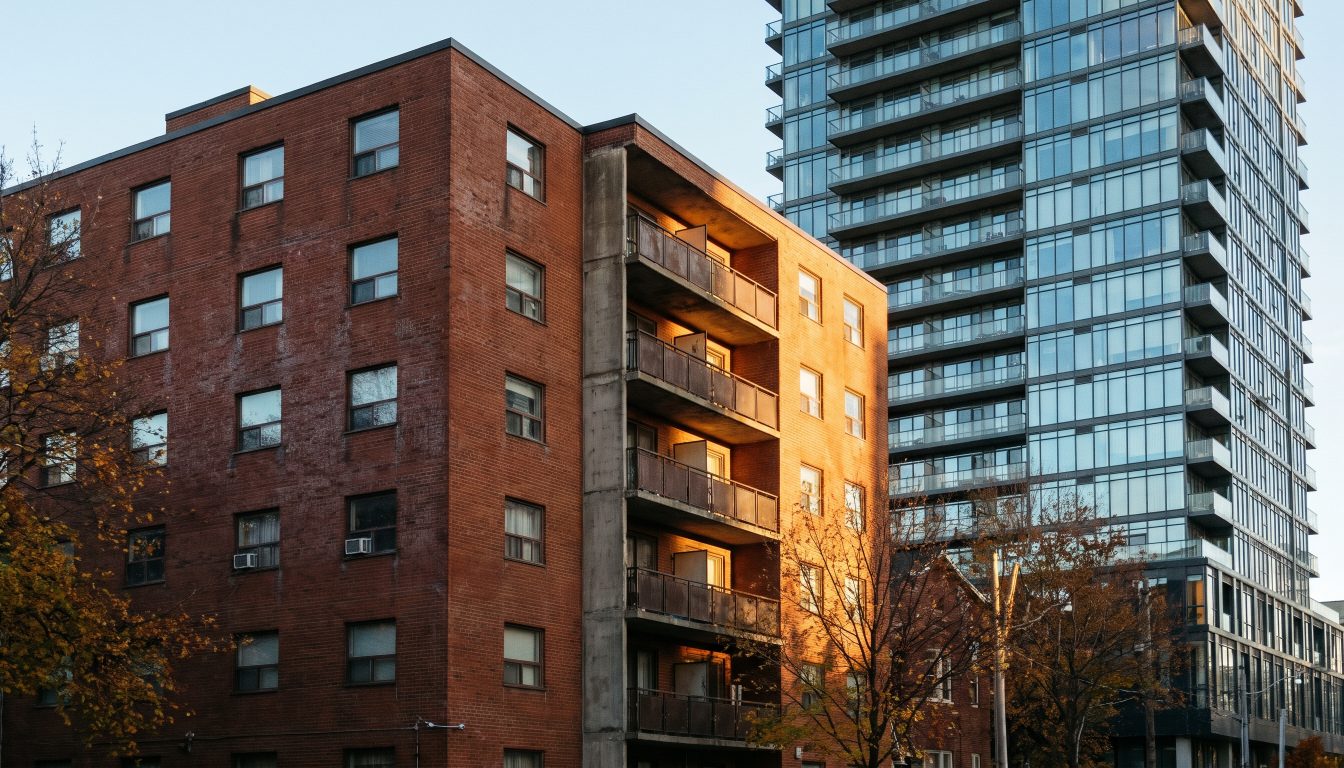
Most Ontario rental units are rent controlled in 2027: rent can rise by no more than the 1.9% guideline, once every 12 months, with 90 days’ written notice. The main exception is a unit in a building or addition first occupied after November 15, 2018, or a qualifying new basement or second unit. Those have no cap but keep the timing rules.
This guide is for Ontario tenants who want to know whether their rent can only rise by the guideline in 2027, and for landlords and condo investors who need to know which rules apply to the unit they own or plan to buy. You will get the legal test, a quick checklist, what 1.9% means in dollars, and how to prove or challenge an exemption.
What does rent control mean in Ontario in 2027?
In Ontario, “rent control” means the rent increase guideline. For 2027 the guideline is 1.9%. It is the most a landlord can raise a sitting tenant’s rent in a year without approval from the Landlord and Tenant Board (LTB). The province sets it from the Ontario Consumer Price Index, and section 120 of the Residential Tenancies Act, 2006 (RTA) caps it at 2.5% no matter how high inflation runs.
Three rules work together:
- The cap: no more than the guideline for most units (RTA s. 120).
- The 12-month rule: at least 12 months since the last increase or since the tenant moved in (s. 119).
- The 90-day notice: written notice on a Board-approved form at least 90 days before the increase. An increase given without proper notice is void (s. 116).
The guideline applies during a tenancy. It does not limit the rent a landlord sets for a brand-new tenant, which I cover below.
How do I know if my unit is rent controlled?
Most units are. Ontario’s own page lists rented houses, apartments, basement apartments and condos as covered by the guideline. The main exceptions are new units first occupied after November 15, 2018, and some types of housing that follow different rules. Use this table as a first check.
| Your situation | Is the 1.9% guideline cap on? | Rule |
|---|---|---|
| Apartment or condo in a building first lived in on or before Nov 15, 2018 | Yes | RTA s. 120 |
| Condo or rental building where no unit was lived in until after Nov 15, 2018 | No | RTA s. 6.1(2), para 1 |
| Unit entirely inside an addition first lived in after Nov 15, 2018 | No | RTA s. 6.1(2), para 2 |
| Basement or second unit in a house, created after Nov 15, 2018, from unfinished space or while the owner lived in the house | No, if all conditions are met | RTA s. 6.1(3) |
| Older basement apartment that already existed as a unit by Nov 15, 2018 | Yes | RTA s. 120 |
| Community or social housing, rent-geared-to-income units | Different rules | RTA ss. 7 and 8 |
| Long-term care home or commercial space | Not covered by the guideline | ontario.ca |
Source: Residential Tenancies Act, 2006, ss. 6.1, 7, 8 and 120 (e-Laws consolidation, September 2026); Ontario, “Residential rent increases” (updated June 23, 2026).
Two points catch people. First, the date that matters is when the building (or addition) was first occupied for residential purposes, not when you signed your lease. A tenant who moves into a 1970s tower in 2027 is still covered by rent control. Second, an exempt unit is not exempt from everything. The 12-month rule and 90-day notice still apply.
What is the November 15, 2018 rent control rule?
Ontario changed the law in late 2018 to encourage new rental supply. Section 6.1(2) of the RTA switches off the guideline (and the above-guideline increase rules) for a unit in a building where no part of the building was occupied for residential purposes on or before November 15, 2018.
For a condo tower, the key date is usually when the first buyers or tenants moved in, which in Ontario is often the interim occupancy period before the condo is registered. If the first residents moved in during 2019 or later, every unit in that building is exempt. If even part of the building was occupied on or before November 15, 2018, the building test fails.
The same test applies to an addition. A new wing built onto an older apartment building can be exempt, while the original building stays rent controlled.
What about tenancies that started before the rule?
Section 6.1(4) says the exemption does not apply to a tenancy whose agreement was signed on or before November 15, 2018. Section 6.1(5) limits that to the same tenancy only. In practice this affects very few tenants today, but it is the reason the law reads the way it does.
Are basement apartments and second units rent controlled?
Older ones usually are. Newer ones often are not. Section 6.1(3) exempts a unit in a detached house, semi or row house only if all of these are true:
- The house had no more than two residential units on or at any time before November 15, 2018.
- The unit has its own bathroom and kitchen, its own entrance, and a door that locks from the inside, with at least one door that locks from the outside.
- It became a self-contained unit after November 15, 2018.
- Either the owner lived in another unit in the house when it was first occupied, or it was built in space that was unfinished before (such as a bare basement or attic).
So a basement apartment finished in 2021 by an owner who lives upstairs is normally exempt. A basement apartment that has been rented since 2012 is normally controlled, even if it was renovated later. Toronto now permits up to four units as of right across the city, so more homeowners are adding units, and this test is worth knowing before you set the rent.
Which other rental units do not follow the guideline?
Ontario lists a few groups that sit outside the guideline or follow separate rules:
- Community and social housing. Section 7 of the RTA removes the guideline for units owned or operated by government bodies, many non-profit housing projects, and non-member units in non-profit co-ops. Rent-geared-to-income units follow income rules (s. 8).
- Long-term care homes and commercial properties. These are not covered by the guideline.
- Care homes such as retirement residences. The guideline applies only to the rent portion, not to services like meals or nursing.
Separately, some housing is outside the RTA entirely, for example when a tenant shares a kitchen or bathroom with the owner or the owner’s close family. If that is your set-up, the guideline question does not arise in the usual way, so get advice on whether the Act applies at all.
Instant Home Valuation
What’s your home
worth today?
Answer six quick questions and get an instant value range built from current Toronto & GTA sale data — property type, size, condition, lot and location all weighted the way a real pricing conversation weighs them. Takes about ninety seconds.
Reading recent GTA sale data…
Building your estimate
Estimated market value
—
$0–$0
Most likely value $0 · roughly $0 per square foot
What moved the number
Starting from the area baseline for your property type, here’s what each answer added or subtracted.
Market context
Recent local averages for comparison.
—
A range is a starting point.
A strategy is what sells.
This model doesn’t know that your neighbour’s identical semi went $80,000 over asking last month, or which two upgrades actually pay back in your area. That conversation is free and takes twenty minutes.
Can a landlord charge a new tenant any rent in Ontario?
Yes. Ontario has what is often called vacancy decontrol. Section 113 of the RTA says the lawful rent for a new tenant is the rent first charged to that tenant. When a unit turns over, the landlord and the new tenant can agree on any amount, and the guideline then applies to that new starting rent.
This is why two identical units in the same rent-controlled building can rent for very different amounts. The one with a long-term tenant has only moved up by the guideline each year. The other was re-let at market rent. For more on this, see my guide on whether a landlord can raise the rent for a new tenant.
How much can my rent go up in 2027?
If your unit is rent controlled, the most it can rise in 2027 is 1.9%, unless the LTB approves an above-guideline increase. Here is what that looks like on typical Toronto rents.
| Monthly rent (reference point) | Max 2027 increase at 1.9% | New monthly rent |
|---|---|---|
| $2,316 (City of Toronto average one-bedroom condo lease, TRREB Q2 2026) | $44.00 | $2,360.00 |
| $2,590 (Toronto average asking rent, apartments and condos, Rentals.ca October 2026) | $49.21 | $2,639.21 |
| $3,154 (City of Toronto average two-bedroom condo lease, TRREB Q2 2026) | $59.93 | $3,213.93 |
Source: TRREB Rental Market Report, Q2 2026 (average lease rates; the Q3 2026 report was not posted when this was written); Rentals.ca and Urbanation National Rent Report, October 2026 (average asking rent). Increases calculated at the 2027 guideline of 1.9%.
The guideline has moved a lot over the past decade. Ontario’s published history shows 1.8% for 2018 and 2019, 2.2% for 2020, a legislated freeze at 0% for 2021, 1.2% for 2022, the 2.5% cap for 2023, 2024 and 2025, 2.1% for 2026 and 1.9% for 2027. A rent-controlled tenant who moved in years ago may now be paying well below what a new tenant would pay for the same unit.
If my unit is exempt, is there any limit on rent increases?
There is no percentage cap, but there are still rules. The landlord can raise the rent only once every 12 months and must give at least 90 days’ written notice on the Board’s form. If the landlord skips the notice, the increase is void and a new notice is needed. The 2021 rent freeze did apply to post-2018 units too, which shows the province can change the rules by law.
In practice, the market sets the ceiling. Rentals.ca and Urbanation reported that Toronto’s average asking rent for apartments and condos rose 1.6% year over year in October 2026, the first annual gain after 32 months of declines. Over the same period they reported declines in Oakville, Markham, Vaughan and Mississauga. A landlord who asks for far more than comparable units risks a vacancy.
If you are buying a condo to rent out, the 2018 line changes the numbers. A unit in a building first occupied in 2019 or later lets you move the rent toward market each year. A unit in an older building with a long-term tenant may be locked at a rent far below market, and the buyer inherits that tenancy. I always ask for the first occupancy date, the current lease and the rent history before we price an offer. My guide on how much less a tenanted condo is worth shows how that plays out.
How do I check or prove that a unit is exempt from rent control?
The burden is on the landlord. Section 6.1(6) of the RTA says that if the exemption is disputed at the LTB, the landlord must prove it. Ontario suggests that landlords add a term in section 15 of the standard lease stating that the unit is exempt and keep the records that prove it. Section 15 is where the standard lease allows extra terms, which must be attached to the lease in plain language.
For a new building or addition
- Building permits, permit applications and plans
- Occupancy permits
- New home warranty documents
- Documents from the builder
For a new unit in an existing house
- Builder documents or contractor invoices
- Before and after photographs
- Building permits, applications and plans
Tenants can ask the landlord for these records, and either side can contact the LTB to ask whether a unit is exempt. For a condo, the year the building opened is often public, but “opened” is not always the same as “first occupied,” so rely on documents, not a listing description.
A listing or lease that says “not rent controlled” is not proof. If the building or the basement unit was in residential use on or before November 15, 2018, the guideline applies regardless of what the paperwork claims. Tenants generally have one year from the date an increase is first charged to challenge it, because section 136 deems rent lawful after that. Do not wait.
What can I do if my rent increase breaks the rules?
If you think your unit is controlled and the increase is above 1.9%, or the notice was late or missing, raise it with your landlord in writing first. If that fails, you can apply to the LTB. Ontario says you can dispute an improper increase within 12 months after the amount was first charged. Under section 135, a tenant can also ask the Board to order the landlord to repay money collected in breach of the Act.
Landlords who face rising costs have a legal route too: an above-guideline increase application for eligible capital work or large jumps in municipal taxes. My guide on above-guideline rent increases explains the grounds, and my post on illegal rent increases in Ontario walks through the tenant side.
What to do next
- Find out when your building, addition or basement unit was first occupied as a home. That single date decides most cases.
- Check your lease, especially section 15, for any statement that the unit is exempt, and ask for the records behind it.
- Compare any 2027 increase notice with the 1.9% guideline, the 12-month rule and the 90-day notice period.
- If something looks wrong, put your concern in writing and apply to the LTB within 12 months of the first increased payment.
- If you are buying or selling a rented unit, get the first occupancy date and rent history before you set a price. I am happy to run those numbers with you anywhere in the GTA.
Need help with this? Talk to me.
I’m Jatin Dua, Broker of Record at RE/MAX Quantum Realty, and I’m the best agent to do this kind of work for you in Toronto and across the GTA. Over $100 million in GTA sales and 100+ families helped sell. Feel free to contact me any time: call or text 833-330-1925 or email [email protected].
Frequently asked questions
Is my apartment rent controlled in Ontario?
Probably yes. In Ontario in 2027, most rented apartments, condos, houses and basement units are covered by the 1.9% rent increase guideline. The main exception is a unit in a building or addition where no part was occupied for residential purposes on or before November 15, 2018, plus qualifying new basement or second units. Social housing and long-term care follow different rules.
Are units built after 2018 rent controlled in Ontario?
No, not by the guideline. Under section 6.1 of Ontario’s Residential Tenancies Act, a unit in a building or addition first occupied for residential purposes after November 15, 2018 has no cap on the size of a rent increase in 2027. The landlord must still wait 12 months between increases and give at least 90 days’ written notice on the Board’s form.
What is the rent increase guideline for 2027 in Ontario?
The 2027 Ontario rent increase guideline is 1.9%. It applies to increases that take effect between January 1 and December 31, 2027 for rent-controlled units. On a $2,316 monthly rent, that is a maximum increase of $44. The guideline is based on Ontario inflation and is capped by law at 2.5%.
Is a condo rent controlled in Ontario?
It depends on the building, not the fact that it is a condo. In 2027, a rented condo in a building first occupied on or before November 15, 2018 is covered by the 1.9% guideline. A condo in a building where nobody lived until after that date is exempt from the cap. Check the building’s first occupancy date with documents, not just the listing.
Is a basement apartment rent controlled in Ontario?
An older one usually is. In Ontario, a basement apartment that existed as a unit by November 15, 2018 follows the 1.9% guideline in 2027. A newer one is exempt only if the house had no more than two units by that date, the unit is self-contained, and it was built in unfinished space or while the owner lived in the house.
How do I find out if my unit is exempt from rent control in Ontario?
Ask your landlord for proof. In Ontario the landlord must prove the November 15, 2018 exemption if it is disputed, using records such as building permits, occupancy permits, warranty or builder documents, or contractor invoices and photos for a new basement unit. Check section 15 of your standard lease, and contact the Landlord and Tenant Board if you are unsure.
Can my landlord raise my rent by 5% in 2027 in Ontario?
Only if your unit is exempt or the Landlord and Tenant Board approves it. For a rent-controlled Ontario unit, the 2027 maximum is 1.9% unless the landlord wins an above-guideline increase or you agree to an increase for a new service. For a unit first occupied after November 15, 2018, there is no percentage cap, but the 12-month and 90-day rules still apply.
Does rent control apply when a new tenant moves in?
No. Ontario allows vacancy decontrol, so in 2027 a landlord and a new tenant can agree on any starting rent, even in a rent-controlled building. Section 113 of the Residential Tenancies Act makes the first rent charged the lawful rent. After that, the guideline limits increases for as long as that tenant stays.
How long do I have to challenge an illegal rent increase in Ontario?
About one year. Ontario says tenants can dispute an improper rent increase at the Landlord and Tenant Board within 12 months after the amount was first charged. Under section 136 of the Residential Tenancies Act, an increase is deemed lawful if no application is made within that year, so act quickly in 2027 if a notice looks wrong.
Sources
- Residential rent increases (Government of Ontario)
- Residential Tenancies Act, 2006, S.O. 2006, c. 17 (e-Laws)
- TRREB Rental Market Report, Q2 2026
- Rentals.ca and Urbanation National Rent Report, October 2026
- Guide to Ontario’s standard lease (Government of Ontario)
Related reading
- Can My Landlord Enter Without Notice in Ontario?
- Can a Landlord Evict You Without Going to the LTB in Ontario?
- Can My Landlord Raise the Rent Every Year in Ontario? 2027 Rules
- Can a Landlord Put Security Cameras in or Outside a Rental in Ontario?
About the author — Jatin Dua, Toronto and GTA real estate broker
I am Jatin Dua, Broker of Record and co-founder of RE/MAX Quantum Realty Inc., Brokerage, Unit 101, 799 The Queensway, Toronto. I work with buyers and sellers across Toronto and the GTA and have helped more than 100 families sell. Four-plus years of active GTA transactions and over $100 million in sales volume.
Reach me at [email protected] or 833-330-1925, or book a call.