
Published 7 September 2026 · Updated 29 September 2026 · By Jatin Dua, Broker of Record, RE/MAX Quantum Realty
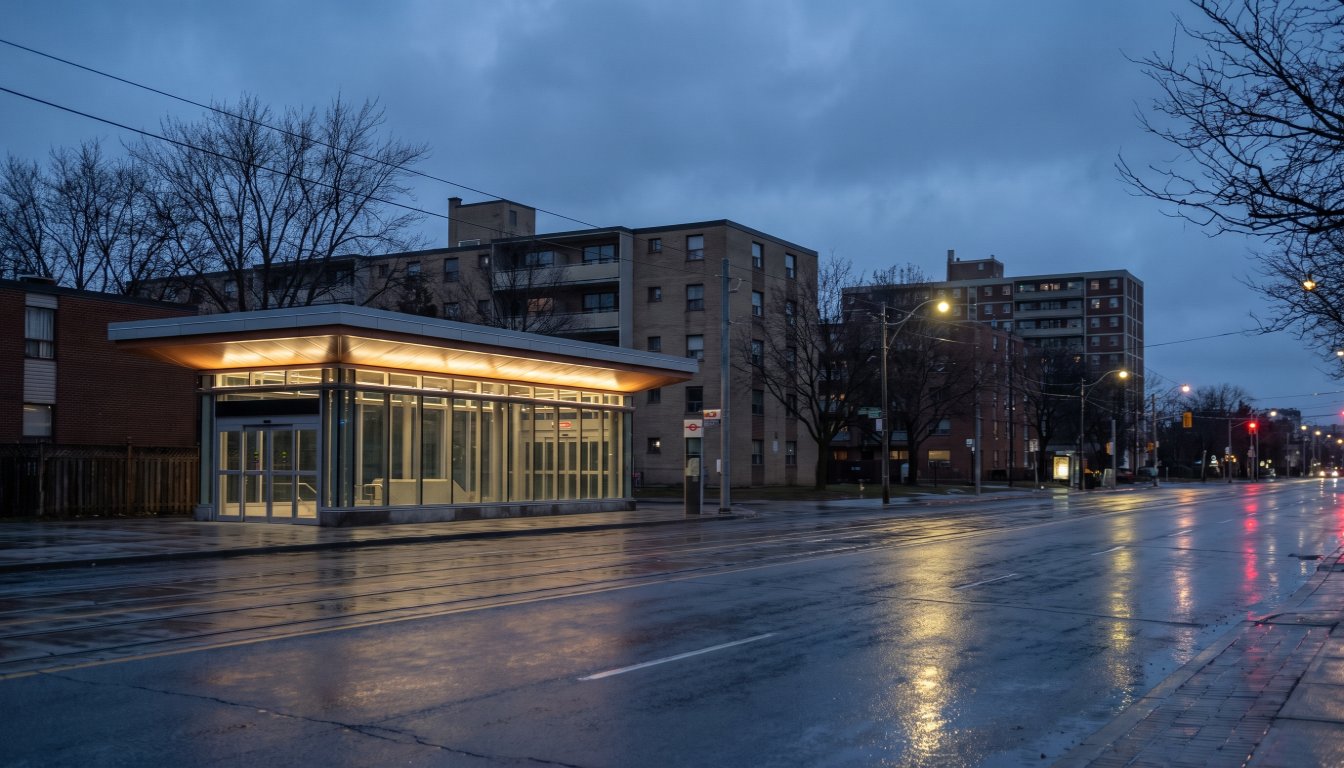
Line 5 Eglinton opened on 8 February 2026 after more than a decade of construction — 19 kilometres and 25 stations from Mount Dennis to Kennedy. End to end it runs roughly 50 to 55 minutes against about 105 minutes on the old bus. The biggest gains are in the middle of the line, around Oakwood, Fairbank and Caledonia, where residents went from a slow bus to a rapid transit station within walking distance. The western extension to Renforth is not expected until 2031.
What actually changed on 8 February
For a decade, Eglinton was a construction site people apologised for living near. The line finally opened in February 2026, and the practical effect is easy to state: a crosstown trip that used to mean a bus crawling in mixed traffic now takes roughly half as long, and it connects to Line 1 at two points and Line 2 at Kennedy.
The commute improvement is not evenly distributed, and that is the whole story for anyone thinking about property.
| Segment | Before | After Line 5 |
|---|---|---|
| Mount Dennis to Kennedy, end to end | About 105 minutes by bus | 50 – 55 minutes |
| Mid-line to Yonge and Eglinton | Slow bus in mixed traffic | Direct, grade-separated for much of it |
| Mid-line to downtown | Bus plus subway, two transfers | One connection to Line 1 |
| Scarborough to midtown | Line 2 plus a bus | Line 2 to Line 5 at Kennedy |
The short version
Line 5 halved a crosstown trip that used to run about 105 minutes end to end. The gain is concentrated where there was no rapid transit at all before, not at Yonge and Eglinton, which was already on a subway.
How transit premiums actually behave
There is a well-documented pattern in how rapid transit affects nearby home values, and it is not the one most sellers expect. The premium arrives in stages, and a lot of it is already priced in long before the first train runs.
The rough shape of it:
- Announcement. A modest early lift, and heavily discounted for the risk the project never happens — a discount Toronto buyers learned to apply generously during the Crosstown’s delays.
- Construction. Often a drag. Years of hoarding, dust, closed lanes and lost storefront parking suppress values along the corridor itself, even as the eventual benefit becomes more certain.
- Opening. The relief trade. The construction discount unwinds, retail comes back, and the corridor starts to look like the thing it was always going to be.
- Two to ten years after. The real, durable change, and it is less about existing houses than about what gets built. Intensification permissions, new midrise, and the slow shift in who wants to live there.
Walking distance is the whole variable
The one thing the research is consistent about: the effect falls away sharply with distance from the station entrance. A ten-minute walk is a different asset from a three-minute walk, and buyers price it that way.
If you own or are buying near the line, measure the actual walking route — not the straight-line distance on a map. Eglinton has long blocks, a rail corridor, and a few places where the nearest crossing adds several minutes.
- Under 500 metres: genuinely walkable in February. This is where the premium concentrates.
- 500 metres to a kilometre: walkable in good weather, a bus ride in bad. A meaningfully weaker effect.
- Over a kilometre: the station is a convenience, not a feature of the property.
- Directly on Eglinton: a trade-off, not a pure gain. You get the shortest walk and the most noise, traffic and, in some stretches, an aboveground alignment right outside the window.
Measure the walk, not the map
Under 500 metres is where the premium concentrates. Past a kilometre the station is a convenience rather than something you can price. Walk the actual route before you decide what it is worth to you.
Where the second wave of change is coming from
The durable effect of a transit line on a neighbourhood is rarely about existing houses. It is about what the city permits next.
Eglinton is now a rapid transit corridor, and provincial and municipal policy pushes density towards exactly that. Major transit station areas, the multiplex permissions across Toronto’s residential zones, and midrise development along avenues all point the same way.
- Midrise on the avenue. Expect a steady pipeline of six to twelve storey buildings along Eglinton itself over the next decade.
- Gentle density on the side streets. Duplex, triplex and fourplex conversions in the low-rise blocks behind the corridor.
- Retail turnover. The independent shops that survived a decade of construction are not all going to survive the rent increases that follow it. This is the part longtime residents feel most sharply.
- Assembly interest. Builders quietly buying adjacent lots near stations. If you own within a couple of hundred metres of a station and you get an unsolicited offer, it is worth understanding why before you answer it.
If you are buying near the line right now
Seven months in is an awkward moment. The construction discount has largely unwound, but the second-wave changes have barely started. A few things worth doing before you commit:
- Check the alignment outside the property. Line 5 runs underground through the central section and at surface level towards the eastern end. Surface running beside your bedroom is a different proposition from a tunnel.
- Look at what is already approved nearby. Your municipality’s development application map will show you what is coming. A pleasant low-rise view can have an approved twelve-storey building behind it.
- Test the actual commute. Ride it at 8am on a weekday to where you actually work, before you make an offer. Frequency and crowding at rush hour are the real experience.
- Do not overpay for the extension. The Renforth extension is targeted for 2031 and Toronto’s record on transit timelines speaks for itself. Buy for the line that runs today.
Three checks before you make an offer
Ride the commute at 8am to where you actually work. Pull the development applications within two blocks. Check whether the line runs in a tunnel or on the surface outside the window. That is an afternoon of work and it changes the number.
And if you already own along it
You have absorbed a decade of construction. The question is whether now is the moment to sell into the improvement or hold for the second wave.
There is no universal answer, but the framing that helps: selling now captures the relief trade — the unwinding of the construction discount, which has largely already happened. Holding is a bet on intensification and the neighbourhood’s re-rating over five to ten years, which is a slower and less certain payoff but a considerably larger one if you are near a station.
Selling or holding
Selling now captures a discount that has already unwound. Holding is a bet on what gets built next. Neither is wrong — but be clear with yourself about which bet you are making.
Common questions
When did the Eglinton Crosstown open?
Line 5 Eglinton opened on 8 February 2026, running 19 kilometres and 25 stations between Mount Dennis and Kennedy after more than a decade of construction and repeated delays.
How much faster is Line 5 than the old bus?
End to end the line runs roughly 50 to 55 minutes, against about 105 minutes for the buses it replaced. The gain is largest for trips that previously required a slow crosstown bus plus a transfer.
How much does a transit station add to a home’s value?
There is no reliable single figure. Published studies span a very wide range and the effect depends heavily on walking distance, housing type and what the corridor looked like beforehand. What is consistent is that the effect concentrates within roughly 500 metres of a station entrance and falls away quickly beyond that.
Which neighbourhoods gained the most from Line 5?
The mid-line areas that previously had no rapid transit at all — around Oakwood, Fairbank and Caledonia — gained the most in practical commute terms. Areas already on a subway line, like Yonge and Eglinton, gained the least because they were already well served.
When will the Eglinton West extension to Renforth open?
The 9.2 kilometre western extension from Mount Dennis to Renforth is under construction and currently targeted for completion around 2031. A further extension towards Pearson has been proposed but remains at the planning stage.
Is it too late to buy on the Eglinton corridor?
The easy part of the trade — the construction discount unwinding — has largely happened. What has not happened yet is the intensification and neighbourhood change that follows a transit line over five to ten years. Whether that is worth buying for depends on how long you intend to hold.
Thinking about buying or selling along Eglinton?
I have watched this corridor through the entire construction period and I know which blocks actually improved and which just got noisier. Send me the address or the area you are considering and I will give you a straight read — including what is already approved to be built nearby.
Ask Jatin about the corridor or call or text 833-330-1925.
Related reading
- Metrolinx and TTC — Line 5 Eglinton opening, 8 February 2026; 19 km, 25 stations, Mount Dennis to Kennedy
- Metrolinx — end-to-end travel time of approximately 50 to 55 minutes versus about 105 minutes by bus
- Metrolinx — Eglinton Crosstown West Extension, 9.2 km to Renforth, targeted for completion around 2031
- City of Toronto — Major Transit Station Areas and Avenues midrise policy
- Published transit-oriented development literature on distance-decay in station value effects
Jatin Dua is Broker of Record and co-founder of RE/MAX Quantum Realty, Brokerage, Unit 101, 799 The Queensway, Etobicoke. Four-plus years in the GTA and more than $100M in sales volume.
General commentary on the Eglinton corridor, not investment advice or a valuation of any specific property. Transit effects on home values vary enormously by location, housing type and timing, and no percentage quoted anywhere should be applied to an individual address. Speak to a licensed agent about your own situation.