
Published 7 September 2026 · Updated 29 September 2026 · By Jatin Dua, Broker of Record, RE/MAX Quantum Realty
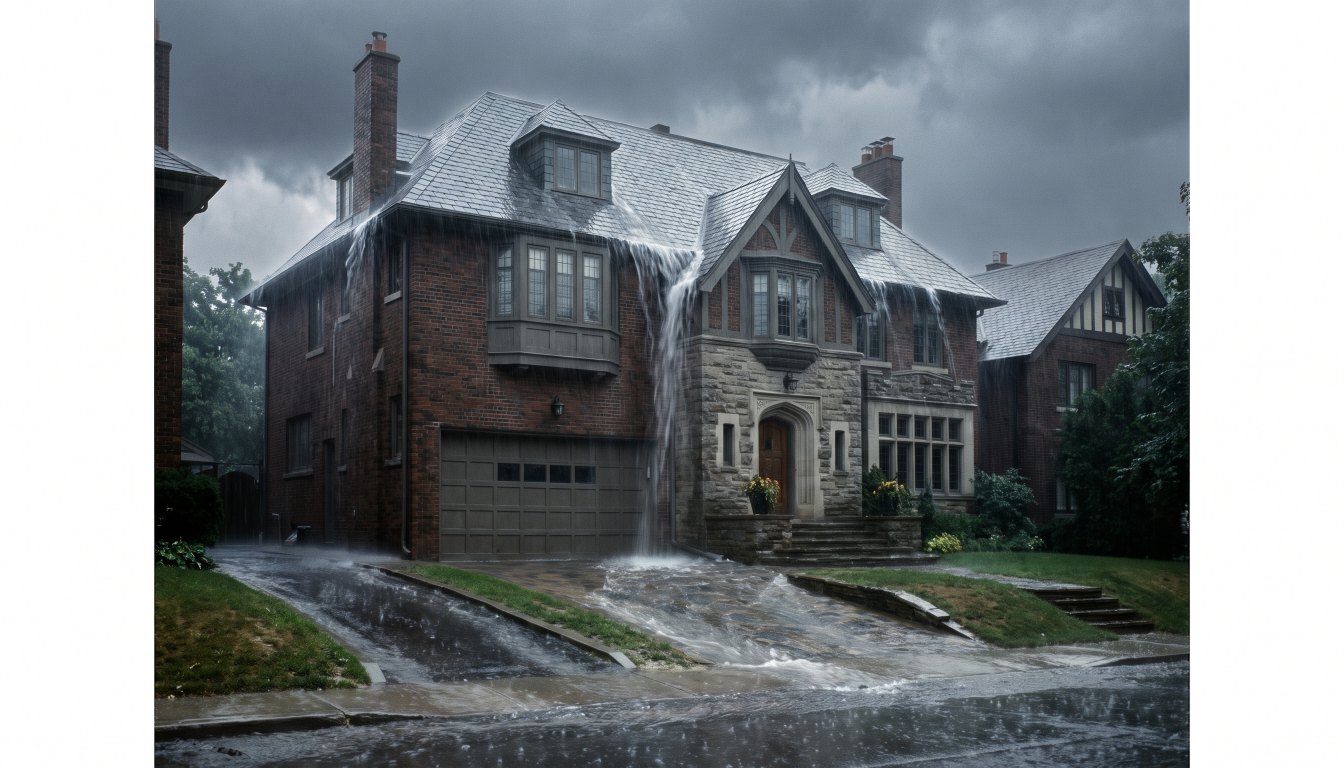
Because high-value home insurance is priced on replacement cost — what it would cost to rebuild this house, with these materials, to current code — rather than on market value. On a Toronto property where much of the purchase price is land, replacement cost can be very different from what you paid, in either direction.
The other drivers are risk-specific rather than value-specific: water and drainage exposure, a ravine slope, extensive glazing, pools, older wiring and plumbing, and how often the house is unoccupied. That last one produces more declined claims than anything else on the list.
Replacement cost, not market value
This is the first thing that surprises people. You paid $4.5 million; the policy is written for a rebuild figure that may be materially lower. That is not an error — a large part of what you bought was land, and land does not burn.
The corollary matters more. On an unusual or heavily detailed house, replacement cost can be higher than people expect, because rebuilding with the same stone, millwork, glazing and detailing to current code is expensive. Both directions of error are common and both are worth checking.
What underwriters actually look at
| Factor | Why it matters |
|---|---|
| Electrical | Knob-and-tube wiring and undersized services are specific declinature triggers in older houses |
| Plumbing | Galvanised supply, lead service lines, and age-related failure risk |
| Roof | Age and material; a roof near the end of its life affects both premium and eligibility |
| Water and drainage | Overland water and sewer backup are usually separate endorsements with their own limits |
| Slope and ravine | Drainage, erosion, and the practicalities of access for repair |
| Glazing | Large format glass is expensive to replace and slow to source |
| Pool and grounds | Liability, fencing and enclosure compliance |
| Occupancy pattern | How often, and for how long, the house is empty |
| Oil tanks | Environmental exposure; frequently a condition of coverage |
Water is the recurring theme
Fire is what people insure against and water is what actually happens. Overland water and sewer backup coverage are usually endorsements rather than core coverage, with separate limits and deductibles, and terms vary considerably between insurers. On a ravine lot, a low-lying rear garden, or a house with a finished lower level, this is the section of the policy to read line by line.
Condominium owners: read the deductible allocation
In a condominium, the corporation insures the common elements and the standard unit, and the status certificate includes the certificate of insurance. What matters to you personally is how the corporation’s deductible is allocated when a loss originates in a unit — in many corporations the unit owner is responsible for it in defined circumstances, and those deductibles can be substantial. Your own unit-owner policy needs to be sized to that actual number.
What to do before you buy
- Get an insurance quote during your conditional period, not after closing. A declinature or an unexpected requirement is information you want before you are bound.
- Ask what water coverage is included, and at what limit and deductible.
- Disclose the occupancy pattern honestly if the house will be empty for long stretches.
- Ask about remediation requirements — wiring, plumbing, roof, oil tank — and price them into your budget.
- For a condominium, ask your lawyer to explain the deductible allocation from the declaration and the status certificate.
The practical takeaway
Treat insurance as part of your diligence rather than a formality after closing. On a large or older Toronto house, the quote frequently surfaces conditions the inspection did not emphasise, and it does so while you can still do something about it.
Frequently asked questions
Is my home insured for what I paid?
No. Home insurance responds to the cost of rebuilding the structure, not the purchase price. On a property where the land is a large share of the value, the insured amount can be well below what you paid — and that is normal, not an error.
Why is insurance harder on an older luxury home?
Knob-and-tube wiring, galvanised or lead plumbing, an undersized electrical service, an aged roof and an oil tank are all specific underwriting concerns. Insurers may require remediation as a condition of coverage or decline entirely.
How does a ravine lot affect insurance?
Slope, drainage and water are the underwriting questions. Overland water and sewer backup coverage is usually a separate endorsement rather than automatic, and terms and limits vary considerably. Ask specifically what water coverage a quote includes.
What is a vacancy clause?
A provision suspending or limiting coverage when a property is unoccupied beyond a stated period. It affects owners who travel for long stretches, properties held between tenants, estates, and houses empty through a long renovation. Tell your insurer before the property sits empty, not after a loss.
Do pools affect the premium?
Yes, through liability rather than property risk primarily. Fencing and enclosure requirements are set by municipal bylaw and are a condition of both compliance and coverage. Confirm the requirements for your address with the City.
Should I use a specialist high-value insurer?
Many owners of large or unusual homes do, because standard programmes are built around typical housing stock and typical claim patterns. Speak to an insurance broker who works with high-value properties; the terms and the service model are meaningfully different.
Thinking about buying or selling at the top end?
Send me the address, or the shortlist you are considering. I will tell you what the property is actually worth today, what the land is worth without the house, what the transfer tax and carrying costs will be, and whether the deal makes sense. Confidential, always.
[email protected] · 833-330-1925 · Book a free consultation
Confidential. Read personally and answered within 24 hours. I never share, sell or distribute your information.
Related reading
- Water is the most expensive problem in a Toronto luxury home
- What a real inspection on a luxury home should include
- Buying a ravine lot in Toronto: what the bylaw does to your plans
- Toronto’s vacant home tax at 3%: what it costs on a luxury home
Sources
Everything above that is a rule, a rate or a published number comes from these. Verify anything that matters to your own deal.
- City of Toronto — Vacant Home Tax
- City of Toronto — Municipal Code Chapter 658, Ravine and Natural Feature Protection
About the author — Jatin Dua, Broker of Record
I’m the Broker of Record at RE/MAX Quantum Realty, 799 The Queensway in Etobicoke, and I work with buyers, sellers and investors across Toronto and the west GTA. A large part of my work sits in the upper end of the market, where the comparables are thin, the rules are heavier and the cost of a wrong number is measured in hundreds of thousands of dollars.
The free estimators on this site are mine. I built them because the first question every owner asks is “what is it worth?” and the honest answer starts with a number you can check yourself. [email protected] or 833-330-1925.