
Published 7 September 2026 · Updated 29 September 2026 · By Jatin Dua, Broker of Record, RE/MAX Quantum Realty
A standard home inspection is scoped for a standard house. On a large property the scope has to grow with the building: more envelope, more roof, more glazing, more mechanical zones, plus systems that simply do not exist in ordinary housing — a pool and its plant, an elevator, a generator, irrigation, a septic system on some estate lots, and extensive site drainage.
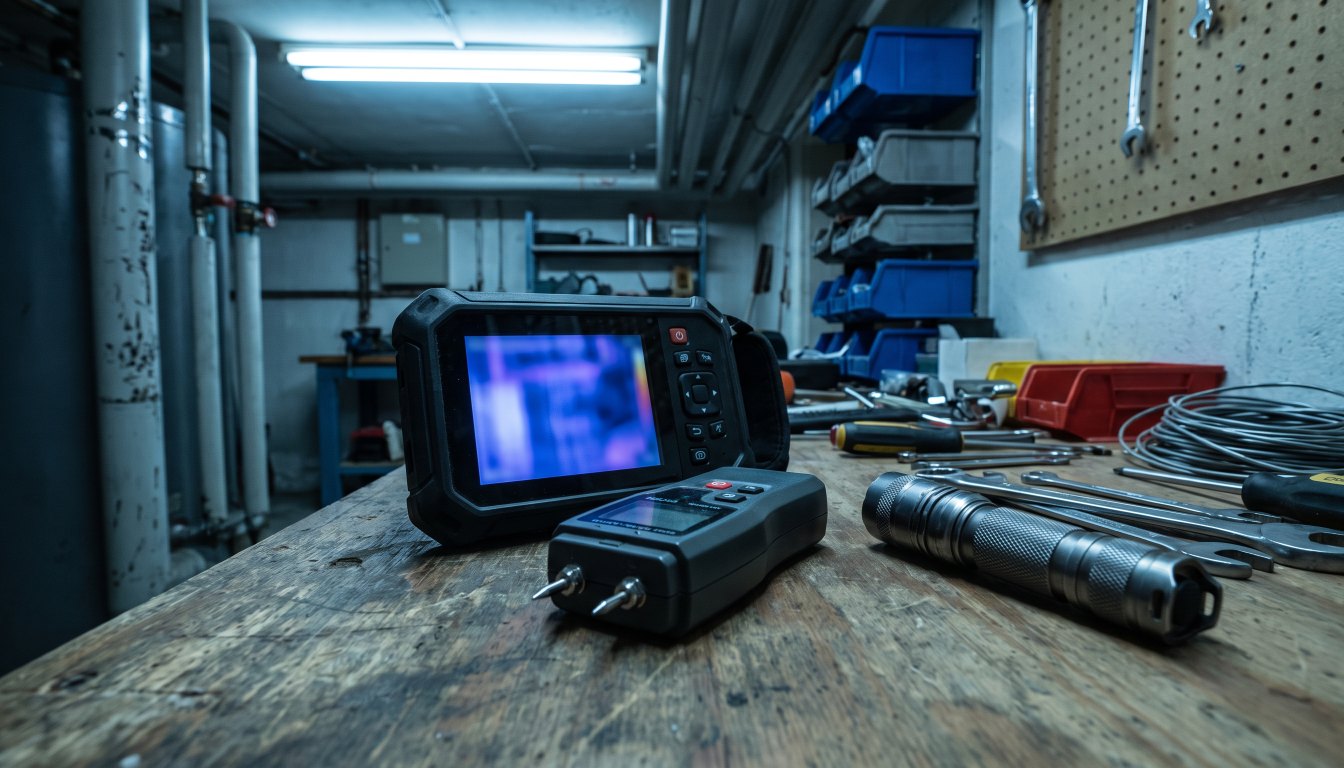
The single most valuable addition is water investigation: grading, drainage, the lower level, and thermal imaging or moisture metering where anything looks suspect. Water is the most expensive category of problem in a large Toronto house and the one most often invisible on a dry day in September.
Scope has to scale with the building
A general home inspection is a visual assessment carried out within defined limitations and in a defined amount of time. On a 1,800 square foot semi that is proportionate. On a 6,000 square foot house with four mechanical zones, a pool, a generator, an elevator and a ravine slope, the same time and the same scope do not cover the property.
The full checklist
Envelope and roof
- The whole roof, accessed or surveyed properly rather than viewed from the driveway
- Flashings, valleys, chimneys, skylights and any flat roof sections
- Masonry, stone, mortar and any cladding transitions
- Window and door seals, and any large-format glazing
- Eaves, gutters and where the downspouts actually discharge
Water, in every form
- Site grading away from the foundation on every elevation
- The lower level: foundation walls, base of finished walls, efflorescence, odour
- Sump pit, pump, backup power and the backwater valve
- Weeping tile and any evidence of past remediation
- Thermal imaging and moisture metering where anything looks suspect
- On a ravine lot, slope drainage, erosion and any retaining structures
Mechanical
- Heating and cooling equipment, age, service history and zoning
- Whether the zoning actually delivers comfort across the whole house
- Water heating capacity relative to the number of bathrooms
- Ventilation, humidification and any air quality equipment
- Boiler and radiant systems where present
Electrical
- Service size and panel capacity, with attention to headroom for future load
- Knob-and-tube wiring or aluminium branch wiring in older houses
- Generator, transfer switch and its service history
- Low-voltage and automation infrastructure, and whether it is documented
Specialist systems
- Pool: structure, liner or finish, plant, heater, safety and enclosure compliance
- Elevator: a licensed specialist, not a general inspector
- Irrigation and landscape lighting
- Septic, on estate lots outside the sewer network
- Retaining walls and slope structures, with engineering input where there is any doubt
What an inspection cannot do
It is a visual assessment. It does not open walls, it does not guarantee the future, and it does not answer legal questions. The lot questions — boundaries, easements, encroachments, ravine and TRCA mapping, heritage status, protected trees, the zoning envelope — are for your lawyer and your survey, not for the inspector.
For sellers
A pre-listing inspection lets you find the problems on your own schedule and fix or disclose them deliberately, rather than under negotiation pressure with a buyer holding a report. It also makes it easier for buyers to compete on firm terms, which is what produces a strong result in a market this thin.
The practical takeaway
Match the inspection to the building. Add the specialists the general inspector does not cover, insist on a proper water investigation, and get it all done before you write a firm offer. On a property at this level, the cost of a thorough inspection is a rounding error against the cost of finding out afterwards.
Frequently asked questions
Is a standard home inspection enough for a luxury home?
Usually not on its own. A general inspection is a visual assessment with defined limitations. On a large property it should be supplemented by specialists for the systems the inspector does not cover — pool and plant, elevator, generator, septic where applicable, and structural or engineering review where anything is unclear.
What should be inspected that usually is not?
Site grading and drainage in detail, the full roof rather than what is visible from the ground, mechanical zoning and balance, the pool and its equipment, the elevator, the generator and its transfer switch, irrigation, and any retaining structures on a slope.
Is thermal imaging worth it?
It is a useful supplementary tool for identifying moisture, insulation gaps and some electrical issues. It is not a guarantee and it does not see through walls in the way people imagine. Treat it as one input among several.
When should an engineer be involved?
Where there is a structural question, a retaining wall or slope stability issue, evidence of movement, or a proposed alteration that changes loads. An inspector will often recommend this, and the recommendation should be followed rather than negotiated away.
Can I inspect before making an offer?
Often yes, with the seller’s cooperation, and at the top of the market it is common. It is the only way to submit a firm offer responsibly, since Ontario provides no cooling-off period on a resale purchase.
What is a pre-listing inspection?
An inspection commissioned by the seller before listing and made available to buyers. It lets buyers compete on firm terms with better information, and it lets the seller address issues on their own schedule rather than under negotiation pressure.
Thinking about buying or selling at the top end?
Send me the address, or the shortlist you are considering. I will tell you what the property is actually worth today, what the land is worth without the house, what the transfer tax and carrying costs will be, and whether the deal makes sense. Confidential, always.
[email protected] · 833-330-1925 · Book a free consultation
Confidential. Read personally and answered within 24 hours. I never share, sell or distribute your information.
Related reading
- Water is the most expensive problem in a Toronto luxury home
- The pre-listing inspection: why top-end sellers pay for bad news early
- Going firm on a $4 million house: the risk nobody prices
- Insuring a luxury home in Toronto: why the quote comes back strange
Sources
Everything above that is a rule, a rate or a published number comes from these. Verify anything that matters to your own deal.
- City of Toronto — Municipal Code Chapter 658, Ravine and Natural Feature Protection
- Toronto and Region Conservation Authority — Replacing an existing home
About the author — Jatin Dua, Broker of Record
I’m the Broker of Record at RE/MAX Quantum Realty, 799 The Queensway in Etobicoke, and I work with buyers, sellers and investors across Toronto and the west GTA. A large part of my work sits in the upper end of the market, where the comparables are thin, the rules are heavier and the cost of a wrong number is measured in hundreds of thousands of dollars.
The free estimators on this site are mine. I built them because the first question every owner asks is “what is it worth?” and the honest answer starts with a number you can check yourself. [email protected] or 833-330-1925.