
Published 2 November 2026 · By Jatin Dua, Broker of Record, RE/MAX Quantum Realty
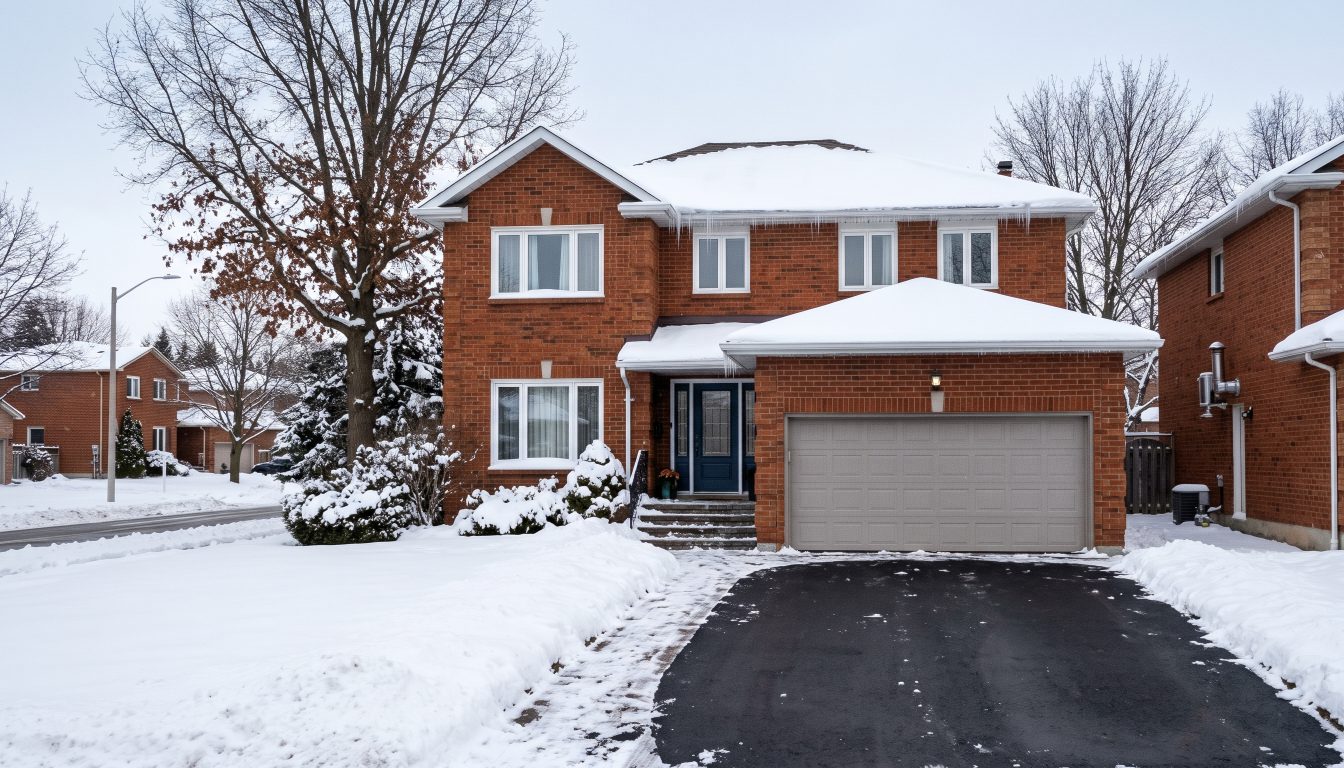
The five winter jobs that matter most for GTA homeowners are a yearly furnace and fuel-appliance inspection with working CO alarms on every storey, protecting pipes from freezing, clearing eavestroughs to prevent ice dams, keeping vents and walkways clear of snow, and protecting the basement before the spring thaw. In Toronto, driveways and steps must be cleared within 24 hours.
This is for homeowners in Toronto and across the GTA who want to get through the 2026 to 2027 winter without a burst pipe, a cold furnace or a flooded basement. You will get the five jobs that prevent the most expensive winter damage, the official rules and numbers behind each one, and the snow-clearing rules that can cost you a fine.
Which winter maintenance jobs matter most for GTA homeowners?
Most winter damage I see comes from a short list of causes: heat, water and ice. The five jobs below deal with each of them.
| Job | When | Key rule or number | Who says so |
|---|---|---|---|
| Inspect furnace and fuel-burning appliances | Every year, before the cold | Use a TSSA-registered fuel contractor | TSSA |
| Test CO and smoke alarms | Monthly | CO alarm next to each sleeping area and, since 1 January 2026, on every storey in homes with fuel-burning appliances, a fireplace or an attached garage | City of Toronto (Ontario Fire Code) |
| Protect pipes from freezing | All winter | Keep areas near pipes above 8°C; trickle water from at-risk taps when nights drop below -15°C | City of Toronto |
| Clear snow from your property | After each snowfall | Toronto: driveways, steps and ramps within 24 hours; pushing snow onto the road can bring a $500 fine plus a $110 surcharge | City of Toronto |
| Protect the basement | Before the spring thaw | Toronto subsidy covers 80% of eligible flood protection work, up to $6,650 per property | City of Toronto |
Source: TSSA; City of Toronto carbon monoxide alarm, frozen pipe, snow clearing and basement flooding subsidy pages, checked November 2026. Rules outside Toronto vary by city.
1. Get the furnace inspected and test your carbon monoxide alarms
Your furnace works hardest from December to March, and that is when a breakdown costs the most. The Technical Standards and Safety Authority (TSSA), which regulates fuel safety in Ontario, recommends having all fuel-burning appliances inspected every year by a TSSA-registered fuel contractor. That includes the furnace, water heater, gas fireplace and gas stove. TSSA says the average Ontario home has about four to six appliances that can produce carbon monoxide (CO), and roughly 65% of CO incidents in Ontario happen at home.
The alarm rules tightened this year. According to the City of Toronto, a home with a fuel-burning appliance, a fireplace or an attached garage must have a working CO alarm next to each sleeping area and, since 1 January 2026, on every storey. The City recommends testing both smoke and CO alarms every month. Learn the difference between the low-battery chirp, the end-of-life warning and the real alarm, so you know which one you are hearing at 3 a.m.
While the technician is there, ask them to show you how to change the furnace filter, and check it regularly over the winter. A clogged filter makes the furnace work harder.
2. How do you stop pipes from freezing?
The City of Toronto’s frozen pipe advice is the clearest guide I have found, and it applies anywhere in the GTA:
- Outdoor taps: disconnect the hose, shut off the indoor valve for the outdoor tap if you have one, and open the outside tap to drain it.
- Insulate exposed pipes in the basement, crawl space, garage and attic, using foam pipe covers if needed. Seal drafts near pipes, vents and wiring.
- Keep it warm: keep areas near pipes, especially the water meter, above 8°C. Keep the heat on overnight and when you travel.
- Open cabinet doors under kitchen, bathroom and laundry sinks so warm air reaches the pipes.
- On very cold nights below -15°C, run a pencil-thin stream of water from a tap on an outside wall. You pay for the water, but it is cheaper than a repair.
- Find your main shut-off valve now and make sure it turns.
If a pipe does freeze, open the cold tap nearest the problem and warm the pipe with a hair dryer, heating pad or warm towels. The City warns never to use a torch, propane heater or any open flame. Ownership is split: the City owns the water service pipe from the watermain to the property line, and the owner is responsible for the pipe from the property line into the house.
3. Clear the eavestroughs and watch for ice dams
The Insurance Bureau of Canada (IBC) explains that ice dams form when heat escaping into the attic melts snow on the roof, and the water refreezes at the cold roof edge or in the eavestroughs. Water can then back up under the shingles and into ceilings and walls.
IBC lists the main causes as poor attic insulation, poor attic ventilation, and heavy snow with blocked eavestroughs. Its prevention steps are practical:
- clear leaves and debris from eavestroughs and downspouts before the first hard freeze;
- check attic insulation and roof ventilation;
- use a roof rake from the ground to pull heavy snow off the lower roof;
- call a professional if ice dams keep forming.
Insurance matters here. IBC notes that sudden water damage from an ice dam is commonly covered, but ongoing or repeated damage may be treated as poor maintenance and not covered. Fix the cause after the first one.
Instant Home Valuation
What’s your home
worth today?
Answer six quick questions and get an instant value range built from current Toronto & GTA sale data — property type, size, condition, lot and location all weighted the way a real pricing conversation weighs them. Takes about ninety seconds.
Reading recent GTA sale data…
Building your estimate
Estimated market value
—
$0–$0
Most likely value $0 · roughly $0 per square foot
What moved the number
Starting from the area baseline for your property type, here’s what each answer added or subtracted.
Market context
Recent local averages for comparison.
—
A range is a starting point.
A strategy is what sells.
This model doesn’t know that your neighbour’s identical semi went $80,000 over asking last month, or which two upgrades actually pay back in your area. That conversation is free and takes twenty minutes.
4. Keep vents, the gas meter and your walkways clear of snow
High-efficiency furnaces and water heaters often vent through a side wall, close to the ground. Enbridge Gas warns that snow or ice blocking these vents can let carbon monoxide build up inside. Its advice:
- keep snow and ice off the gas meter and every outside vent, including the furnace, water heater, fireplace and dryer vents;
- clear them gently with a brush or broom, not a sharp tool, and never kick the meter or pipes;
- do not shovel, plow or blow snow onto the meter or vents, and be careful with snow blowers near them;
- knock down icicles above the meter so dripping water does not freeze on it.
Clear walkways matter too. A slip on your steps is your problem as the owner, and in many GTA cities clearing snow from your own property is a bylaw requirement, not a choice. The rules are below.
5. Protect the basement before the spring thaw
Winter basement floods often happen in the thaw, when snowmelt and rain hit frozen ground that cannot absorb it. Before the cold sets in:
- make sure downspouts carry water at least a few feet away from the house and are not frozen shut;
- test the sump pump by pouring water into the pit, and consider a battery backup;
- if you have a backwater valve, have it checked and cleaned;
- keep snow piles away from the foundation and window wells.
In Toronto, the Basement Flooding Protection Subsidy covers 80% of invoiced cost for eligible work done on or after 12 November 2025, up to $6,650 per property. That includes up to $1,600 per backwater valve (up to two), up to $2,250 for a sump pump and $300 more for a battery backup. My guide to the Toronto basement flooding subsidy walks through how to apply, and if water does get in, here is what to do after a basement flood.
If you only do one thing this month, book the furnace inspection and replace any CO alarm that is past its end-of-life date. If you do two, add the outdoor taps. These are the jobs where a small cost now prevents a large one later. And if you plan to sell in spring 2027, buyers’ inspectors will look at every item on this list, so a winter of good maintenance also shows up in your sale. My notes on selling a house in winter in Toronto cover what buyers check.
What are the snow-clearing rules in Toronto and the rest of the GTA?
In Toronto, the City says its crews clear about 98% of sidewalks once 2 cm of snow has fallen and stopped. For lighter snowfalls under 2 cm, residents must clear the sidewalk next to their property within 12 hours. Owners must clear their own driveways, parking spaces, steps, ramps and landings within 24 hours after the snow stops. Pushing snow onto a sidewalk, road or bike lane is illegal and can bring a $500 fine plus a $110 victim surcharge. The City also asks residents to clear snow around fire hydrants and, where safe, the catch basins near their homes.
The windrow, the ridge of snow a plow leaves across your driveway, is handled differently in each city. As reported by CP24 in January 2026:
- Mississauga and Vaughan clear windrows for residential driveways, with some limits.
- Richmond Hill clears them for more than 50,000 residential driveways, and residents can opt out.
- Toronto clears them for about 262,000 households in North York, Scarborough and Etobicoke, where its plows can safely do so.
- Brampton and Pickering leave windrows to residents.
- Markham, Milton, Whitby, Ajax and Oshawa have help programs for seniors and some other eligible residents, and Oakville runs a paid program.
Check your own city’s website for current sidewalk rules and deadlines, since they differ outside Toronto.
What if you rent out part of your home?
If you have a tenant, winter maintenance is a legal duty, not just good sense. In Toronto, where the landlord pays for heat, the City requires a minimum indoor temperature of 21°C from 1 October to 15 May. Landlords must also install and maintain CO alarms under the Ontario Fire Code, and tenants must not disable them. My guide to landlord maintenance obligations in Ontario covers the wider rules.
If you travel this winter, read your home insurance policy before you leave. Ask your insurer in writing whether your policy has any conditions for a home left empty, such as keeping the heat on, shutting off the water or having someone check the house. A burst pipe in an unchecked house can leak for days before anyone notices.
What to do next
- Book a TSSA-registered contractor to inspect your furnace and other fuel-burning appliances.
- Test every smoke and CO alarm, and make sure each storey has a CO alarm if your home has fuel-burning appliances, a fireplace or an attached garage.
- Drain and shut off outdoor taps, insulate exposed pipes and find your main water shut-off.
- Clean eavestroughs and downspouts, and buy a roof rake before the first big snowfall.
- Test the sump pump and backwater valve, and check whether your city offers a flood protection subsidy.
Need help with this? Talk to me.
I’m Jatin Dua, Broker of Record at RE/MAX Quantum Realty, and I’m the best agent to do this kind of work for you in Toronto and across the GTA. Over $100 million in GTA sales and 100+ families helped sell. Feel free to contact me any time: call or text 833-330-1925 or email [email protected].
Frequently asked questions
How do I prepare my house for winter in Toronto?
Start with five jobs: have the furnace and other fuel-burning appliances inspected by a TSSA-registered contractor, test smoke and carbon monoxide alarms, drain and shut off outdoor taps, clean eavestroughs and downspouts, and test the sump pump and backwater valve. The City of Toronto also advises keeping areas near pipes above 8°C all winter.
How often should I have my furnace serviced in Ontario?
Once a year. The Technical Standards and Safety Authority (TSSA) recommends that all fuel-burning appliances, including furnaces, water heaters and gas fireplaces, be inspected every year by a TSSA-registered fuel contractor. TSSA says about 65% of carbon monoxide incidents in Ontario happen at home, so book the inspection in the fall, before the GTA’s coldest months.
Do I need a carbon monoxide alarm on every floor in Ontario?
Yes, if your home has a fuel-burning appliance, a fireplace or an attached garage. According to the City of Toronto, since 1 January 2026 the Ontario Fire Code requires a CO alarm next to each sleeping area and on every storey of such homes. Test alarms monthly and replace them at the end of their life, as the manufacturer directs.
At what temperature should I drip my taps to stop pipes freezing in Toronto?
When overnight temperatures drop below -15°C. The City of Toronto suggests running a pencil-thin stream of water from taps on outside walls or in cold spots on those nights, and notes that you pay for the water used. It also advises keeping areas near pipes and the water meter above 8°C throughout the winter.
Who is responsible for a frozen water pipe in Toronto?
It depends on where the pipe froze. The City of Toronto owns the water service pipe from the watermain to the property line, and the owner or landlord is responsible from the property line into the home. If you have no water, call a licensed plumber or 311. City staff will investigate, but will refer you to a plumber if the frozen section is on private property.
How long do I have to shovel my sidewalk in Toronto?
For snowfalls under 2 cm, Toronto residents must clear the sidewalk next to their property within 12 hours after the snow stops. City crews clear about 98% of sidewalks once 2 cm or more has fallen. Owners must clear their own driveways, steps, ramps and landings within 24 hours, and pushing snow onto the road can bring a $500 fine.
How do I prevent ice dams on my roof?
Fix the heat loss and keep the edges clear. The Insurance Bureau of Canada says ice dams are mainly caused by poor attic insulation, poor ventilation, and heavy snow with blocked eavestroughs. Clean eavestroughs in the fall, check attic insulation and ventilation, use a roof rake from the ground, and call a professional if ice dams keep forming on your GTA home.
Does home insurance cover ice dam damage in Ontario?
Often, if the damage is sudden. The Insurance Bureau of Canada says standard home policies commonly cover sudden, accidental water damage from ice dams, but ongoing or repeated damage may be treated as a maintenance issue and not covered. Some basic policies exclude it. Review your policy before winter and call your insurer right away if water gets in.
What temperature must a landlord keep a rental unit in Toronto in winter?
At least 21°C from 1 October to 15 May, where the landlord pays for heat, according to the City of Toronto. The rule covers rental units in the city. Landlords in Ontario must also install and maintain carbon monoxide alarms under the Fire Code where they are required.
Sources
- TSSA: Carbon monoxide, what Ontarians need to know this winter
- City of Toronto: Carbon monoxide alarms
- City of Toronto: Prevent or thaw frozen pipes
- Insurance Bureau of Canada: Understanding and helping prevent ice dams
- Enbridge Gas: Keep gas meters and vents free from ice and snow
- City of Toronto: Clearing snow and ice from your property
- CP24: Who clears driveway windrows in GTA cities (January 2026)
- City of Toronto: Indoor temperatures in apartment units
Related reading
- Top 5 Best Neighbourhoods to Live in Mississauga in 2027
- Top 5 Best Neighbourhoods to Live in Brampton in 2027
- Top 5 Best Neighbourhoods to Live in Markham in 2027
- Top 5 Best Neighbourhoods to Live in Oakville in 2027
About the author — Jatin Dua, Toronto and GTA real estate broker
I am Jatin Dua, Broker of Record and co-founder of RE/MAX Quantum Realty Inc., Brokerage, Unit 101, 799 The Queensway, Toronto. I work with buyers and sellers across Toronto and the GTA and have helped more than 100 families sell. Four-plus years of active GTA transactions and over $100 million in sales volume.
Reach me at [email protected] or 833-330-1925, or book a call.