
Published 2 November 2026 · By Jatin Dua, Broker of Record, RE/MAX Quantum Realty
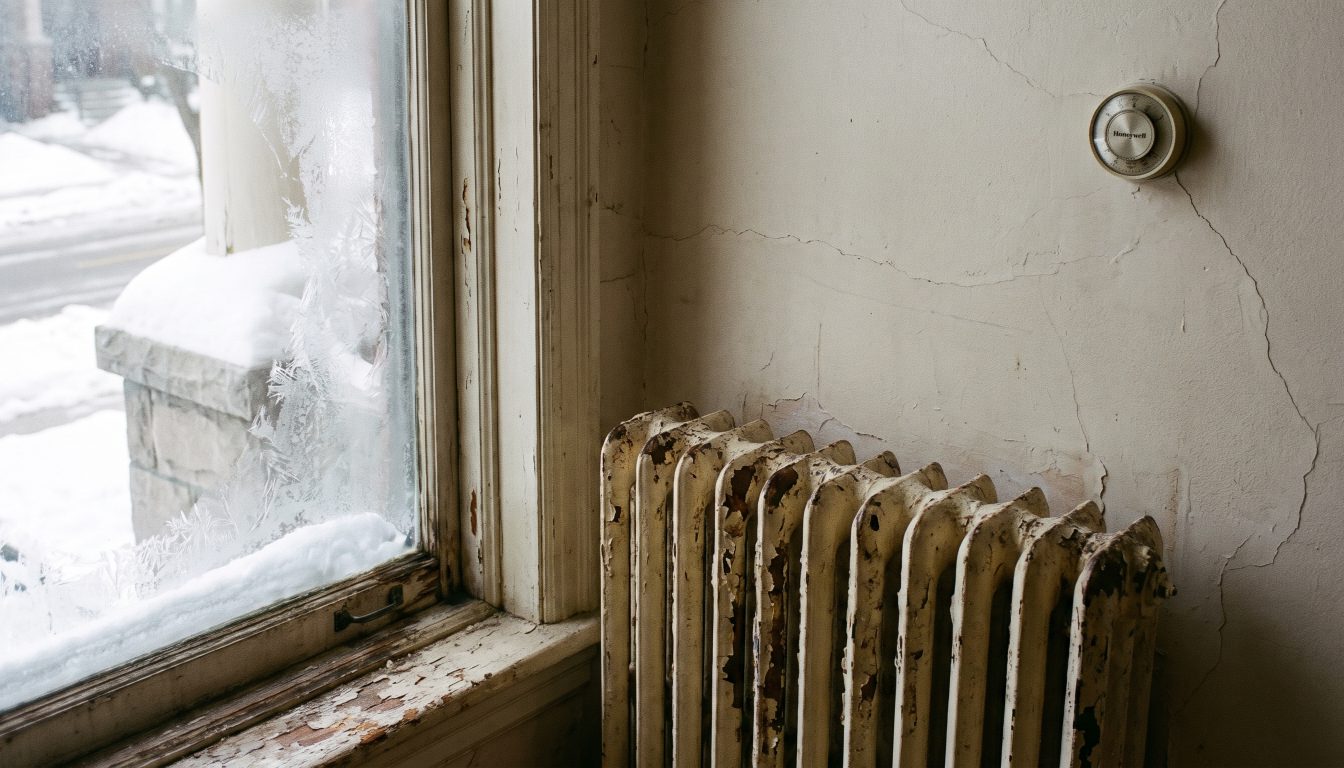
Toronto landlords who pay for heat must keep rented units at 21°C or more from October 1 to May 15, measured 1.5 metres above the floor. Ontario’s rules also treat heat as a vital service from September 1 to June 15 at 20°C. If your unit is cold, tell your landlord in writing and call 311 after 24 hours.
This guide is for Toronto tenants who are cold at home and want to know what their landlord owes them, and for landlords who want to get the dates and numbers right. You will get the current minimum temperatures, how to measure your unit properly, and the exact steps to take when the heat falls short.
What is the minimum temperature for a rental in Toronto?
21°C. Under Toronto Municipal Code Chapter 497, every landlord must keep a minimum air temperature of 21°C in all areas of a rented unit from October 1 to May 15. The temperature is measured 1.5 metres above the floor. The rule applies when the unit is normally heated at the landlord’s expense.
Many articles still quote September 15 to June 1. Those dates are out of date. Chapter 497 was most recently replaced by By-law 1511-2025, which took effect on June 1, 2026, and is now called the Indoor Temperature Standards bylaw. It sets October 1 to May 15, and the City’s own page confirms those dates. If the unit is already at 21°C, the landlord does not have to run the heating.
This is general information, not legal advice. Confirm how the rules apply to your unit with the City, the Landlord and Tenant Board (LTB), a licensed paralegal or a lawyer.
How do Toronto’s rules and Ontario’s rules fit together?
Toronto tenants are covered by two layers: the City’s bylaws and the province’s Residential Tenancies Act, 2006 (the RTA). They use different numbers and dates, and they are enforced by different bodies.
| Rule | Standard | Dates | Who enforces |
|---|---|---|---|
| Toronto heating (Ch. 497) | At least 21°C | October 1 to May 15 | City of Toronto (311) |
| Ontario vital service heat (O. Reg. 516/06) | At least 20°C | September 1 to June 15 | LTB (T2) and provincial enforcement |
| Toronto heating system (Ch. 629) | Capable of 21°C in habitable rooms and bathrooms | Year-round | City of Toronto (311) |
| Toronto cooling, where air conditioning is installed | No more than 26°C | June 1 to September 30 | City of Toronto (311) |
| Toronto hot water at the tap | 45°C to 49°C | Year-round | City of Toronto (311) |
Source: Toronto Municipal Code Chapters 497 (in force June 1, 2026) and 629; City of Toronto heat and vital services page; O. Reg. 516/06, s. 4.
The gap matters in September and early June. Toronto’s bylaw does not require 21°C then, but the provincial rule still treats heat as a vital service from September 1. A landlord who controls the heat and leaves you below 20°C in that window may face a T2 at the LTB. My guide to what your landlord must fix in Ontario explains all three temperature layers in more depth.
How do I measure the temperature in my unit?
Measure the way the rules do, so your numbers hold up.
- Height: hold the thermometer 1.5 metres above the floor, about chest height for most adults.
- Distance from walls: the provincial rule also measures one metre away from exterior walls. Do the same.
- Every room: Toronto’s rule covers all areas of the unit, not just the warmest room.
- Several times a day: record the date, time, room and reading. Mornings and late evenings often tell the story.
- Proof: take a photo of the thermometer with something that shows the date, such as your phone’s lock screen.
A simple log over a few days is far stronger than “it has been freezing for weeks.”
What if I pay for my own heat?
Then the 21°C bylaw duty to run the heat is generally yours, because Chapter 497 applies only to units normally heated at the landlord’s expense. That is common in condos and houses with electric baseboards or a separately metered furnace.
Your landlord still has duties. Toronto’s property standards bylaw, Chapter 629, says every unit must have a heating system able to keep habitable rooms, bathrooms and toilet rooms at 21°C, and every heating system must be kept in good repair. If the baseboards, thermostat or furnace do not work, that is a repair issue for the landlord. My guide to the T6 maintenance application covers how to push for the fix.
Instant Home Valuation
What’s your home
worth today?
Answer six quick questions and get an instant value range built from current Toronto & GTA sale data — property type, size, condition, lot and location all weighted the way a real pricing conversation weighs them. Takes about ninety seconds.
Reading recent GTA sale data…
Building your estimate
Estimated market value
—
$0–$0
Most likely value $0 · roughly $0 per square foot
What moved the number
Starting from the area baseline for your property type, here’s what each answer added or subtracted.
Market context
Recent local averages for comparison.
—
A range is a starting point.
A strategy is what sells.
This model doesn’t know that your neighbour’s identical semi went $80,000 over asking last month, or which two upgrades actually pay back in your area. That conversation is free and takes twenty minutes.
Does the heat bylaw cover condos and basement apartments?
Yes, if the unit is rented. Chapter 497 applies to every landlord of a rented dwelling unit in Toronto, not just big apartment towers. The City says that when a condo unit is rented, the landlord, meaning the unit owner, is responsible for making sure the heat bylaws are followed. A condo tenant should go to their landlord first, and then to 311.
The RentSafeTO program is narrower. It covers only apartment buildings with three or more storeys and ten or more units, and it leaves out condos, townhomes and units in a private house. But the heating and property standards bylaws still apply to those homes. If you are renting a condo, check whether heat is part of the building’s common costs. My post on condos with heat, hydro and water included explains how bulk heating works.
Can my landlord turn the heat off in spring or fall?
Sometimes. The City calls September 15 to October 15 and May 1 to June 1 the “shoulder season.” It says landlords can use their judgement then, because warm weather can push indoors above 21°C. If the outdoor temperature is high enough that the building stays at 21°C without heat, the landlord can turn the heat down or off.
What a landlord cannot do is turn it off and leave it off when it gets cold again. Inside October 1 to May 15, the 21°C minimum applies whenever the unit falls short. And the provincial vital-service rule runs from September 1 to June 15.
What should I do if my apartment is too cold?
- Tell your landlord or property manager in writing. The City treats no heat or low heat as urgent and expects landlords to respond within 24 hours.
- Start your temperature log the same day.
- Call 311 if it is not resolved within 24 hours. The City will investigate. Officers can educate, issue a ticket or take further enforcement action.
- Check your building’s record. If you live in an apartment building with three or more storeys and ten or more units, it falls under RentSafeTO. You can search for its evaluation score and active violations online.
- Apply to the LTB if needed. Use a T2 if the landlord is withholding heat. Use a T6 if the system needs repair. You can ask for a rent abatement. My guide to the T2 application walks through the form.
A space heater is not a fix. Toronto’s property standards bylaw says auxiliary heaters must not be used as a permanent source of heat. Accept one as a stopgap if you need it, but keep pressing for the real repair. And do not hold back rent. Since September 21, 2026, a notice for unpaid rent can end a tenancy after just 7 days’ notice.
What fines can a Toronto landlord face for not enough heat?
The City’s set fine for failing to keep a rented unit at 21°C is $500 per ticket. If the City takes a landlord to court instead, a conviction can bring a fine of up to $100,000, plus up to $10,000 for each day the offence continues. The bylaw also allows a special fine equal to any economic advantage the landlord gained. Directors or officers of a corporation who go along with the offence can face fines up to $100,000.
These are separate from LTB orders. A landlord can face City fines and also owe a tenant a rent abatement after a T2 or T6.
Does my landlord have to keep my unit cool in summer?
Only if air conditioning is already installed. Chapter 497, in force since June 1, 2026, requires owners, operators and landlords to run any installed cooling system from June 1 to September 30 to keep indoor temperatures at 26°C or lower. It does not require landlords to add air conditioning.
Apartment buildings with an existing amenity space, such as a party room or gym, must keep at least one of those spaces at 26°C or lower in that period if cooling is not provided in every unit. There is an exception where meeting the rule would require construction under the Building Code.
Air conditioning is not a vital service under the RTA. Since July 1, 2026, though, the RTA lets a tenant install a window or portable air conditioner where the landlord does not supply one, unless a regulation allows the landlord to refuse. You must tell the landlord in writing first, and install it safely without damaging the unit. If your landlord pays for electricity, they may raise your rent by the actual cost of running it. They must lower it again when you remove it or stop using it for the season.
Heat complaints are some of the easiest landlord-tenant disputes to avoid. For landlords, service the system before October, answer cold-unit calls the same day, and keep a written log of what you did. If an old system cannot keep up, my post on heat pumps in Toronto covers upgrade options. For tenants, a few days of careful readings plus one 311 call usually moves things faster than weeks of angry texts.
What to do next
- Check your lease to see whether heat is included in your rent or paid by you.
- Buy a basic thermometer and log readings at 1.5 metres in each room for a few days.
- Send your landlord one written request with your readings.
- If nothing changes within 24 hours, call 311, then consider a T2 or T6 at the LTB.
- If you rent outside Toronto, check your own city’s property standards rules, since the provincial 20°C rule applies across Ontario.
Need help with this? Talk to me.
I’m Jatin Dua, Broker of Record at RE/MAX Quantum Realty, and I’m the best agent to do this kind of work for you in Toronto and across the GTA. Over $100 million in GTA sales and 100+ families helped sell. Feel free to contact me any time: call or text 833-330-1925 or email [email protected].
Frequently asked questions
What is the minimum heat a landlord must provide in Toronto?
21°C. Under Toronto Municipal Code Chapter 497, landlords must keep rented units at a minimum air temperature of 21°C from October 1 to May 15, measured 1.5 metres above the floor. The rule applies when heat is normally paid for by the landlord. The old September 15 to June 1 dates no longer apply in 2026.
When can landlords turn off the heat in Toronto?
When the building stays at 21°C without it. The City of Toronto lets landlords use judgement in the shoulder seasons, September 15 to October 15 and May 1 to June 1, and turn heat down or off when warm weather keeps units at 21°C. From October 1 to May 15, a landlord-heated unit must not fall below 21°C.
What temperature is too cold for a rental apartment in Ontario?
Below 20°C between September 1 and June 15. Ontario’s regulation under the Residential Tenancies Act treats heat as a vital service in that period and requires at least 20°C, measured 1.5 metres above the floor and one metre from exterior walls. In Toronto, the City’s bylaw sets a higher 21°C minimum from October 1 to May 15.
Who do I call if my apartment has no heat in Toronto?
Your landlord first, then 311. The City of Toronto says to contact your landlord or property manager, and if the heat problem is not resolved within 24 hours, contact 311 to have the City investigate. You can also file a T2 or T6 application with the Landlord and Tenant Board to ask for a rent abatement.
Does a landlord have to provide air conditioning in Toronto?
No. Toronto does not require landlords to install air conditioning. But where a cooling system is already installed, Toronto’s indoor temperature bylaw requires it to run from June 1 to September 30 to keep units at 26°C or lower. Apartment buildings without cooling in every unit must keep at least one existing amenity space at 26°C or lower.
Can I install a window air conditioner in my rental in Ontario?
Usually yes. Since July 1, 2026, Ontario’s Residential Tenancies Act lets tenants install a window or portable air conditioner when the landlord does not supply one, unless a regulation allows the landlord to refuse. You must notify the landlord in writing first and install it safely. If the landlord pays for electricity, they can raise rent by the actual cost.
What is the fine for a landlord not providing heat in Toronto?
$500 per ticket for failing to keep a rented unit at 21°C, according to the City of Toronto. If the landlord is summoned to court and convicted, the fine can reach $100,000, plus up to $10,000 for each day the offence continues and a special fine for any economic gain. Directors of a corporation can also be fined.
Does the Toronto heat bylaw apply to condo rentals?
Yes. The City of Toronto says that if a condo unit is rented, the landlord is responsible for making sure the heat bylaws are followed. Tenants with low heat should talk to their landlord first and contact 311 if the problem is not fixed. If the tenant pays for their own heat, the 21°C duty to run it generally falls on the tenant.
Can my landlord give me a space heater instead of fixing the heat?
Only as a short-term stopgap. Toronto’s property standards bylaw, Chapter 629, says auxiliary heaters must not be used as a permanent source of heat. Every unit must have a heating system able to keep habitable rooms and bathrooms at 21°C, kept in good repair. Keep asking for the real repair, and use 311 or a T6 if it does not happen.
Sources
- Toronto Municipal Code Chapter 497, Indoor Temperature Standards (By-law 1511-2025, in force June 1, 2026)
- City of Toronto: Heat and Other Vital Services in Rental Units
- Toronto Municipal Code Chapter 629, Property Standards, s. 629-38 Heating and air conditioning
- O. Reg. 516/06 (General), s. 4: heat as a vital service, September 1 to June 15, 20°C
- Residential Tenancies Act, 2006, ss. 21, 29, 36.1 (Ontario e-Laws, consolidated September 21, 2026)
- Ontario: Rental housing offences (air conditioning is not a vital service)
- City of Toronto: RentSafeTO for Tenants
- LTB: Form T2 Instructions, Application about Tenant Rights
Related reading
- Can My Landlord Enter Without Notice in Ontario?
- Can a Landlord Evict You Without Going to the LTB in Ontario?
- Can My Landlord Raise the Rent Every Year in Ontario? 2027 Rules
- Can a Landlord Put Security Cameras in or Outside a Rental in Ontario?
About the author — Jatin Dua, Toronto and GTA real estate broker
I am Jatin Dua, Broker of Record and co-founder of RE/MAX Quantum Realty Inc., Brokerage, Unit 101, 799 The Queensway, Toronto. I work with buyers and sellers across Toronto and the GTA and have helped more than 100 families sell. Four-plus years of active GTA transactions and over $100 million in sales volume.
Reach me at [email protected] or 833-330-1925, or book a call.