
Published 2 November 2026 · By Jatin Dua, Broker of Record, RE/MAX Quantum Realty
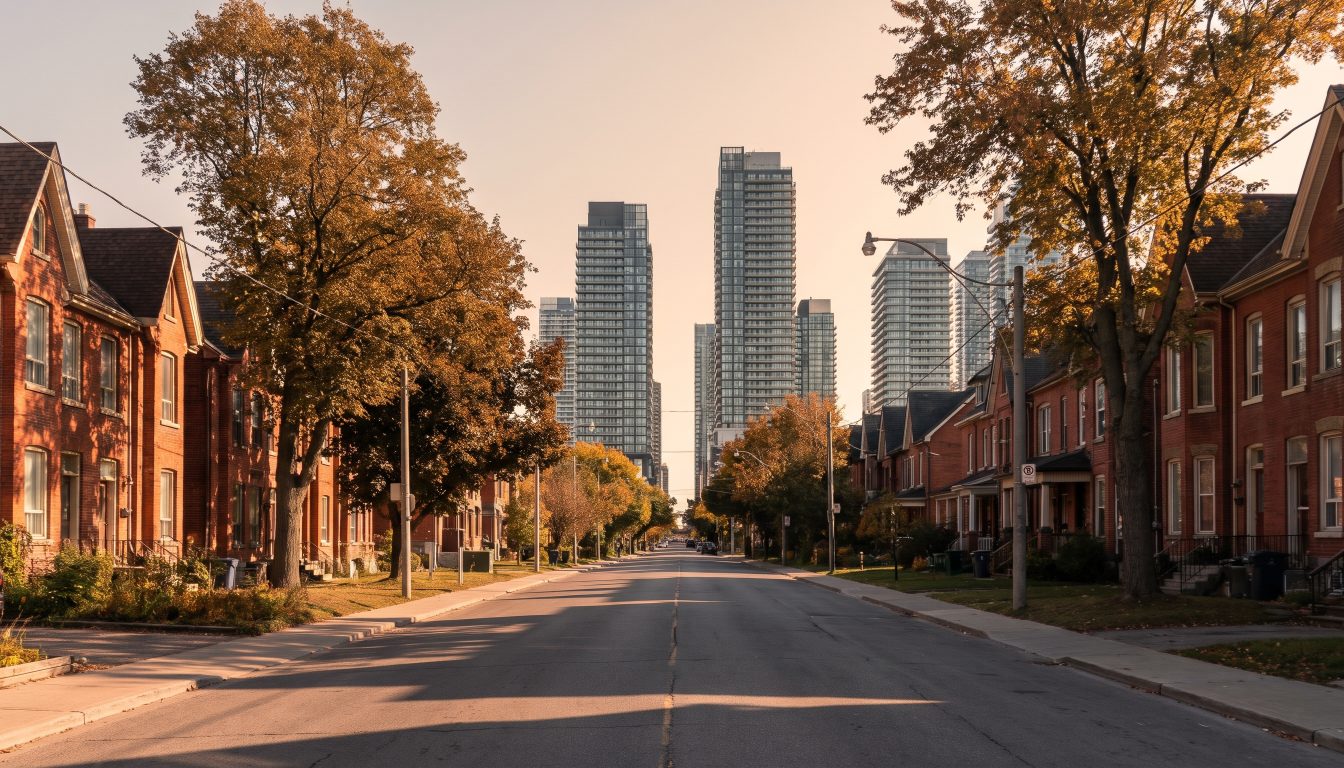
Toronto’s Municipal Non-Resident Speculation Tax is 10% of the price of a home with one to six units bought in the City of Toronto by a foreign national, foreign company or taxable trustee. It started on 1 January 2025, sits on top of Ontario’s 25% NRST, and follows the province’s nominee, protected person and spouse exemptions.
This guide is for foreign buyers looking at a condo or house anywhere in the City of Toronto in 2027, and for the lawyers, family members and co-buyers working with them. You will see exactly what Toronto’s 10% Municipal Non-Resident Speculation Tax covers, what the full tax bill looks like on real Toronto prices, who is exempt, and what is still unclear about refunds.
What is Toronto’s Municipal Non-Resident Speculation Tax?
The Municipal Non-Resident Speculation Tax (MNRST) is a 10% tax on the purchase price of certain homes bought in Toronto by foreign buyers. City Council adopted it under its taxing powers in the City of Toronto Act, 2006 (item 2024.EX11.1), and it has applied since 1 January 2025.
Key facts as of November 2026:
- Rate: 10% of the value of the consideration, normally the price plus any mortgage or debt you take over.
- Stacking: it is charged on top of Toronto’s Municipal Land Transfer Tax (MLTT), and separately from Ontario’s 25% Non-Resident Speculation Tax (NRST) and Ontario land transfer tax.
- No grandfathering: the City says agreements signed before 1 January 2025 get no relief if they close later.
- When it is paid: on registration of the transfer, along with the MLTT. Every buyer must make a declaration or claim an exemption as part of registration.
The City’s stated goal is to discourage buyers who will not live in the home or who are buying purely to speculate.
Where in Toronto does the MNRST apply, and where does it not?
It applies to homes anywhere inside the City of Toronto: the old city, Etobicoke, North York, Scarborough, East York and York. It does not apply in Mississauga, Brampton, Vaughan, Markham, Richmond Hill, Oakville, Pickering or any other GTA municipality. City staff noted in their 2024 report that Toronto is the only Ontario municipality able to levy its own additional land transfer tax.
That boundary matters. A foreign buyer choosing between a condo on the Etobicoke side of the city line and a similar one just across it in Mississauga faces a 10-point difference in tax, before price. Ontario’s 25% NRST applies in both places.
Who has to pay the MNRST?
Toronto uses the same groups as the provincial tax:
- Foreign nationals: individuals who are not Canadian citizens or permanent residents. This includes work permit holders and international students.
- Foreign corporations: companies incorporated outside Canada, and in certain cases Canadian companies controlled by a foreign entity.
- Taxable trustees: trustees of a trust with a foreign trustee or a foreign beneficiary.
Being allowed to buy under the federal foreign buyer ban, for example on a work permit with 183 days left, does not exempt you from this tax. My guide to foreign buyer rules in Toronto explains how the federal and local rules fit together.
Which Toronto properties does the MNRST cover?
The tax applies to land containing at least one and not more than six single family residences, on the full purchase price. That includes:
- detached and semi-detached houses;
- townhouses;
- condo units, where each unit counts as one residence even if you buy several.
It does not apply to rental apartment buildings with more than six units, agricultural land, commercial land or industrial land. In some cases the tax is based on fair market value instead of price, for example on a lease that can run more than 50 years, a transfer from a company to its shareholder, or a transfer to a company in exchange for shares.
Instant Home Valuation
What’s your home
worth today?
Answer six quick questions and get an instant value range built from current Toronto & GTA sale data — property type, size, condition, lot and location all weighted the way a real pricing conversation weighs them. Takes about ninety seconds.
Reading recent GTA sale data…
Building your estimate
Estimated market value
—
$0–$0
Most likely value $0 · roughly $0 per square foot
What moved the number
Starting from the area baseline for your property type, here’s what each answer added or subtracted.
Market context
Recent local averages for comparison.
—
A range is a starting point.
A strategy is what sells.
This model doesn’t know that your neighbour’s identical semi went $80,000 over asking last month, or which two upgrades actually pay back in your area. That conversation is free and takes twenty minutes.
How much does a foreign buyer pay in Toronto in 2027?
A foreign buyer in Toronto faces four taxes on one closing day. Here is the full bill on median 2026 prices in four Toronto districts.
| Example (district median, Jan to Oct 2026) | Price | Ontario LTT | Toronto MLTT | Ontario NRST 25% | Toronto MNRST 10% | Total tax | Share of price |
|---|---|---|---|---|---|---|---|
| Condo apartment, C01 downtown | $600,000 | $8,475 | $8,475 | $150,000 | $60,000 | $226,950 | 37.8% |
| Detached, W08 (Islington-City Centre West, Edenbridge-Humber Valley) | $1,540,000 | $27,275 | $27,275 | $385,000 | $154,000 | $593,550 | 38.5% |
| Detached, C04 (Bedford Park-Nortown, Lawrence Park) | $2,352,500 | $45,288 | $45,288 | $588,125 | $235,250 | $913,951 | 38.9% |
| Detached, C12 (Bridle Path-Sunnybrook-York Mills, St. Andrew-Windfields) | $3,200,000 | $66,475 | $70,275 | $800,000 | $320,000 | $1,256,750 | 39.3% |
Source: prices are Toronto district medians (C01, W08, C04, C12) from TRREB MLS data via REALM, January to October 2026; taxes are my calculations using Ontario Ministry of Finance and City of Toronto rates in force November 2026, before any exemption or rebate. Legal fees and the City’s MLTT administration fee are extra.
Two things stand out. First, roughly 38 to 39 cents of every dollar of price goes to tax for a foreign buyer with no exemption. Second, on homes over $3 million, Toronto’s graduated MLTT rates that took effect on 1 April 2026 push the city’s share higher still. My post on Toronto’s MLTT brackets from 1 April 2026 shows those rates in full.
Who is exempt from Toronto’s MNRST?
The City follows the provincial exemptions. You may be exempt if you are:
- A nominee under the Ontario Immigrant Nominee Program at the time of purchase, who has applied, or certifies they will apply, for permanent residence;
- A protected person on whom refugee protection has been conferred under section 95 of the Immigration and Refugee Protection Act; or
- A foreign national buying jointly with a spouse (as the Land Transfer Tax Act defines spouse) who is a Canadian citizen, permanent resident, nominee or protected person.
For the matching provincial exemptions, Ontario requires every buyer to move in as their principal residence within 60 days of registration, and Ontario’s spouse test is marriage, three years living together, or parents of a child in a lasting relationship. Expect the same proof for the city tax. The City audits exemptions claimed on its land transfer tax at registration and requires records to be kept for seven years, so keep yours.
Can you get Toronto’s MNRST refunded?
This is the least clear part of the tax. In its January 2024 report to Council, City staff recommended that the MNRST mirror the provincial tax on rebates, refunds and exemptions. The report said a buyer who becomes a permanent resident within four years would be able to apply for a full rebate of both the provincial and city speculation taxes. Staff also said the City was not planning separate rebates for students or foreign workers, matching Ontario, which closed those rebates.
The City’s current rebate page, however, only describes the first-time buyer MLTT rebate of up to $4,475, and that rebate requires you to be a citizen or permanent resident, or to become one within 18 months of the transfer. If you plan to rely on getting the 10% back, ask your lawyer to confirm the City’s current application process in writing before you buy.
Do not assume a rebate will cover your cash shortfall. Both speculation taxes are paid in full at registration, and any rebate comes years later, only if every condition is met. Also, under the City’s land transfer tax audit rules, failing to back up an exemption you claimed leads to immediate payment of tax, interest and penalty.
How much does the MNRST raise for Toronto?
City staff estimated the MNRST could raise $9.6 million to $15 million in 2025, depending on whether the federal ban continued. The ban did continue through 2025 and 2026. For context, Ontario’s own NRST collected at the Toronto land registry office fell from $91.5 million in 2022 to $22.4 million in 2025, gross of rebates. The City has not, in the pages I read, published actual MNRST collections.
The staff report also said the City may revisit the 10% rate after judging how well it discourages speculation. No change had been announced as of November 2026.
What other Toronto costs hit foreign owners?
The speculation taxes are one-time. Two ongoing costs often matter more to owners who do not live in the home:
- Vacant Home Tax: since 2024, 3% of the property’s assessed value each year if a home is vacant for six months or more in a year. Every owner must declare each year; the declaration for the 2026 year is due by 30 April 2027. My Vacant Home Tax guide explains the rules.
- Tax on rent: if you live outside Canada and rent the home out, federal rules require 25% of gross rent to be withheld unless you file to have tax withheld on net rent instead. See non-resident landlord withholding.
If you are a foreign buyer who must be in the GTA but not necessarily in Toronto, compare the same type of home just outside the city line. Avoiding the 10% city tax can be worth more than any price negotiation. If you need to be in Toronto, buy only after confirming your status and exemption in writing, and keep enough cash to close even if no rebate ever arrives.
What to do next
- Confirm the property is inside the City of Toronto boundary, not just a Toronto mailing address.
- Confirm every buyer’s status for closing day and whether a nominee, protected person or spouse exemption applies.
- Use the estimator above to price the home, then add Ontario LTT, Toronto MLTT, the 25% NRST and the 10% MNRST.
- Ask your lawyer to confirm the City’s current rebate process in writing if you expect permanent residence within four years.
- If you will not live there, budget for the Vacant Home Tax or a tenant, and the rent withholding rules.
Need help with this? Talk to me.
I’m Jatin Dua, Broker of Record at RE/MAX Quantum Realty, and I’m the best agent to do this kind of work for you in Toronto and across the GTA. Over $100 million in GTA sales and 100+ families helped sell. Feel free to contact me any time: call or text 833-330-1925 or email [email protected].
Frequently asked questions
What is the Toronto MNRST rate?
The Toronto Municipal Non-Resident Speculation Tax is 10% of the purchase price. It has applied since 1 January 2025 to foreign nationals, foreign corporations and taxable trustees buying homes with one to six single family residences in the City of Toronto. As of November 2026, no rate change had been announced for 2027.
How much is the foreign buyer tax in Toronto in 2027?
Foreign buyers in Toronto pay 35% in speculation taxes: Ontario’s 25% NRST plus Toronto’s 10% MNRST, on top of both land transfer taxes. On a $600,000 downtown condo that adds $210,000, and with land transfer taxes the total is about $226,950, or 37.8% of the price, before any exemption.
Does the Toronto MNRST apply in Mississauga or Vaughan?
No. The MNRST applies only to property inside the City of Toronto. Buyers in Mississauga, Brampton, Vaughan, Markham and the rest of the GTA do not pay it, though Ontario’s 25% NRST applies across the whole province. Check that the property sits inside the city boundary, not just that it has a Toronto mailing address.
Who is exempt from the Toronto MNRST?
The City follows Ontario’s NRST exemptions: Ontario Immigrant Nominee Program nominees, protected persons, and foreign nationals buying jointly with a spouse who is a citizen, permanent resident, nominee or protected person. For the provincial versions, all buyers must move in as a principal residence within 60 days; expect the same proof in Toronto in 2027.
Is there an MNRST rebate if I become a permanent resident?
City staff told Council in 2024 that the MNRST would mirror Ontario’s rules, including a full rebate for buyers who become permanent residents within four years of purchase. The City’s current web pages do not set out that application process, so confirm it with your lawyer and the City before relying on it in 2027.
Do I pay the MNRST if I signed my agreement before 2025?
Yes, if the deal closed on or after 1 January 2025. The City of Toronto says it has no grandfathering provision for agreements of purchase and sale signed before that date. The tax is due on registration, so the closing date, not the signing date, decides whether the 10% applies.
Does the MNRST apply to condos in Toronto?
Yes. A condo unit counts as a single family residence, so a foreign buyer of a Toronto condo pays the 10% MNRST on the full price in 2027. If you buy several condo units, each unit is treated as land with one single family residence, so each purchase is taxed.
Do work permit holders pay the Toronto foreign buyer tax?
Yes, unless an exemption applies. A work permit holder is a foreign national, so buying in Toronto means the 10% MNRST plus Ontario’s 25% NRST. The federal work permit exception only lets you buy; it does not reduce either tax. Buying with a citizen or permanent resident spouse can remove both.
Sources
- City of Toronto: Municipal Land Transfer Tax and Municipal Non-Resident Speculation Tax
- City of Toronto: MLTT and MNRST Rates and Fees
- City of Toronto: MLTT and MNRST Rebate Opportunities
- City of Toronto: Report for Action, Municipal Non-Resident Speculation Tax on Foreign Buyers of Residential Property (16 January 2024)
- Ontario Ministry of Finance: Non-Resident Speculation Tax
- Ontario Ministry of Finance: Non-Resident Speculation Tax collected (2017 to 2025)
- City of Toronto: Vacant Home Tax
- Canada Revenue Agency: T4144 Income Tax Guide for Electing Under Section 216
Related reading
- Foreign Buyer Ban 2027: What Budget 2026 Changes (Extension to 2029, New Homes Exempt)
- Can Foreigners Buy New Construction Condos in Toronto in 2027?
- Foreign Buyer Ban Exemptions in Canada for 2027: Who Can Still Buy
- Can International Students Buy a Home in Ontario in 2027?
About the author — Jatin Dua, Toronto and GTA real estate broker
I am Jatin Dua, Broker of Record and co-founder of RE/MAX Quantum Realty Inc., Brokerage, Unit 101, 799 The Queensway, Toronto. I work with buyers and sellers across Toronto and the GTA and have helped more than 100 families sell. Four-plus years of active GTA transactions and over $100 million in sales volume.
Reach me at [email protected] or 833-330-1925, or book a call.