
Published 7 September 2026 · Updated 29 September 2026 · By Jatin Dua, Broker of Record, RE/MAX Quantum Realty
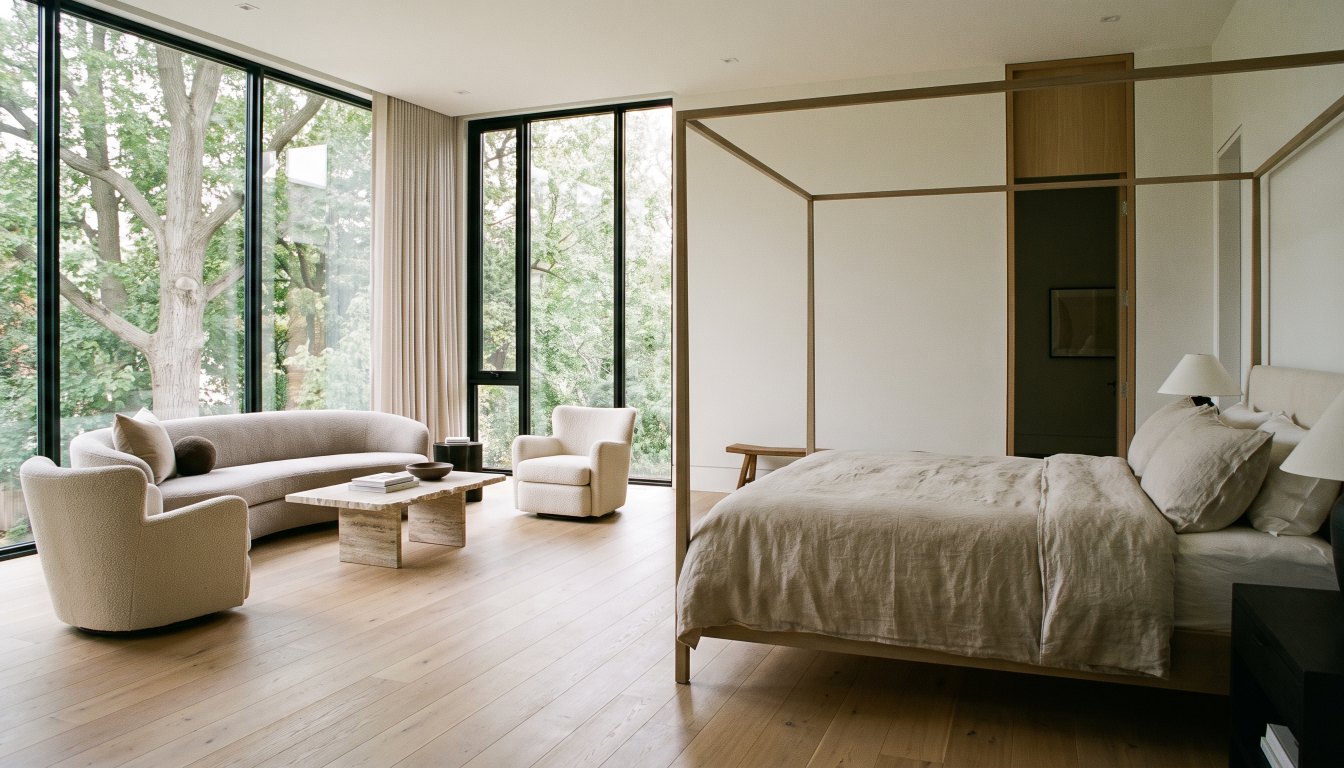
One rule explains almost the entire list: buyers pay for what cannot be added later and they do not pay for what can be replaced. Land, frontage, ceiling height, natural light, a protected view and a workable plan are permanent. Appliances, millwork, technology, wine cellars and theatre rooms are not.
The corollary is uncomfortable for sellers who have spent heavily. Money spent on the second category is spent on your own enjoyment, which is a legitimate reason to spend it — but it should not be confused with an investment.
The seven they pay for
1. The lot
Frontage, usable table land, shape, and what the rules permit. Two identical houses on different lots can differ by millions. It is the only part of the property whose supply is genuinely fixed — which is why the Bridle Path, platted with a two-acre minimum and subdivided into roughly fifty lots in the 1950s, still dominates the record sales list seventy years later.
2. Ceiling height
Structural, expensive, and effectively impossible to add without rebuilding. It changes how every room in the house feels, and buyers register it within seconds of walking in.
3. Natural light
A function of orientation, glazing and plan. A large dark house is a hard sell at any price; a smaller bright one is not.
4. A plan that works
Bedrooms on one floor. A kitchen connected to how families actually live. A mudroom that connects to the garage. A primary suite that does not require a tour. None of this is glamorous and all of it is what buyers actually live in.
5. Parking that is genuinely usable
Not the count on the listing — the reality. A three-bay garage with proper turning space and a motor court is materially different from three tandem spaces on a narrow drive.
6. A protected outlook
A ravine, a park, water, or a street inside a Heritage Conservation District. What you are paying for is the guarantee that it will still be there. In Rosedale that guarantee comes from two district plans plus ravine and TRCA regulation, and Rosedale tied for the highest number of $3 million-plus sales of any Toronto neighbourhood in the January to April 2026 count.
7. Documentation and provenance
Survey, permits, dates and scope of renovations, mechanical ages, warranty paperwork. This one surprises people. At this level buyers are advised, cautious and looking for reasons to be confident. A documented house negotiates from strength; an undocumented one invites discounts.
The five they do not
1. Appliances
Expected, not rewarded. Replacing them shortly before listing rarely returns the cost.
2. Technology platforms
The wiring holds value. The control system, the touch panels, the in-wall speakers and anything app-dependent do not. Assume the next owner replaces all of it.
3. Dedicated single-purpose rooms
Theatre, aquarium, showroom garage, salon. Expensive to build, narrow in appeal, and frequently priced by the buyer as a conversion cost.
4. Elaborate wine storage
Modest value. A buyer without a collection sees storage.
5. Very personal design statements
A facade at war with its street, an interior organised around one owner’s taste, or bedrooms removed to create a gallery. In a market of roughly 75 sales a month above $3 million across the whole GTA, anything that halves the buyer pool costs real time and real money.
The practical takeaway
Put money into the permanent half of the property: the lot, the envelope, the height, the light, the plan, the systems and the paperwork. Enjoy spending on the rest, but budget it as consumption rather than investment. The buyers who will decide your price are a small group who have seen everything else on the market, and they price exactly this way.
Frequently asked questions
What single feature adds the most value to a Toronto luxury home?
The lot. Frontage, usable table land, shape, and what the zoning, ravine, heritage and tree rules permit you to do with it. Everything about the building can be changed; the land cannot.
Do buyers pay for a wine cellar?
Modestly, and less than owners expect. It is a small, specific space that a buyer without a collection reads as storage. It photographs well, which is not the same as commanding a premium.
Is a home theatre worth building?
For your own enjoyment, possibly. For resale, a dedicated windowless single-purpose theatre is one of the least flexible rooms in a large house and many buyers price it as a conversion.
What about an elevator?
In a house of four levels or more it genuinely widens the buyer pool, particularly among downsizers and multi-generational households. In a two-storey house it is unusual enough to be neutral at best.
Do buyers pay for new appliances?
They notice their absence more than they reward their presence. Current, properly specified appliances are expected at this price. Replacing them a year before selling rarely returns the cost.
What is the most over-invested feature in Toronto luxury homes?
Highly specific, highly personal single-purpose rooms — the theatre, the two-storey aquarium, the showroom garage, the salon. They cost a great deal, they narrow the buyer pool, and the next owner budgets to undo them.
Thinking about buying or selling at the top end?
Send me the address, or the shortlist you are considering. I will tell you what the property is actually worth today, what the land is worth without the house, what the transfer tax and carrying costs will be, and whether the deal makes sense. Confidential, always.
[email protected] · 833-330-1925 · Book a free consultation
Confidential. Read personally and answered within 24 hours. I never share, sell or distribute your information.
Related reading
- Ceiling height and natural light: the two features money cannot retrofit
- Luxury renovation ROI in Toronto: where the money comes back
- Lot frontage, depth and shape: the quiet driver of luxury home value
- Smart home technology: what adds value, what dates instantly
Sources
Everything above that is a rule, a rate or a published number comes from these. Verify anything that matters to your own deal.
- RE/MAX Canada — 2026 Spotlight on Luxury Real Estate, Greater Toronto
- Toronto Regional Real Estate Board — Market Watch, August 2026
- City of Toronto — Municipal Code Chapter 813, Trees
About the author — Jatin Dua, Broker of Record
I’m the Broker of Record at RE/MAX Quantum Realty, 799 The Queensway in Etobicoke, and I work with buyers, sellers and investors across Toronto and the west GTA. A large part of my work sits in the upper end of the market, where the comparables are thin, the rules are heavier and the cost of a wrong number is measured in hundreds of thousands of dollars.
The free estimators on this site are mine. I built them because the first question every owner asks is “what is it worth?” and the honest answer starts with a number you can check yourself. [email protected] or 833-330-1925.